

Theatres may be closed all over the country, but the show can still go on! Children’s Theatre Workshop (CTW) has adapted some of their programs to a new online format, offering several online-only theatre classes for existing and new students. There are five online programs, ranging from a prompt for kids to write a short play, to hand sewing lessons, to a radio play class. All programs use the Zoom video meeting program. Programs will be added as staff learn more about the opportunities to provide content for their students. To register or more details, visit ctwtoledo.org/shelter-in-place. These programs are free in consideration of the financial uncertainty many families are experiencing, but donations are accepted.
Highlights@Home: A Free Email Subscription to Help with Teaching at Home

Highlights@Home, a FREE email subscription that provides parents and kids with fun learning activities while sequestered at home, is filled with stories, puzzles, videos, games, creative activities like crafts or recipes, physical activities and suggested acts of kindness.
April content will include themes such as Find Your Funny Bone, We Are (All) Family, Never-ending Piles of Fun, Every Day is Pajama Day, Check it Out: We Love Libraries, Staying in Touch, Just Keep Dancing, and Let’s Be Honest.
Every collection will include a video message for parents from Highlights Editor-in-Chief Christine French Cully, offering tips and inspiration for ways to create new at-home routines, strengthen family bonds and build memories that will last a lifetime.
Register for Highlights@Home at
highlights.com/email-sign-up.
Links to each collection and downloadable content will reside on www.highlights.com/parents.
Social Distancing Can’t Stop Mission at Bittersweet Farms

COVID-19 pandemic has been a significant disruption to daily life, and for individuals with autism, disruptions to daily routines can be especially difficult. In the face of the COVID-19 pandemic and all the resulting changes, the residents at Bittersweet Farms have been amazingly resilient, and their stories can be an inspiration for all of us. All non-essential services are currently suspended at Bittersweet, but the closure has not stopped Bittersweet’s residents from following their passions and continuing to develop their vocational skills.
Two residents at Bittersweet’s Pemberville location, Bob and Tom, have been working with staff to grow vegetables while maintaining safe physical distance. Excited to grow vegetables for their meals this spring and summer, Bob and Tom have been diligently working six feet apart in the hoop house to seed, transplant seedlings, water, and care for their plants each day.
Committed to keeping residents engaged while at home, staff from Bittersweet’s Whitehouse Community Living program partnered with local artist Greg Justus to provide custom coloring pages during this time of social distancing. Residents received fresh new coloring pages and have completed countless other art projects, including painted ceramic figurines, watercolors, and wax paper stained glass.
The mission of Bittersweet Farms is to positively impact the lives of individuals with autism and those whose lives they touch. By sharing their stories of resilience and determination, Bittersweet hopes that in some small way, you are now one whose life has been touched by their residents. Bittersweetfarms.org
Your Educational Philosophy in One Sentence…Go!

Parents all across the country changed careers overnight, becoming full-time educators to their children as the COVID-19 pandemic forced schools to close.
We asked our Toledo Parent community–both parents and teachers–how they would describe their educational philosophy in one sentence. From wise to witty, see their responses below:
Sarah Zadrazil: “To encourage active learning through play, lots of it!! But I like the idea of snack time, too!”
Cheryl Lehsten: “No knowledge is ever wasted. Learn everything you can about everything you can!”
Jen Grant: “Dear God, please bless me with patience (and coffee…lots of coffee).”
Patricia Cowan: “Repetition, repetition, repetition!”
Stephanie Buck: “If Johnny had 5 apples…”
Jessica Haney: “They won’t care about school until they know you care about them.”
Liz Wargo: “Play, more play, maybe a worksheet, and snacks.”
Jason Webber: “Hey, teacher! Leave those kids alone!” ~ Pink Floyd
Family Favorites: COVID Edition

Little things to make parenting a bit easier during this shelter-at-home period.
Soy Candles
From stinky diapers to foul bathrooms, every family needs a few candles to mask everyday odors (especially with the entire family home and using the bathroom so much more!). Soy candles burn cleaner and longer than traditional candles, like NYC-based mama-owned company Scrumptious Wicks, with unique scents like Mango Lassi and Indian Monsoon. Delivery available. Virtually visit your local candle stores, including Swan Creek Candle Company and RiverFront Candle Company, for other soy candle options.
Buddha Boards

Stress levels are higher than usual due to the COVID-19 pandemic. If you’re feeling frazzled, decompress with the Buddha Board. Portable and slim, simply unfold the board, wet the brush and start creating with a paintbrush effect, letting go of your worries about the future and tuning into the present moment instead. When the water dries, you’re left with a blank slate, allowing you to repeatedly create without generating waste. Available at Target, Barnes & Nobles, Walmart and online at Buddhaboard.com.
CBD Bath Bombs
Finding time for self care can be difficult for parents, especially now that kids are home full time. CBD bath bombs, like the Life Elements Bath Bomb (delivery available), are an affordable way to ease tension and relieve tight muscles. CBD bath bombs are also available at Toledo Hemp Center, Buff City Soap, Handmade Toledo, and The Shed.
Baby Wraps
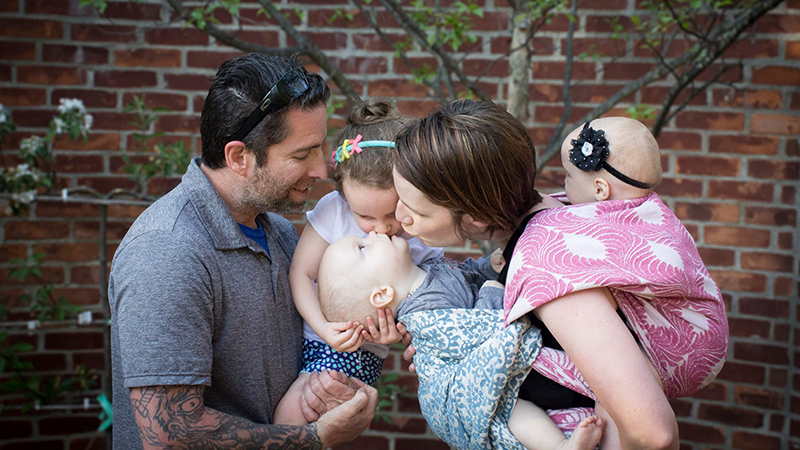
There is a reason baby-wearing has made a resurgence in American culture: it’s easy, convenient and it provides parents with much-needed hands-free time while still keeping baby snuggled close (and away from germs!). The moms at Toledo Parent recommend a sling for newborns, like the Ring Sling, and something sturdier, like the Ergo, for babies over 4 months. Buy them used at Once Upon a Child or new at Target.
BBLuv Sunkito Pop-Up Tent
Tents are a must-have for families sheltering at home; they provide hours of imaginative play. The BBLuv Sunkito is a convenient pop-up tent that collapses into a small circle, making it perfect for storing or traveling, and it’s small enough to set up inside during the colder days for indoor play. Bbluvgroup.com
Parents, cut yourself some slack on screen time limits while you’re stuck at home

Brenna Hassinger-Das, Pace University
As families hunker down during the coronavirus pandemic, many parents may wonder how much screen time they should let their kids have. Brenna Hassinger-Das, a scholar of children and technology, shares one rule it’s OK to break, one rule parents can bend and a best practice worth upholding.
1. Break: Previous daily screen time limits
The American Academy of Pediatrics warns parents that letting children spend too much time watching TV shows or playing video games on any device can make them more anxious, reduce their ability to control impulses and disturb their sleep. How much screen time varies by age. The doctors’ group advises avoiding all screen time, aside from video chats, for babies and toddlers up to 18 months old, and sets gradually increasing limits after that.
Between the ages of 2 and 5, for instance, the academy estimates that kids can safely get up to an hour of daily screen time, as long as their parents or caregivers join in. It advises parents of kids 6 and up to consistently limit time spent using digital media and to make sure that screen time doesn’t displace sleep or physical activity.
As a mom, I have to admit that these recommendations often seem impossible to follow. Personally, I believe that it’s worth breaking this particular rule. I have found the evidence behind the academy’s specific limits not compelling enough to warrant firmly adhering the guidelines with my own child, who is now 6 years old.
Professionally, I’ve observed that the available data doesn’t definitively indicate whether screen time makes kids significantly worse off. It only suggests that several behavioral and health problems might be related to excessive screen time. As I’m now teaching online and working from home, my child has been completing school lessons while relying on devices and spending more time than usual watching TV and playing games on our tablet. Life is changing in my house – as it has no doubt in yours too.
As of now, there’s little compelling evidence backing up concerns over the dangers of screen time for preschoolers, in particular. So when the parents of little kids let their child watch a video to make it possible for the grownups to make dinner or take a phone call, there’s no reason to beat themselves up.
Because the American Academy of Pediatrics doesn’t include video chatting as part of a child’s total screen time, it’s a good option to ramp up now, even for the very youngest. And some research suggests that babies can learn new words when they engage in a video chat but not from prerecorded videos. Video chatting can also help kids stay connected with their friends or members of their extended families whom they no longer can see in person. Consider using it to read stories, play the Go Fish card game or just talk about the day’s events.
2. Bend: Most restrictions on where and when to use devices
The American Academy of Pediatrics also advises parents to create tech-free zones and common situations at home. For example, the doctors’ group says that kids, especially little ones, should never use digital media while eating or during any kind of family gathering.
But I think it might sometimes be worth bending this rule.
Whether they’re coming home from work outside the home, teleworking or simply spending the day taking care of their children, all parents need some time to decompress or tackle household chores.
During this time of uncertainty, it might be time to make even more realistic trade-offs. Maybe it’s been a really tough day and having the whole family watch a TV show together at dinnertime will get you through it all without an argument. You can explain to your kids that this is not the new normal, just something unique to this unprecedented time.
3. Keep: Unplugged bedtime
However, one rule I consider worth keeping even when schools, day care centers and workplaces are shuttered is unplugging from tech at bedtime. Sticking to bedtime routines is really important for young children – those 5 years old and younger. Research indicates that kids with consistent bedtime routines do better in school and tend to behave better than their peers.
Studies suggest that even babies get less of the sleep they need if they interact with or watch screens at night. The same goes for preschool-aged kids – those between 3 and 5 years old.
Using any digital device at bedtime is correlated with losing about half an hour of sleep for children who are between 8 and 17 years old. Remember, if your kids sleep better, they’re likely to behave better too. That will make it easier for your entire family to handle whatever happens next.
[You need to understand the coronavirus pandemic, and we can help. Read our newsletter.]
Brenna Hassinger-Das, Assistant Professor of Psychology, Pace University
This article is republished from The Conversation under a Creative Commons license. Read the original article.