Home Blog Page 478

Medi-Pals makes oral medication manageable

Medi-Pals is a local medication dispenser company that makes giving medication to babies and children much easier. Medi-Pals patented split-tip design fans medicine out to the sides of the mouth, as opposed to, squirting it down the throat like a traditional medicine dispenser. Founder, Todd Strayer, believes this design is safer and easier because the child controls the flow of the medicine and the recommended dose is received. The gag reflex is not activated since it flows to the side, and it helps babies get used to the texture and taste of medicine.

The idea for Medi-Pals came about out of frustration after a doctor’s appointment for Grace, Strayer’s daughter. As the nurse administered an oral dose of the Roto-Virus vaccine, baby Grace thrust a good amount out of her mouth. The Strayers were worried about the effectiveness of the medication since their baby girl did not receive the intended dosage. They began thinking of ways to combat the problem.

After a couple of years of building and testing prototypes on their daughter and friends’ children, they finally settled on a design and launched Medi-Pals in February 2015.

The colorful Medi-Pals faceplates can be found in three designs: a ladybug, crab, and frog and are less intimidating than a typical medicine dispenser. Most babies want to put everything in their mouth, so it’s a natural response when they see Medi-Pals.

There also is a simple disposable dispenser for use in hospitals and doctors' offices. All of the pieces are manufactured locally by DRS Industries and Basilius Inc. Strayer is always looking for ways to make the current dispenser better and to expand his product offerings.

 Right now you can find Medi-Pals at www.medi-pals.com and also online at Amazon.
They will soon be in Lullaby Lane and select pharmacies. 

We Are in This Together Moms

As I sat down to write my column this month, I struggled. Not because I have nothing to say, but because I have a one-track mind right now about a problem we are dealing with involving one of my daughters. I have a lot to say about what has been going on this week, however I like my columns to be fun and light-hearted and share a touching message about how great it is to be a mom.. but you know what? Sometimes, it’s just really, really hard to be a mom. Sometimes it’s hard to find anything light-hearted in what you are dealing with.

This week has been one of those times. As we all know there are so many outside factors that are working against us as mothers, but the absolute hardest part of this week for me has been the realization that one of our biggest obstacles as moms is other moms. Moms who have chosen different methods and different values to use in raising their families. I am not saying they have chosen the wrong methods and values, but different. I respect that not everyone will make the same choices that I have made for my family. And that is good, actually. I mean how boring would the world be if we all raised our kids the same way, right? As mothers we should acknowledge that everyone has their reasons for their ways and respect them.

We are not the judge and jury of each other. A mother has to answer to no one when she makes a decision to protect her child from a situation. Nor should any mother have to answer to anyone as to why she is alright with her child being in that situation. We should be supportive of each other and try to understand others’ views and actions even when we disagree.

And, my goodness, moms, we should keep it off of social media if we don’t agree! Let us practice what we preach about cyberbullying.

Just be nice to each other. We are all doing the best we can. It is a hard job and there is no one perfect way to do it. We all have different views, opinions and approaches, but no matter how we go about it there is one common practice among us all; we do what we think is best for our kids. Sometimes we make mistakes and sometimes we surprise even ourselves at how good we really are, but, I promise, each one of us does what we think is best at the time. We are in this together moms.

Putting a Lens on Vaccinations

A favorite story told by my 92 year-old grandmother is the day that electricity was turned on at her parent’s home.  She was eight years old at the time and every neighbor of their farm had come out with a bucket in hand to see the house burn down. Everyone was convinced that when the electricity was turned on the house would ignite. It didn’t and soon everyone’s home was electrified.

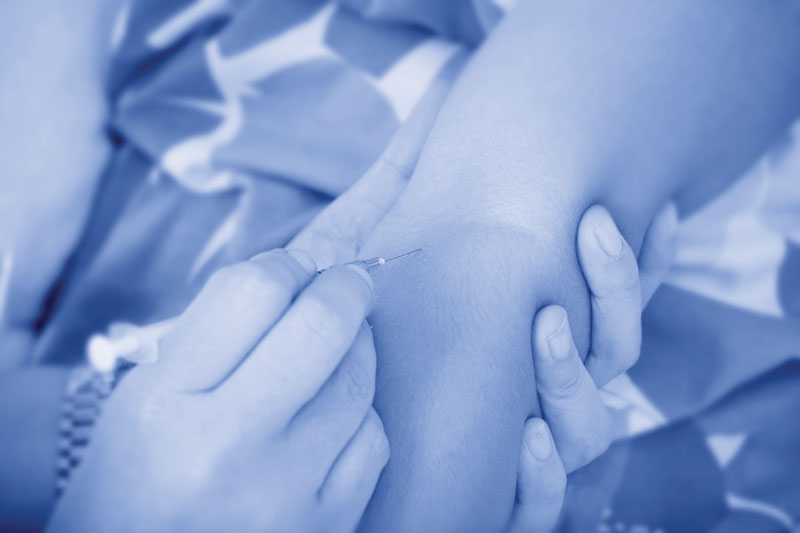
Although the fear of electricity has faded, there is another fear of that time that has not. Unlike buckets of water to put out a fire, my great-grandparents and their contemporaries could only fear polio. Vaccines available in the 1920’s and 1930’s were limited to smallpox. Although studies were under way for the development of diphtheria, tetanus, pertussis, and polio vaccines, the actual shots were still years away. Influenza, an epidemic just four years before my grandmother’s birth, would have a vaccine in the early 1940’s. Diphtheria, tetanus, and pertussis would have regular vaccinations by the late 1940’s.

My grandmother sees the vaccine debate through the eyes of a child who grew up in the 1920’s and 1930’s. She knew the effects of whooping cough, children and adults with polio, others who died of influenza and her own experience with measles and mumps. When she was a mother and sent my mom to school in 1951 she made sure the available and necessary vaccines were obtained. When a polio vaccine was made available just a few years later she was in line and made sure her two daughters were vaccinated.

In 1972, when I started kindergarten, my mother did exactly what the doctor instructed on vaccinations. By then the list of vaccines had grown to ten shots and seven different diseases had vaccinations to prevent them. This list had actually shrunk the year before I was vaccinated with the elimination of the smallpox vaccine because the disease had been eradicated.

A generation of difference 

Fast-forward to the vaccinations of my own children and the world seems to have changed dramatically. My daughter began school in the fall of 2011 and when we submitted her vaccination record, she had received approximately 28 different shots for 10 different diseases, more than double what I had received in 1972. Although we had adopted an alternate schedule, spacing out the shots with fewer shots at a time and even sought out a doctor who separated the MMR vaccination, we still had hit most of the vaccines except Hepatitis B.

When I spoke to my mother about our vaccination process she wondered why we would even question the doctor and the CDC schedule. Although she was shocked to learn about the number of shots administered at one time, she still questioned our stance. My grandmother was less diplomatic. She thought it was downright stupid not to get a vaccine for a disease that could be avoided.

My story is similar to a small but growing number of families in the United States. To my grandmother they were miracles. To my mother they were required. To me they were questioned.

There is more material than any one person could ever adequately review about the safety and benefits of vaccines. The CDC website (www.cdc.gov) is filled with facts, figures and scientific support for the safety of vaccines. Scientific journals and research have revealed no link between vaccines and Autism or other neurological disorders. In spite of these assurances there are minimal risks as with any procedure. The scientific community and CDC acknowledge these risks.

Taking a shot at the risk

Most people in the United States do vaccinate. CDC information indicates that the vaccination rate in the United States in general is 95%, mostly because every state requires vaccination to enter public schools. The CDC reported in its 2012–2013 report on Vaccination Coverage Among Children in Kindergarten that of 49 states (Wyoming provided no information) and the District of Columbia, there was a median vaccination coverage of 94.7% for two doses of measles, mumps and rubella vaccine (MMR) and 95% for varying local requirements for diphtheria, tetanus, and  pertussis (DTaP).

In spite of the national statistic showing high rates of vaccination, there are variations in that information based on the type of vaccination and location surveyed. The more serious the disease (i.e. polio) the higher the vaccination rate and the lower the perceived danger, the lower the vaccination rate (i.e. chickenpox). There are also locations throughout the United States where pockets of low vaccination rates occur. For example the PBS news program Frontline recently featured Ashland, Oregon, the community with the lowest rate of vaccinations in the United States. All of these variations add texture to the landscape of vaccinations. To go into all them would be more than could be covered in this article. But a visit to the CDC website would reveal those vast differences and explain how statistics in this area can rarely be generalized.

Adding to concerns about immunizations rates are recent outbreaks of Measles in California’s Disneyland and Ohio’s Amish community, which bring light to the difference between personal immunity and herd immunity revealing that the vaccination question is not merely one of personal choice but of responsibility to the community. Herd immunity protects those who are too young to be vaccinated for a particular disease and those with compromised immune systems who cannot be immunized because of the danger. But herd immunity only works when immunization rates exceed 90%. Some communities in American have much lower rates than that, Toledo included.

Making the personal political

Opposition to immunizations is nothing new. The first mandatory vaccination law was passed in Massachusetts in 1855. In response to this law and others like it in other states the Anti-Vaccination Society of America was founded in 1879. This organization was formed with the belief that it “is undignified” to mandate vaccines and that the “efficacy of vaccinations as a disease preventative is a matter of individual opinion.”

Arguments against vaccinations haven’t changed since the nineteenth century in many ways, but who makes those arguments has evolved. Although opposition revolves around faith matters in certain religions, the safety of vaccines, and the need for herd immunization, the ultimate decisions about vaccines seem to be more related to the generational scenario I presented above than any single oppositional argument. In a study by the Pew Research Center it was found that 41% of adults between 18 and 29 believe parents should make the decisions about vaccinations. Compare that figure with 20% of adults 65 and older and it is obvious that generation is the determining factor.        

Why age is such a determining factor seems to be simultaneously obvious and complex. It is obvious that parents in my generation – who have rarely, if ever, seen those with Whooping Cough, Measles, Mumps, and Polio – would not find them the threat my grandmother did. But more complex is the fact that my generation and those younger than me have access to more information than previous generations and we have been asked to have our children immunized against more and more diseases with an increasing numbers of shots. Because we have no memory of terrible diseases, we only see the risks of immunization and not the benefits as clearly.

Doctor’s orders 

Doctors have responded to this questioning generation in a manner also never experienced by my parents or grandparents. Doctors in some cases have abandoned patients who are unvaccinated. Currently more than 25% of doctors’ offices in the United States will refuse treatment to patients who do not follow the recommended CDC schedule of vaccinations. This approach by doctors and the practice of some parents to not allow non-vaccinated children to play with their vaccinated children could have the effect of ostracizing the anti-vaccination group and harden their resolve against vaccines. The Frontline documentary demonstrated how this had happened in Ashland, Oregon.

I talked to friends from all over the United States. I received responses from those in Ohio, New Hampshire, Connecticut, Minnesota, and Colorado.

What I found was that most of our friends do vaccinate but have thought seriously about the issue and researched it in a way that neither my grandmother nor my mother would have thought necessary. A friend from Minnesota, who has thoroughly researched vaccinations, said that her family does vaccinate because they “feel strongly that everyone should be vaccinated.”

I did find that although most friends did vaccinate for the standard diseases required for school, they did not vaccinate for perceived less serious diseases as chickenpox and the flu. One person told me that she did not get flu shots “mostly because I grew up without them and year after year, our family doesn’t get sick.”

Weighing the options, for our community

Over time people have trusted electricity in their homes, businesses and public places. People no longer stand around fearing a fire. Those in older homes may take precautions to improve their wiring but in general very few people are going without electricity because of fear of fire. That’s because the benefits far outweigh any relative danger.

I’ve found that the same is true of vaccinations. To my knowledge and in spite of the existing dangers, vaccines are safe and provide a protection against diseases we never want to know and, hopefully, will never know to the extent my grandmother did.

Obviously questions will continue to be asked by generations weighing the relative danger to benefit for their children.  Each year that a disease is absent means that the perceived danger is reduced. That may mean that doctors have to be more patient with newer generations who are more concerned with the safety of the vaccine as opposed to the danger of the disease. They may have to engage in a colloquy that ends with more than “because I said so”, but actually answers questions related to timing and number of shots at one time.

I understand the need for vaccinations, the benefits of herd immunity and the safety of such medical miracles. At the same time I am sympathetic to my generation’s need to question a doctor and make certain that parents make the important decisions in their child’s life in an informed and thoughtful manner.  That will be the tender line everyone will have to walk as we move into future generations where the cure is more common than the disease.

Matthew Reger is a local father and attorney. He contributes to Toledo Area Parent monthly with his Diary of a Dad column. 

The Advocate Mom

Kate Fineske resides in Sylvania with her husband Adam Fineske and their 3 Children: Elizabeth, age 12, Andrew, age 8, and Nicholas, age 5

Employed as the Assistant Executive Director of Mom-mentum, a national non-profit organization striving to engage mothers personally, enrich mothers professionally and empower mothers through public policy.
www.mom-mentum.org

What quality do you most admire in others?

Kindness. As I raise my own three children that’s what I want most for them. It’s a skill and characteristic that takes a lot of patience, love and self confidence to build, yet has the biggest ability to positively impact others in our community and across the globe.

What's your favorite childhood memory?

Family vacations. Our vacations were magical memories which I feel privileged to have experienced and hope to re-create in my own family. Every year my father would pack up our conversion van with enough shoes, clothes and accessories to outfit a small village, that’s what you get when you have three daughters and a wife with a fashion fetish, in search of a fun and affordable family vacation destination as a small break from the reality of the everyday grind.

What's your favorite food? 

Lasagna. Hands down.

Where is the best local place to take your kids? 

There are SO many! The Toledo Zoo, no wait… the library, especially the Main Library in downtown Toledo! We love to bike ride and explore all the different parks in the area too!

What's your super power? 

Understanding. I love the saying, “Be kind… everyone you meet is fighting a battle you know nothing about.” I ALWAYS refer back to this quote when someone does something that makes me sad, disappointed or frustrated. Remembering this helps me to get through the more difficult moments in life with unheard of “superhero strength.”

What is your favorite movie? 

The most recent movie I’ve enjoyed, would be Maleficent. We tend to watch a lot of 80s movies on Netflix at home too— my all time favorite 80s movie is Goonies!

When you were younger, what did you want to be? 

I had a friend growing up that wanted to be the president of the United States and I was bound and determined to be her fashion designer. That lasted through Kindergarten. I no longer find fashion that intriguing, but love creativity.

What are your hobbies? 

Bike riding, traveling, and snuggling up with a good book.

What is the most important lesson in life you've learned so far? 

Never say never— ever. Motherhood has taught me that lesson over and over and over again!

What is your favorite family ritual? 

Getting up early. I typically get up around 5am, even when on vacation, and love the quietness of the morning.

What always makes you laugh? 

My children.

What do most people not know about you? 

I love music and had a college concentration, just short of a minor, in music performance. I’ve played the piano all my life and in college focused on the upright string bass with the University of Toledo’s Orchestra and Jazz Band.

What has surprised you the most about being a parent? 

Without a doubt, that there isn’t one correct answer to any parenting question and what works for one parent doesn’t always work for another. The pediatrician will tell you something different than the OBGYN, who will tell you something different than your friend, who is raising a plethora of amazing children, who will tell you something different from your mother, the lactation consultant and that amazing “solve-all-your-parenting-problems” book that everyone raves about. There is never ONE answer, just the solution that works best for you.

What is your favorite indulgence? 

Traveling.

Who do you admire most? 

My youngest who just turned 5. He has the freshest and most innocent outlook on everything… something that somehow gets lost and harder to maintain as youth disappears.

Early bird or night owl? 

Early bird.

If you could have dinner with anyone, who would it be? 

Oprah Winfrey. She intrigues me, and I would love to have a genuine conversation without cameras around.

What book would you recommend to other moms? 

Maxed Out: American Moms on the Brink. The book is by Katrina Alcorn, a happily married, mother of three with a thriving career, who shares a personal story of her own struggles to have both a career and a family while weaving in surprising research about the dysfunction between the careers and home lives of working mothers. The book made me cry, but also made me feel not so alone in my personal struggles to be a good mother while reaching for my own personal and professional goals.

What's your signature meal to make? 

I’m not much of a cook. In fact, my first response was that my signature meal was dinner at the Sundown Cantina, a nearby neighborhood restaurant favorite. After a little more thought, I realized that I make a pretty mean “Tossed Lasagna.” An easy rigatoni, meat and cheese casserole that (miraculously!) the whole family likes.

What is the best gift moms can give their children? 

Confidence. I’ve noticed when my children gain confidence, it is easier for them to be kind when others are not. It’s easier for them to make good choices because often the best choice is not the easiest choice. And overall, it’s easier for them to step outside of their comfort zone. The best things in life always come when one can step outside their own comfort zone. The best way I’ve found to instill confidence in my children is to try with all my might to model it myself. 

Fat-N-Happy At Grumpy’s

Grumpy’s

34 S. Huron, Toledo

419-241-6728

Mon-Fri: 8a.m.-2p.m.

www.Grumpys.net

The Short Course

Kid-friendly: Yes
To avoid wait: Lunch time is hit or miss but wait time is relatively short
Noise level: Moderate
Bathroom amenities: Changing station
High chairs? Yes
Got milk? Yes
Kids’ menu:Yes, plus a homemade cookie with every meal
Food allergy concerns: Gluten free items available. No peanut oil is used. Alert server of allergies at time of ordering.

As I mentioned in my previous column, I’m making more of an effort to patronize the great places that downtown has to offer; and not just when I’m catching a game or a special event. New restaurants and nightspots continue popping up, but there are also many places that have called downtown home for a long time. Grumpy’s is one of those longtime residents. 

Keeping it in the family

Grumpy’s has been on the scene for over 30 years; with its humble beginning in the back of the family hardware store. “They started with a deli counter in the hardware store”, said Sara Bauman, one of the owner’s daughters. Bauman and her sister Jennifer Shemak stepped up to keep the business running after their mother, Connie Horn, passed away a few years ago. Shemak had already been in the business many years, and her sister relocated back to Toledo to help keep the family tradition going.

 Grumpy’s is on its fourth location and has called the quaint Huron Street storefront home for the past 13 years. The family business has continued to grow so much they now have a food truck that is out and about at special events and various locations on a regular basis. The website lists its regular locations for the week. The kids and I even recently spotted the truck at the Crosby Festival of the Arts.   

Rustic and quaint atmosphere 

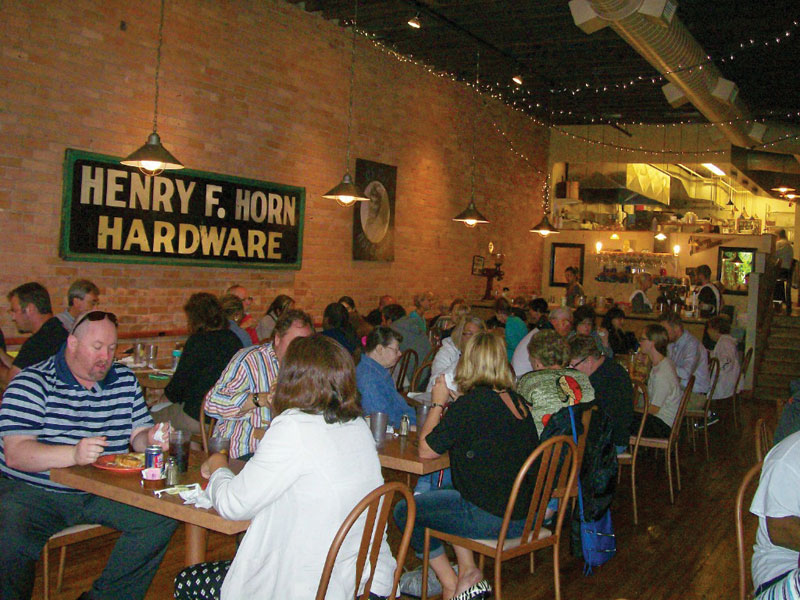
Grumpy’s is located on a tree lined portion of Huron Street with old brick buildings bursting with character. You can’t help but chuckle that the lit “OPEN” sign has a frown in the “O”. But upon walking in, you only hear the low rumble of people enjoying themselves, talking and laughing. They were far from “grumpy.”

 We loved the inside as well with the open ceiling, brick walls, twinkling white lights above, and a rustic wood floor below. It was standing room only at lunchtime, but our group of eight didn’t have to wait long  for a table. My complaint about waiting for the table? I had to stand next to the case that held the homemade pies and desserts and I think I gained five pounds just drooling over them. Maybe that is why they say “Eat here & diet home?” The apple pie alone was easily 5 inches high in the center. Shemak makes some incredible pies of all kinds and also makes a chocolate chip cheesecake that is gluten free for those with allergies.    

Many trips needed to try it all

Unfortunately for many, Grumpy’s is only open Monday through Friday until 2pm. That is part of the reason it took us so long to make it down there. We need to do it during a school vacation, or it can’t happen with all of us going as a family. Shhhh…don’t tell my kids, but now that I got a taste of Grumpy’s, I may need to go back without them while they’re slaving away in school.   

Only one of the kids in our group opted for the kids’ menu. It includes hot dogs and chips, PB&J, and grilled cheese. Drinks are extra, but I was told by Bauman that they get a free homemade cookie when they leave. That didn’t happen to be the case for us, but we’ll know to ask next time.

 Yes, all that I had heard about the endless selection of fabulous sandwiches and remarkable salads was true. They are known for the Garbage Salad with the poppy seed salad dressing, Shemak developed, that is now bottled and sold in some local stores. However, my friend and I shared the turkey Rueben and Sandy’s shroom sandwich. Others at the table enjoyed the cheeseburger pizza, an angus burger, and a veggie burger. Delicious.  

 Though we had a nice dining experience, we did have to chuckle that as we were still there at closing time and just ordering our cookies for dessert, it did appear our server seemed slightly annoyed. We had to laugh and said “Maybe THIS is why it’s called Grumpy’s!”

 Bottom Line: Despite the name, Grumpy’s is more than happy to accommodate children for a meal. They offer a reasonably priced kids’ menu and it’s hard to beat the delicious homemade cookie that are included for dessert. The menu is almost overwhelming but you can’t go wrong with whatever you choose. Be sure to note their days and hours of operation. 

Karen Zickes is a mom of three active children and freelance writer who resides in Holland, OH. She can be reached in c/o [email protected].

The Black Swamp Rowing Club

The Black Swamp Rowing Club, new in the area since the spring of 2015, is looking for rowers in grades 8-12 from any school district in northwest Ohio who want to row competitively and be eligible for college scholarships. (Two of the club’s recently graduated seniors earned scholarships!) Practices are held at the Toledo Sailing Club at Walbridge Park, and rowers can take advantage of winter conditioning at the Essence Mind Body Studio in Perrysburg. Coaches Trevor Jones and his wife Kelly, with 11 years of coaching experience, direct the athletes to develop skills and improve cardiovascular strength and endurance. Trainers at the studio work with rowers through yoga, Pilates and specific alignment exercises to keep rowers’ bodies balanced in the sitting position required by the sport. Rowers are reminded that “school comes first and grades are most important,” and coaches teach sportsmanship, respect, and integrity. Rowers typically row as novices their first year, then become varsity rowers. The Club currently has a roster of 13 rowers—Varsity Girls, Varsity Boys, and Novice rowers—and the teams compete in the fall and spring with some summer regattas. 

Follow the team on Twitter @blackswamprowin, on Facebook, or at blackswamprowing.com.