Home Blog Page 401

Ideas to help create a family vision

I recently had a conversation with someone I haven’t seen in roughly 10 years. We covered the basic topics you would expect after such a time. As we worked through the names and ages of my children he asked “Wow, three girls! Did you ever think you would have three daughters?” Of course my answer was “No.” It wasn’t that I didn’t want three daughters, it was simply that I had never thought about it. I don’t necessarily think I ever considered how many children I wanted at all. And while you can control how many children you have, you certainly can’t control how many sons or daughters you have.

While I had never envisioned a life with three daughters, there are certain aspects of my life right now that I did envision, and I think this is true for all of us. Certainly as parents there are many things that take place that we did not have in mind or plan for but, hopefully, there are other realities that are part of a plan. We all have hopes and dreams for our children. We want them to fall in love, travel the world (safely of course), get a great education and so on. I believe thatthe more specific and detailed the vision for our family becomes, the more powerful that vision is in our day- to-day lives.

Goals vs vision

Often, when when we set long term goals for our family, we essentially settle for vague aspirations. There is a big difference between goals and a vision. A vision isn’t something you can check off a list. A vision isn’t something you can accomplish or move beyond. A vision is a reality you can picture and imagine. It moves and ebbs and flows and changes as you do. So the vision we create for our family twists and turns as our family grows.

Here are two ideas to create a family vision:

Picture it, and work backwards. Picture a point out in the future and ask yourself, what does your family look like? What does a normal week look like? Is everyone running a different direction involved in their own personal lives only sharing just a few moments together each week? Is dinner eaten separately? Or do you share a meal at a table together? What else is your future family doing together? Do you volunteer together? Are you a part of a faith community on a regular basis? Is there a regular rhythm to your year or do you try to cram relaxation into one epic family vacation every year?

The key here is to get as specific as you can! Nothing is too small for this exercise. In fact, it probably is better to talk through the mundane activities in life.

Once you’ve pictured it, it’s time to work backwards. While picturing life in the future is fun, realizing and working out it’s implications can be more difficult. What needs to be added to your life? What needs to be taken away? It’s important here to give yourself space to make these changes. Sustainable change needs to happen bit by bit. You can’t get to this future point by rushing and your life won’t change that fast either. But as you begin living into this picture more each day, eventually you will see it transfer from your brainstorming session to the pictures on your wall and the dates on your calendar.

Remind Your Family Who They Are. The second helpful idea to creating a family vision involves the most central part of any family, identity. One of the most powerful ways to create a family vision is to remember who you are as a family. What is the character of your family? If you share the same last name, how do people with that last name behave? How do they treat people? How do they treat each other? How do they engage in their community? Why do they get up in the morning? If you don’t share the same last name, what about your physical address? How do people who share that home behave in the world?

This is one of my favorite ways to think about parenting. Now, I certainly miss the boat a lot with my own children, but it is so much better to call our children back to who they are rather than simply tell them not to be someone. When my daughter is rude to her friends, reminding her that people in this family don’t treat others that way is much more significant than simply telling her not to be rude. We all want to be someone much more than we want to stop being something. The same is true for our families as a whole, isn’t it?

Most of us never could have imagined how many sons or daughters we might have, or what the makeup of our family would be. But with a little effort, all of us can imagine what we want that family to look like once it exists.


Local author/illustrator Denise Fleming talks about creating children’s books

Denise Fleming, children’s author/illustrator and Toledo mom, “never aspired to be a writer.” Instead, she wanted to “make books — to combine pictures and words to tell a story or share a concept.” Fleming has penned and illustrated more than 20 children’s books, including The Cow Who Clucked, The Everything Book, and Sleepy, Oh So Sleepy.

An avid reader, as a child Fleming’s favorite book was The Giant Golden Book of Cats; she was “crazy for anything about cats” and loved the stories and pictures. Her love of animals and nature permeates her children’s books, particularly her first book, In the Tall, Tall Grass, which just celebrated its 25th birthday. Fleming says, “Nature is a big part of my life. I would much rather spend time outdoors, surrounded by birds, insects and wild creatures, than at a party or a museum. By creating books, I can share my fascination with the natural world.” That childlike wonderment is imparted to children all over the world through her words and art.

childrens-author-toledo

A family affair

Fleming is also a mom, and her family is her artistic team. Fleming explains, “My husband, David Powers, an artist, is my sounding board and booking agent for speaking presentations and workshops. He also does the mechanicals for my books. My adult daughter, Indigo, is my web mistress and PR person.”

Flemings has been writing for more than 25 years, when Indigo was just a child, but she managed to make time for her passion. “There is always time,” she says. “You just need to make choices. Set aside the time, early in the morning, late at night, during swim lessons, or waiting for kids at pickup. If you have the passion, you will find the time.”

Work and life are one and the same for Fleming–she is incessantly working. Even when she appears to simply be staring into space, she is turning over ideas or images for a book in her head. “Ideas come out of everyday life. Sometimes an image gives me an idea for a book…often a phrase or play of words will inspire me.” She writes her first drafts in longhand, and she writes whenever and wherever the mood strikes her. Thankfully for all of the children and parents who love her books, Fleming continues to pursue her passion, writing and creating art with each book.

What’s your favorite activity to do with your family?
Just hang out.
Best vacation memory you have from when you were a kid?
Climbing the dunes in Upper Michigan.
What’s your go-to activity when you finally have a few minutes to yourself?
Reading. I read constantly. Books are my weakness.
Name one thing you swore you’d never do as a mom, but totally do.
Give unwanted advice to an adult child. Can’t help myself.
Describe your life in five words:
Pretty dang wonderful, oh yes!!!!!

Craft of the month: Bunny and chick pots

Easter crafts are a great way to welcome in the spring season. These bunny and chick pots are the perfect craft activity to do with your children. Not only are they a cute decoration, they also serve a greater purpose—to store all the delicious treats we collect during this season!

Supplies:

  • Small ceramic pots
  •  Yellow and white craft paint
  •  Foam paper (pink, white, and orange)
  •  Craft paper (pink and orange)
  •  Yellow pipe cleaners
  •  Googly eyes
  •  Glue & Scissors
  •  Black marker
  •  Candy to fill potsSupplies-Easter-Craft-Toledo-Parent

Chick Instructions:

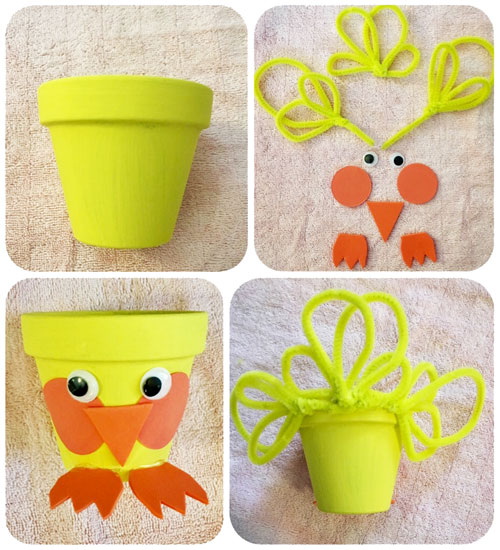
  • Paint the pot yellow.
  • Cut two circles out of orange paper for the chick’s cheeks.
  • Using the orange foam paper, cut a triangle for the nose and two chick feet.
  • Using the yellow pipe cleaners, create three sets of wings (I used two pipe cleaners for each set). Shape them into ovals and twist together at the ends to secure.
  • Glue on cheeks, googly eyes, nose, and feet to the front of the pot. Glue the wings to the back of the pot (hot glue works best to keep these secure).
  • With the black marker, add any finishing touches to the chick (eye lashes, outlines, etc.).

Craft-Easter-Bunny-Pot-Toled-Supplies
Bunny Instructions:

  • Paint the pot white.
  • Using the white foam paper, cut two large bunny ears and two bunny feet.
  • Using the pink paper, cut two smaller bunny ears, a triangle nose, and two circles for the cheeks.
  • Glue on cheeks, googly eyes, nose, and feet to the pot.
  • Glue pink bunny ears on top of the white ears and secure to the front, inside of the pot.
    With the black marker, add any finishing touches to the bunny (whiskers, mouth, etc.).

Candy Free Easter Treats

Chocolate bunnies, jelly beans, and more sugary treats, Easter’s here!

Before you load your kids baskets with candy, consider some of these alternatives that won’t give your young ones a sugar high. Bonus – once all the chocolate is gone, these toys will still be around to play with!

hurrican-water-balls-easter

Hurricane Reusable Water Balls
This summer, make tying water balloon knots a thing of the past! Hurricane Reusable Water Balls are soft silicone rubber balls that self-seal and fill in seconds when submerged in water. Upon impact the water bursts out, soaking your target. They can withstand more than1000 throws. Ages 5+. $9.99. fatbraintoys.com
playfoam-Easter-Parenting-Toledo

Playfoam Sparkle 4-Pack A tactile toy that never dries out! Playfoam Sparkle provides hours of creative play. The playfoam can be squashed and squished, molded and shaped. The no-stick formula will not leave a residue behind. Ages 3-6. $4.99. educationalinsights.com

bunny-barn-easter-Toledo-Parent

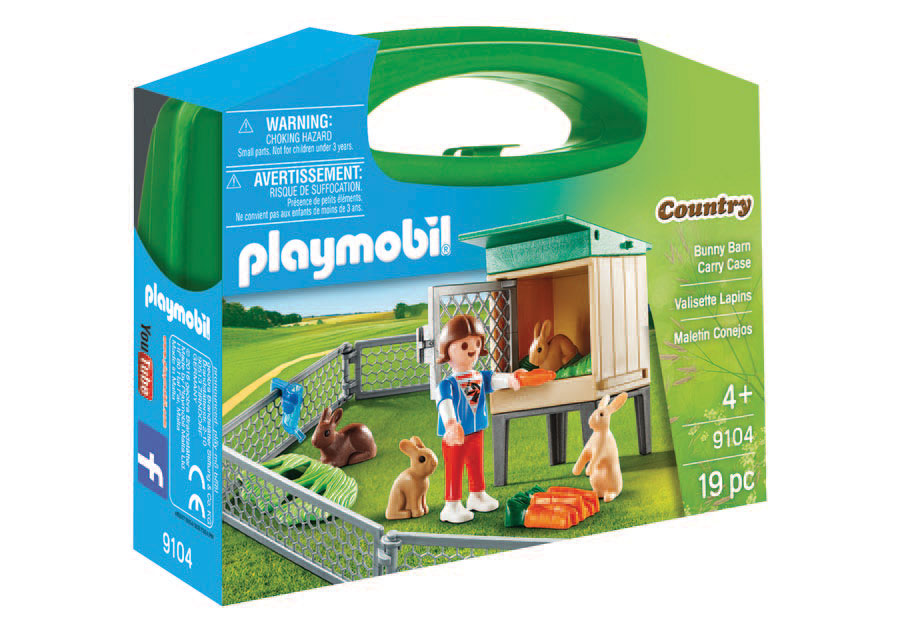
PLAYMOBIL Bunny Barn Carry Case – All your little one needs to set up a bunny farm including one figurine, four bunnies, a bunny hutch and other accessories such as a fence and bunny food. Set up your bunnies’ home and let your imagination free. $9.99. Learning Express

playgro-flower-puzzle-easter-toledo-parent

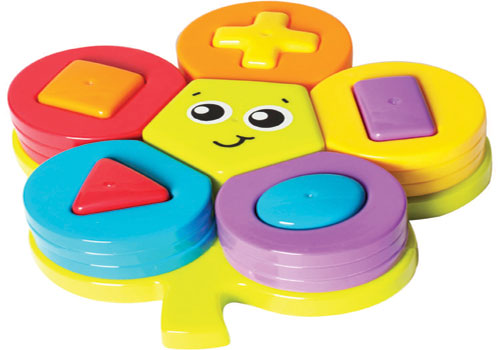
Playgro Shape Sorting Flower Puzzle – Perfect for spring, this colorful 22-piece puzzle encourages your child to learn various shapes, practice trial and error and develop special reasoning. The happy flower is the center of the puzzle with each petal being a different color with a different shape. Children learn to sort the shapes as they put the petals on the flower. For ages 12-36 months. $14.99. amazon.com

Translating your teens texts

Most parents know that LOL means Laughing Out Loud. You may even know that 420 refers to marijuana. But you may not know that 53X means sex. That worries Brian Bason, CEO at Bark, a new monitoring app. Their website includes a list of popular texting slang terms. For $9.99 a month, they promise to alert parents when kids text something risky.

Slang is nothing new. Parents have been scrambling to keep up with it for generations. Using freshly minted words that adults won’t understand appeals to kids for two reasons. First, it helps kids establish and reinforce a social identity. Slang establishes an “in” group, that understands, and an “out” group, that seems hopelessly out of touch. Second, slang allows kids to fly under adult radar, talking about things that might be forbidden if adults understood the actual meaning.

Messaging has added a new dimension to all of this. Acronyms and emojis make it possible to cram a lot of information into a small space. Messages have become more and more cryptic and harder for parents to decipher.

Much of the new slang being used is harmless and even creative. Some of the better acronyms enter the language. Pretty much everyone knows about FOMO (Fear of Missing Out), IRL (In Real Life) and BRB (Be Right Back).

Still, parents need to be alert because kids can get into trouble with texting.

Topics of Concern

Sex. Most teens seem to have gotten the message that sending nude photos isn’t a good idea. That doesn’t mean teens aren’t texting about 53X. Even emojis may have a double meaning – an eggplant can stand in for male genitals; a peach may refer to someone’s backside. It’s perfectly natural for young people to take an interest in sex, but parents need to watch for behavior that is too adult-like, and for partners who may be predatory.

Drugs and alcohol. Slang has always been part of drug and alcohol culture since using coded language is a way to evade legal authorities as well as parents. Keeping up with the current terminology isn’t easy, especially since it often varies from place to place. Talk to other parents and even school counselors who often know the latest lingo. And remember that drug terms sometimes have more than one meaning. Dabbing, for example, is both a dance craze and a way to use cannabis. Lit can mean getting high or simply having a good time.

Hate. Texting and social media are often used to bully and abuse other people because of their gender, race, ethnic origin or disabilities. Be clear with your child. A slur is a slur, and you won’t tolerate abusive language in any setting.

Bad Language. If you don’t want your child to say the F word, you will probably want to discourage the use of acronyms like WTF or AF.

The best way to know what an acronym means is to ask the child who used it. Another way to educate yourself is to visit databases that try to keep up with slang as it’s created.

Trying to keep up with adolescent slang is difficult. As soon as new term is widely understood by adults, it loses its value for kids. That’s why parents have to reinforce the idea that kids shouldn’t say anything online they would say in real life.

Learn The Language

  • McAfee, also produces a list of common terms, conveniently subdivided into categories for drugs, sex and bullying
    (securetomorrow.mcafee.com).
  • Wiktionary also has a long list of acronyms in an Appendix
    (wiktionary.org).
  • Slangit.com is a family friendly website (they also have free apps for Iphone and Android). When you enter a slang term, you get an accurate definition.
  • Noslang.com offers a text slang translator and a reverse translator that turns English phrases into acronyms.
  • Internetslang.com also allows parents to look up acronyms. Their Trending Terms section helps parents zero in on current terminology.
  • Acronymsandslang.com has an enormous list of acronyms, organized into categories. With over 20,000 entries in the Internet category, they are likely to supply an explanation for almost any acronym.
  • The Urban Dictionary also has a very complete list of slang of all kinds. The definitions are crowd-sourced so they are generally irreverent and often obscene. The site is not suitable for children, but may be useful to parents because it’s regularly updated by its users.

ProMedica’s Autism Center provides solutions for area families

The diagnosis of Autism Spectrum Disorder, or ASD, covers a range of behavioral, social and communication challenges. Now local parents with children on the spectrum can turn to the ProMedica Autism Center as a place to meet a variety of needs.

Community collaboration

The Center, located at ProMedica Toledo Children’s Hospital, was developed through the cooperation of “neighbors”, said Melissa Schlotterer, Autism Early Learning Program manager. It’s a “community collaboration” comprised of several area organizations, including the Autism Early Learning Program, Great Lakes Collaborative for Autism (GLCA), Harbor, iTaalk Autism Foundation, and Special Kids Therapy. These organizations offer a range of support and resources from providing diagnoses to therapy to scholarship support.
GLCA connects parents with local agencies and works to enhance services for autism care in the community; Harbor provides behavioral health services such as diagnosis, counseling and training; iTaalk helps provide families with assistive technology devices, such as tablets, that benefit children with autism; and Special Kids Therapy provides scholarship support to families to help cover costs not covered by insurance for therapy and medical equipment. The Center also has a multi-sensory play space for kids with special needs.

Setting up for success

ProMedica’s Autism Early Learning Program offers intensive applied behavioral analysis (ABA) intervention for children up to 6 years old. The program is similar to school, but with intervention and therapy included. Schlotterer said kids can begin the program once they’ve been diagnosed with autism. In the program, children learn life skills including communication, behavioral and social skills.

“We want to prepare them for a more successful future,” Schlotterer said.

A child’s therapy begins with a one-on-one behavioral therapist followed up in small groups of kids with similar skill levels. Using ABA intervention, the staff of behavioral therapists, special educators, speech and language pathologists and behavior analysts help the children by reinforcing appropriate behaviors while eliminating unwanted behaviors through positive reinforcement and repetition.

Schlotterer said there is a lot of play and fun involved. The center has age-appropriate toys, an outdoor play area, computers and iPads, and plenty of books. Younger children also learn potty training, she said.

A place for parents

Parental involvement is vital. The program has a monthly observation session where parents can watch a live video of their child and speak with a therapist who can teach them how to implement similar methods at home and to handle issues that arise.

Consistency is important for each child’s success so the program runs year-round, five days a week. Children can attend either a full-day or a half-day program. Schlotterer explained, there are only about two weeks off total during the year to help prevent regression of the child’s progress.

The center celebrated its fifth anniversary earlier this year and has seen immense growth from its first child participant in January 2012 to 27 kids enrolled this year.

Several activities are lined up for the month of April in honor of Autism Awareness Month.
Parents can contact the Autism Center at 419-291-7080.

According to the Centers for Disease Control, 1 in every 68 children has a form of Autism Spectrum Disorder. Parents seeing red flags should speak with their child’s pediatrician and have them properly screened for autism.

Common signs include:
• No eye contact
• No smiling or gesturing
by 6 months old
• No response to their
name by 10 months old
• Not imitating simple
words by 15 months
• Inability to follow
simple directions
• Prefers to play alone
• Doesn’t point or
respond to pointing
Source: ProMedica Autism Center