
Home Blog Page 182

Toledo’s Freedom School Cultivates Children’s Love for Books

Freedom School brings its scholars on three field trips for fun and educational purposes.
Freedom School Scholars take a field trip to the Toledo Mud Hens to enjoy some baseball.

Each summer, students in grades 5-12 have the opportunity to improve their reading skills through free enriching activities and reading classes at the Monroe Street Neighborhood Center’s Freedom School. 

Freedom school’s origins

The Children’s Defense Fund sponsors Freedom School programs throughout the country, and its history dates back to the struggle for Black citizens to secure justice and voting rights. 

The Mississippi Freedom Summer Project of 1964 was created to fill in the educational gaps in Mississippi’s public school curriculum for Black youth. 

During this program, college student volunteers guided students in subjects including mathematics, reading, writing, science and humanities. Students were also taught Black history and constitutional rights, areas of history that were left out of Mississippi’s public school curriculum. 

In 1995, the first two official CDF Freedom School sites were opened in Bennettsville, SC and Kansas City, MO.

Now, over 150,000 children have experienced CDF Freedom School in over 182 programs throughout the nation. 

According to data from 2021, 81 percent of CDF Freedom School scholars avoided summer reading loss and 87 percent of parents saw increased confidence in their scholars. 

The local history 

The Monroe Street Neighborhood Center’s Freedom School began in the summer of 2017. 

The idea to start a Freedom school was sparked by the late Gloria Layson, an advocate for children’s literacy. 

A team tried to start the Monroe Street Neighborhood Center’s Freedom School in 2017, but they failed to raise the $70,000 required to begin the program. 

With the help of Rev. Rae Lynn Schleif, retired assistant to the Maumee Watershed District superintendent, they were able to raise the required funds.

Layson, unfortunately, passed away before the opening of the Freedom school. Neighborhood Center Executive Director Clara Petty said she wished Layson was able to see her idea become a reality.

The Monroe Street Neighborhood Center’s Impact 

During this six week program, scholars start their day with an integrated reading curriculum and spend the afternoon participating in fun activities including field trips.  

This year, the field trips consisted of the University of Findlay’s Mazza Museum which is the world’s largest collection of original artwork by children’s book illustrators, a Toledo Mud Hens game and the Charles H. Wright Museum of African American History.

Through these field trips, students were able to elevate their education through hands-on experiences. Petty said the Mazza Museum was especially enriching for students. 

“As we share with children how important it is to read, it is also important to learn about how a book was developed, and that is what the Mazza Museum did for them. It was an excellent field trip for us,” Petty said. 

Since 2017, the program has grown significantly. There were 40 scholars enrolled in the first year of the program. This year, they had 53 scholars in addition to a waiting list. The waiting list was never let in because no one dropped out before the program started. 

“We have found that Freedom School is an opportunity for children to just pick up a book, not because you are told to read, but because you have developed a love for reading,” Petty said. 

Instructors lead scholars through six or seven books each summer and provide activities that help students comprehend what they are reading. 

Scholars are tested at the beginning of the program and at the end to see the impact the reading curriculum made on their education. 

Every morning Freedom School has a guest speaker. These speakers range in professions to show students what kinds of jobs are available in the community.  

Petty shared a story from a year when one of the guests read a book to the scholars, but did not finish it. This led to the scholar’s curiosity to grow and one of the students declared that they needed to finish the story and wanted the book. 

When Petty heard this, she told the project director to find out how many scholars wanted the book and she would pay for it. 

The project director posted this on her Facebook page, the author saw it and generously sent them the book and its sequel. 

This story perfectly illustrates the dedication of the Monroe Street Neighborhood Center’s Freedom School. To learn more about getting your children involved, visit the Monroe Street Neighborhood Center’s Freedom School website.

School Employees in Ohio Can Now Carry Guns

Polly-Taylor Gerken, board member for TPS. Polly has voiced her disapproval of HB 99.

In June, Gov. Mike DeWine signed a bill into law that allows school employees (faculty and staff) in Ohio to possess a handgun on school grounds. This comes on the heels of a resurgence of mass shootings across our country, most notably the Fourth of July shooting in Highland Park, Illinois, and the massacre at an elementary school in Uvalde, Texas, that’s been fueling the nationwide gun debate.

Breaking Down the Law
The legislation, known as House Bill 99 (HB 99), requires up to 24 hours of school-specific training prior to an employee becoming armed, up to eight hours of additional yearly training, and an annual criminal background check. All training will be provided by a member of the new Safety and Crisis Division Training Officers, who will focus on teaching faculty and staff how to safely de-escalate situations, promote crisis intervention, supply first aid, understand the psychology of critical incidents, and how to respond to specific scenarios. 

Upon successfully completing the training, individuals will need to submit an application to the Ohio Peace Officer Training Academy. However, the ultimate decision of whether or not faculty and staff can carry a firearm on school grounds ultimately comes down to the respective school district’s board. Those same board members are required to inform parents if school employees are permitted to carry and must also keep track of all employees are permitted to carry. That list will not be made public record. “Each school board will determine what is best for their staff, their students, and their communities,” said Gov. DeWine in a press conference.

Gov. DeWine wants to make it clear that the enactment of this law gives faculty and staff the option to carry a firearm. This bill does not make it mandatory. 

Gov. DeWine also outlined several other initiatives to improve school safety, including $100 million in funding for grade school security upgrades across the state and $5 million for upgrades at colleges.

What are Local Schools Doing?
Since Gov. DeWine signed the bill into law, he says he has seen several responses from various schools in the state. Some have decided to adopt the legislation while others have not. There are also schools that have not made a decision. In our area, below are some schools that have made a decision.

    • Sylvania Schools
      There is already a policy in place that prohibits weapons for staff members. Per the policy, those who are in exception are authorized State or Federal agents who are acting within the scope of their duties and or personnel employed by the Board who are qualified under state law to carry a weapon in school while on active duty. “Sylvania Schools remains committed to our longstanding board policy which prohibits staff members from being armed on school grounds,” says Dr. Veronica Motley, superintendent for Sylvania Schools.
    • Anthony Wayne Schools
      Per a June letter that was sent to all parents across the district, there are currently no plans to adopt the legislation. The letter reads, in part, “… As issues or concerns arise, the district will continue to take a collective and collaborative approach to responding appropriately to ensure the safety of all students.”
  • Toledo Public Schools
    According to a resolution that was passed by Toledo Public Schools (TPS) board members in June, the board “does not authorize school employees to carry firearms within the school district”. The only individuals who are authorized to carry a firearm within TPS are Toledo Police Department Officers, certain TPS officers, and other law enforcement personnel.

    “It’s simply ridiculous,” says Polly Taylor-Gerken, board member for TPS when asked about her reaction to the passing of HB 99, adding that they are doing a good job in maintaining a safe and secure learning environment for the students. 
  • Perrysburg Local Schools
    During a Board of Education meeting in June, Robin Laird, a Perrysburg citizen took the podium to voice her concern for the new legislation. “The fraternal order of police absolutely opposes this,” she says. I know the Perrysburg Board will do the right thing and the Perrysburg educators need to make this known publicly.” 

    According to school policy that the school district adopted several years ago, staff members are prohibited from possessing, storing, making, or using a weapon on school grounds. This policy remains in effect. Much like Toledo Public Schools, the only individuals who are authorized to carry a firearm are State or Federal agents authorized to carry deadly weapons who are acting within the scope of their duties.

    The policy continues to state that weapons carried by security personnel or other designated staff employed by the Board of Education who are qualified under State law to carry a weapon in a school safety zone while on active duty, are permitted.
  • Washington Local Schools
    According to school policy, no person shall knowingly possess, have under the person’s control, convey, or attempt to convey a deadly weapon or dangerous ordnance into a school safety zone.

    “It’s very upsetting to me,” said Karen Mayfield, board member for Washington Local Schools, during a board of education meeting in June. “I do not believe this is a role that I could support and place on the shoulders of our staff,” she adds.
  • Ottawa Hills Local Schools
    “We [Ottawa Hills Schools] will not be adopting this legislation at this time,” said Dr. Adam Fineske, superintendent, Ottawa Hills Local Schools.  Per school policy, The Board of Education prohibits staff members from possessing any type of weapon in a school safety zone.

    Pictured: Dr. Adam Fineske, superintendent for Ottawa Hills Local Schools.

Diverse Political Opinions
The bill has seen support from republicans and opposition from democrats. Ohio State Sen. Teresa Fedor (D), a Toledo democrat, is one who was quick to voice her frustration to the lawmakers, blatantly telling them, “everyone in this room will have blood on your hands” if there is another active shooter situation.

On the other hand, republicans are citing the 2019 call to action by the public, asking politicians to “do something” to stop these mass shootings, and they feel this legislation does just that. “The thing that has to be done is stop the shooter,” said Republican Senator Terry Johnson. “When people are bleeding, you have to stop the bleeding,” he adds.

The bill was passed by the Senate in a 23-9 vote and passed the House on a 56-34 vote. 

HB 99 is the second gun-related legislation passed in Gov. DeWine’s administration. Earlier this year, lawmakers passed Senate Bill 215 that removed the requirement of Ohio citizens to obtain a concealed-carry permit to carry a hidden gun.

Funding for safety measures
In addition to HB99, it’s also important to note that Gov. DeWine’s Ohio K-12 School Safety Grant Program provided $47 million in grant funds for security upgrades to 1,183 Ohio schools. Toledo area schools that will receive funding include the following:

  • Achieve Career Preparatory Academy
  • Anthony Wayne High School
  • Anthony Wayne Junior High School
  • Fallen Timbers Middle School
  • Bowling Green High School
  • Crim Elementary School
  • Lake Elementary School
  • Lake High School
  • Lake Middle School
  • Ohio Virtual Academy
  • Rossford Elementary
  • Rossford High School
  • Crissey Elementary
  • Dorr Street Elementary
  • Holland Elementary
  • Springfield High School
  • Springfield Middle School
  • Toledo School for the Arts
  • Greenwood Elementary
  • Hiawatha Elementary
  • Jefferson Junior High School
  • McGregor Elementary
  • Meadowvale Elementary
  • Monac Elementary
  • Washington Junior High School
  • Whitmer High School

How to Communicate with Your Child’s Teacher

Do you feel intimidated when you think of talking with your child’s teacher? If your child complains about problems with his or her teacher, what do you do then? 
I’m a parent and a teacher, so I’ve been on both sides of the teacher’s desk. I’ve also felt the challenges teachers and parents feel while navigating remote learning. Here are some tips to help you communicate and connect with your child’s teacher even during the most difficult of times.

Get to know the teacher

Try to introduce yourself and talk to the teacher face-to-face or on a virtual call. If this is not possible, it’s never too late to send an email introducing yourself while offering your support to the teacher. That way, if a challenge does present itself during the school year, a teacher’s first encounter with you isn’t a call about behavioral challenges or academic struggles.

Be involved

One of the best ways to get to know your child’s teacher is to be involved in what is going on in the classroom and at the school. One way you can do this is to volunteer. Ask if you can read to your child’s class. If volunteers are limited at your child’s school, you can organize signups for supplies and send in prepackaged craft items and snacks for class parties or events. If your career is related to something your child’s class may be studying, offer to answer questions face-to-face or virtually. Many employers build in time for employees to volunteer in schools freeing them from taking vacation or personal time off from work.

Ask if you can cut out the items the teacher has laminated, or purchase supplies for a lesson. Come to after-school events, school productions and parent-teacher conferences so that you are visible and can touch base with your child’s teacher.The key is to be tuned in to what is going on so that you will be, and remain, in the know.

Keep communications open and positive

Typically, teachers welcome questions and comments about your concerns and are proactive. As a teacher, I would much rather know about a problem early so that I can consider how to deal with it and then to make a plan so that the issue is dealt with in the best way for all concerned parties. Your child’s teacher should be open to your suggestions, but don’t be too intimidated to ask.

Keep up with written teacher notes, permission slips, report cards and any other written communications the teacher sends home. Sending a quick response to the teacher’s requests makes the teacher’s job easier.

Remember to keep communications positive. If you have concerns or think the teacher has dealt unfairly with your child, don’t jot down a negative note or email and send it first thing in the morning. For those more sensitive conversations, call and set up a time to meet after school.

Of course, sending an encouraging note brightens a teacher’s day, so those are always a good idea!

Try to understand both sides

Teachers have a lot of different factors to manage in their classrooms, and with twenty-five or more students to supervise, sometimes they make mistakes or don’t see every problem. Your child may think something happened in class that wasn’t fair, and it’s easy for parents to react emotionally and immediately blame the teacher. It is important to support the teacher as much as possible while you gather information about what happened. Try to help your child see the teacher’s point of view, and talk about how people can have differences and still work together to succeed.

Advocate for your child

Don’t be afraid to speak up if a problem in your child’s class becomes pervasive. If your child’s grades start to slip, or you see that he or she is continually unhappy or you suspect your child is being bullied by a classmate, work with the teacher to devise a plan to help.

Make a drastic change only as a last resort

Sometimes children have personality conflicts with their teachers. That situation actually offers an opportunity for growth if teachers and students can work together in a respectful and productive manner. After all, this is what children will need to do when they grow up. But if problems persist, it may be time to request a change to another class. Discussing your options with a school counselor or administrator may help you navigate a tough year.

Understand that teachers are human

Most of the teachers I know are caring individuals who want to make a difference in the lives of the children they teach. Often, they are parents too, and although it is hard to imagine, at one time they were students who lived through awkward growth spurts, problems with peers, lost homework and braces. They understand what parents and kids are going through, and they strive to build a positive connection between school and home.

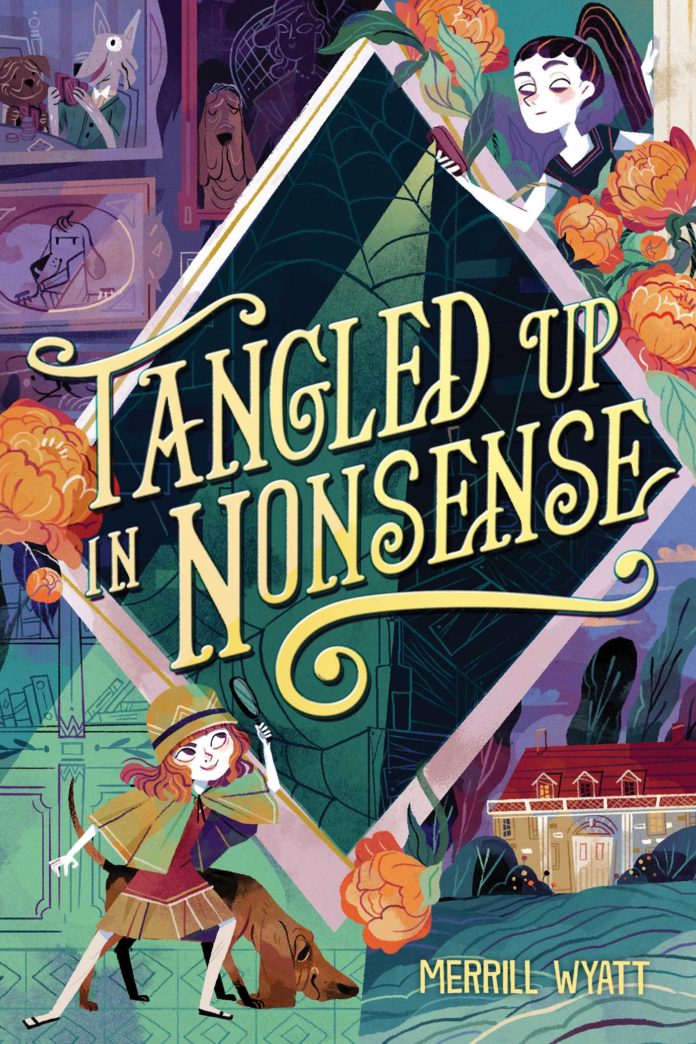
Toledo Author Merill Wyatt Releases Tangled Up In Nonsense this Fall

Wauseon author Merrill Wyatt has an eye for adventure. It is not surprising, then, that she loves a good mystery.  “Growing up in a small town, I always wanted to have exciting adventures. You see them on television, you watch them in the movies and you say ‘Ooh, I want that to happen to me, too!’ Spoiler alert: it never did. But it was still a fun place to grow up,” she said. 

Wyatt’s third book, “Tangled up in Nonsense,” will be released in November by Simon and Schuster. A sequel to her earlier book “Tangled Up in Luck,” it follows the adventures of unlikely friends and amatuer sleuths Sloane and Amelia as they travel to the banks of the Maumee River in Toledo to solve the mystery of a Prohibition-era bootlegger’s missing millions. Wyatt, who is a self-professed history buff and lover of old houses and architecture, likes to find ways to incorporate these elements in her stories. 

“I always wanted to be an author because I loved reading books when I was a kid, and one of my absolute favorites was the Nancy Drew series. It wasn’t until I was an adult that I found out that the primary ghostwriter for the Nancy Drew books lived in Toledo [Millie Benson]. As a kid, I probably would have stalked her had I known,” she said with a laugh.

Middle School Mysteries 

Wyatt has written three mysteries geared toward the middle school reader, an age that she knows well after working as a technologies instructor at Springfield Middle School for eighteen years. 

“I ended up really loving that age group a lot,” she said. “I just like how creative and fun the kids still are at that age. They are smart and insightful, and yet they also hang onto that childlike sense of wonder, which is a big part of why I aimed [my writing] at that group.”

A Writer’s Process 

Wyatt said her writing inspiration can come from unlikely places, and may develop over time. 

“Ideas churn around in my head for periods of time anywhere from weeks to years,” she said. “I might take bits and pieces of something I thought about years before. I do think through the ideas for a couple of weeks, or honestly, a couple of months. When I sit down to write, it typically takes me three months to write the first draft, and another month to two months to revise it.”

After finishing her first novel, Wyatt approached numerous agents to represent her, which proved to be a lesson in perseverance.   “With ‘Ernestine, Catastrophe Queen,’ I easily went through 60 or 70 agents, and they were all ‘no’s’ other than my one agent who said ‘yes.’ And she sent it to 20 to 25 editors, who were all ‘no’s’ except for my one editor.” 

What advice does Wyatt have for would-be authors? “Don’t give up! Do something that is hard every single day because it is good practice. It takes a lot to get a book published in this industry, and it never gets easy.” 

Find “Tangled up in Nonsense” on Amazon or locally at Gathering Volumes.

Q and A with Merrill 

Your life in six words or less: Hectic but fun all the time! (She spends her days with her husband, her teenage daughter, three cats and a guinea pig.) 

The ideal way to spend a day: Going on little adventures that involve good food and seeing something new. (Next stop: Frank Lloyd Wright house in Springfield, OH.) 

Describe Toledo in one sentence: It’s rustic and low-key artsy. (“There’s a lot of mystery here,” she added. “You see these old buildings and think ‘What happened?’”)

Favorite place for a coffee and a good book: Brewhouse Coffee and Bake Shop in Maumee. 

What’s your favorite genre to read? Hands down, mystery!