
Home Blog Page 183

Finding a Good Tutor for Your Child – Regardless of Your Budget

If your child has a learning disability, poor or declining grades, poor time management skills or difficulty understanding homework, tutors are an effective way to get kids back on track and keep them there. But how do you find a good, reliable tutor who you can trust? And what if hiring a tutor isn’t in your budget? There are many options.

Finding a tutor

Your child’s teacher and the school administrator are an excellent place to start. They may be able to recommend a tutor in your community or online resources to help your child. Also, chances are one of your child’s friends has a tutor, so ask other parents for a recommendation.

Another option is to search online for tutors in your area. You’ll likely find a couple of local tutoring companies. These companies often offer on-site tutoring, while some may offer in-home tutoring as well.

There are also many websites developed for helping parents find tutors. Takelessons.com has a searchable database of tutors. Just enter your zip code and the school subject and you will see a list of tutors in your area. This site also shows tutors’ ratings and their fees per session.

Another source is Care.com, connects people with various service professionals, including tutors. Experience in tutoring varies widely, however. Make sure to check the reviews for potential tutors for your child and ask for references.

Online tutoring is another popular choice, though it isn’t right for every child. This is where diligent research becomes vital, as the reviews of many online tutoring companies are fair to mediocre, at best. The cost of online tutoring isn’t always consistent with quality.

Free tutoring

If tutoring isn’t in your budget, there are several options to consider. First, check with your child’s school for need-based assistance. Although the No Child Left Behind Act is now defunct, some schools still offer one-on-one tutoring programs for eligible students. Many schools also offer after-school group tutoring. Kids can stay after school to work on their homework with a teacher to assist, while some teachers are happy to do after-school tutoring for their students.

If tutoring isn’t available at your kid’s school, ask trusted family members, neighbors, and friends if they can help. You might discover someone you know is quite enthusiastic to help your struggling child.

Another option is to contact your local high school and community college. Students majoring in particular subjects or those who are looking at a career in teaching are often required to do a certain number of hours of tutoring. For that reason, these students often offer to provide tutoring for free.

If you are looking for a remote learning opportunity that is also free, the popular Khan Academy website offers online video tutorials for students of all levels. Visit .khanacademy.org to learn more.

What to look for in a tutor

There are several factors to consider when looking for a tutor. These include:

  • Is the tutor qualified? Your best bet is to look for someone with a teaching degree since tutoring requires skills that not everyone possesses. For younger students, if the tutor has a teaching degree, specialization in a particular subject isn’t necessary. From high school and beyond, look for a tutor with expertise in the subject your child needs help with.
  • Does the tutor’s personality work for you and your child? First, a tutor should be patient, empathetic, positive, passionate, creative and fun. These characteristics help ensure your child can learn from the tutor and will walk away with self-confidence. It’s also essential that the tutor and your child have the ability to connect with each other.
  • Is the tutor flexible? Each child has a learning style that is best for them. It might be visual, aural, physical, verbal, logical or a combination of those. Some kids are solitary learners, others are social learners and enjoy learning in groups. Look for a setting and tutor that fits your kid’s style.
  • Does the tutor have excellent references? Online tutoring services often have reviews from previous clients. Look for those with overall high ratings and positive comments. But beware of reviews directly on the tutoring company’s website, since these can often be manipulated. If you find your tutor offline or find very few reviews, ask for several references. Still, the references a tutor provides might not be an entirely accurate depiction of their character and experience, so use due diligence for your child’s safety to ensure your child receives quality service.

Toledo Tutoring Programs to Check Out

Sylvan Learning of Toledo
1566 Spring Meadows Dr., Holland
Has multiple Toledo area locations
419-491-3140
sylvanlearning.com

Stars Test Prep and Tutoring
5151 Monroe St., #100
419-870-8384
starsprep.net

A Village Learning Center
5327 308th St.
419-480-9825
Avillagetoledo.com

Kumon Math & Reading Center
Has multiple Toledo area locations
Kumon.com

MathDork
Private tutor based in Toledo
Mathdork.com

Huntington Learning Center
6638 Centers Dr., Holland
419-867-4000
huntingtonhelps.com
Toledo Area Pediatrician on Toddlers and Screen Time: What you Need to Know

From birth to age three, a toddler’s brain grows at a phenomenal rate. Those developing brains make 1 million neural connections per minute. Because their brains are still developing, babies and toddlers don’t process media in the same way as older children and adults. 

Sarah Magoun M.D., a pediatrician with Maumee Pediatric Associates emphasizes that “if a toddler is engaged in screen time, they’re not engaged in other things that are important for learning and development. Toddlers, especially, learn by hands-on play and social interaction with the people around them, and they don’t learn those skills if they are engaged with a screen.” 

American Academy of Pediatrics Recommendations

0 to 18 months
Avoid use of screen media other than video-chatting. 

18 to 24 months
Parents may introduce high-quality programming and watch it with their children to help them understand what they’re seeing.

2 to 5 years
Limit screen use to one hour maximum per day of high-quality programs. Parents should co-view media with children to help them understand what they are seeing and apply it to the world around them.

Risks of Too Much Screen Time

Obesity
When young children are sitting and watching, they are not engaged in active play and are more likely to snack on unhealthy foods.  

Lack of Sleep
Dr. Magoun explains that screen time “can interfere with sleep, especially screen time too near bedtime, or if a screen is in the bedroom. We do not recommend any screens in the bedroom or using television to help kids of any age to fall asleep.”

Antisocial Behavior
Violent content, including animated or cartoon-related violence, can lead to aggressive behavior.   

Language Delay
Screen time inhibits infants and toddlers’ ability to read faces and learn social cues, which are critical for learning language skills. Even educational programming can hinder learning when it replaces face-to-face communication, reading aloud, and unstructured play.  

Infant and Toddler Screen Use is High

The Pew Research Center has found that: 

  • Four months old is the average age that children begin daily media viewing.
  • 74 percent of children ages 0-2 watch television daily.
  • 50 percent of children ages 0-2 watch YouTube or similar media.

As a parent herself, Dr. Magoun understands: “The screen is a way to get other things done, to have a child be quiet and calm and engaged… but it’s not worth the benefits the parents get from having that extra downtime because, ultimately, the child will suffer for it.” 

Screen Time Tips for Toddlers

  • Video chatting with parent/caregiver involvement is okay for young children.
  • Print books are better for young minds than educational apps and electronic books. 
  • Monitor screen time content as well as the time spent on screens. Choose high quality educational shows such as those found on Sesame Workshop or PBS. 
  • Avoid any violent content or content geared to adults or older children.
  • Avoid short, user-generated videos such as those that are found on YouTube or TikTok as they don’t allow for a child’s slower processing time. 
  • Turn the television off when young children are around. Even when children are not directly watching, television negatively impacts language and other development.  

Dr. Magoun wants parents “to think about both quality and quantity of time, that it’s important for parents to engage with their young children… early childhood play, social interactions, learning to take turns and real-world experience.”


AAP Recommends Breastfeeding Until Age 2: Toledo Expert Weighs In

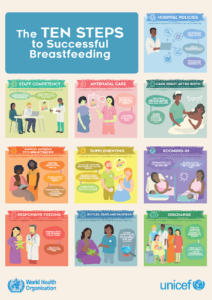
There are many online resources for moms who are struggling to find success with breastfeeding, like this one, courtesy of the WHO website, 2022.

The American Academy of Pediatrics (AAP), the World Health Organization (WHO), and other health organizations and agencies recently extended the recommended duration for breastfeeding infants from “at least one year” to “at least two years.

The WHO actively promotes breastfeeding on a global scale, and “is working to increase the rate of exclusive breastfeeding for the first six months up to at least 50 percent by 2025.” However, the Center for Disease Control reports that in Ohio only five percent of infants were exclusively breastfed until six months, according to a report from 2018.

The “AAP supports continued breastfeeding, along with appropriate complementary foods introduced at about six months, as long as mutually desired by mother and child for two years or beyond,” per a policy statement released on June 27.

Why the change?

Several factors contributed to the updated breastfeeding recommendations, including the national shortage of infant formula, explored in Toledo Parent’s “Fed is Best” story posted on May 31. New research indicates that extending breastfeeding to two years and beyond has significant health benefits for both mother and child.

“Human milk has a unique composition, with antimicrobial, anti-inflammatory, and immunoregulatory agents and living cells, all of which contribute to the developing immune system of the child,” states the APA technical report of June 27, 2022. All of those factors contribute to a stronger immune system for exclusively breastfed infants with healthy gut bacteria passed through the mother while nursing. 

According to an APA policy statement, breastfed infants have a reduced chance of: 

  • otitis media (ear infection)
  • acute diarrheal disease
  • lower respiratory illnesses
  • sudden infant death syndrome (SIDS)
  • inflammatory bowel disease
  • childhood leukemia
  • diabetes mellitus
  • obesity
  • asthma
  • atopic dermatitis 

As for the mother, health benefits include: 

  • decreasing type 2 diabetes mellitus
  • decreased chance of hypertension
  • decreased chance of breast cancer
  • lower ovarian cancer rates
  • increased metabolism
  • faster weight loss 

Mother-child bonding is another beneficial key factor to consider regarding breastfeeding. The Surgeon General’s Call to Action to Support Breastfeeding states “the psychological benefit of breastfeeding, including bonding more closely with babies, is an important influence on the decision to breastfeed.” Snuggling your infant skin-to-skin produces oxytocin, the feel-good chemical, which also plays an important role in breastfeeding — triggering milk let-down. It has also been suggested that breastfeeding may decrease the chance of developing postpartum depression.

Successful breastfeeding is still a challenge, even with very young children under six months old, despite the new recommendations.  “The Problem with the AAP’s New Breastfeeding Guidelines” (Buzzfeed) discusses the pitfalls of the new recommendation. A lack of support from partners and the lack of adequate parental leave policies across the US, along with other workplace issues contribute to early weaning.

FYI, a bathroom is not a suitable setting for pumping or breastfeeding!

Many factors in the US contribute to the negative perspective about breastfeeding, especially in public. Nursing mothers “often report feeling ridiculed or alienated for their choice and conceal their breastfeeding to minimize unsolicited judgment and comments,” the APA reports. 

Dr. Joan Meek, the lead researcher for the updated APA policy statement, shared the following in a  New York Times interview: “Studies show that some women are reluctant to share their continued breastfeeding with even their health care providers because they do not feel supported in continuing to breastfeed beyond a year.” 

Socioeconomic factors and systemic racism also contribute to low breastfeeding rates: “None of the Healthy People 2020 objectives for breastfeeding were met for Black mothers and infants among the 2018 birth cohort,” the report states, imploring that “implicit bias, structural bias and structural racism should be addressed to eliminate disparities in breastfeeding and improve the health and well-being of all children and families.”

The updated report heralds the call for social changes that will benefit not just nursing mothers, but all families in the United States. 

Local Resources and support

Although choosing to breastfeed may seem overwhelming, don’t be anxious — there are resources and support available locally.

Gloria Shortridge, R.N., IBCLC, at the WIC Breastfeeding Program in downtown Toledo is a tremendous resource for those interested in learning more about breastfeeding.

The Ohio Department of Health has a fantastic downloadable breastfeeding guide at odh.ohio.gov. If you are pregnant and considering nursing your child, or are struggling in the early stages of nursing, this guide is an excellent resource with a ton of valuable information.

Other resources include the National Breastfeeding Helpline, the Women’s Health website, the Center for Disease Control, Promedica’s Lactation Support, Mercy’s Lactation Support, and even a local breast milk bank, as reported in Toledo Parent’s “Donating Breast Milk, Saving Lives” piece on May 6.

Breastfeeding, for six months, two years, or even longer, is now considered preferable although it is certainly not always possible. The APA concludes their updated policy statement:

“Exclusive or any breastfeeding is not always possible, despite the best of intentions, and these mothers and families need special support to overcome the disappointment that may accompany breastfeeding difficulties.”

Toledo Area Midwives and Doulas Create Unique Birth Experiences

There are many things to consider during pregnancy besides the baby shower and gift registry. While pregnancy can be an exciting time, it is also when important decisions about the overall health of the mother, baby and family are made. 

Midwives and doulas are certified individuals who can help develop the birth plan, as well as provide support during birth and education throughout pregnancy. Both services bring unique areas of expertise, and each service provider has their own touch. These services are able to help decrease the needs for extra medical intervention and increase chances of natural births without complications. Many offer reduced rates for women considering adoption. 

Midwives are certified medical professionals who are able to deliver the baby and provide nutrition and health counseling throughout the pregnancy. Midwives can perform fetal monitoring and are able to recognize high risk situations where care is needed from medical doctors. 

Doulas are able to provide physical and emotional support to women throughout pregnancy and the birthing process. Many offer postpartum and bereavement services as well. Physical support may include relaxation techniques, massage therapy, birth positions and lactation consulting.


Midwives

Jennifer Moyer-Certified Professional Midwife

As the owner of Northwest Ohio Birth Services, Jennifer is helping families be more autonomous in their birth experiences. She works with a team of birth doulas who are also able to assist. She provides services in-hospital, at the birthing center or the mother’s home. Military support provided. Virtual and remote options available. Services are based out of Findlay within a 65-mile radius. 


Shelly Varelli, CCT, RCS, LMT, Childbirth Educator, Primary Midwife under Supervision

Holistic Therapy & Birth Services with Shelly Varelli has been supporting women, families, a

nd birthing people in NWO and SEM for almost twenty years. Shelly is committed to restoring birth to its honored, sacred place in our culture. Now offering homebirth midwifery services, with expectations to pass the national exam for the certified professional midwife credential (CPM) in the summer of 2022. 


Doulas

The Doula Xperience

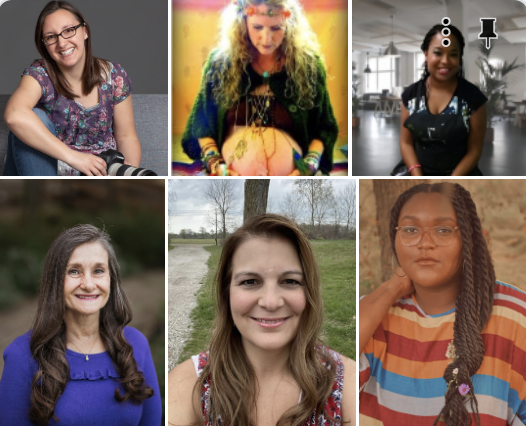
The Doula Xperience has a team of five certified full-spectrum doulas who are able to provide birth, postpartum and bereavement services. Serving you wherever you call home, they are prepared to provide non-judgmental emotional support and physical support during the birthing process with coaching and techniques. They are also there to provide education about maternal health throughout the pregnancy. Follow them on Facebook to learn more about what they offer.


Tiana Taylor, CD

Tiana is a certified perinatal educator and birth and postpartum doula. In addition to being a certified doula, Tiana is also a licensed massage therapist, specializing in Prenatal and Fertility and Womb massage. Tiana places an emphasis on non-judgemental support. Postpartum services focus on assisting the whole family to adjust to life with a newborn. She is also a certified lactation educator, serving women and families in the Toledo area. Follow her on Facebook to read more about her work with expectant mothers.


Doulas Christine Scarlett, RN, BSN, PCD (DONA), CPD, CBD, CLC, CEIM

Christina provides doula services for both home and hospital births. She offers postpartum services and is a Certified Birth Doula to walk with families through pregnancy and infant loss. She also offers infant massage and is a certified lactation counselor. She serves the Toledo area with a service range of 50 miles, and she provides remote services as well. Contact her at 419-893-4318 for more information.


Kate Hayfield, CD (DONA), CLCC

Having experienced both birth experiences herself, Kate offers doula services at home or in the hospital. She is also able to assist as a certified lactation consultant to help women feel confident and supported through their breastfeeding journey. Kate specializes in  LGBTQIA+ support, offers Mother Blessing Celebrations and abortion support. Services are offered in  Findlay and surrounding areas.  


Jeanette Albright, Bradley ® Certified Childbirth Educator and Doula

Jeanette is a certified Bradley Method Instructor, educating couples regarding natural birth processes. Classes last 12 weeks and provide education on healthy eating, exercise, relaxation techniques, communication between partners and best ways to research and make optimal decisions for pregnancy and birth. She also works outside of the classroom as a certified birth doula serving Lasalle, MI and Toledo. Follow her on Facebook for the latest news on her services.


Ellie Risher-Certified Doula

Based out of Monroe, MI with a service area of 50 miles, Ellie has eight years of doula experience. She is available for birth center, home or hospital births. Ellie’s doula services also include aroma therapy, childbirth education and sibling support for older siblings. She is a member of the Michigan Prison Doula Initiative. Remote and virtual services are available. 


Ashley Short-Certified Doula and Photographer

Located in Archbold but serving all of Northwest Ohio, Ashley is a birth doula and also offers services of birth and family photography. These services are offered separately but can be combined. She also provides private childbirth education and customizes birth and photography services for each family. 


Nadia Hoppe – IBCLC

Nadia is not only a doula, but also a lactation consultant and a yoga teacher! Offering both birth doula support and postpartum doula support, Nadia offers services catered to individual needs. Along with postpartum services, she offers the traditional lactation consulting. The in-home lactation assessment allows her to individualize each plan to fit any mother’s needs and the baby’s needs. Nadia also does virtual or phone consultations. 

The most unique aspect of Nadia’s services is her focus on yoga. After her experiences with motherhood, she found that yoga brings intention and movement to her life. She offers a variety of classes and workshops. Nadia serves the Toledo and Cleveland areas.

New Family Friendly Toledo Businesses: September/October 2022

Performing arts at the Toledo Met
Toledo Met offers ballet classes with beginner to advanced levels, along with voice, acting and musical theater dance lessons. Their main focus is to instill a love of the performing arts in children. Make sure to mark your calendars for their December 4, 2022 rendition of “The Nutcracker,” which is sure to be a success given their accomplished instructors. Learn more about the Toledo Met’s programs at toledomet.com. Toledo Met, 5441 Main St., Sylvania. 419-913-8476. —EH

New CEO of GENYOUth
Perrysburg dietician Ann Marie Krautheim became CEO of the national nonprofit GENYOUth on July 1, a major accomplishment and opportunity to expand her community work. GENYOUth is known for its focus on youth nutrition, helping kids stay physically active, and making sure that students have healthy meal options at school. Krautheim was serving as president and chief wellness officer before this promotion. A tireless advocate in the fight against food insecurity, she is the ideal leader for the organization. Read more about Krautheim’s mission at toledoparent.com. —EH

Tutti Fruity food truck

For healthy treat options on the go, visit Tutti Fruity, a new food truck offering smoothies, smoothie bowls, freeze pops and “over the top toast” covered with berries and cream, pesto, nutty crunch and more. Find the schedule at facebook.com/tuttifruitytruck.  —JM

Date night for sushi lovers
The mind behind Kengo Sushi & Yakitori and Kato Ramen will be opening a new restaurant in the area, this one located in the Hollywood Casino. Shobu by Kengo will feature high quality sushi, including classics from Chef Kengo Kato’s other restaurants as well as new items. Shobu by Kengo is scheduled to open before the end of the year.  —JM

What’s Happening in Toledo: September/October Family News

Birth and labor services end at St. Luke’s
McLaren St. Luke’s Hospital in Maumee, has served expectant mothers for the past 25 years. The services will end in September as the hospital announced at the end of May that it will be closing the Holland and Perrysburg obstetrics physician offices, and labor and delivery will no longer be available at the hospital after September 30. Jennifer Montgomery, McLaren St. Luke’s President and CEO, made the following statement: “We made every effort to avoid eliminating the program, but the loss of a large managed care health plan and other economic conditions have significantly reduced the number of patients who choose McLaren St. Luke’s for birthing services.” —ER

Local 7th-grader writes his first book
“My Story of America” by Tanzeel Ahmad begins in Pakistan, where he emigrated from a few years ago. Tanzeel’s story details how his family’s religious beliefs and Muslim community were not accepted in his home country, and how those practicing the religion in Pakistan were often persecuted. With the help of his teachers at Washington Local Schools, he not only learned English but wrote this amazing story about how he and his family started a new life here in Toledo. Read the full story at toledoparent.com. —ER

Financial literacy class now required for Ohio students
Governor Mike Dewine signed Senate Bill 1 into law on October 28, 2021 after a unanimous vote in the Ohio Senate to support the mandate. This new law will require all Ohio students to complete 60 hours, or “one-half unit” — as described by Ohio’s Department of Education — of course instruction in financial literacy as part of high school graduation requirements. Although this bill was signed into law in 2021, it will not go into effect until the 2024-2025 school year. Each school will be required to have an educator with a license in financial literacy. Considering this timeline, only students who enter ninth grade for the first time on or after July 1, 2022 will be required to complete the financial literacy course before graduation. —AV