Home Blog Page 674

Charm and character included

LaRoe’s Restaurant
24138 Front St.
Grand Rapids, OH 43522
419-832-3082
Mon-Thur: 11a.m-9p.m.
Fri-Sat: 11a.m.-10p.m.
Sun: 10a.m.-8p.m.

Leisurely weekend mornings are few and far between anymore, but when we’re not rushing to sporting events and other activities, my family enjoys going out for breakfast/brunch. We especially enjoy dining at local eateries with lots of character as often as we can.

A charming little town

Grand Rapids, Ohio is a quaint little town that sits on the Maumee River just a short drive away from the hustle of the big city. A couple summers ago we enjoyed a relaxing meal at LaRoe’s Restaurant in Grand Rapids while seated on their deck overlooking the canal and Maumee River. When a friend recently reminded me LaRoe’s offers a Sunday brunch buffet as well, we headed back the first chance we had.

If you haven’t been in for awhile, you will notice there is no longer the heavy Victorian look the restaurant had for years. Updates include a new color scheme with fabulous new murals done by local artist Becky Shepard of Shepard Design. “It’s always great to find local entrepreneurs to work with,” said owner Dave LaRoe.

Much of his added décor also comes from local businesses just steps from his restaurant. The terracotta, tan and black color scheme work beautifully against the interior brick walls throughout. The restaurant definitely has a unique feel all of its own.

On a recent Sunday we were greeted by the hostess on Saturdays and Sundays, Mr. LaRoe’s mother. Everyone was friendly and we were soon feeling right at home.
The obvious advantage to buffets is that you don’t need to commit to just one entrée and the kids are sure to find at least a few things they like. However, I sometimes shy away from the grandiose buffets because they can be pricey. A person can only eat so much in one sitting.

A bevy of options

LaRoe’s Sunday buffet was just right. For $7.45 plus drink, it was definitely a good bang for the buck. If you arrive after 11am, the lunch menu is also available, as is the regular kids’ menu. The buffet pricing for children is offered on a sliding scale. My 12-year-old was full price, my 9-year-old was $5.25, and my 5-year-old was only $3.25. 

The buffet included scrambled eggs, ham, sausage, bacon, cinnamon French toast, pancakes, fresh fruit salad, toast and LaRoe's signature mini pumpkin muffins. My family made a couple trips up to the buffet and there was plenty to choose from. Reminding the boys of buffet etiquette was necessary, but soon they got with the program. 

Mr. LaRoe and his mother greeted many of the customers by name. Waitresses even knew a few of the customers’ orders before they could sit down. “I always try to talk to my tables," Mr. LaRoe explains. He enjoys talking with customers, getting to know them, and sincerely appreciates their business. He makes it around to the tables to meet, greet and be sure everyone has the best possible dining experience. It’s that personal touch that keeps customers coming back.

If you decide to skip brunch and stop in for dinner, some of the favorites are baby-back ribs, their special French onion soup, and the sole wrapped around a crabmeat and scallop stuffing served with a gorgonzola cheese sauce. More than just a bite to eat, make it a destination trip and enjoy all of downtown Grand Rapids while you’re there.

Bottom Line: LaRoe’s Restaurant has been a staple in downtown Grand Rapids, Ohio for 35 years. Whether you come for the reasonably priced Sunday buffet or stop in for dinner, you will enjoy your dining experience. Give yourself a little extra time to walk along the waterfront in warmer weather, take a load off on the big swings overlooking the water, or stroll through the downtown shops. You’ll enjoy the slower pace and quaint atmosphere.

Karen Zickes is a mom of three active children and freelance writer who resides in Holland, OH. She can be reached in c/o [email protected].
A full house

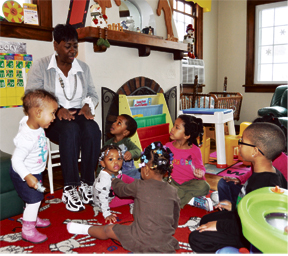
There are daycare centers — and then there are homes. West Toledo's I Can Do All Things Daycare, owned and run by Suzette Cason, is more the latter than the former. Literally, in this case — I Can Do All Things is run from Cason's modest-but-charming West Toledo house, and for her young charges and their parents, it's a  home away from home.

"I love kids," Cason says, and it's easy to believe her. She's a veteran of three decades in the childcare business, working for Toledo Day Nursery for 25 years. (She also works professionally as Cici the clown!) During that time, she raised her own son, James (and now has her first grandchild).   Ten years ago, she felt ready to work for herself. All she needed was a name.

"I was at church one night," she remembers. "Thinking 'what would I name my daycare?'" That same evening, she heard her favorite scriptural passage, Phiippians 4:13 ("I can do all things through Christ who strengthens me.") She knew she'd found a name — and a philosophy. She believes in the children she cares for, and constantly strives to raise their confidence. "I don't let them say 'I can't,'" she says. When a child is struggling with a task, she says "I tell them to say 'I need a little help.'"

A leap of faith

Starting out on her own was "a leap of faith," Cason says. The business began with only one client, and Cason struggled for a while. But over the past decade she's thrived, and currently cares for 15 children daily, from infants to 12-year-olds. Infants are a challenge to Cason's communication skills (which with older children she considers a strength), but it's a challenge she relishes.

"My motto is learning through play," Cason says, and through hands-on activities, I Can Do All Things' children are learning whether they're aware or not. Communal cooking sessions give kids the power to help control what they eat, while teaching valuable lessons in everything from math to team skills. She's especially passionate about introducing children raised in the city to the outdoors. "We barely watch TV" outside of some educational programming, she insists. "I'd rather take them outside. I know they (watch TV) at home." She's not afraid to let the kids get their hands dirty, learning about nature in the way that children always have.

With field trips to the Toledo Museum of Art and the library, there's always something to keep Cason's charges engaged and busy. And she wants to keep parents engaged, too, sending home daily updates and encouraging them to take an interest in their childrens' activities.

"My biggest weakness is office work," Cason says. "I'd rather be out there having fun with the kids and teaching them." But that's hardly a weakness for someone as enthusiastic and engaged as Cason. Now, she's on the verge of outgrowing her home, and is ready to start looking for a new space for her business. "It's time to pray and get direction," she says. And it's easy to believe Cason will have no trouble finding it.

Women, take your health to heart

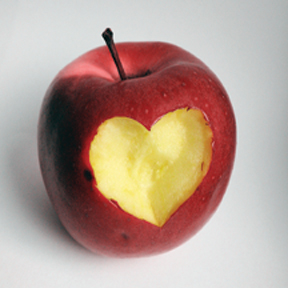
February is American Heart Month, which makes it the perfect time to remind yourself of the key role this muscle plays in your health and how to protect it.

According to the Center for Disease Control, heart disease is the leading cause of death for both women and men in the United States. And, while it is more common among women ages 65 and older, it is the third leading cause of death among women ages 25-44.

Although heart disease is often perceived as a “man’s disease,” that’s not that case. Heart attacks are a real threat to women. Unfortunately women sometimes don’t realize they’re experiencing a heart attack because they are more likely than men to experience symptoms other than chest pain.

Knowing how to prevent a heart attack and recognize symptoms can help you keep a healthier heart beat for life.

What is a heart attack?

A heart attack occurs when the blood flow to a part of the heart is blocked – usually by a blood clot. If this clot cuts off the blood flow completely, the part of the heart muscle supplied by that artery begins to die.

Getting help fast is crucial! The amount of damage to the heart muscle depends on the size of the area supplied by the blocked artery and the time between the injury to your heart and treatment.

In most cases, heart attacks are a result of coronary artery disease (CAD). Over many years a fatty material called plaque builds up on the inside walls of the coronary arteries, which supply blood and oxygen to your heart. When plaque in the artery ruptures, a blood clot forms around the ruptured material. A heart attack occurs when this blood clot shuts off the blood flow to your heart.

What are my risks?

Many women can significantly reduce their risk of heart disease, like coronary artery disease, by knowing the risk factors and reducing the risks that are preventable. Here are some factors that increase your risk of a heart attack:

•Smoking
•Diabetes
•High blood pressure
•Being overweight
•Bad cholesterol
•Lack of physical activity
•High stress levels
•Family history

The sooner you take steps toward a healthier heart the stronger chance you have of reducing your risk for a heart attack. In fact, the American Heart Association recommends that heart attack prevention begin by age 20. Working with your physician to come up with a personalized plan and choosing a healthy lifestyle that minimizes the risks listed above is your best defense.

What are the signs?

According to the American Heart Association, most heart attacks start slowly, with mild pain or discomfort. Knowing the symptoms can help you know when to seek medical help right away. Typical signs of a heart attack include:

Chest discomfort – Most times this occurs in the center of the chest and lasts more than a few minutes, or goes away and comes back. It can feel like uncomfortable pressure, squeezing, fullness or pain.

Discomfort in other areas of the upper body – This can include pain or discomfort in one or both arms, the back, neck, jaw or stomach.

Shortness of breath – This may be, but isn’t always, accompanied by chest discomfort.

Other signs of a heart attack include breaking out in a cold sweat, nausea or lightheadedness.

Women, in particular, may have difficulty recognizing heart attack symptoms because they are more likely than men to experience signs other than significant chest pain. Women may have unexpected fatigue; shortness of breath; heartburn; and shoulder, back or jaw pain.
If you think you or someone you know may be having a heart attack, call 9-1-1 as soon as possible and chew on an aspirin to prevent further blood clotting. Definitely don’t wait longer than five minutes! Women tend to ignore their symptoms and put off seeking help for a heart attack. You don’t have time to fold the towels you just pulled out of the dryer or to make a phone call to your children’s babysitter. You need to get help right away. (Note: If your symptoms stop completely in less than five minutes, you should still call your doctor.)

Your heart is your body’s most important muscle. When it’s in trouble, every second counts. Talk with your doctor about developing a heart-healthy lifestyle and knowing the signs of a heart attack.

Dr. DeBenedetti is a cardiologist with ProMedica Physicians, practicing with Northwest Ohio Cardiology Consultants. For more info visit www.promedica.org/doctors.

Down the rabbit hole

It is hard to believe another Valentine’s Day is approaching. It is a major day for me. B.C. (before cancer) it was a day of eating my famous (if I do say so myself) lamb shanks and orzo, passing out little tokens of love and, of course, in a house of estrogen, consuming large quantities of chocolate. It was during our 2007 Valentine’s feast that I received, via phone, the news that I was about to be shoved down a “rabbit hole” and enter the dark unknown world of cancer.

Before my journey, I always wondered what Lewis Carroll was smoking when he wrote Through The Looking Glass. Now as a cancer survivor, I firmly believe that Alice and I could bond while indulging in a nice glass of Merlot. Like Alice, I was forced to go through doors, not to mention “tubes” I did not want to enter. Instead of an evil Queen of Hearts wanting my head, I heard “off with her breasts!” However, my “potions” came in IV form instead of the little bottle Alice found with the attached note stating “DRINK ME” or the hookah the Caterpillar was puffing.

Embracing it all

I would love to ask Alice how she handled talking with the flowers. In the company of women, I came to realize that “hair” and “menstruation” are big topics of conversation and when I came up short on both, I felt like Alice, trying to fit in without petals or fragrance. I would not know how to respond if the roses and tulips asked me to tell them my species or genus. There were times when I felt like a common weed until I remembered that I have solid roots and a strong stem, capable of weathering
any storm.

So on this Valentine’s Day anniversary, I once again celebrate being on this side of the grass.  A strange thing happens when you have been forced into a rabbit hole and at one time in our lives everyone will be. We are all survivors and here is the incredible part. The bad news; there is no way you can resurface from the “hole” unscathed. The great news; like Alice, you grow to tremendous heights only to shrink again upon reentry. The miraculous thing though is that all that growth and insight will always be with you even though you have returned to “normal.” You no longer “tolerate the toxic” as I like to say. You will find you have little tolerance for the Cheshire cats and opt to surround yourself with loving people with genuine smiles. Wasting precious time is no longer a viable option and instead of asking “Why?” you say “Why not?”

Finding the positive

I remember hearing a story of a woman stuck in a dark hole. A doctor walked by and she cried out for help. He threw her some medication and continued on. A clergyman came along and heard her pleas. He threw a prayer down into the darkness and went on his way. A friend discovered the woman down in the darkness and jumped in the hole with her. The woman was dumbfounded and asked, “Why did you come down here with me?  Now we are both in the darkness!” Her friend replied, “I have been down here before and I know the way out."

Nelson Mandela, a man who was unjustly imprisoned for nearly 40 years has clearly shown that  we don’t need “funky mushrooms” to make it through a crisis but rather hope and faith in the human spirit. In one of his speeches he utilizes material originally written by Marianne Williamson, “Our deepest fear is not that we are inadequate. Our deepest fear is that we are powerful beyond measure. It is our light, not our darkness, that most frightens us. We ask ourselves, who am I to be brilliant, gorgeous, talented and fabulous? Actually, who are you not to be? You are a child of God. You're playing small doesn’t serve the world. There’s nothing enlightened about shrinking so that other people won’t feel insecure around you. We are all meant to shine, as children do. And as we let our own light shine, we unconsciously give other people permission to do the same. As we are liberated from our own fear, our presence automatically liberates others.”

It is my wish that this Valentine’s day we open our hearts and dare to be the compass, North Star, and exit strategy for those in need of light. 

Exit with care

Dee’s mother and I have made the typical rookie mistakes in many areas of parenting. One certainly stands out, and that has to do with Dee’s various transitions relating to naps and bedtimes.

Family friends were kind enough to give us a copy of Healthy Sleep Habits, Happy Child before our little one arrived. But when we took her home from the hospital, our opening months of parenthood involved so much sleep deprivation that it took us nearly half of her first year to get around to having the energy in waking moments to read the book. We were quickly brought up to speed on all we’d been doing wrong.

Dee handled her first major nap/bed-time transition, from the bassinet to her crib, with only mild difficulty. This first transition was interrupted by several detours in the form of nights spent nestled between parents on a king-size bed.

Along the way, we tried out a number of different bedtime routines. Warned off of a warm bottle by our dental hygienist, we hoped that a soothing bath and a few bedtime stories would do the trick. They certainly did at first, until Dee developed a complete understanding of the volume of her library of story books and started demanding a repetition of some favorite book in an effort to forestall sleep. We tried some quiet movie musicals, in the hopes that singing along could help Dee find her way to a restful night. In the end, a balance of different approaches has allowed Dee to develop a workable night-time pattern.

Changing it up

Now, a few months into the “terrible” twos, Dee has embarked on a second transition, from crib to her “big girl bed.” Two rails put parents’ minds at ease and a gate which she could presumably figure out while fully awake helps prevent any midnight strolls to the top of the stairwell. 

The toddler bed has actually been assembled for months, but until this past week, largely represented a place to play with a collection of cuddly friends. But a lengthy Thanksgiving break at home provided just enough naptime to transition into sleeping in a new room atop new equipment. The fact that Dee had managed to loop one leg over the rail of her crib on several occasions attempting to escape helped compel the move.

A sleepy adventure

Still, sleep time has been a challenge. Perhaps useful regarding the subject are two scenes from the Indiana Jones films. In the opening scenes of the first Jones movie, our hero attempts to remove a golden statue from a pedestal and replace it with a bag of sand. He reaches out with great care, but still triggers booby traps which cause mayhem and adventure to unfold.

We’ve had similar delicate operations with Dee on nights when she’s needed additional attention after falling asleep. When wrestling with the pains of a new tooth or sore gums, Dee sometimes needed a midnight application of teething gel. And when dealing with the inevitable autumn cold, fevers sometimes demanded a midnight dose of children’s elixir. We felt like the hero from Raiders of the Lost Ark,  trying to administer the appropriate balm without upsetting the giant boulders and other traps that represent a toddler wakened in the middle of the night.

In the third Jones movie, the hero has to walk on a series of stones in a precise order to avoid unleashing similar disasters. He tip-toes and balances from one stone to the next in an effort to avoid an untimely ending. When we put Dee down to sleep, our exit from the room involves a similar delicate set of steps. In an old house, floorboards creak. The various appliances in a nursery or toddler’s room — from humidifiers to baby monitors — can easily become traps for a tired parent whose single misstep may undo an hour’s effort reading bedtime stories and singing soothing melodies. Only after exiting the room and gently pulling the door shut, does it seem safe to exhale.

A toddler’s infant sleep is obviously an essential part of keeping a little one happy, content and ready to encounter new challenges in the coming day. It’s equally important to offer parents some breathing room to recover from an increasingly physical evening of playing and an ongoing effort to try different healthy foods at dinner time. 

The booby traps and dangers we create for ourselves certainly aren’t as frightening as those in the movies, but the prospect of disturbing a toddler at rest is just as likely to trigger nail-biting and the desire for a nice big bag of popcorn.

Geoffrey Rapp is a law professor at the  University of Toledo and the father of a toddler, “Dee.”

When it’s urgent

Every family at some time will face a medical emergency. From burns to sprains to fractures to nasty infections, there’s bound to be a moment when you need medical care, and need it now. You could go to the emergency room — but you could end up waiting for hours due to patients with much more severe problems. Sylvania Urgent Care, which opened five months ago under director Dr. Walid Mahmoud, aims to fill a gap in the system between family doctors and hospitals. Dr. Mahmoud is a board-certified emergency medicine specialist, and the Assistant Medical Director of UTMC’s department of emergency medicine. Sylvania Urgent Care features state-of-the-art technology like digital x-rays and ultrasound, and their fully electronic medical record system makes coordinating with primary care physicians easy. As the Sylvania area’s first urgent care facility, they’re winning over patients through word-of-mouth, treating them more efficiently and at lower cost than an ER. “Everybody wins,” Dr. Mahmoud says. “The patients, the insurance companies and the healthcare system. 4405 N. Holland-Sylvania Rd. 419-517-0146. www.sylvaniaurgentcare.com.