Home Blog Page 332

Decoding Dyslexia

Ohio’s state education code has adopted the definition of dyslexia as a specific learning disability that is neurobiological in origin and characterized by difficulties with accurate and/or fluent word recognition and by poor spelling and decoding abilities. Kids with dyslexia may struggle with reading comprehension or limited vocabulary growth. The sooner you recognize that your child is falling behind his peers in reading and writing and then reach out for help, the better your outcome will be.

Fact or fiction?

There are several myths about dyslexia including that it is a visual problem and that your child will outgrow the struggle. “Typically the problem grows bigger and the child falls further behind his peers which can lead to secondary consequences such as anxiety, depression, loss of confidence or self-esteem,” said Tammy Alexander, certified dyslexia therapist at Armus Reading Specialists in Toledo. Sign to look for are age-dependent. In the preschool years a child may have trouble learning common nursery rhymes, mispronounce words or be unable to recite the alphabet or days of the week. Kindergarteners and first graders may make reading errors that show no connection to the sounds of the letters, be unable to sound out common one-syllable words or complain that reading is hard. From second grade onward a child may mispronounce long, unfamiliar or complicated words, stumble when reading multi-syllable words, be unable to finish tests on time, have messy handwriting or spell poorly.

Dyslexia is not uncommon and professionals want to be sensitive to your child. “Intervention specialists are speaking up more and calling it unspecified learning disability instead of dyslexia because it affects math, reading and writing so they hesitate to call it dyslexia because people think that is just reading,” said Michelle Bradley, owner and manager at Success with Dyslexia in Toledo.

It is important that kids with dyslexia do not feel singled out. “Be friendly to them and supportive because they do not understand themselves sometimes,” said Bradley. We are fortunate to have laws in place in Ohio that give students with dyslexia rights to get individualized help.

Strategies to help your child

“A two-pronged approach is recommended that includes specialized instruction using structured literacy programs based on the Orton-Gillingham teaching approach to remediate the child’s deficits and academic accommodations and modifications until the time when a student’s reading and writing skills have been remediated to potential and are no longer an issue,” said Alexander.

Something as simple as having more time or a different way to complete a task can make all the difference. “If a student needs to read a particular chapter in history class and be ready to discuss the content,” said Alexander. “It would benefit that student to be able to listen to the chapter using assistive technology rather than laboriously reading the chapter themselves.”

Often, a multisensory approach works wonders. “The goal when teaching students with dyslexia is to incorporate visual, auditory and kinesthetic-tactile modalities simultaneously during instruction,” explained Alexander.

Available resources

“In this electronic age, speech to text is on the computer and tablets,” said Bradley. Remember even though kids with dyslexia have weaknesses, they still have strengths. “They are left-brained people, very creative and many see in 3-D which makes them successful as engineers, inventors and wonderful athletes,” Bradley added.

Knowledge is Power—Where to get Help

International Dyslexia Association of Northern Ohio
PO Box 172 Richfield, OH 44286
(216)-556-0883, noh.dyslexia.org

Armus Reading Specialists
4165 Monroe St. Ste. B., Toledo
(419)-472-4554, jeanarmus.com

Success with Dyslexia
1014 Shadow Lane, Toledo
(419)-806-1585, succeswithdyslexia.net

Decoding Dyslexia OH Family Support
decodingdyslexiaoh.org

Falling in Love with Your Kids

Photo by Breakthrough Images. Julie and Brian Paszczykowski with their adopted children Trinity (15), Kyleigh (14) and Dru (11) who came to live with them July, 2014. The adoption was finalized November, 2016.

Julie and Brian Paszczykowski have always had a full house. They have four biological (bio) children of their own, and just as they were about to become empty-nesters, they made the decision to foster.

Julie reminisces, “I remember telling my husband when our children were young that I wanted to be a foster mama to those who didn’t have a mama. Our house was full already with four of our own, and he looked at me like I was crazy. God just put that in my heart.”

“When our bio children were all grown and married except for one…the opportunity [arrived] to take in three siblings who were our kin, and I never looked back,” she said.

Finding a forever home

Julie and her husband thought they would foster the three siblings for about a year “while their bio parents got cleaned up, and reunification was always the plan, [but] in my heart of hearts, I knew the day they came to us that it would be forever.”

Julie recalls that first day vividly: “They came to us with the clothes they were wearing–nothing else. They had been ‘homeless’ for two years prior, living with this person or that, and rarely all together.”

“We were told that it was rare for three siblings to stay together, and since they were older it was even more difficult to find placement. There really wasn’t much discussion on whether or not we would ‘keep them’ forever. We just knew it would be.”

The four biological Paszczykowski children jokingly call themselves the “OG’s” or “original gangsters,” and they were unequivocally supportive of their parents’ decision. Julie explains, “They have embraced the three ‘littles’ as their own siblings. They grew up with them as their second cousins, but now the kids refer to each other as brothers and sisters.”

Julie’s urge to foster began when their biological children were young and continued throughout her life. Just a year before the Paszczykowskis opened up their home, she and her friends started a bucket list, and “the very first thing on my list was to foster children. It was one item I was able to check off for the first time.”

IMG_0429

The ups and downs

While the Paszczykowskis would not change a thing about their situation, Julie admits that foster care and adoption have their hurdles. She had trouble articulating the struggles, but she explains that the new movie Instant Family is “spot on.” She confesses, “I laughed, then cried, then laughed again. It was so on point with all the ups and downs.”

Julie chuckles that fostering before adopting isn’t a “benefit” because “it’s not like you could ‘return’ the kids if it wasn’t what you thought. Although, trust me, it is not always easy and that thought might go through your head! Even with your own bio kids!”

She adds, “But seriously, fostering is like slowly falling in love with your kids…getting to know them, letting them adjust, getting used to the idea of a new family.”

Julie advises to gather as much information about fostering before you take the leap. “Talk to others who have [fostered]. Gather information. Attend classes. Ask to join a support group beforehand to be armed with information going in. And, most importantly, have an open mind and an open heart.”

Julie says…

Favorite activity to do with family?
I love having meals together and playing games after dinner, as well as going to church and volunteering in the community.

Best holiday memory from when you were a kid?
I remember always going to Children’s Wonderland and seeing all the Christmas scenes and taking photos in front of them!

What do you do when you have a few moments to yourself?
A hot bubble bath! My other fave thing to do is hang out at a bookstore with a coffee in hand.

Your life in 5 words or less: Love, laughter, chaos, Jesus, family.

Favorite Toledo hangout?
I LOVE downtown!

Describe Toledo in a sentence?
Toledo is quickly (slowly?) becoming what it used to be, and I love it!

The Kids are Online: Now What?

The holidays are over and your child is still in the honeymoon phase with their brand new smartphone, laptop, or gaming system. Now comes the hard parenting work: we raise our kids to be polite and respectful in person so how do we stress those same values in the online environment? A digital citizenship contract can help you spell out expectations for appropriate online behavior, sending a clear message about how seriously you take your child’s safety and online reputation. Involve your kids in the process, outlining a contract to start a family dialogue about issues that may arise.

Here’s a checklist of points to cover in the contract:

Treat others with dignity and respect. In other words, treat people the same way you wish to be treated, just like in person. Unacceptable behavior includes posting/texting cruel remarks, gossiping, bullying, using profanity and impersonating others.

Think before your post. “Teenagers are all about instant gratification. They aren’t necessarily thinking: ‘well, if I do this, how is this going to affect the other person? How’s this going to affect my life in the future?’” says Sarah Manriquez, a licensed clinical social worker.

Remind your kids to ask themselves questions like: “Would I want Mom or Dad to see this?” and “Would I be embarrassed if everyone in school saw it?”

Show empathy. Explain that when they forward or share photos/texts/video that are harmful to a peer, they inadvertently condone cyberbullying. Also, steer clear of mean-spirited chat rooms where anonymous members dish up snarky, cruel comments for entertainment.

fb

Ask permission. Before logging into someone’s personal device, ask first and then log back off of the device when finished. Tell your child that before downloading an app, he needs to discuss it with you first.

Personal accountability matters. Errors of judgment happen and kids are still learning. Immediately address the situation together, whether they need to craft an apology or remove a comment or photo.

Don’t talk to strangers. Some free texting and gaming apps permit members to connect with other members even if they aren’t “friends.” Emphasize that exchanging text messages with someone they don’t know is the same as talking with a stranger.

Guard personal information. Avoid sharing personal information with unknown individuals in a chat room or a public forum like email address (don’t use your email as a user name), street address, social security number, school name, birthday or photos with geotags.

Assume everything posted is public. Texts, images and posts can be saved and shared. Mine the latest news, TV shows and other media for examples that can lead to conversation and empathy-building opportunities.

Ignore attacks. Tell your kids to let you or another trusted adult know if someone bullies them. Reacting or retaliating generally adds fuel to the fire. If the bullying continues, your child can politely ask the person to stop; report the behavior to the content provider; and/or block the individual. Preserve the evidence and contact law enforcement if your child feels scared or threatened.

Check out thatsnotcool.com, a site for kids featuring scenarios and text responses to help kids manage cyberbullying, dating violence and awkward peer situations like password requests and gossip.

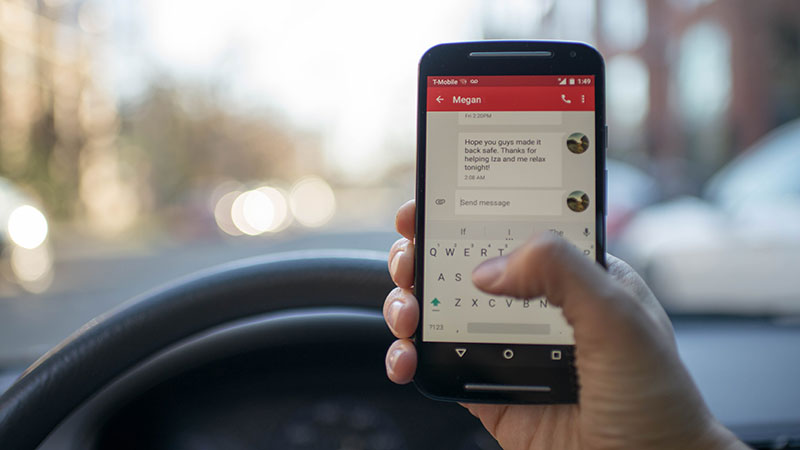
Establish boundaries. Declare certain times of the day, the car or areas of the house as no-phone/no-device zones. At the end of the day, power down and store electronic devices in a central location of your home.

Stress that privacy is earned. Because you are ultimately responsible for your child’s behavior whether online or off, have access to all passwords, check their phones and visit the apps/social media networks they frequent regularly.

blur-car-cellphone-230554

Pledge not to text and drive. Finally, if your child is of driving age, include a pledge on your contract that states a promise that he will not text and drive. Consider watching the 30-minute documentary by Werner Herzog together called “From One Second to the Next” on YouTube.

Clearly state consequences. Consequences could include loss of devices, limitation of screen time (except for required school work) and suspension of driving privileges.

Sign here. After your child signs the commitment, hang it up near your computer or on your refrigerator as family reminder. Review and adjust as needed.

For more ideas about creating a family digital citizenship contract, visit Safekids.com. Additional online resources, include CommonSenseMedia.org and ConnectSafely.com.

Just Do It: Organize Already

Every year it’s on your list to get done: organize. Maybe you want to organize the garage or the kids’ playroom or finally tackle the linen closet. Whatever it is, there’s a place in your home that needs some attention but you keep putting it off because you’re overwhelmed at the thought of actually starting the task. Don’t be! It’s a new year and a new chance for a start fresh. Here are a few simple tips to get you going.

One thing at a time. To avoid being overwhelmed, start small with one thing. Whether it’s the garage or the refrigerator or a closet, start with one shelf. Sort through anything that’s expired or broken and toss it. If you haven’t used it in more than a year, donate it. Once you’ve gotten rid of what you don’t need, you can start to put back what you do use. By breaking down the task into one part at a time, you’re more likely to get it done without things feeling impossible.

fridge

Keep, donate, toss. No matter where you’re starting, create piles for things you want to keep, things you can donate, and items to trash.

Give everything a place. You can spend a lot of time organizing, but if you don’t have a place for things, no space will stay clutter-free for long. That’s why everything needs a place and when you’re done using something, it goes back to where it belongs. Bins and baskets are great for sorting and storing. Hooks work well for coats, jackets and book bags.

Don’t wait – do it now. If you’ve got a lot of paper coming into your house, don’t wait to recycle or trash what you know you won’t keep. Recycle junk mail immediately and file anything that you need to tend to later. This helps you find what you need when you need it and prevents clutter from piling up.

organize-4
Get everyone on board. Make sure your spouse and kids are on board with the organization system from the get-go. Set up things that make sense for your lifestyle and your space.

Plan ahead. One way to make things easier for everyone is to plan ahead. Give an hour of your time on Sunday to plan meals for the week, prep food, pick out outfits, and go over the calendar for what’s ahead. This gets everyone on the same page and can help you anticipate what days might be hectic to allow you to prepare as best you can.

Designate a time every day for everyone to put things away. Maybe it’s before dinner or before everyone heads to bed, but designate five minutes to cleaning up and putting things away. Even little ones can help put toys back in the toy box or pick up shoes. School-aged kids should put backpacks, homework and anything needed for the next day (library books, school projects, sports equipment) in a spot so they can easily find what they need in the morning. Before going to bed, set up the coffee maker, pack lunches and pack your work bag. This will just insure you have what you need and will help the morning go smoothly, especially if anyone oversleeps.

Be kind to yourself. Finally, celebrate the small victories. If you set up one system that works all year, but that’s all you get to, that’s still progress! Sometimes we can start January off with a rush and burn out because we can’t live up to our own expectations. Instead of keeping at it, we say we’ve failed and we give up. This year, be kind to yourself and make small, steady changes that you can actually maintain. Slowly but surely you’ll get things organized!

Choosing New Books in the New Year

Choosing great books for your family can be difficult with so many new age gaps in your house it can be hard to make time for reading between work and school and life. I’m excited to begin the new year with this new column to make the task of finding fantastic books for your family a little easier.

The books I’ve chosen teach us, along with our kids, the power of taking risks and learning by making mistakes. Starting something new takes courage and the determination to learn from inevitable mistakes.

The Book of Mistakes

written & illustrated by Corinna Luyken

mistakes

This book is a beautiful example of embracing life even when it doesn’t go according to plan. The illustrations, simple & sweet, continuously change as each seeming mistake is embellished or altered to change the course of the story. A big splotch becomes a balloon or a smudge becomes a cat sleeping in the sun. The illustrator makes something beautiful out of not-so-beautiful things. Stories like this one show kids (and grown ups) that life is messy and that’s ok. What we make out of life is the important thing.

The Dot

written & illustrated by Peter H. Reynolds

thedot

I love Peter Reynolds’ simple & colorful illustrations because I can relate. The main character, a little girl named Vashti, struggles in her art class because she has determined that she just CAN’T draw, until one amazing teacher gives her the suggestion to “just make a mark” and everything changes. We often feel limited by our circumstances or even our own ability which can prevent that first step toward something new. This book may give your family the courage to just start!

The Day You Begin

by Jacqueline Woodson & illustrated by Rafael Lopez

begin

The world today can feel like a dark place, isolated by technology and polarized by politics, our differences can divide us. With the new year we have the opportunity to set intentions for our families to be more open to community, to reach out to people who are different than us, to extend hospitality to our neighbors and to share stories with strangers. This book illustrates the power of sharing our stories, even when we feel afraid. It reminds us that being courageous often makes room for others to feel brave too.

Find time for reflection & intention with your family and as you set out bravely into this new year together, may the year be filled with great books!

Top Docs 2019

Anticipating a happy, healthy New Year, but looking for a new doctor in town? In need of a specialist? We’ve rounded up some local Top Docs to help you make this one of your best years yet!

Dr. Nick Goin

Chiropractor

Dr.Nick

Innate Health Chiropractic
26580 N Dixie Hwy Ste 101, Perrysburg
getinnatehealth.com

What do you want readers to know about your practice that they may not know?
The majority of our practice does not suffer from back or neck pain but rather come to see us for healing from other health challenges like colic, reflux, digestive issues, poor sleep, anxiety, prenatal care & baby positioning, ear infections and much more.

What sets you apart from others in the area?
The focus of our office is prenatal and pediatric care making up over 60% of our practice. Our doctors have extensive training from the International Chiropractic Pediatric Associations (ICPA) which allows them to specialize in these areas including having the Webster Technique Certification.

What is one health goal individuals/families should aim for in 2019?
Get your spine & nervous system checked. Nervous system health is vital to reaching any health goals because your brain and your nervous system control and regulate all functions of your body.

Jon Frankel, D.D.S.

Dentist

frankel

Frankel Dentistry
5012 Talmadge Road #100
jonfrankeldentistry.com

What do you want readers to know about your practice that they may not know?
Since 1946 Frankel Dentistry has served the Toledo community with an always better philosophy. We are grateful to our patients and want every visit to be their best dental experience. Changing lives a smile at a time is our passion. The best dental experience is our niche.

Frankel Dentistry opens the doors twice a year to serve those in need at no cost. The Wednesday before Thanksgiving and the Wednesday before Memorial Day are Free Dentistry Days. Every year after Halloween excess candy is purchased at a dollar a pound and sent to local Toledo troops overseas.

What is one health goal individuals/families should aim for in 2019?
Schedule dental wellness visits and cleanings. Infants can be seen the first time right after the first tooth erupts. Children, teens and adults benefit from two visits a year. Seniors 65 and older are best seen 4 times a year or every 3 months.

Dr. Jackson

OB/GYN

Jackson

Associates in Women’s Health
5300 Harroun Road, Suite 201, Sylvania
associnwomenshealth.com

What do you want readers to know about your practice that they may not know?
We are a solo provider of OB services in the Toledo Area. Dr. Jackson has been in practice in Toledo for 19 years.

What sets you apart from others in the area?
We are one of the few practices that offers vaginal birth after Cesarean (based on Dr. Jackson’s medical judgment). We also offer the Mona Lisa laser treatment in our office for post-menopausal women who are experiencing vaginal dryness.

What is one health goal individuals/families should aim for in 2019?
One health goal for 2019 would be to move more! Even a little bit of exercise 2-4 times per week is good. And get the kids involved – make exercise fun! Sledding, swimming, biking – all can be great exercise, and fun too.

Dr. Joseph Marra

Optometrist

Marra

Dr. Marra & Associates
4240 Secor Road
drjosephmarra.com

What do you want readers to know about your practice that they may not know?
Our practice has been helping the Toledo area see their world better for 30 years. We provide visual examinations, treat eye diseases, fit glasses and contact lenses for everyone in the family.

What sets you apart from others in the area?
We have state-of-the-art equipment to help better diagnose and treat our patients. We treat our patients like we would want to be treated.

What are health goals individuals/ families should aim for in 2019?
Three health goals for families that will benefit your eyes:
1) Don’t smoke
2) Wear sunglasses
3) Eat naturally pigmented foods

Dr. Andre Haerian

Orthodontist

Haerian

HLS Orthodontics
6407 Monroe St, Sylvania
perfectbraces.com

What do you want readers to know about your practice that they may not know?
One of the most unpleasant procedures in an orthodontic office is having an impression done of the teeth. Not too many people enjoy a metal tray filled with a pudding-like substance being inserted into their mouth for the longest 30 seconds of their life! At HLS, our patients no longer need to undergo this old-fashioned way of making models of the teeth. Two years ago we invested in digital technology so we can use a small wand to scan the teeth, create a digital file, and then print the models on a 3-D printer.

What sets you apart from others in the area?
One of the things that sets our office apart, literally sets our office apart! All three of our offices feature separated treatment areas. In regular dentistry, this is the norm. However, in orthodontics, it’s much more efficient for the orthodontist to have exam chairs lined up next to each other in one big room. Dr. Gene Simon, who founded our practice in 1981, designed his first office with this unprecedented concept of privacy for patients, and we have continued with this standard in subsequent offices in Lambertville and Maumee.