Home Blog Page 316

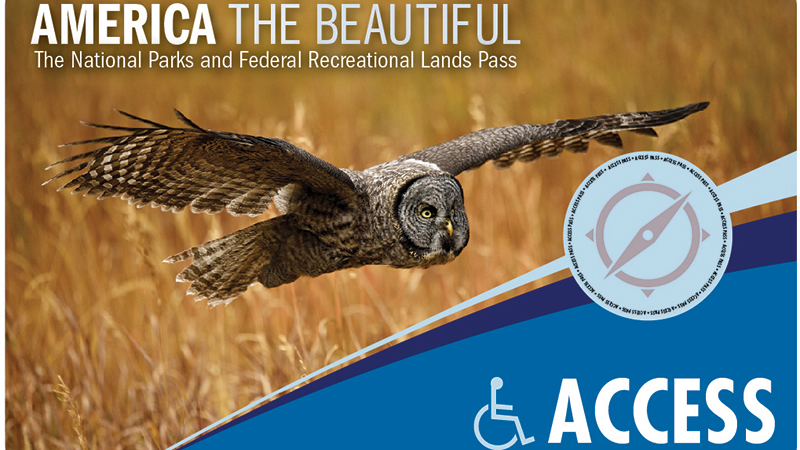
Free National Parks access for people with disabilities

If you, or your child, has a permanent disability that limits one or more major life activities, you may be eligible to receive the Access Pass granting you free admission to more than 2,000 recreation sites including National Parks, National Wildlife Refuges, and National Forests. The pass extends to all those in the vehicle with the passholder. At many sites the Access Pass also provides the pass holder with other discounts for activities such as camping and guided tours. The disability requirements are defined broadly as a permanent physical, mental, or sensory impairment that limits one or more major life activities such as walking, seeing, caring for oneself and learning.

For full information and to learn about the application process
visit store.usgs.gov/access-pass.

Earth to Oven Bakery Reopens

Earth To Oven Bakery & Cafe has reopened, after briefly closing for renovations, with a now-expanded menu, which includes vegan and vegetarian items. A coffee bar featuring Flying Rhino coffees, a bread case, refrigerated pastry display cases, outdoor seating among other updates, have been added. A delivery service still in the works.

5758 Main St., in Sylvania’s Haymarket Square
419-824-0683 | Earthtoovencafe.com

Kid Blogging: A Summer Writing Project

A fun way to practice skills in the summer

Does your child have a particular passion that could be explored more through writing or photography? Blogging is an educational way for kids to practice their writing and research skills over the summer while interacting with a receptive audience.

Take a cue from teachers. Pernille Ripp, a 5th grade teacher, who introduced blogging to her students several years ago. The response she has received has been overwhelmingly positive.

“Parents love that it provides a look into what is happening with their child in school and what their child is thinking. It also allows extended family to be part of the learning. Students love it because of the conversation it starts and the ideas they can get from others,” she says.

Why blog?

Not only do kids learn to write to a target audience, they enhance their writing skills in the process. “I’ve seen the rates of student writing really increase,” says Sue Gorman, an Innovation Learning Consultant K-12 and adjunct professor for the Institute of Professional Educator Development for the University of Wisconsin-Parkside. “You aren’t just turning this [writing assignment] into your teacher, you are turning this in as a global writer, a global thinker.”

Get to know blogging. If you aren’t sure how blogging works, open an account and play around with the platform. Learn how privacy settings work and familiarize yourself with the terms and conditions associated with the platform. Explore blogs your child likes.

When is a good age to start blogging?

Whether a child is ready for blogging, or any other type of social media, really depends on your child and her maturity level. Some teachers start kids blogging as early as second and third grades. Educators use carefully moderated and secure sites like KidBlog.org.

Blog options.

For the under 12 crowd, Kidzworld offers a safe, moderated platform for kids to blog with parental consent.

Your child could also blog through a free platform like Blogger or WordPress, however both platforms require that users are 13 and over. In this case, you might want to create a family blog where you make the blog private and invite family and friends to follow.

Tumblr, Twitter and Instagram are especially popular among teens. These are “short-form multi-media” blogging sites. Members post photos, video and short posts. These sites are not suggested for kids younger than 13.

Safety considerations.

Naturally, your child’s safety will be top of mind. Create a digital contract with your child to clarify your rules, expectations and consequences.

Talk about the types of information she should never share like:
• Full name
• Year of birth
• The name and location of her school (including in photos)
• Home address

If she includes a photo of herself, make sure it doesn’t leave a digital footprint that reveals your location. (Turn off geotagging by going into your privacy settings on your the phone and turn off the location services under your camera app.)

Review her posts before they go live to make sure she isn’t inadvertently sharing information that could put her personal safety or identity at risk.

Discourage your child from using the blog like a private journal by asking questions like: “Am I okay with Grandma or my teacher seeing this?” “Would I be embarrassed if my friends at school read this?”

“Going High” With Others

The lessons we must learn on the playground and on Capitol Hill

It was during the Democratic National Convention in 2016, when Michelle Obama was giving a great speech, reflecting on how people should carry themselves in our current political climate. She referred to a lesson she tries to teach her children whenever negative talk and rudeness comes at them, she said: “When they go low, we go high.” That line has stuck with me. The former First Lady summed up so much of what I believe about how we should interact, how we are supposed to treat each other, how we should carry ourselves. How do we want our children to behave? It’s really that simple.

So, why do we continue to put up with low levels of civility from our elected leadership in this country? We all know the truth is: if our children came home from school talking about one of their classmates the way we see the players in this Civil War of Words go after each other, we would set them straight, telling them that is not the way to treat their fellow human beings. What do we say to our children? And how does what we would say to our children inform what we should say to those claiming to represent us in our government?

Let’s define “Go High”

First, we need to clearly and intentionally define what it means to “go high.” We all know what it feels like when someone “goes low.” They stoop to a level of making something personal. They act out and name call, trying to diminish another person with their words and behavior. Do we actually know what it means to respond on a “higher” plane? We need to spell it out for our children. We must teach them the power of silence. We must give them the strength of understanding their value is not connected to their ability to “get even.” We have to teach our kids the deep moral lesson of standing up for their brother and sister, but not raising their fist in defense of their own ego.

Hold up the mirror

Perhaps the most discouraging thing I have seen from my own political party since President Trump was elected, was how infrequently we actually take Michelle Obama’s advice. It feels like that lesson was good for a bumper sticker in 2016, but once President Trump was inaugurated, we forgot all about it. In this moment of history, filled with toxic talk and dehumanizing rhetoric, we have to hold up the mirror and find self-awareness. Can we acknowledge when we make mistakes? Can we, with our children, own up to not “going high” when someone else goes low? We need to, and we have to learn from it when it happens.

More Than Not “Playing Dirty”

It could be easy to read this column and walk away thinking of things we shouldn’t do. But, the harder task, the more important task, is to think of what we should do. We have come to define sportsmanship, integrity, and many other aspects of character by not doing something. We need to think about the actions that make up the character we want to exhibit in the world. What are the things we want our children to do, say, believe and act out? Those are the things we need to focus on and we need to teach our children to behave this way, before they even have a reason to “go high” in the first place.

None of this is easy, but if we can’t up the level of conversation and compassion and understanding in our own homes, how will we ever do it in our communities and cities? If we can’t do it in our cities, how will things change in our state, and if things don’t change in our state, what will come of the collection of our States? We must be united in our desire for more humane politics and, like most things, if we can teach it to our kids, hopefully we can expect it of their elected leaders as well.

Planet Fitness free for teens this summer

This summer, Plant Fitness, one of the largest and fastest-growing operators of fitness centers in the country, is opening its doors to teens for free. High school teens ages 15-18 are invited to work out for free until September 1 as part of the nationwide Teen Summer Challenge initiative. Free fitness classes for teenagers are available Monday through Friday with certified fitness trainers. Teens must sign up in person (if under 18 a parent needs to go along for the sign up, too) and they must work out at the location where they sign up. For details, visit PlanetFitness.com/TeenSummerChallenge

Book Nook: Welcome Baby!

Books to prepare siblings for the new arrival

Welcoming a new baby can be one of the most happy and tumultuous times for a family. Everyone is excited to meet the new member of the family and the countdown to delivery can be filled with anticipation and preparation. The transition can also bring an assortment of negative feelings for siblings and expecting parents alike. Joy mixed with fear, excitement mixed with anxiety, and love tempted by jealousy once the baby arrives. For kids, these big emotions can be hard to navigate, and for parents who are sleep-deprived the emotional work can feel daunting. Thankfully, with a little time, gentle hugs and good books your family can navigate this transition and welcome your new bundle with love and joy.

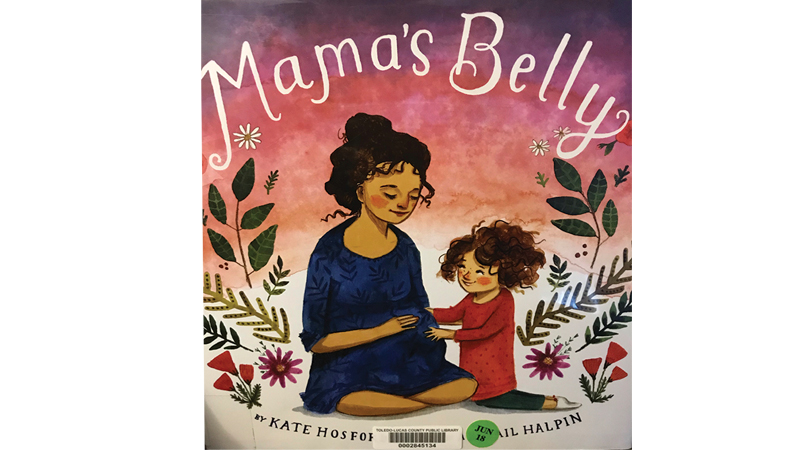
mamas-belly

Mama’s Belly

by Kate Hosford

This beautifully illustrated and tenderly told story gives us a glimpse into a sweet family of 3 as they prepare to welcome a new baby. Mama is changing, the family rhythm is changing, the house is changing. Big sister watches Mama’s belly grow and she has many questions about the new baby and what life will bring. She wonders what she will look like, she wonders how they will play, but the most important of all: “When my sister comes, will you have enough love for both of us?” I wish I had had this story to read to my oldest girls when their younger sister arrived, to remind them that our family’s love is as wide as the sky.

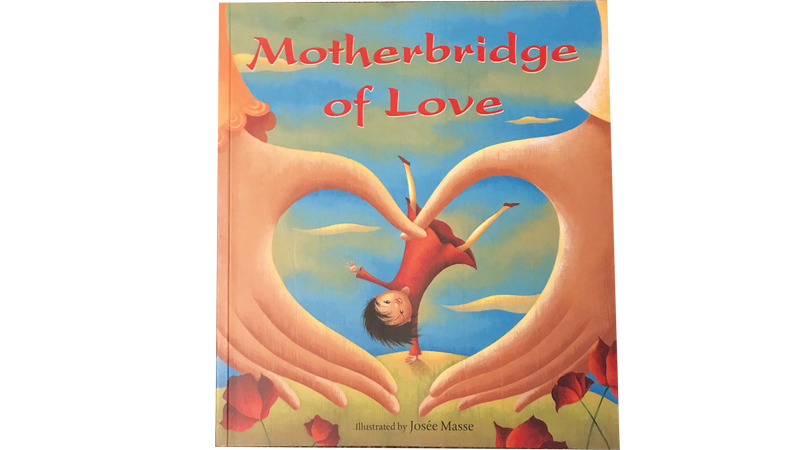
motherbridge

Motherbridge of Love

poem & story by anonymous author
Illustrated by Josee Masse

This poem was written anonymously by an adoptive mother to the charity The Mother’s Bridge of Love, which works to develop a connection between adopted children from China, their adoptive parents and their Chinese culture. This sweet stomry shows how families are formed differently and how adoption can bring people together in beautiful ways. It honors both the birth mother and adoptive mother’s love and how each hold an irreplaceable place in a child’s life. It is a beautiful tribute to motherhood in its many forms.

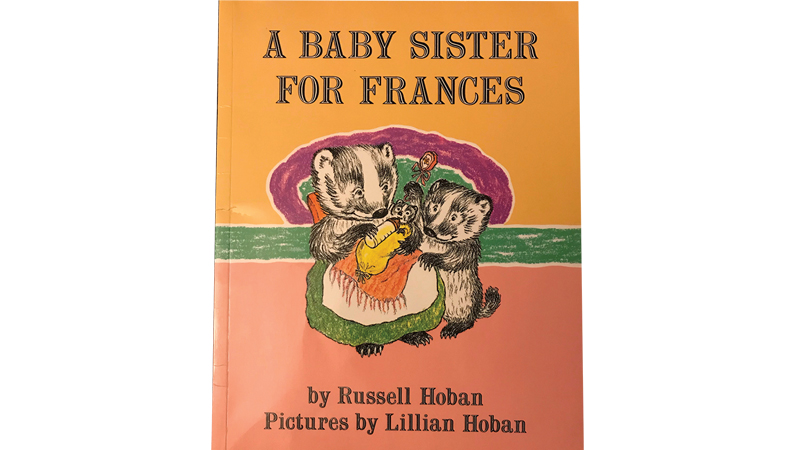
a-baby-sister

A Baby Sister for Frances

by Russell Hoban

The Frances series is a favorite around our house. Hoban captures the simplicity of an ordinary day of childhood; a day for Frances which means play and imagination and silly songs. In A Baby Sister for Frances, little Frances is feeling sad that she can’t enjoy her usual play because it’s too rough or too loud for the new baby. She decides she’d be better off alone and pretends to run away. Hoban sweetly portrays every new sibling’s fear: that her parents prefer the baby to her, and also depicts the patient love that parents hold for each of their children.

Welcoming a new baby into your family is filled with so many beautiful things – anticipation, tiny fingers and toes, lullabies, snuggles, and joy.

I hope these books help your family prepare to welcome your new little one and to adjust peacefully to your new life together.