Home Blog Page 309

How Mindfulness Helps Kids Manage Stress

stress

When kids are stressed, they ruminate about past problems and worry about future what-ifs. These negative thought patterns rob their ability to focus on the present. Because stress feeds anxiety, impulsive behavior and lack of focus, more schools are adopting simple mindfulness techniques that parents can also foster.

Why are kids stressed?

Academic pressures, overstuffed schedules, unstable home life, economic hardship, social media and peer issues can all affect a student’s physical and mental health.

According to the Center on the Developing Child at Harvard University, prolonged stress not only harms healthy development, it interferes with learning, behavior and health throughout life.

Michelle Landy, a third grade teacher, says student stress is especially prevalent during mandatory state testing. “State tests are scary for many of the kids,” Landy says. “Their anxiety hinders their ability to remember what they’ve learned.”

She recalls one panicked student who insisted she didn’t remember learning any of the material that was on the test. “The concepts had been previously taught to her that week -and she aced them,” Landy says.

After Landy led her students through a calming, school-approved mindful breathing exercise, the third grader “ended up remembering what she knew and got the entire next set of questions correct!”

Landy was first introduced to the practice by Lauren Wessinger, a long-time mindfulness mentor and yoga practitioner, who facilitates an eight-week school-based mindfulness program geared toward K-5 grade students.

What is mindfulness, anyway?

“Mindfulness is not a control mechanism or behavioral modification. It can be a calming technique, but not always. It’s more of helping a child become actively aware of how they are feeling and using some of their tools to manage those feelings,” Wessinger says.

Mindfulness gives children–and adults–simple strategies to intentionally and without judgement notice what they’re feeling in the moment, observe their surroundings and self-regulate their behavior.

Does it work?

To learn more about the effects of the practice on students, researchers at the University of California, Davis, partnered with Mindful Schools, a non-profit organization that teaches educators, parents and mental health professionals how to integrate mindfulness into everyday learning at K-12 schools around the globe. Among students who participated in a mindfulness program, the researchers found significant improvement in paying attention and class participation.

Begin with you. When you feel calm, your children will likely respond in kind. As part of her daily practice, Wessinger takes three deep breaths before she picks up her children, ages 8 and 12, from school.

“I’m more of a receptive, calm container. They don’t consciously know why, but their nervous system is like, ‘okay, everything is cool. I’m safe right now.’ It’s like a nervous system to nervous system language,” she explains.

Start with just three to five minutes a day of quiet breathing and observing your emotions. Try challenging yourself by doing 10 days in a row for three minutes a day and add a minute as the practice becomes easier.

Teach your child deep breathing.

Begin with a simple practice. For one to three minutes, have your child place their hand on their belly and feel the movement when they breath.

“The tension going down into that movement is about as present as you can get. Nothing’s really going on except belly moving, eyes closed, feeling the breath in the hand,” Wessinger says.

Mindful listening. Through intentional listening, kids learn to become more aware of their surroundings. Begin with three long and deep breaths. Suggest they close their eyes. Ring a bell or chime and have them listen for the sound until they can no longer hear it.

“When the noise goes away, they raise their right hand and then they take three deep breaths and then put their hand down,” Wessinger says.

Mindful seeing. In this exercise, kids stare at a point on the ground for about a minute. If they lose focus, encourage them to return back to the point on the ground.

“I tell them you have super strong eye strength now. What is an animal that has great vision? They always say a bird,” Wessinger says.

She then has them use their eagle eyes to look around the room, noticing things they’ve never noticed before.

Practice heart awareness. In this visualization exercise, your child imagines reaching out to help a lonely friend. Ask questions like, “how does that feel in your body when you are helping your friend?”

Then, walk them through a visualization of them not helping their friend (but not doing anything cruel either.) Perhaps instead of acknowledging their friend, they ignore them. Again, ask your child how that feels in their body and in their heart.

Walking mindfulness. Wessinger also takes her students on walking heartfelt meditations in which the kids walk silently around the school and send out kind thoughts toward anyone they see.

“In our heads, we think ‘may you be happy, may you be peaceful, may you be free,'” Wessinger says. “They love it. This is the piece that felt inspiring to me. It helps them understand ‘when I do this action, I feel this way. Don’t I want to feel the good way as often as possible?'”

Signs Your Child Might Be Stressed

  • Unusual mood swings, behavior changes
  • Withdrawal from social groups or activities they’ve historically enjoyed
  • Poor health
  • Weight gain/weight loss
  • Difficulty concentrating
  • Changes in sleep patterns

Source: American Psychological Association

SafeSplash + SwimLabs Swim School

SafeSplash + SwimLabs Swim School

It’s not your traditional school, but SafeSplash + SwimLabs Swim School is now open in the Spring Meadows shopping center in Holland. The new 6,000 square foot facility provides year-round lessons to children (starting at 6 months) and adults of all abilities. Lessons focus on the principles of safety, fun and progressive skill development. Private, semi-private and group instruction is available, along with adult classes, lessons for individuals with special needs and advanced training for triathletes and other elite swimmers. SafeSplash + SwimLabs features a full-size indoor swimming pool as well as two smaller pools, which allow swimmers to learn in a personalized setting. Group lessons are $20 per class with one lesson per week. Pricing for SwimLabs advanced training varies.

1510 Spring Meadows Drive | Holland
safesplash.com/locations/holland

Cedar Point Ranks #1

Cedar Point Ranks #1

Cedar Point fans love the amusement park. And it seems the rest of the country does, too. The park has once again been named “Best Amusement Park” in USA Today’s 10 Best Readers’ Choice Awards. The world-record-breaking Steel Vengeance hyper-hybrid roller coaster also won “The Best Roller Coaster” award. And the historic Hotel Breakers, Cedar Point’s beachside resort, also captured the top spot in the “Best Amusement Park Hotel” category. “We’ve made it our mission to be the top destination for family fun, and these awards help validate our team’s efforts,” said Jason McClure, vice president and general manager of Cedar Point. “We’ve been a summertime tradition for almost 150 years, and we won’t ever rest on our promise to deliver an exceptional experience for our guests.”

Playground Gets Colorful

Playground Gets Colorful

A summer project helped make the Lucas County Children Services outdoor Family Visits Playground area brighter, more inviting and much more colorful. Art students from Bowling Green State University, Toledo artist Yusuf Lateef and Lorenzo Flores, art director for the Sofia Quintero Art and Cultural Center, worked together to create a series of murals along the formerly blank concrete walls surrounding the playground. The art project took about a week to complete. These murals are the first step in a comprehensive playground renovation project to replace the 25-year-old playground equipment and to create an all-inclusive, accessible playground with a bonded rubber surface. Lucas County Children’s Services protects children at-risk for abuse and neglect by working with families, service providers and the community to coordinate community-based services resulting in safe, stable and permanent families for children.

Lucas County Children Services,
705 Adams Street, Toledo.
419-213-3200

Summer In The City

Book Nook

We’ve got just a few more weeks of summer left and hopefully, you and your family are making the most of it with long days spent poolside and warm nights outdoors watching the stars or fireflies. Some of my favorite stories are set in summer time, probably because summer is the perfect time for adventures. On days when it’s too hot to do much outdoors there are always good books to read or a relaxing trip to the library (hello A/C!) to enjoy. Here are some favorite books to celebrate the dog days of summer.

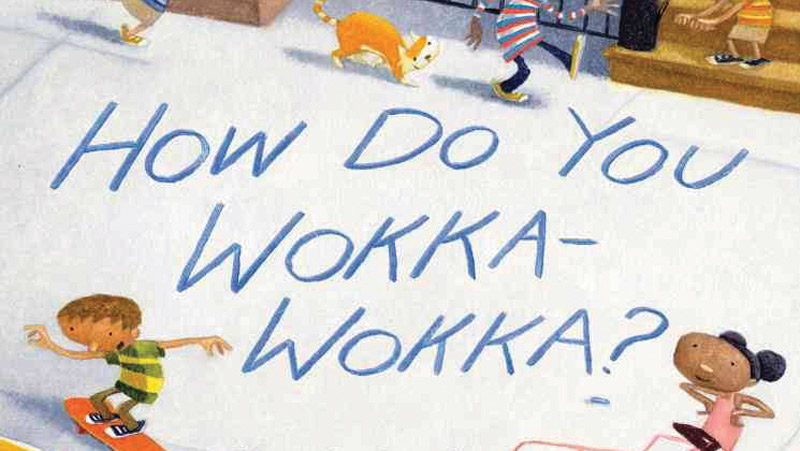
How Do You Wokka-Wokka?

How Do You Wokka-Wokka?

by Elizabeth Bluemle

This story will have you tapping your toes to the beat! Join a group of friends as they walk through the city on a warm summer day singing and dancing to “wokka wokka” beat. The fun sounds and rhythms will carry you along to a dancing beat and may even inspire you to have your own dance party!

Hot City

Hot City

by Barbara Joose

Mimi and her brother Joe are trying to have fun but it’s so hot the pavement is sizzlin’. They decide to get snow cones and go for a walk, which eventually leads them to the magical (and deliciously cool) public library. What stories will they find and what imaginary play will it inspire? Let this book inspire your family to venture out on a hot summer day to explore.

Mermaids on Parade

Mermaids on Parade

by Hope Greenberg

Every year on the summer solstice magical creatures like mermaids, neptunes and jellyfish pour into the streets for a parade to celebrate the opening of the Coney Island beach and the start of summer vacation. One little girl works very hard to make her costume just right so she can win a trophy. The magical costumes and music, paired with the book’s colorful illustrations make this a great way to celebrate the fun of summer. Encourage your little readers to make homemade costumes and enjoy their own family parade. Or let it inspire your little ones to try something new – like learning to float! – before summer comes to a close.

Blackout

Blackout

by John Rocco

In this story, we follow one family as they experience a neighborhood blackout in the middle of the summer. At first, they are a little frightened and frustrated that their evening has been interrupted, but slowly people in the neighborhood come out of their houses and soon everyone is enjoying the summer evening in unexpected ways.

We Survived The First Year Of Jr/Sr High School…and you will too

Jr/Sr High School

Last year as my twins finished sixth grade, my anxiety bubbled to the surface. All summer long, I worried about their impending transition to the junior/senior high school for seventh through twelfth graders.

As August approached, my fears grew more intense as I thought of all the unanswered “what if” questions that rattled through my mind.

How would they handle riding the bus with twelfth graders?

How would they navigate the stress of a rotating schedule and a grueling course load with six different teachers?

And more importantly, how would they remember their locker combination when they can’t remember how to close the refrigerator door?

I’m able to make light of the situation now because when last school year ended I realized they had one of the best years yet. And I know it was not worth worrying about all last summer. If I could go back in time here’s what I would tell myself:

Navigating a New School

My Fear: That they would get lost trying to find their classes and end up hiding in the bathroom. I envisioned them texting me from the stall, “Help, I have no idea where I am right now.”

Reality: They loved being at a new school with different teachers for each subject. If they got lost they did what any normal person does—they asked for directions (no texting necessary).

Eating Lunch

My Fear: They would have no one to eat lunch with and end up eating in the bathroom (again hiding in the bathroom—I need to stop watching all the teen movies and TV shows that portray this as a reality).

Reality: Both of them actually made more new friends this past school year than any other school year because they were able to choose tables (in the past they had assigned seats) and their friends introduced them to new people.

Locker Combination

My Fear: They would not remember their locker combination causing them to be unprepared or late for class.

Reality:They did not even try to remember their locker combination and brought all their books to all their classes. By the end of the year, they had better lat muscles than a bodybuilder.

Morning Routine

My Fear: They would miss the bus and be late for school since the bus arrived at 6:40 am, which is rather early for my night owls.

Reality: They did miss the bus (only once) but I drove them and they ended being there before the bus arrived. I should also add that all year I barked like a drill sergeant, “Get your shoes on, eat your breakfast, it’s getting late.” The last week of school I decided not to say a word and they were on time and my voice wasn’t hoarse by 7 am. They even set their own alarm and made their own breakfast, two fewer things I had to do.

Riding the Bus with 12th Graders

My Fear: The twelfth graders would harass and bully my sweet little twin thirteen-year-olds like that older brother in Diary of a Wimpy Kid.

Reality: Most twelfth graders drove to school and if they were on the bus they were too busy watching YouTube videos to even notice a seventh grader.

Waiting at the Bus Stop

My Fear: They would be kidnapped or hit by a car.

Reality: I walked with them to the bus stop until the end of school, not because of fear but because I liked spending those extra ten minutes with them. They actually use complete sentences in the morning. Their sleepy disposition must suppress the teen part of the brain that utters only one-word responses to all questions.

More Challenging School Work

My Fear: They would not be able to handle all the homework and schoolwork and end up repeating seventh grade. I definitely don’t remember 7th-grade math formulas, science or social studies so I would need to hire expensive tutors and pay for summer school.

Reality: One of the best things about the new school is the teachers stayed after school every day for extra help. Both of my kids took advantage of this perk and for each semester they earned either honor roll or high honor roll recognition. Now I’m worried about them going off to college one day without me—sigh.

As the year came to a close I thought, “We survived.” And so will you. If your teens are starting a new school, don’t stress about it as I did. Instead, know they will be fine. Teens are much more resilient than we give them credit for. Now if only I could figure out how to get them to remember to close the refrigerator door.