Home Blog Page 243

Maker-Minded – Raising DIY Kids

When your electronic gadgets break, does your tween fix them? Do you have a child that builds elaborate housing for pets and dolls out of scraps of craft materials and cardboard boxes? Maybe you’re raising entrepreneurial teens with ideas that could make them the next Facebook or Snapchat inventor, app creator, or “Shark Tank” winner.

If any of this sounds familiar, you may have a Maker on your hands. But what exactly does that mean?

What is the Maker Movement? The Maker Movement is a quickly growing culture that embraces the idea that learning is done best through doing. It includes do-it-yourself individuals and groups that create things, and its members are producers more than consumers, says Irm Diorio, executive director of a maker space. While some makers work in maker spaces, others tinker in their homes and garages. Some maker interests include robotics, electronics, metalworking, woodworking and traditional arts and crafts.

With affordable access to 3-D printers and computers, technology is often a part of the Maker Movement, but it doesn’t have to be. “Everyone is a maker,” Diorio says, and she encourages others to discover the maker in them. “It’s about finding what really inspires you— gardening, baking, sewing, anything that you would build with your hands. It’s fun and can be functional, but it doesn’t have to be. It’s all about letting your creativity take you for a ride.”

Why do makers use maker spaces? Some makers discover other like-minded individuals at maker spaces, where adults and children can find the community and supplies they need. Maker spaces often house equipment like 3-D printers, laser cutters, wood lathes, saws, welding equipment and sewing machines. Maker spaces offer community, encouragement and expertise for those working on projects.

How can parents support a maker-minded life? Help your child flourish at being a DIY kid. Depending on his or her age, here are some suggestions that will help guide kids as they grow.


Preschool:

Encourage natural curiosities, inclinations or interests.

Start coding with and without technology (there are lots of ideas at code.org).

Give them the tools of their trade — in junior size — think miniature tool boxes with tools, junior sewing machines or real gardening tools small enough to fit their hands.

Don’t be afraid to introduce sophisticated vocabulary— don’t dumb it down.


Elementary:

Give them a maker space and fill it with the best tools that you can afford.

Volunteer to start a maker space at your child’s school.

Create an invention station where your kids can do STEM challenges. Check out a cool design spinner at PBS Kids Design Squad Global Build.

Participate in a science fair.

Encourage participation in a maker faire.

Have a STEAM closet or basket at home that allows kids to pull out supplies and invent, build, or create.

Provide a coding robot they can program with a tablet.

Join a Lego Robotics club.


Middle and High School:

Encourage an apprenticeship in a trade or with a family member or friend who is an expert (such as a computer science expert, car or airplane mechanic, fashion designer, seamstress).

Attend a certified STEM High School.

Join a robotics club.

Give them low cost technology like Raspberry Pi or Arduino to experiment and create their own technology products.

Introduce them to conductive thread so they can make clothes that light up, or Makey Makey, an invention kit that can turn items as simple as bananas or staircases into computer touchpads.


Online Resources for the Maker-Minded Family

Makezine.com – a site for the print magazine, Make, it offers ideas for projects, Maker news, links to Maker Faires and support for all things Maker.

Makerfaire.com-shares information about Makerfaires all over the world.

Makered.org – provides support for those interested in integrating maker education into learning environments.

KiwiCo.com – purchase a monthly service that delivers art and science projects for kids of all ages to your door.

CardboardChallenge.com – Learn about how to host or find a Cardboard Challenge in your area. A Cardboard Challenge allows kids to make creations using recycled materials and their imaginations.

Thingiverse.com – this website shares user-created design project files to make using technology such as 3D printers and laser cutters.

ToledoLibrary.org – The Toledo-Lucas County Public Library offers a variety of maker-minded programs for creators of all ages. More information is also available at 419-259-5200.

Feline Foster Family

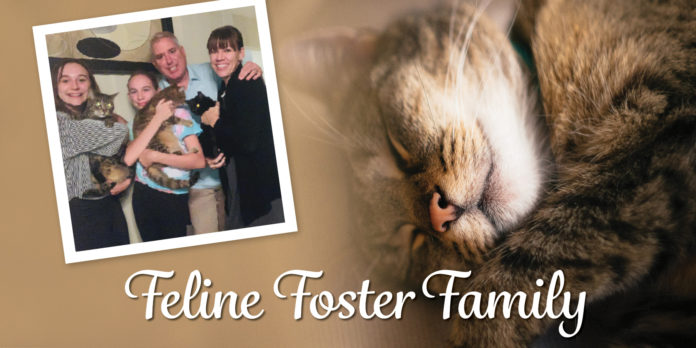
Stacey LaPointe, Promotional Marketing Specialist at Advance Advertising Ltd., moved to Toledo from Long Island in 1996, but now she feels like she has lived here her whole life. LePointe effuses, “Toledo is such a fantastic and welcoming city.” After meeting her husband Ryan at Marshall University in West Virginia, LaPointe moved to Toledo, Ryan’s hometown thinking they were simply stopping by for a bit. Married in 2000, the couple have established their life and become part of the Toledo community. They now have two girls, Claire (14) and Katie (12) and three cats Charlotte (14), Rainy (7) and Clarabelle (1).

LaPointe’s Toledo area community includes friends met through Paws and Whiskers of Toledo. LaPointe recalls that a few years back her children wanted to volunteer at Paws & Whiskers. Explaining that her daughters love animals, especially cats. “We started visiting different shelters in the area and what we loved about Paws & Whiskers is how the cats were free range and a cat could ‘live there forever’ as my kids would say.” The fact that Paws and Whiskers is a no kill shelter confirmed for the LaPointes that it was where they wanted to put their time. 

Labor of Love/Learning to Let Go

What began as simply spending time and socializing with the cats in the shelter developed into a commitment to help clean their rooms, make cozy beds, doing laundry, feeding and grooming them. In the fall of 2019, the family decided to take home a little kitten named Jellybean that needed to be bottle fed as she had been separated too early from her mother. “We had her for about 2 months. Letting her go was one of the hardest, yet rewarding experiences,” LaPointe recalls. Knowing that Jellybean was going to an extraordinary couple made letting go a little easier. LaPointe shares, “I think we realized we had a calling, and that was loving on these babies.”

Thinking back to the beginning of the pandemic, the five cats that the LaPointe family took on— one mom and her four little kittens— were a light and joy that helped them through the challenges of the statewide quarantine. Over the last year, the family has had fifteen kittens/cats in their foster care, adopting a little black cat at the beginning of 2020. When she first came to their home the black cat “was emaciated and timid {but she is] now a lovebug and the size of a puma (or perhaps a baby puma).” With the same birthday and name as one of her daughters, LaPointe couldn’t ignore the signs that Clarabelle was meant to become a member of the family. 

A Compassionate Community Resource

Paws and Whiskers provides a level of care and compassion that stems from a genuine love and respect for the creatures in their care. Adoption fees range from $75-100 dollars, which is invested to support the work of the shelter. Cats that are up for adoption are healthy, have had their shots, have been spayed or neutered, microchipped and dewormed. The shelter spends an average of $225 on each cat in their care. As Paws and Whiskers is a not for profit shelter, it operates through the efforts and financing from area cat lovers.

“We have met so many wonderful people through the adoption process, some have become friends because of this bond we share.” LaPointe describes the ladies at Paws & Whiskers as “loving, knowledgeable & helpful.” The community accessed through the shelter is a source of deep connection and service to the LaPointe family and those they have come to know through foster care and adoption at Paws and Whiskers.

Hook a Book Lover: 10 Clever Ways to Get Kids to Read

One of the most important skills a parent can encourage is to make their child a reader. Consistent reading leads to successes in academics and gives kids a solid start in life. In fact, recent research shows that kids who read at least 15 minutes a day have accelerated reading gains.

But no matter how diligently parents support reading, sometimes kids resist. Books have to compete with those oh-so-scintillating devices, video games and TV streaming apps.

Why not shake things up and try stealthy ways to create a book lover? These 10 ideas are sure to win over the most reluctant reader.

Free Stuff! If your kids don’t believe you, ask Alexa, Siri or Google “What free stuff can kids earn by reading?” and oodles of items will pop up. By merely recording the titles they are reading, my own children have earned Pizza Hut Personal Pan Pizzas, frozen yogurt, books from Barnes and Noble and amusement park tickets. One time my son turned in the most reading logs in our local summer reading program and was rewarded by being interviewed on the radio by a DJ. She gave him a basket of goodies, including movie tickets for our whole family.

Let the books out. Don’t cage books up on the shelves! Put bins and baskets of books in the bathroom, in the car, and spread out books with inviting covers on the hard surfaces in your home. Research shows that kids from print-rich homes are better readers, and it helps if the books, magazines and newspapers are out where kids can see them.

Reward with extra bedtime reading. Have you noticed that your child who has a plague-like aversion to reading during the day suddenly develops a fondness for it at bedtime? Embrace this and let your child earn extra reading time at bedtime. If he or she reads for a specified amount of time or a certain number of books, extend lights out for a few minutes— as long as your child spends that time reading.

Make your book nook the envy of the neighborhood. Think of a tent with twinkle lights, plump pillows and comfy chairs. Make your child’s reading space as comfortable and inviting as you can. A reading space in a school was a model of the fictional Narnia ship Dawn Treader. Kids climbed a ladder to a reading nook on top that was cushioned with carpet and pillows.

But you don’t have to get fancy— sometimes what adults think is simple is a kid’s reading castle. Drape a sleeping bag over the footboard of a bed for a makeshift tent or build a “reading cave” with old moving boxes.

Make it a double feature. Every year new films come out that are inspired by books. If your child wants to see a movie that was based on a book, have them read the book first and then rent the movie and watch it together. Compare the two, and have your child explain which he or she liked better, the movie or the book.

Get graphic. Graphic novels may not be the conventional kind of books parents grew up with, but they may draw your child into reading. And while you are mixing it up, let them read comic books. Or throw in some audio books and let them read on a device sometimes. Imagine all the possibilities that might engage your child in reading.

Order a magazine subscription. Magazine subscriptions that come specifically for the kids of the house make them feel grown up and tempt them to read. Some good ones to try: Ask, Ranger Rick, National Geographic Kids, Sports Illustrated Kids, Cobblestone, Ladybug and Highlights.

Tickle a funny bone. From Jeff Kinney’s Diary of a Wimpy Kid, to Peggy Parish’s Amelia Bedelia, or Sara Pennypacker’s Clementine, a funny story is a good way to hook a book lover. And if you read a humorous book with your child, you might find yourself chuckling along, too.

Let there be light. Let kids read with a flashlight under the covers! Also, there are a plethora of really cool reading lights in today’s universe. Headlamps are a unique option, and there are even book lights that keep track of minutes read.

Be a rock star reader yourself. Carve out time daily for your child to see you pouring over the paper, curling up with your favorite book, or discussing a tidbit from a magazine. Model a reading life, and your child will be more likely to embrace the same literature-loving values.

Childcare & Preschool Guide


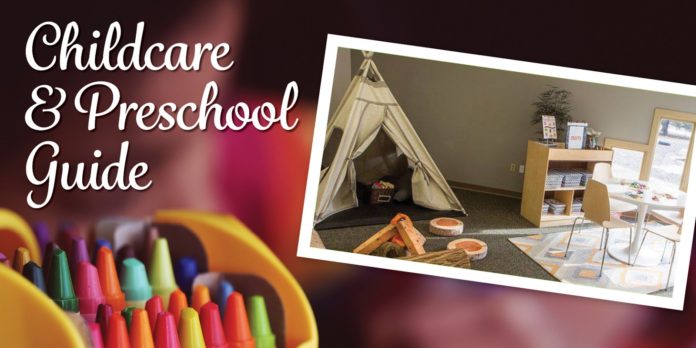
In an uncertain era, parents have much to keep in mind as they seek out childcare and preschools that are safe, affordable and effective. Learn about some of the Toledo area’s best options!

Children’s Discovery Center

West Toledo:
3839 Talmadge Rd.| 419-474-8303

Perrysburg:
11090 Avenue Rd. | 419-874-8203

childrensdiscoverycenters.com

Is your curriculum play-based, academic-based or something different? Children’s Discovery Center was founded on a mission to cultivate and nurture young minds through the unique Reggio Emilia education model. Recognized around the world, this inquiry-based approach invites children to explore concepts by investigating, creating and collaboratively solving problems as a group. The teacher and children work together to design projects that encourage growth in physical, emotional, creative and intellectual development. The teacher facilitates higher level thinking with the child, and acts as a resource, guide and documenter of learning in the classroom.

Since our educational philosophy views children as competent, capable and amazing, we seek to nurture their interests by creating developmentally appropriate learning centers that focus on each child’s interests.

We also believe early childhood learning begins with discovery in a compassionate environment. The atmosphere we have cultivated in our various centers is best described as adhering to The Seven Principles of Early Childhood Classroom Design:

Nature Inspires Beauty, Color Generates Interest, Furnishings Define Space, Texture Adds Depth, Displays Enhance Environment, Elements Heighten Ambiance and Focal Points Attract Attention.

Does the center offer half days and/or full days? Is lunch provided on full days? We offer full and half days. We do provide lunch.

Does the center have early drop off and/or late pick up available for working parents? We are open 7:00 am-6:00pm Monday- Friday. Some locations have extended hours.

What training/certifications and experience do the teachers hold? The Executive Director has a Master’s degree in Education and thirty-eight years of experience in early childhood. The Chief Operating Officer holds a bachelor’s degree, has taken graduate coursework in early education, and has twenty-five years of experience in the field. Most teachers and center directors are graduates of accredited colleges and universities where they majored in Early Childhood, Elementary Education or a related field.

What is the school’s Step Up to Quality star rating? Three.

How long has the school been operating? Children’s Discovery Center has been operating since 1982.

What kind of diversity experience does the school offer? Enrollment is available to any child regardless of race, color, religion, sex, or national origin.

What kind of support does your school offer for children with special needs?

Child Assessments: Formal and informal assessments are conducted on each child to evaluate developmental progress of educational and social/emotional skills. If there are areas of concern, community referrals may be made upon the parent’s request.

What is your school’s goal/mission? Children’s Discovery Center, a premier early care and education provider, respects the child, encourages learning through exploration, and supports the family within a creative, nurturing, and Christian environment.


What sets your center apart from others?

Reggio Emilia Approach to Early Childhood

STEAM Component

Enrichment Classes

Attractive Facilities and Equipment

Nutritionally Balanced Meals

Christian Philosophy

Accredited Kindergarten

Parent Conferences & Newsletters

Security &Camera Monitoring System

Parent Engagement App

Educational Consultant Assures Compliance with Ohio’s Early Learning

Content Standards

Discovery Room with Children’s Museum Exhibits

Inviting Classrooms featured in "Inspiring Spaces for Young Children"

Art Studio

Award-Winning Company:

Top 50 Largest Child Care Company in North America

Governor’s Award for Excellence in Enterprise

Ohio’s Outstanding Child Care Director

Cleveland District’s Small Business of the Year

BBB Torch Award for Marketplace Ethics

Athena Award

Milestones Recipient

Entrepreneur of the Year

Manager of the Year

What does an average day look like at your childcare center?

Preschool Schedule:

7:00–8:15 Arrival

8:15–9:00 Learning Center Rotation

9:00–10:00 Reggio, Project Based Experience

10:00–11:00 Morning Meeting, STEAM Centers

11:00–11:30 Project Reflection/Research

11:30–12:00 Outside

12:00–12:30 Wash Hands, Lunch

12:30–1:00 Clean-Up Lunch, Wash Hands

1:00–3:00 Nap

3:00–3:30 Snack/Clean-Up/Stories

3:30–4:30 Table Top Activities/ Choice Centers

4:30–5:00 Outside

5:00–6:00 Table Based Experiences


Educare Academy

Euclid: 631 Euclid Ave. | 419-691-6444

Oregon:
3158 Navarre Ave. | 419-693-6982

Rossford:
943 N. Dixie Hwy., Rossford | 419-666-9843

Toledo:
806 Starr Ave. | 419-693-7550
3580 Lagrange St. | 419-242-4777
111 Indiana Ave. | 419-254-4000
4450 Jackman Rd. | 419-478-3131
1940 W. Laskey Rd. | 419-474-3400
2303 Cheyenne Blvd. | 419-865-8191
1902 W. Sylvania Ave. | 419-214-1322

EducareAcademy.com

Is your curriculum play-based, academic-based,
or something different?

The Creative Curriculum® for Preschool, Guided Edition is a comprehensive, research-based curriculum that features hands-on, project-based investigations as a pathway to learning. It includes the most up-to-date early childhood development research and offers the embedded support and guidance to bring a content-rich, developmentally appropriate curriculum to life effectively.

Does the center offer half days and/or full days? Is lunch provided on full days? The program is 2 days a week.  M/W or T/TH 9:00-3:15.  Yes, breakfast, lunch, and snack are provided.

Does the center have early drop off and/or late pick up for working parents? Our program hours are 6:00am-6:00pm

What is the adult to child ratio? 1:12

What training/certifications and experience do the teachers hold?

Child Development Association (CDA), AA or BA in Early childhood education or related field.  There is ongoing Professional development yearly (30 hours)

What is the school’s Step Up to Quality star rating? All 10 locations are five-star rated.

How long has the school been operating?

We have been in business for over 50 years.

What kind of diversity does the school offer?

All children are welcome in our centers. Cultural diversity in our classrooms involves celebrating those differences and creating a culture of inclusion and acceptance among students and the greater school community.

What kind of support does your school offer for children with special needs? We have partnerships with many facilities in our community.

What sets your center apart from others?

We have a SUTQ 5 star rating.


Sylvania Children’s Center

3421 Talmadge Rd. | 419-537-1122

sylvaniachildren.com

Is your curriculum play-based, academic-based or something different? Play and nature-based, with a focus on learning through the children’s interests. We love to facilitate engaged learning experiences for our community of learners!

Does the center offer half days and/or full days? Is lunch provided on full days? We do provide half day and full day options, as well as options to have a few days or a full week. We believe that lunch is an extension of the home and family, so our children pack a healthy lunch daily. We do provide at least 2 snacks daily as well. In the late Spring and early Summer, this could very likely be coming out of our garden.

Does the center have early drop off and/or late pick up available for working parents? Our school day is from 8:30am-3pm, however, we do offer Extended Care from 7:30am to 6pm.

What is the adult to child ratio? As we are a NAEYC accredited Center as well as rated 5 stars on Step Up to Quality, our ratios are 1 to 4 for Infants, 1 to 6 for Toddlers, and 1 to 10 for Preschoolers!

What training/certifications and experience do the teachers hold? Our teachers hold degrees in Early Childhood Education.  Our professional development requirements are double the state licensure requirements!

What is the school’s Step Up to Quality star rating? We are very proud of our 5 star rating – and strive to continuously push for excellence!

How long has the school been operating? 29 years and going!

What kind of diversity experience does the school offer? We celebrate diversity both amongst our staff and children. Looking around, you will find an experience that welcomes all! 

What kind of support does your school offer for children with special needs?  We provide smaller class sizes, hands-on learning, and additional support and partnerships with agencies in the area.

What sets your center apart from others? We strive to build a community of learners with a focus on excellence. Our play-based environment is quite welcoming, nature-based, and completely surrounded around the needs of each child. We love what we do, and we think you can feel it as you come into our doors!

What does an average day look like at your childcare center? Our school day is from 8:30-3, but we offer care from 7:30am- 6pm. A very full day awaits every child that comes in, with much exploration and investigation. We love our outdoor playspace, and spend a lot of time there— rain or shine! Have you seen our garden? Let us offer you a favorite vegetable! Whether it’s reading a favorite book tucked away into the loft, or playing outdoors with your closest friend digging for buried treasure in our digging pit, we have something for everyone.    

What is your school’s goal/mission? Our mission is to develop a community of learners committed to excellence in Early Childhood Education! It’s a partnership and a team effort, and we love the inclusion of all!

Downtown Just Got Yummier: New Fowl & Fodder Downtown menu wows

Fowl & Fodder Downtown
614 Adams St., Toledo
Tues-Thurs, 9am-4pm | Fri-Sat, 8am-8pm | Closed Monday
fowlandfodder.com 

I don’t know about you, but I am tired of cooking. I’m sick of rotating through the same meals, spending the time on prepping and cooking, and making slightly different versions of our adult meal for the kids (only to have one or both of them politely tell me the food is “not so good”). 

So as a special Friday night treat to myself, I asked my husband, who works in downtown Toledo, to grab curbside from Fowl & Fodder Downtown on his way home from work. Not only did I get a break from cooking, but the kids got a break from mom forcing them to try new foods! 

The new Fowl & Fodder menu has been completely revamped. Chef Aaron Lawson explains, “I came in with a small team, and what started as a small tweak in the menu progressed to a 10-day shutdown and a complete menu overhaul.” He adds that the Southern flair is evident within many dishes because “Southern has always been a part of my heritage, so it usually comes out naturally when I write menus, but with the name Fowl & Fodder being farm-related, we just took that and ran with it.” He slides in, chuckling, “I’d like to give a shout-out to my wife, Stephanie Lawson, and the family for being so supportive with me starting this new adventure in such a crazy time.”

Perfect for families after work
Fowl & Fodder Downtown online makes it easy to order and schedule your pickup time. I ordered shortly after lunch and scheduled curbside pickup for after work, making sure to enter my husband’s car make and model. A subsequent email explained the procedure upon picking up the food. Easy peasy! 

I ordered the Pork Belly Cuban— pressed cubano bread, Toledo Spirits Heart of Gold pickles, whipped goat cheese and smoked chile mustard— with house made chips. The sandwich was yummy and big enough to provide leftovers for next day’s lunch. My husband ordered the avocado melt beef burger with smoked tomato jam, chipotle crema, seasoned avocado, crispy goat cheese, and Balance Farms sunflower sprouts. The burger had that delicious homemade feel. While we both enjoyed our sandwiches, the chips were jaw-dropping good–some of the best house potato chips we’ve ever had!  

My kids each ordered the chicken & frittes: two crispy chicken tenders with potato sticks, the homemade, healthier version of the fried food the kids crave on the regular. The chicken tenders reminded me of a homemade version of KFC, but waaaaaay tastier and less greasy with all of the flavor reminiscent of grandma’s fried chicken. The potato sticks were actual potatoes, cut and cooked with love! For my 5-year-old sweet-tooth carb lover, we ordered the cake doughnuts for dessert. While all of the food was delicious, the donut holes were a crowd pleaser. Make sure to order them regardless of what time of day— you won’t regret it. 

Brunch next time!
I love brunch. Absolutely love it. The next time we order from Fowl & Fodder Downtown, I play to try the tomato benedict, almond chicken and waffles, or the cornbread and chicken. Kids will love the pumpkin waffles, Southern waffles, French toast and (of course) the cake doughnuts. 

 Family-style takeout
Order a scratch-made menu packed with locally sourced ingredients! Hang up the apron and let Fowl & Fodder do the heavy lifting. Chef Lawson says, “With everything going on in the world right now and the added stress with kids and school— or even the lack of shelves being stock at the grocery stores— we wanted to offer an amazing and simple ‘take home and heat’ meal.”

Though the menu hd yet to be finalized as of press time, dietary restrictions can be accommodated. 

Bottom Line:
Fowl & Fodder Downtown has an eclectic, hyper seasonal menu that utilizes regional farms and locally crafted products. The creative twists on Southern fare will tantalize the taste buds. F&F Downtown is a one-stop shop for dining downtown with the fam, taking clients out for a socially-distant lunch, or safely picking up food after work for dinner. From brunch to lunch to dinner, they offer something for any time of the day, to please any palate, and to fit any budget. 

March/April 2021