Home Blog Page 229

Open House Guide

By Emily Remaklus and Erin Holden

With school resuming this fall, so has a sense of normalcy. There’s no better time to review your options if you are looking for your child to attend a different school, or if they will just be starting their educational journey. Our Open House Guide provides parents with a list of options to suit different needs, from Montessori schools to those that provide income-based aid for families. Explore these centers of learning to help with one of the biggest decisions parents can make for their little ones!


Cardan Montessori Center
1555 S. Byrne Rd., Toledo
419-787-7376 or 419-215-8151
cardanmontessori.com
Open House: Virtual interview and tours available now

Early childhood educators Jordan and Carmen Nathaniel discovered after having children that many Montessori schools were over their budget, and government childcare benefits did not offer them the opportunity to send their children to centers that offered more private and specific education. Wanting to give young, low-income parents the chance to send their children to a Montessori school, they opened Cardan Montessori Center. The Center accepts government benefits so that children in low-income households can have a quality Montessori education. Montessori studies come from Maria Montessori, who developed a way of education that allows children the freedom to learn through exploration, creating a sense of independence and a love for learning. The Cardan Montessori Center offers programs for children from infants to school-age. Jordan and Carmen Nathaniel’s ultimate goal is to open a chain of centers throughout the country so that underprivileged children nationwide can benefit from the Montessori Method.


Toledo Public Schools
419-671-0001|tps.org
High School Open House Dates:
Start High School: September 1| 5-6:30pm
Scott High School: September 1| 5:30-7pm
Bowsher High School: September 8| 6:30-7:30pm
Woodward High School: September 8|6-7pm
ANSAT (Aerospace & Natural Science Academy of Toledo): September 15|5-7pm

Whatever your child’s interests academically, the Toledo Public Schools system offers many resources to help them excel and find their niche. From college prep to vocational training like carpentry, welding, auto collision, aviation, medical technology, and animal science, “It’s offered at TPS.” Students who attend TPS also have endless opportunities for extracurriculars in athletics, the arts, and much more.

TPS standards for early childhood education and special education are second to none, and they are well-recognized for their Intervention Response Teams (IRT) to help any student who is experiencing behavioral and/or academic difficulties. No matter what your child is going through, there are resources to help them overcome it and thrive.

Though open house events took place in August and early September, parents who are looking to send their child to a Toledo Public School can always visit the website to learn more about the TPS mission and call to set up a time for a tour.


Cardinal Stritch Catholic High School & Academy
3225 Pickle Rd., Oregon
419-693-0465| www.cardinalstritch.org/
Open House: November 7|noon-3pm
Cardinal for a Day availability: Opens in October

Since 1960, Cardinal Stritch has been a leader in the Toledo area for Catholic education, focusing on helping students reach their academic and personal excellence. This year, Cardinal Stritch celebrates their 60th Anniversary in Catholic Education as the only Preschool-12 Catholic school in the Toledo area. Cardinal Stritch offers a wide range of courses, giving students the chance to discover new interests from Preschool-12. These courses include core classes along with theology, French, Spanish, engineering technology, performing arts, visual arts, health and personal fitness, and L.I.F.E. (Looking Into Future Experiences) Program classes.

The faculty members at Cardinal Stritch make learning fun as students transition to becoming independent learners from academy to high school. The school’s small group rotations help students with problem solving, independence and taking ownership of their learning.

Cardinal Stritch also has college credit options through AP courses and their partnerships with Owens Community College and The University of Toledo for college-credit-plus classes. To emphasize the importance of community service and life-long stewardship, students participate in Stewards of Stritch (S.O.S.) which requires a certain number of community service hours each year. As for after-school activities, 98 percent of students participate in extracurriculars such as athletics, performing arts and enriching clubs.


Children’s Discovery Center
Locations in Toledo, Holland, Perrysburg, and Waterville
419-867-8570 | childrensdiscoverycenters.com
Open House: Call for an appointment

With centers throughout the Toledo area, Children’s Discovery Center is a great close option for many families. This early care facility is a place where students learn through exploration, and it works hard to support children and families in a creative Christian environment. Children’s Discovery Center has programs for infants, toddlers, and preschoolers, and offers a Discovery Express School for kindergarten-aged children. Additionally, Camp Discovery is a summer program designed for school-aged children. The school follows Reggio Emilia’s approach to learning, which focuses on creating strong, powerful and capable children. The Center’s educators are degreed teachers who have ongoing training during the year. The programs are all Step Up to Quality star-rated and the Centers have won various local and national awards.


Educare Academy Child Development Centers
10 locations throughout Toledo
(419) 704-2009 | educareacademy.com
Open House: Schedule a tour online

With ten locations throughout Toledo, Educare Academy Child Development Centers make finding a local childcare option easy for parents. Children from infants to school age have a place at Educare. For parents with infants and toddlers, the school has partnered with Cuties Care, which provides diapers and wipes for little ones while at school, for an extra $10 a week. The school has also partnered with Lucas County Family Council and Great Lakes Community Action Partnership to provide Early Head Start and Head Start programs. Early Head Start is for children under three and helps prepare children for the transition to preschool, while the traditional Head Start program helps promote and strengthen school readiness for preschool-aged children. The Head Start programs help the children of low-income families to succeed when starting kindergarten. Free Pre-K is also offered for four-year-olds whose families meet certain income requirements. School-age children also have a place at Educare, where they can get assistance with homework, read, play games and engage in crafting activities before and after school. During the summer, the school-age kids participate in the Summer Camp program with learning opportunities and field trips.



Kids Astrology: Virgo

Aug. 23 – Sept. 22

Your Virgo child is particular; they know what they like and definitely let you know what they DON’T like. Creatures of habit, these children do best with a set routine. This month, their creative switch will flip on! Make sure you know where your crayons and markers are; otherwise, they will be expressing their creativity on your furniture and walls! If you exhibit frustration, you might stifle their natural ability to create.

Virgos are neatniks and will prefer simple surroundings without a lot of distractions. Go out and get an easel for them with some simple watercolor paints or crayons and let them create masterpieces! Designate a specific place to hang their creations and your little Virgo will grow up able to freely create. That nit-picky part of the self will fade away when your child realizes that you are excited about what they did. They will give you artwork that they feel is their best work!

Multi-Level Marketing Companies: Think twice before joining the ranks

Long before there was a “hustle culture,” there was the Tupperware Party and “Avon calling!” These direct sales companies lured stay-at-home moms to hawk their wares with the promise of added income and a vibrant social life. But opportunity proved that it could also quickly become an albatross for these eager entrepreneurs as unsold products littered their homes and resentment cluttered their social lives.

Today, companies such as LuLaRoe and Color Street, built upon the same sales model of those staples of yesteryear, tout the same insidious promise. Then as now, multi-level marketing companies can become financial honey traps which can take advantage of the vulnerable among us.

First, a bit of history
The first major Multi-Level Marketing (aka Network Marketing Business) company was launched just a few short years after the Great Depression. With the economy in ruins and wary families seeking financial stability, Nutralite tempted average homemakers with the lure of added income but without the need for a formal education or formidable business start-up costs.

Nutralite creator Carl F. Rehnborg, credited as the creator of the multi-level-marketing model, has his products distributed to this day by Michigan-based Amway, which was founded in 1959 by Jay Van Andel and Richard DeVos. In the decades since Amway (short for American Way) was founded, the company has faced ongoing accusations of nefarious pyramid scheme practices and spent millions in court to settle resulting suits.

After seeing record revenue in 2013, Amway’s profits have been on the decline. Yet the possibility of being lured to an Amway conference endures, and now, thanks to the arrival of social media, modern day clones like LuLaRoe and Herbalife use Rehnborg’s model as a blueprint for moving their own products. These companies tout the same promise, more often than not with the same results: a significant loss of both time and money at the precise moment in our lives when both are precious commodities. 

The “Be your own boss” facade
As the post-Covid 19 economy finds working families struggling to weave a financial safety net, the prospect of making big money with little effort is more alluring than ever.

According to the Federal Trade Commission, “Multi-Level Marketing companies sell their products and services through person-to-person sales.” With no brick and mortar storefronts, MLM participants instead sell their products from their own homes, the homes of their customers, or, more recently, online.  Accordingly, MLM companies, such as make-up company Younique, frequently use the term “direct sales”, which implies a sense of empowerment.

These companies turn a profit by one of two methods — either by selling their wares to “retail” customers who are not part of the organization, or by conscripting new distributors and collecting commissions earned from those new distributors’ sales to “retail” customers. The best way to identify an MLM company is by determining the source of income: If a company earns its profits by recruiting new distributors instead of selling products, they are an MLM operator.

Listening for a few key terms can provide some early warning signs. Language like “upline,” “downline,” and “levels” are good indicators that an organization is built on a pyramid structure. Likewise, upon being accepted into the fold, it is quickly made clear to new recruits that, in order to be successful, they will need to build inventory, and that reinvesting their revenue back into inventory will be critical to their success.

When you see or hear these phrases, it’s time to take a moment to remember your reason for considering these companies in the first place: you wanted to make money. Spending your own money to house a company’s products while you sell them to others is antithetical to that goal.

Legal, but nefarious
The difference between an illegal pyramid scheme and a legal multi-level marketing business is simple; if the focus is on selling products, it’s a legal MLM business, but if the focus is on recruiting more people, it’s a pyramid scheme.

Even when the focus is on product, however, that doesn’t mean you’ll actually turn a profit; stories abound of salespeople with a garage full of unsold products, and the amount of time one sinks into the effort is often far greater than anticipated.

MLM companies harness the inherent artifice of social media to their advantage by telling salespeople to adopt a fake-it-til-you-make-it persona online, bolstered by unwavering optimism regardless of how bleak your sales may actually be. And with mission statements claiming to uplift, empower, validate, and ultimately build the self-esteem of women around the world, the positivity is saccharine.

In the 2018 Vice article “How to Get a Friend Out of an MLM,” anonymous former Younique representative “Elle Beau” details how her experience with the company drove her and a few other like-minded writers to launch The Anti-MLM Coalition website, mlmtruth.org, which is dedicated to exposing the ugly truth about MLM organizations.

Mlmtruth.org is overflowing with resources devoted to helping others avoid repeating Beau’s mistakes, and the articles draw some startling correlations between MLM companies and actual cults that should be enough to make anyone take pause. Likewise, the Federal Trade Commission’s tips and advice,  Business Guidance Concerning Multi-Level Marketing, are indispensable resources for educating yourself and others about MLMs.

Richard Eppstein, President of the Northwest Ohio and Southeast Michigan Better Business Bureau, has seen his fair share of both pyramid schemes and MLMs during his time at the BBB, and doesn’t mince words when it comes to calling out the problems. “Pyramids always collapse,” says Epstein. “They always collapse, and they always break down because, frankly, you run out of people.” He adds that word-of-mouth from former victims and outright rejection from skeptical friends complicate the seemingly-simple early task of recruiting two people, enacting a domino-like race toward collapse. “Then we get a call from the person who started the whole thing,  furious at us because we put out an alert,” he says. “They’re going to sue us, and they’re threatening us, but then they disappear and we never hear from them again.”

If you suspect someone you know may be ensnared in a pyramid scheme, discretion is paramount when it comes to confronting them. People don’t respond well to being told they’ve joined a cult, so the best approach is to direct them to the FTC, or sit them down to actually crunch the numbers; once hidden factors such as taxes come into play, the grass starts to look a little less green.

There are time tested reasons to be wary of these business models, though some still insist that MLMs have provided them with an income and an outlet for socializing. Even so, these proponents appear to be the minority, and few individuals long to be viewed as “revenue streams” to their friends on social media. The best advice is to ask questions and be realistic about what is required for those who become distributors for MLM companies. The upside is always readily presented; however, at second glance, the potential downsides might not be worth it.

September/October Giveaway – Back to School Survival Kit

It’s an exciting time for the kiddos, but we all know that Back to School can be a little stressful for parents! We’ve put together a Back to School Survival Kit, including Under Cover Snacks made with quinoa and chocolate (we tried them – they’re delicious), plus two bottles of Vedic Botanicals Radiance Face Cream and their Balancing Body Mist (for a refresh after a hectic homework session). Enter today!

Are Bullies Making School a Nightmare for Your Kids?

By Communicare

Face-to-face bullying and cyberbullying by peers can threaten your students’ emotional and physical health and make their schools feel like unsafe environments. And while there’s heightened awareness of the prevalence of bullying in schools and online spaces these days, many students still struggle with reporting bullying—whether they experience it personally or witness the incidents. 

Let’s talk about equipping all local students with ways to recognize bullying behaviors and protect themselves and others.

Is That Bullying? 

Bullying can take many forms, including cyberbullying, and can happen at any age. Bullying isn’t limited to stereotypical experiences like being aggressively bumped into lockers, having your lunch money stolen, or being tripped in the cafeteria.

Bullying is a type of harassment. And in 2014, the Department of Education and Centers for Disease Control released the first federally recognized definition of bullying, defining it as unwanted aggressive behavior or a perceived power imbalance.

Here are some questions to have students ask themselves to understand bullying:

  • Do others make fun of my appearance or imitate me in a mocking manner?
  • Does how others treat me make me feel isolated and excluded?
  • Do others make hurtful or untruthful comments about me in person or online?
  • Have I been physically hurt at school, including being shoved or tripped?
  • Have I been threatened with harm in person or online?
  • Has anyone used their status or age to make me do things?
  • Do others force me to do things I don’t want to do, either by physical force or psychological methods?
  • Has my property been destroyed purposely?
  • Am I afraid to go to school?
  • Has my mental health suffered because of others’ treatment and behavior towards me?

How to Prevent and
Combat Bullying

According to StopBullying.gov, only 46 percent of students who were bullied during the school year notified an adult at the school. With more than half of bullying incidents going unreported, this means the majority of bullied students don’t get the support they need to deal with their experience or have the incident handled properly.

Therefore, students’ voices and actions can make a significant difference in stopping bully culture. Here are some ways your student can prevent and combat bullying in their school:

  • Be mindful of their own behavior; they may be exhibiting bullying tendencies without realizing it.
  • Stand up for others; promote anti-bullying programs and values.
  • Think before they post or comment online; ask themselves if the content could potentially harm someone’s feelings or reputation.
  • If they are bullied and feel unsafe about telling the aggressors to stop, walk away. Find an adult or authority figure to report the incident.
  • If they witness bullying, only step in if they feel they’re not putting their physical and mental health in danger. Then, report the incident to an authority figure.
  • Be kind; sometimes bullies are the most misunderstood and struggle with personal issues causing them to take their aggression out on others.

Just a few decades ago, there were few efforts to prevent bullying. Today, we see progress as all states have anti-bullying legislation. However, there’s still more we can do to ensure that bully culture is eradicated.

Should you have a mental health emergency, please call 911 or go to your nearest emergency room.

What Happens if My Child is Exposed to COVID-19 at School?

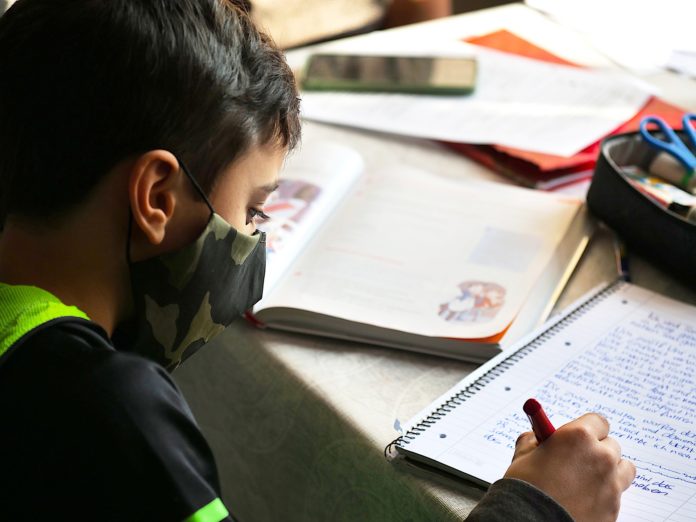
With COVID-19 cases rising again just as kids head back to school, parents may find themselves wondering what happens if their child is exposed to the virus in the classroom. Will they need to keep their child home, and for how long? Should the child be tested? Will this mean more remote school for everyone this year? 

Fortunately, Lucas County did not see much disease spread within classrooms last school year, according to health commissioner Dr. Eric Zgodzinski. “We were masking up, we were staying relatively far apart from each other, and those things really did work last year,” he says.

Zgodzinski expresses confidence about the continued effectiveness of these mitigation strategies even in the face of the more contagious delta variant. “You’re going to be much better off if you’re masking and staying at least three feet away, to be able then to curb those issues of disease in schools, but then, of course, there are the quarantine and isolation issues,” he says. 

In its back to school guidance, the Lucas County Health Department recommends a layered approach to prevention that includes vaccination, good ventilation, regular cleaning, universal masking, social distancing of at least three feet, hand washing and respiratory etiquette. 

To quarantine or not to quarantine

Earlier this month the Ohio Department of Health released a detailed flowchart to help guide decisions about the need for quarantine after a student or adult is exposed to someone with COVID-19 in the classroom setting. The flowchart addresses various scenarios based on school-wide preventive strategies, as well as the vaccination and masking status of the student, teacher or staff member who was exposed to someone with COVID-19 in a classroom setting.

The bottom line? If they are symptom free, individuals can safely remain in class and participate in extracurricular and sport activities if the school has all of the of the following layered prevention strategies recommended by the ODH in place:

  1. Masking required for all students and staff (regardless of vaccination status).
  2. Strategies to maximize physical distancing (at least 3 feet between desks).
  3. Documented COVID-19 prevention policies and procedures (identification of individuals experiencing symptoms, strategies to increase ventilation, protocols for cleaning, etc.).

If a school does not have all of the above prevention strategies in place, the question of quarantining gets a bit more complicated depending on the contact’s vaccination status and whether they were wearing a mask. The ODH offers guidelines for several scenarios:

Quarantining is not necessary for fully vaccinated students and adults, provided that they wear a mask indoors either for 14 days or until a viral test performed three to five days after exposure has come back negative. Vaccinated individuals can remain in class and participate in extracurricular and sport activities as long as they have no symptoms.

Quarantining is also not necessary for students and adults who are not fully vaccinated if the person who was exposed was wearing a face mask consistently and correctly. ODH guidelines call for the contact to continue wearing a mask indoors for either 14 days or until a viral test performed at least five days after exposure has come back as negative. They should continue to self-monitor for symptoms for 14 days following exposure, but may continue attending class and participating in sports and extracurriculars as long as they remain symptom free.

Anyone who tests positive for COVID should isolate for at least ten days from the date of the positive test.

Who needs to quarantine? 

Quarantine is required if the recommended layers of prevention are not in place, the exposed student or teacher is not fully vaccinated and they were not wearing a mask at the time of exposure, according to the ODH. The student or teacher may only return to school, sports and extracurricular activities after seven days if they receive a negative viral test performed at least five days after exposure. They should continue to watch for symptoms of COVID-19 for 14 days.

These ODH guidelines for students and adults only apply to exposures occurring in classroom settings. Individuals who are not fully vaccinated and exposed to COVID-19 outside of the school setting should refrain from attending in-person school and participating in organized sports or extracurriculars throughout their quarantine period.

Best practices for keeping kids safe

For the best chance at a safe and successful year, Zgodzinski advises parents to get their children vaccinated if they are eligible and to have them wear masks at school. It might not be necessary for the entire year, he says, but it is especially important now because the local community is seeing a rapid increase in COVID cases among all ages. 

“The idea here is we need to get our kids in school and keep them in, and we do that by making sure that kids are vaccinated and masked up,” says Zgodzinski.