Home Blog Page 228

Gearing Up For Solheim with Toledo Merch

The Toledo Store website shows off newly available merch for sale https://www.toledochamber.com/toledostore.html

The best way to represent your city is to wear it proudly on your sleeve…literally! In preparation for the Solheim cup, a special pop-up-shop featuring Toledo gear is now open downtown. Not only is it great to represent your own hometown, but the number of travelers set to be passing through the city is enormous, and everyone is going to want to get their hands on some Toledo merchandise at some point. The Solheim Cup is one of the first major international events being held in the United States post-COVID, which shows just how large the draw of the audience is expected to be. 

Some of the featured merchandise includes Toledo-themed t-shirts, sweatshirts, glasses, mugs, stuffed animals, keychains and bags. Much of the apparel, as shown in their promotional photo here, relates Toledo to being “the Glass City” and “Frogtown”.

The store is located right in the heart of all the action, the lobby of 300 Madison Ave., which is right across from Promenade Park on Summit Street and on the corner of Madison Avenue and St. Clair Street, right next to Levis Square. It opened on August 30 and will be in business daily from noon-6pm through September 11, with the exception of being closed on Friday, September 3. The shop will close when the Solheim Cup comes to an end, but is expected to reopen before the holiday shopping season. 

Jewish Fall Holiday Resources for the Family

PJ Library’s A Time to Grow cover https://pjlibrary.org/highholidays

Tradition through storytelling is what makes every holiday special for families. Reading to your kids is a great way to spend time with each other, but the next best thing is to create an engaging and interactive environment that leads to fun, yet meaningful lessons. From the history of the holiday to the traditions passed from generation to generation, getting your kids excited about it can seem like a chore when there’s little inspiration. 

PJ Library, a program of the Harold Grinspoon Foundation in partnership with local Jewish communities, aims to make resources for families celebrating the fall holidays easily accessible and readable for all ages. Their expanded 2021 fall version is called “A Time to Grow: A PJ Library Family Guide to the Fall Holidays.” Overflowing with activities, recipes, rituals, playlists, music videos, podcasts, and more, it’s sure to make Rosh Hashanah and Yom Kippur even more exciting.

With a focus on breaking down the meaning of each holiday, the traditions behind them, and their origins, PJ Library has collected all of the best resources and organized them in a way for kids to be able to engage with the content online. The free, downloadable guide is available on their website and is also friendly for iPad and mobile use.

Whether you’re celebrating at synagogue or at home, A Time to Grow will serve as a fun and engaging activity to experience as a family, don’t miss out!

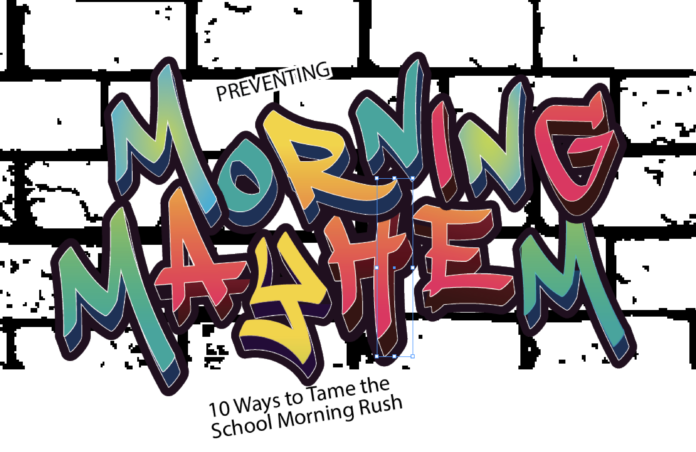
Preventing Morning Mayhem

Not ready for the morning chaos of getting everyone ready? Here are some ways to reduce morning mayhem.

By Jill Morgenstern

My home recently underwent two years of renovations. And although the lengthy process had distinct disadvantages, there was one perk: a hole in the ceiling directly under my son’s bed. Rather than run upstairs and make sure his alarm had done its job, I was able to bang on the floor of his bedroom with a broom handle. This crude wakeup call saved precious moments for me every weekday. With a new school year arriving, you may also be dreading those early mornings. But even without a convenient hole in your ceiling, here are some ways that you can save time and hassle in the morning.

#1) Get Kids to Bed on Time

Everything runs more smoothly when kids get enough sleep. According to leading sleep expert Richard Ferber in his book Solve Your Child’s Sleep Problems, the average six-year-old needs ten and a half hours of sleep and a ten-year-old needs an average of ten hours. While this may seem difficult with work, school schedules and after school activities, the closer you can get to giving your child this much needed rest, the easier mornings will run. A well-rested child will be easier to rouse and more compliant with instructions throughout the day, not just early in the morning.

#2) Pack Lunch the Night Before

Early mornings will go more smoothly if you don’t realize you are out of carrots five minutes before you’re scheduled to leave the house. Packing lunch the night before not only saves time in the morning, but it also allows an extra cushion for when expected items are not on hand, making mornings less hectic.

#3) Get as Much Done on the Weekends as You Can

Mornings can run smoother if grocery shopping is planned for the week and clean clothes are ready and waiting. Some parents even go as far as picking out outfits for the week and lining up five sets of snacks for lunch boxes over the weekend, when timing is not so critical.

#4) Choose Clothing the Night Before

Lining up the week’s clothing ahead of time is not feasible for everyone, but choosing clothing the night before saves much needed time in the morning. Not only does your child not have as much to think about during those groggy early mornings, but laundry emergencies such as a lack of clean socks can be taken care of the night before. Making sure shoes, hats and coats have a designated spot and are present and accounted for the night before will also help prevent morning mayhem.

#5) 10 Minutes Earlier

Ten minutes may seem like a small amount, but it can make a huge difference when it comes to getting ready in the morning.

#6) Keep Backpacks at the Ready

Make sure and have a designated spot for the backpacks. Before bed the night before, make sure all homework is already inside and ready to go! One easy way to accomplish this is to train your kids to put their homework into their backpack directly after completing it.

#7) Make it a Game

Try timing certain parts of their mornings. Some children will like the challenge of getting dressed faster today than they did yesterday.

#8) Ban TV in the Mornings

Even having the TV on and tuned to the news or weather can be distracting to children. If TV in the mornings is the habit at your house, try banning it for a week and see if it improves your morning routine.

#9) Delegate

Assign certain chores to your kids. Whether it’s picking out their clothes the night before or gathering snacks for their lunch box, kids should definitely be responsible for parts of the morning routine. In addition to making mornings run more smoothly, giving children more responsibility for readying themselves can provide a myriad of benefits including increased self-control and building problem-solving skills.

#10) Shower or Bathe the Night Before

Especially if your child likes to lounge in the tub or shower, before or after dinner is a better time to bathe than mornings.

Using some or all of these tips can help prevent morning mayhem. Just a little saved time in the morning can get your child off to a cheerier start to their day, entering the classroom with the best foot forward. Not to mention, starting your day off on a more pleasant note.

Focaccia’s Brunch Menu + New Patio

I am a city girl at heart, and strolling through downtown Toledo brings me joy. From the Arts Commission Summer Spectacular to the Adams Street Block Party and Toledo Pride Live at the Park, downtown Toledo is pulling Toledo area families, including ours, to the city for daytime fun.

Weekend brunch is an option Focaccia’s has added to the downtown offerings, along with a brand new patio, the Garden at Focaccia’s.

When Prakash Karamchandani (PK), co-founder and owner of Balance Pan Asian Grille, posted photos on Facebook of his family brunch at Focaccia’s, we knew we needed to take our kids. I asked PK if I could include his photos with this article. He acquiesced, adding, “Honestly, it (the brunch at Focaccia’s) was really good. I don’t write reviews often…so it’s got to be really impressive to have me going to Facebook!”

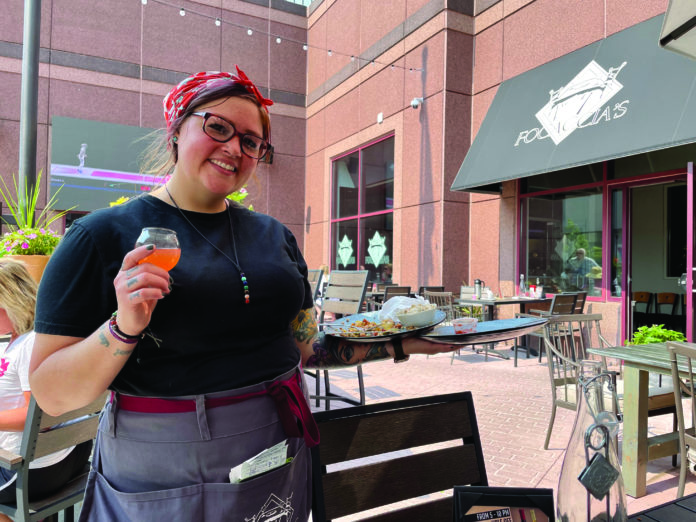
The Garden at Focaccia’s offers plenty of outdoor seating, either in the sun or under an umbrella. As an exceptionally pale family, we opted for the shade. Our waitress, Cassandra, was personable, patient and accommodating. She ushered us to the only available shaded table, cleaning it for us even though there were several clean and open tables in the sun. When we couldn’t decide on our meals because everything sounded delectable, she provided suggestions based on customer popularity (she is a vegan). Cassandra stood out as a stellar server and made our experience more enjoyable.

A Toledo tradition with a full rebrand 

After viewing PK’s post, I told the kids about the French toast with Lucky Charms. While it wasn’t available the day we visited, there were plenty of other kid-friendly options. Camille chose the beignets with fruit, after I explained they were essentially small doughnuts covered in powdered sugar and honey. Her brother wanted to order the same, but I assured him his little sister would share. He took a risk and ordered his first-ever chicken and waffles, requesting the maple syrup on the side.

Both kids enjoyed their food, clearing their plates completely. I sampled their selections: The beignets were rich with the perfect amount of locally sourced honey. The sugar-pearled waffles were fluffy and sweet, and I didn’t think they even needed syrup. The house-brined chicken tenders tasted homemade and I finally understood the allure of the popular meal.

My husband opted for the chicken fajita omelette with strips of chicken, peppers, onions, tomatoes, shredded cheese and salsa with focaccia bread on the side. Alex isn’t one to rave about restaurants, but he delivered a rare compliment: “It was really good!”

My latent German blood spoke to me when I read about the Cure All: a jumbo potato pancake buried beneath bacon, jam, sausage, peppers, onions and mushrooms and topped with cheddar cheese and two over-easy eggs. I requested the sausage gravy on the side, which I’m thankful for, as the meal was perfect without it.

We were seated around 11am and most of the tables around us were drinking, so we figured it was socially acceptable to order drinks ourselves. Alex ordered the Prince with Empress gin, rosemary syrup, lemon and blood orange. After seeing several other customers with mimosa flights, I went with that to sample multiple takes on that champagne-based libation. The three varieties I tried included Daphne (muddled berries and bubbles), Whitney (peach juice, mango juice, OJ and bubbles) and Heidi (habañero syrup, bubbles, blood orange soda). They were all delicious, but Heidi was my top pick.


The Short Course
Outdoor dining: Yes.
Online ordering: Yes.
Carryout: Yes.
Delivery: Yes.
Kids’ Menu: No, but
kid-friendly options.


Bottom Line:
Focaccia’s is the perfect downtown spot for a family weekend brunch, providing both indoor and outdoor dining options. The brunch menu offerings are unique and flavorful, and everything tasted house-made. The Garden at Focaccia’s offers views of both the cityscape and the river. Whether you are dining with your family or with friends, make sure to check out their extensive list of handmade cocktails.

Baby Food Dangers: Report warns about heavy metal levels

On Feb. 4, a staff report by the House Subcommittee on Economic and Consumer Policy stated the Food and Drug Administration and World Health Organization have declared some baby food as dangerous for their neurotoxic effects, due to high levels of heavy metals such as lead, arsenic, mercury and more.

According to the report, babies are constantly developing and growing, which causes them to absorb more of these heavy metals into their system as compared to adults. Infant exposure to heavy metals is linked to those children having a lower IQ.

The Subcommittee conducted an internal investigation with four large baby food brands—  Nurture Inc., Beech-Nut Nutrition Company, Hain Celestial Group, and Gerber. The products had traces of arsenic, lead, cadmium and mercury, some of which aren’t screened for before the food is put out for sale.

Wal-Mart, Campbell Soup Company, and Sprout Organic Foods also were asked to be included in the investigation, but declined.

Not just a baby food problem

Some baby food companies specifically screen for heavy metals in their ingredients, such as Cerebelly, Yummy Spoonfuls, Tiny Human Food and more, according to Executive Director of the Clean Label Project, Jackie Bowen.

“The issue with heavy metals in baby food is not just a baby food problem, it’s a food problem,” Bowen said.

Rice, root crops and chocolate all have high risks of heavy metal accumulation due to their proximity to soil, according to Bowen.

“The lead, arsenic, mercury, cadmium are found in air, water, soil, that’s how those metals get into our food,” said Lauren Uhrman, pediatric nurse practitioner at Promedica.

Homemade?

Some parents are now looking to homemade baby food as a possible solution to the dangers of heavy metals, but Bowen explained this isn’t the answer— vegetables are all processed from the same manufacturers. Uhrman also believes homemade baby foods won’t get rid of all heavy metals in babies diets, but it lets parents know what ingredients are in it.

Uhrman also suggests parents try a variety of food ingredients, which will limit the amount of exposure to heavy metals. “Every two days introduce a new type of vegetable, fruit or grain,” said Uhrman. Also, she said parents should avoid rice-based snacks and fruit juice.

“Parents are sometimes inclined to reach for organic options,” said Bowen. Organic ingredients have reduced exposure to pesticides, but the U.S. Department of Agriculture’s (USDA) National Organic Program don’t screen for heavy metals.

Uhrman stated parents are always encouraged to speak with their pediatrician with any concerns.

Bowen agreed the best way to counteract the heavy metals is to create a varied diet and recognize ingredients such as rice, chocolate and root vegetables that are high risk for heavy metals.

Local solutions

Local communities can play a part enforcing state governments to create regulations for chemicals, heavy metals and other elements. “Reach out to local and state representatives, and your favorite brands and retailers,” said Bowen. She’s also hopeful the latest report from the House of Representatives will create an investigation and additional action for baby food safety.

“View your dollars as a vote for the food system you believe in, and use your vote wisely,” said Bowen.

For additional information about the baby food studies produced by the Clean Label Project, visit their website here.

Tips For Toddler Toilet Learning (Not Training)

Written by Rachel Montgomery

Dr. Maria Montessori, an Italian doctor who developed the Montessori method of education over 100 years ago, once said, “The greatest development is achieved during the first years of life, and therefore it is then that the greatest care should be taken. If this is done, then the child does not become a burden; he will reveal himself as the greatest marvel of nature.”

The Montessori method aims to guide children on the path of their natural development toward independence. It is truly a marvel to watch very young people learn so much in such a short time! This holds true as well for the family experience of “potty training.”

In Montessori education, we call this process “toilet learning.” Why? Well, it’s a learning process! Just as infants and young children gradually learn to walk, talk, and feed themselves, they are also learning to care for their own bodies. Children are discovering their body’s needs and signals, like when they have to go! Their families have the joy, and sometimes immense challenge, of helping them on their continual journey towards self-care and independence. To describe this experience, I will use the term “parent,” but these tips and ideas are for any adult caregiver in a child’s life.

A Gradual Process

As their bodies develop, children are gradually becoming more aware of their senses and gaining more control of their bodies. Around their first birthday, or when they are walking comfortably, children typically develop the physical ability to control their bladders and bowels. Parents can do a lot from infancy to help a child in this development. They can begin by talking the child through the diaper changing process to better understand the experience. Self-care and using the toilet begins as a collaboration between a child and their parent.

As Simone Davies of The Montessori Notebook explains, using the toilet is a very natural and gradual process that develops at the child’s pace, rather than when the parent decides their child is going to be “trained.” Parents can look for signs that the child is growing interested or curious about the toilet or diaper changes, and for patterns in their eliminations (urine/bowel movements). Parents can also start to change them standing up, allowing them to participate in the process of dressing and caring for their body.

When children later become interested in dressing and undressing themselves, parents are encouraged to choose elastic waist pants to make dressing simpler and easier. Children can even wear underwear or training pants so they can begin to understand what it feels like to be wet and dry. Step-by-step, parents can show them how to pull down their pants, sit on the toilet/potty, use toilet paper, pull up their pants, flush the toilet and wash their hands.

There are many different skills to master on the journey to toileting independence!

Preparing the Environment

As your child shows more interest in the toilet, set up your bathroom to allow more independence. When children are involved in the process, they feel ownership and pride in what they can do. Through this preparation, the child is given the optimal environment for practice of self-care.

Suggestions for setting up your bathroom include:

  • Consider moving all or most diaper changes into the bathroom, changing the child standing up when they are ready and even move your changing pad/mat to the bathroom if that works in the space.
  • Keep a pile of cloths for cleaning, a bucket or basket for wet clothing and a pile of clean underpants nearby when the child begins wearing them.
  • Help build confidence by making the toilet environment comfortable. For example, give the child a stool for their feet. If you are using a child’s potty, keep it in the bathroom so your child always knows where to find it.
  • Add a stool to your bathroom so your child can reach the sink.

Supporting Your Child

Because this area of development requires so many different skills to align, it is essential to observe and listen to your child to meet their needs and help them be successful. Try to remain calm and neutral, rather than getting emotionally involved with the process. Here are a few suggestions when helping your child:

  • Observe for cues: What behaviors does your child do when they are about to eliminate? If you notice them doing “the potty dance” or looking anxious, offer to take them to the toilet. You can say, “Let’s try sitting on the potty” or “It’s time to sit on the toilet.”
  • Get consent! Try to offer the potty without forcing your child to sit. It is their body, and they are learning that they have control over it. You can be encouraging and positive with your tone to get them excited about trying. If you do offer it as a choice, accept their answer if they say “no,” and try again later.
  • Set up a routine: Help your child remember to use the toilet by offering to take them at predictable times. For example, always offer when they wake up, after breakfast, before snack, before lunch, before nap, etc. You will learn how often they need to go, so build potty breaks into their daily routine.
  • Approach “accidents” as neutrally as possible so as not to cause any feelings of shame or failure and avoid scolding. Instead say, “I see you are wet. Let’s go get some dry clothes.” Mistakes are a part of all learning and development, and toilet learning is no different
  • If you notice your child has wet clothes but they are busy, for instance playing with a toy, consider wiping up around them and then waiting a few minutes (or seconds) for a natural break in their attention before interrupting them. It will help them transition more easily and can reduce tantrums when they don’t feel like their play time is being taken away.
  • Celebrate with your child if they are feeling excited or proud of their accomplishments! Observe your child and meet them where they are emotionally. However, too much excitement/praise from an adult could cause them to feel pressure to succeed rather than to feel proud of what they can do.

Parents, It Will Be Okay

The process of toileting happens differently for all children and in their own time. Try to relax and observe what your child can do! A calm and matter-of-fact attitude shows your child that this process is a normal and natural part of life. Everybody goes potty! Some children will gain independence quickly, within a few weeks, while others may take a few months. Rest assured, your child will eventually master this life skill in their own time!

Additional Resources

For more tips, check out these articles:

·         8 Montessori-inspired phrases to use

·         A Montessori approach to toilet training

·         What Montessori parents do differently – toilet learning

·         Montessori tips for toilet learning (potty training)

·         Potty training the Montessori way: Q&A with an expert

Rachel Montgomery has been a Montessori teacher since 2011 and is a toddler teacher at Daycroft School in Ann Arbor.