Win family passes to the Drive-Thru African Safari Wildlife Park!
Sign up now for your chance to WIN!


Sign up now for your chance to WIN!

The next time you bring your child to the doctor for a checkup, the conversation may be a little different than what you’d expect. That’s because — for the first time in 20 years — the CDC has updated the developmental guidelines for growing children in accordance with the Learn the Signs. Act Early program. The guidelines, which were updated in early February, 2022, are now designed to help parents make sure their children are meeting crucial milestones as they continue to grow, and to recognize the potential signs of autism and other developmental disabilities.

What were the changes?
For the last two decades, the guidelines were set so that children who were in the 50th percentile, or in line with 50 percent of children, should meet specific milestones at a specific time. Now, the CDC has moved that benchmark up to the 75th percentile, or 75 percent of children, meaning more children should be meeting specific milestones.
The increase provides parents and doctors with more opportunities to catch any developmental delays so they can take proactive steps to help them get back on track, and to seek help when needed. “It can prompt parents to look more closely at their children, and — if they think their child is not doing the activities that 75 percent of other kids are doing at their age — they can consult with their pediatrician before it’s too late,” says Ashley Muszynski, MD, a pediatrician for ProMedica Physicians in Oregon. “Another major reason for the update was because the CDC now has evidence that children should be doing specific actions at specific ages,” Dr. Muszynski adds.
There is a checklist to follow for each age, from two-months-old all the way up to five-years-old, bringing the total number of checklists to 12 and the number of milestones to 159, down from 216 milestones across 10 checklists. Some of the changes include:
Dr. Muszynski says that crawling should have never been that important of a milestone, as children can crawl at various ages. “What I look for is not necessarily the mechanics of crawling, but if the child has the appropriate strength throughout their bodies to allow them the ability to crawl. If I have a child who is doing everything that we expect them to be doing except crawling, I’m not going to be as concerned,” she notes.

You can find the full guidelines by clicking here. The CDC also developed a mobile app that can help track the guidelines. If a child misses a milestone, the app sends an alert to parents to meet with their pediatrician to discuss any potential concerns.
Concerns of the changes
With these changes, it’s important for both parents and their children’s pediatrician to make sense of them, according to Dr. Rebecca Jackson, Vice President of Programs and Outcomes for Brain Balance. However, she fears that the extensive changes will make it difficult to find the new information. “You have to do a lot of digging,” she says. Dr. Jackson is also a parent. “When I’m going through the checklist, what I’m looking at as a parent is if I can easily identify if my child is reaching x, y and z milestones,” she says.
Dr. Jackson worries that pediatricians across the country are not aware of the CDC’s changes. “The changes were made without training to go along with it, so pediatricians who are unaware of the changes may not be prepared to facilitate conversations with parents,” she says. “If there is training that’s been released, it’s not widespread and it’s not well-known.”
Unsure? Follow your parental instincts
If you are one of the parents who falls victim to the confusion, Dr. Jackson wants to make clear that the checklists are not the end-all-be-all. “Nobody knows your child better than you. Just follow your gut, even beyond CDC guidelines, if you have concerns.”
Dr. Muszynski agrees. “Overall, I think having the checklist is good, but at the end of the day, these are just guidelines, and no parent is going to be perfect at following the guidelines at 100 percent.” Dr. Muszynski stresses that if parents are ever unsure, they should reach out to their pediatrician.
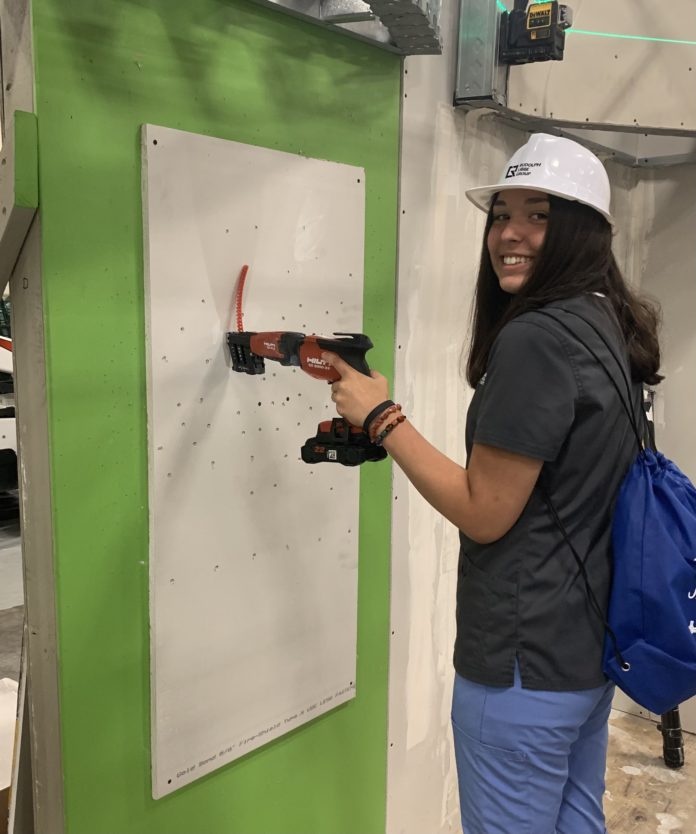
Designed to showcase the trades and various career opportunities, Junior Achievement’s event, JA Inspire, attracted thousands of students to the Glass City Convention Center last week.
Mercy Health proudly showcased opportunities in the medical field, while Meteorologist, Dan Smith, showed students how to deliver the weather at the Channel 13 booth.

OCP, a leading contractor in the area, showed students how to finish drywall and use a screw gun.

According to organizer, Julia Simon, students jumped at the opportunity to try various things and more importantly, might have even found their calling. Now that’s inspiring!
You can read more about the background of this event here.

Preschool has long been touted as the necessary foundation to early childhood education. Politicians and institutions will often champion the cause of universal preschool for all children, beginning at the earliest ages possible. But what effect does public preschool education actually have on young children?
A recent study conducted by Vanderbilt University examined the state-funded preschool program offered in Tennessee and found some shocking results. Student progress was closely monitored over the course of years, and participating students were examined in third grade and again in sixth grade. It found that students who attended public preschool fared worse than students in the control group who did not attend, both in test scores and behavioral issues. They experienced “significant negative effects” and tested “worse than their peers.”
The study examined students who participated, comparing their achievement tests and disciplinary data to non-participating children.
Third Grade:
Sixth Grade:
While participating students had a slight advantage at the onset of Kindergarten, the study showed that the control group quickly caught up to the students who attended public preschool, with any benefits quickly waning. Researchers noted that public preschool tended to initially benefit at-risk children from disadvantaged backgrounds, but could be detrimental to children from middle income families. The younger the child was at the time of enrollment, the higher the negative impact.
Could stress be a contributing factor for educational and behavioral challenges among children who experience group or formal care at a young age?
Researchers are looking at the effects of stress on children who attend daycare and extended care preschools. The National Institute of Health noted that the majority of children saw an increase in the levels of the stress hormone cortisol in an institutionalized setting when compared to natural stress levels at home. For girls, this presented itself as anxious behavior, while for boys, it showed as an increase in aggressive behavior.
“Stress is a normal part of development and daily life,” said Dr. Danielle DeLong, director of psychology services at Harbor of Toledo. “Quite often, we feel stress that helps us stay engaged and functioning at a productive capacity. Infants feel stress when they cry, and then they feel calm again when an adult can help them soothe. When an infant is exposed to prolonged stress, also known as ‘toxic stress,’ this can change the development of the brain, affecting a child’s social and emotional abilities. Many children who experience this level of stress will have a harder time working through problems, communicating effectively with others, sharing and taking turns.”
Dr. DeLong noted that extended periods of time in an institutionalized setting could potentially be detrimental to a child’s growth and development.
“While preschool can be a valuable tool to support the social, emotional and academic growth of children, research has found that there is such a thing as ‘too long’ in childcare,” she says. “Experts generally recommend between 30 and 45 hours as the maximum amount of time in childcare per week. Additional time spent in childcare can lead to poor peer interactions and adjustment concerns for children ages two through kindergarten.”

Quality of care is also a concern for public preschool participants.
“Preschool can be a nourishing environment for children as their brain develops, just as the home environment can be,” said Lindsay Stormer, LSW and team lead of Infant and Early Childhood Mental Health at Harbor. “What is important to know is that, whether it is at home or in preschool, your child’s formative years are from birth until age five, when 90 percent of brain development is occurring. For some children, most of this time is spent in a childcare setting, which can vary from center-to-center and classroom-to-classroom.”
For this reason, Stormer feels that teachers hold a large responsibility in developing child behavior.
“When a teacher has less training and less ability to problem-solve challenging behavior, the environment may offer fewer benefits socially, emotionally, and academically, contributing to potential behavior difficulties later.”
Stormer maintains that a quality preschool program can still have a positive impact on child development.
“When a child is in group care, they are generally exposed to more language, social play, and a structured environment,” she said. “These benefits improve child behavior and can help support a child, both socially and emotionally.”
Here are some things Stormer recommends considering when choosing a preschool:
“One of the disadvantages is that, in Ohio, infant classrooms are staffed at either a 1-to-5 or 1-to-4 ratio, teacher-to-child. As professionals, we understand that, generally, when raising children it is more effective to have more adults provide caregiving. As the adage goes, ‘It takes a village’. When fewer adults are available to support caregiving, such as in group care, children are more likely to incur changes in the brain that may lead to challenges later.”
“Look for warm responses that include patience and a willingness to teach.”
“A connected child will be engaged in their play and attuned to the teacher — signs of a healthy environment that prioritizes growth and development.”
Do the children seem comfortable approaching their teachers for help? Do they seem happily engaged in their play?
“As you observe, be mindful of teachers who appear more invested and engaged with the children, as opposed to those who stop engaging and have a conversation with you. These teachers may have a greater understanding of the impact they have on the growth of the children in their care.”

Originally opening in North Carolina, The Doula Xperience has now expanded services in Northwest Ohio and Southeast Michigan. Its owner, Anita, who prefers to be referred to simply as “Anita the Doula,” is a Toledo native with a team of six certified doulas, all of whom provide non-judgemental support to women and their families. They offer full-spectrum doula services which include birth, postpartum, and bereavement services. The primary role of a doula is to provide emotional and educational support to women and their families to create a healthy and joyful birthing experience.
Doula services can include developing a birth plan, providing education on stress and coping tools, and being present at or after the birth of a child. Knowing that not all babies survive delivery and some are lost during pregnancy, Doula Xperience also provides bereavement support.
“Our services are custom for every client,” says Anita. “We empower our clients to schedule their own appointments. We can explain plans or interventions they receive from their medical team. We encourage women to take birth classes, and we make them aware of resources. We stress the importance of taking vitamins and eating well.”

Evidence Based Birthing Support
The benefits of doula services are evidence-based and include decreased low-birth weights, decreased birthing complications and a higher likelihood for breastfeeding. These outcomes are especially important for women of color and other marginalized communities who are experiencing higher maternal and infant mortality rates. The Doula Xperience offers inclusive support, recognizing that some women may be hesitant to reach out due to mental health or substance use disorders.
“We have a diversity in our personal and professional backgrounds. We also have lived experience; we literally live in the communities we serve. We’ve graduated from these schools. We have experience with these systems,” Anita says of serving in the greater Toledo area.
Support that comes to you
Services are provided wherever the family calls home. Postpartum services include home visits, even if it is in a shelter. “We provide support with “the firsts” — feeding and bathing. We can provide overnight support so the parents can get a full night’s rest. We can help change diapers to get them ready for feeding. This may also include light housekeeping for the baby or sibling, or helping with their laundry.” Anita explains.
Women can reach out for an initial consultation for services upon learning they are pregnant. Pregnancy does not always go as planned, and Anita encourages women to request services as soon as pregnancy is confirmed. “We’ve met some women who are due any day or already in the hospital, and that’s fine. But not all babies go to the due date, so if our services can be in place early on, we can also be there for support if the baby comes early, which is an emotionally trying time.”
While doula services are not free or covered by Medicaid in Ohio, Anita encourages women to reach out regardless of income. Their services are private pay, but Lucas County currently has grants to help cover these services for women who qualify. Lucas County is one of ten counties in Ohio with a focus on lowering the maternal and infant mortality rate. Lucas County continues to address infant and maternal health through the Lucas County Health Improvement Plan.
Addressing Racial Disparities
The Doula Xperience offers services to women of all races, but is also proud to provide representation for women of color.
With a glaring disparity of maternal mortality rates, opening a doula practice has been a long-term goal for Anita. The maternal mortality for Black women is 40 percent higher than their white counterparts. According to the CDC, 60 percent of all pregnancy related deaths are preventable.
Access to quality care and not being understood by medical professionals are two of the reasons women of color experience such different birth outcomes. Despite popular belief, studies have also shown that poverty is not a factor when it comes to disparities. Women of color with college degrees and higher incomes are still dying at higher rates than white women without high school diplomas when experiencing the same medical complications.
There can be a greater level of comfort knowing someone else in your support network has had similar experiences. “Women of color are not being heard. A lot of us have stories of trauma. We [The Doula Xperience] can be there as a patient advocate. We are not only trying to save women and babies, we are trying to help them be heard, regardless of race,” Anita shares.
For more information about The Doula Xperience or to schedule a consultation check them out online at doulaxperience.com.

The Detroit Catholic High School League, the largest Catholic League in the country, announced in March its expansion plans from its current 27 schools to 32 with the addition of Toledo’s five Catholic schools. This is the culmination of Director of Athletics for the Detroit Catholic League Vic Michaels’ ten-year quest to welcome the Toledo schools into its organization.
Toledo’s five Catholic schools include two all-girls schools, Notre Dame Academy and St. Ursula Academy; two all-boys schools, St. Francis de Sales, and St. John’s Jesuit; as well as Central Catholic, the only co-ed school. They will begin competing with the Detroit Catholic League in the 2022-23 school year.
Several factors played into this expansion. Most recently was the departure of four public schools from the Three Rivers Athletic Conference, a move made without the Catholic schools. With this departure, the Toledo Catholic schools had to weigh the benefits of staying independent or finding another League.
Travel time was the primary factor to consider. Administrators looked at Cleveland, Columbus, and Detroit as possibilities. Cleveland’s drive time is approximately one hour and 45 minutes from Toledo, Columbus’ drive time is approximately two and a half hours, and Detroit’s drive time is approximately one hour. Out of the 27 Detroit schools already in the League, the longest drive from Toledo is only about one hour and 15 minutes, with the majority being approximately 55 minutes. It became clear that the drive time to Detroit was comparable to previous drive times the Catholic Schools had in the past. Transportation will be a combined effort between the Toledo schools and parents of athletes.
This expansion provides several important benefits, primarily regarding football. With the addition of the three Toledo football teams to the League, scheduling games became far easier and more flexible, much to the relief of those responsible for scheduling them. Instead of needing to schedule five separate non-conference games, there are now only two: one for the opening and one for the closing of the season. This also provides the possibility of not needing to schedule games with Canadian teams.
This move will also strengthen the girls athletic teams, specifically softball. Scheduling is now far easier and more flexible, allowing the League to schedule according to specific sport and school’s strength. This provides the opportunity to create a more balanced playing field for all sports and schools.
Though the public’s perception may be that these schools are rivals, Father Geoff Rose, OSFS and President of St. Francis, is hopeful that this will shift. “I hope this is an opportunity for the people in the community to see us work really well together,” he said, per Mick McCabe of the Detroit Free Press, adding “it’s not the first time we’ve worked well together.”
Despite the obvious benefit of strengthening all 32 school’s athletic teams, another more subtle benefit is collaborating with other schools who share the same values and beliefs. The League also includes non-Catholic associate members schools: Ann Arbor Greenhills, Bloomfield Hills Cranbrook Kingswood, Grosse Pointe Woods University Liggett, Macomb Lutheran North, and Bloomfield Hills Jewish Academy.

Explore
Magazines
© 2026 ToledoParent.com. All Rights Reserved. Website development by Web Publisher PRO