Your child is a humanitarian who sometimes can be prone to self-sacrifice. This month, it’s essential to teach your child how to love themselves, and that when they love themselves, others will love them for who they are. The birthday theme is, “Know Thyself.” One way to do that is to have them try different ways of expression. Personally, I recommend checking out Boomwackers, a toy that allows kids to learn notes and how to create a beat. If you’re throwing a birthday party, get the kids together in a circle and put the wackers in the center of it. Let the kids choose two of the tubes and play a beat, then have them pass the tube to the kids next to them and have them copy that beat. It’s enjoyable to hear the kids as they mimic each other and create their musical sounds. It also gives them self-confidence as they collaborate to make music.
You can give your child pots and pans with different types of spoons, a creative way to explore making their own unique sounds. They can also put on a talent show, play charades, draw pictures, and many other methods to express themselves with their friends. Maybe throw an art party! Your child will enjoy helping you put together the perfect party for them, especially when it allows them to create from a place of exploration. And don’t forget: your Aquarius child’s mind never stops! The expression will enable them to clear their mind and feel joy.
Although January in Ohio can be dreary with the cold weather and the holidays coming to a halt, this month also marks the exciting start of the 2023 Girl Scout Cookie Season! As of now, Toledo residents will have the opportunity to support local entrepreneurs by placing their orders for Girl Scout cookies. Each box sold helps provide local Girl Scouts with special experiences such as service projects, troop travel, and summer camp.
This year, community members have three ways to show their support for the Girl Scouts program through cookie orders. From now through March 19, Girl Scouts will take orders to make personal deliveries to customers.
Beginning February 17, customers will have the option to order cookies from pop-up booths that will be located at supporting businesses.
Beginning February 27, those who wish to purchase Girl Scout cookies will have the additional option to place their orders online through Digital Cookie®. The online order platform ships directly to a customer’s doorstep and features an online exclusive, the Raspberry Rally™. Customers opting for more traditional delivery methods will be able to choose from familiar flavors such as Thin Mints™ and Samoas™.
Those who purchase Girl Scouts cookies this season will be able to enjoy their purchase while knowing that they are helping girls develop their skills in financial planning, teamwork, decision-making, and innovative thinking. To purchase cookies, supporters can either reach out to a registered Girl Scout they know or enter their zip code into the Girl Scout cookie finder at gswo.org/findcookies.
Stacy Harper: Stacy Harper is the Executive Director of Avenues for Autism and has been with the organization for nearly three years.
According to a recent study, in the United States, 1.5 million children and adolescents ages 3-17 are living with Autism Spectrum Disorder (ASD). Those same children are faced with several barriers in their lives, including limitations on social interaction, verbal and nonverbal communications and repetitive behaviors.
Stacy Harper: Stacy Harper is the Executive Director of Avenues for Autism and has been with the organization for nearly three years.
Avenues for Autism, a Toledo-based nonprofit, is working to remove those barriers along with several partnered organizations throughout Northwest Ohio and Southeast Michigan with the goal of providing opportunities for inclusion, empowerment and the ability to succeed in life.
“The autistic community can count on us to explore their options and to walk beside them as they discover new possibilities. We are humbled to serve them when they need us the most,” explains Stacy Harper, executive director of Avenues for Autism. “We witness firsthand what individuals with autism can accomplish when the limitations are removed.”
Roots in Toledo
The organization got its start in 2004 as Great Lakes Collaborative for Autism through the efforts of Bob and Suzy Tyner, parents of a child with autism. They used their personal challenges to help other parents with autistic children cope with similar struggles. In 2019, Great Lakes Collaborative for Autism changed its name to Avenues for Autism and continued to promote the same level of public awareness of autism, actively searching for partners of other autism-focused nonprofit organizations and providing financial relief to families in need.
“We can provide up to $1,500 per family per year to assist them in caring for their family member,” says Harper, adding that it costs about four to six times more per year to cover therapy, medical costs, the purchase of sensory enhancement items and other needs for development. Since 2018, Avenues for Autism has given over $300,000 to families. Harper adds that the financial assistance means even more for parents who are forced to move to part-time employment, or no employment at all, to care for their loved one. Their YouTube video, “Avenues for Autism,” explains the in-depth impact that raising a child with autism has on families.
To help provide funding to families, the organization runs special events and fundraisers throughout the year. All funding comes from the Suzanne Tyner Fund. The organization usually runs two fundraisers each year: the Suzanne Tyner Autism Assistance Fund annual breakfast in April that directly benefits the Susan Tyner Fund, and the 9 and Wine Golf Outing that happens every August.
The Vision Moving Forward
In 2023, Avenues for Autism is launching a new program; Autism Navigation Services, that will provide family therapy and coaching, individual therapy for parents and caregivers and a referral program for some families to one of the partners they work with. The goal is to help autistic individuals develop and maximize their potential without limits. The organization had a soft launch in November and looks forward to growing the program in the coming years.
To get involved in making a difference for those living with autism, sign up to be a volunteer for the organization’s events or by donating on their website.
“Individuals affected by autism are quite remarkable because no two individuals are the same,” says Harper. “They are unique in their own special way, just like those without autism.”
In 2021, the Children’s Hospital Association, American Academy of Pediatrics, the American Academy of Child and Adolescent Psychiatry and the U.S. Surgeon General declared national emergencies of child and adolescent mental health. The crisis had been brewing for decades but became more apparent with the pandemic as uncertainty, isolation and disruptions to routine and support systems took hold.
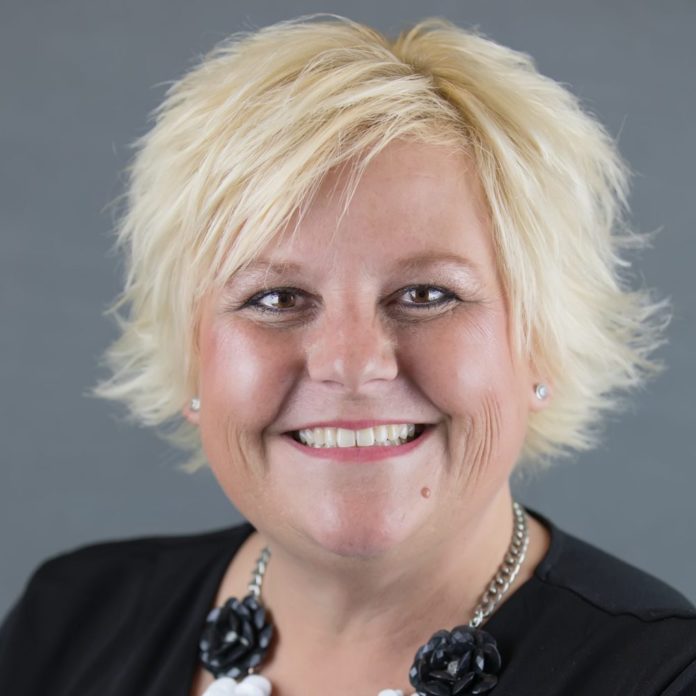
“The pandemic has led to an increase in anxiety and depression as adolescents have had to manage isolation and even death/illness of family members. To then try to navigate back into the world as restrictions are lessened has been challenging,” said Dr. Regina Eich, Maumee Pediatric Associates. “Navigating social media, school, healthy relationships, and activities adds stress to an already stressful life dynamic. This manifests as anxiety anddepression in adolescents and the need for recognition and intervention right now is high.”
For this reason, primary pediatric care is often the first step for families and caregivers who are looking for help.
“Pediatricians are able to recognize when those signs and symptoms of anxiety and depression are present and can easily help guide patients and families to appropriate services and treatment,” Dr. Eich said.
“Mental health is just as important as our physical health and often affects it, especially in children. ‘Wellness’ includes our body as well as our mind.”
Disrupting behaviors, distressing thoughts
“When a child has significant and persistent impairment in multiple areas of their life due to strong distressing emotions, disruptive behaviors or other behavioral concerns, or is having trouble managing distressing thoughts or worries, this often qualifies as a mental health condition,” said Dr. Nasuh Malas, M.D., M.P.H, director of pediatric consultation-liaison psychiatry and service chief for child psychiatry at University of Michigan Health C.S. Mott Children’s Hospital.
These declarations set the stage for what has amounted to a large-scale effort to address child and adolescent mental health in primary care.
“Early intervention can provide meaningful support,” said Malas.
Screening in a primary care setting also creates an opportunity to normalize discussions of emotional and behavioral health and prevent further symptoms and the resulting impairment of function that can happen when a mental illness gets worse.
Make sure when your kids are heading in for their well child visit, they are also being asked about mental health.
Anxiety is kids’ biggest challenge
According to Malas, anxiety is the number one mental health concern kids (and caregivers) bring up to providers, though incidences of other mental illnesses are also increasing.
Anxiety is an innately human experience that may allow us to complete tasks or achieve a high-quality performance when we feel it in small, brief doses, such as stress before a test or speaking with new people.
Usually, this feeling subsides quickly. But when it does not, and the distress is persistent and impacts several areas with reduced functioning, the person likely needs professional support. This may mean counseling/therapy and adjusting demands on them or changing their routine.
In children, mental health challenges including anxiety can result in displays of strong emotions (sadness, loneliness, irritability, outbursts, severe anger or rages, withdrawal), physical changes (muscle tension, headaches, abdominal pain, restlessness, feelings of one’s heart racing and sweating), and may translate to a variety of behaviors including avoidance, tearfulness, withdrawal from activities, panic, aggression, or expressions of fear.
Family histories and personal experiences also play a role, with children of parents with mental health conditions more likely to also suffer from them, and kids who have survived traumatic events being at-risk, too.
Malas stresses that the role of primary care providers is paramount in identifying youth with mental health conditions.
Pediatric guidelines on suicide, depression and anxiety evaluation and management can help bring awareness of ways to prevent, identify and treat mental health conditions early in a child’s life, before they have had major impact on its quality.
How caregivers can help
Kellie Cripe, LMSW, of Ypsilanti, who has experience in child maltreatment, crisis intervention, trauma therapy and management consulting, offers the following advice for parents and caregivers looking to provide support to kids.
“I think it is imperative to start building that comfort level at a very young age,” Cripe said. “Making sure your children know how to identify their emotions and can talk about them is key. As caregivers, we also need to recognize kids’ expression of emotions may have an underlying meaning. For example, a child who acts out in what appears to be anger may be scared and not know how to express that fear. Also, consider the developmental level of your child, and set your expectations accordingly.”
Cripe also reminds caregivers that one of the most important factors in resilience is having at least one close, positive relationship with a parent or other safe adult. This person can also include their primary care doctor.
Other Tips:
– Practice your own coping skills so you can model them for your child.
– Offer opportunities to talk privately at a time when the child can listen with full attention and in a space that feels safe and comfortable.
– Create time to engage in meaningful activities to highlight your child’s strengths or provide opportunities for conversation.
– Reach out to community support systems if the child’s emotions or behaviors are growing more impairing for the child.
– If a child has been diagnosed with a mental illness, it never hurts for parents or caregivers to also receive help and support.
Dr. Regina Eich, Maumee Pediatric Associate, discusses the importance of primary pediatric care when diagnosing and treating mental health issues in children.
Dr. Eich encourages families to trust their instincts.
“Don’t let anything stop you from getting help,” Dr. Eich said. “If you suspect there is a mental health concern, there likely is. Reaching out to your child’s primary care doctor is the best place to start for help.”
In the community improvement and service spirit of the Dr. Martin Luther King Jr. holiday, beginning Saturday, January 14, through Monday, January 16th, the National Museum of the Great Lakes will open their doors for FREE to give thanks and in recognition of all the support our visitors, members and community partners have shown over the years. 10am-5pm. National Museum of the Great Lakes, 1701 Front St. nmgl.orghttps://toledoparent.com/calendar/#!/details/Community-Appreciation-Days/11337635/2023-01-14T10
MONDAY 16
School’s Off, Parks On! Mini-Camps: Hopeful Heroes Mini-Camp
On Martin Luther King Jr. Day, school is out for a day of remembrance of this important, world-changing hero. What better way to celebrate than a day full of fun, age-appropriate camp activities focused on finding his inspiring messages of diversity, celebrating differences, and hope in nature? Activities include story time, crafts, nature strolls, and games focused on how we can all make the world a better place. Register online. $28. Wildwood Metropark, 5100 W. Central Ave. metroparkstoledo.com
The Toledo Museum of Art will open as a space for respite and reflection in honor of Dr. Martin Luther King Jr. on Monday, January 16, 2023, from 11 a.m. to 5 p.m. In honor of the iconic “I Have A Dream” speech TMA will offer various programs that connect to the legacy of Dr. King Jr., and the speech that took place 60 years ago at the march on Washington. 11am-5pm. Toledo Museum of Art, 2445 Monroe St. toledomuseum.org







 Disrupting behaviors, distressing thoughts