Home Blog Page 93

Preparing for the First Day of Kindergarten

A child playing at a desk.
The transition into elementary school can be a big change for both kids and parents. Photo from Pexels.

A child’s first day of kindergarten is a milestone. According to three local, experienced kindergarten teachers, parents are often more nervous about their child starting kindergarten than the child.

“I think parents realize, oh my gosh, they’re in elementary school. They’re not my little baby anymore,” Rachael Lehman observes. Lehman is a veteran kindergarten teacher of twenty years with Anthony Wayne Local Schools (AWLS).  


Ensuring your child is ready  

Academics

One area of concern for parents is whether their child may be behind or ahead academically. It is helpful if kids know their colors, can identify a few letters of the alphabet, recognize their name, and count to ten. 

Emily Lyren, kindergarten teacher for 23 years at AWLS, wants parents to feel assured. “We stress that everybody is starting at their own place, and not to worry… Kindergarten teachers understand that kids are coming in with different experiences with preschool and from a different starting place with their learning.” 

Independence skills

Equally important to numbers and the ABCs are basic self-help skills. Kids need to be able to work their own clothes such as buttoning buttons, zipping zippers and taking their coats off and on, open their own lunch items and use the bathroom independently. 

Social and emotional

Kindergarten is also about helping kids be socially and emotionally ready for first grade. Parents can help kids adjust to the increase in structure and expectations by emphasizing to kids that they are in school to learn. Helpful ongoing conversation topics include respecting the teacher and the rules, following directions, being kind to their classmates and trying their best. 


RELATED: TutorSmart Helps Bridge the Educational Gap


Preparing for the first day 

For separation anxiety Lyren suggests, “when parents leave kids with relatives or a babysitter, remind kids that they always come back. Remind them that when they go to school, we will always be back to pick them up.” Parents can send a picture of themselves to put in their pencil box, so kids can look at it when they are feeling nervous.  She also recommends the book, “The Kissing Hand” by Audrey Penn about a racoon’s first day of school. 

Helping kids know what to expect can also help with first day nerves. Some schools let parents come in on the first day and others have parents drop kids off to their teacher at the door. If your child is riding the bus, likely they will sit up front near the bus driver. 

Separating on the first day or two of kindergarten can be tough for some kids and parents. Dana Sayre, Toledo Public Schools kindergarten teacher of 28 years, wants parents to keep a positive tone. As they are preparing to leave, parents can say “Oh, this is so exciting! What a wonderful day. You are starting kindergarten, and I will be back when school is done.” Then leave knowing that your child is in good hands.


More tips for parents: 

  1. Check backpacks, discuss schoolwork and reinforce what they are learning. 
  2. Communicate with the teacher. Read the information that the teacher sends home and communicate any questions or concerns. 
  3. Read to your child.
  4. Ensure regular attendance.
  5. Routines: Children thrive on routines both in the classroom and at home. 
  6. Have a time and place for your child to do homework

Save Money on Back-To-School Shopping With These 12 Tips

Notebooks and pens laying on a desk.
There are several ways to make sure you’re not overpaying for school supplies every year. Photo from Pexels

This year’s back-to-school season looks more normal than last year — thankfully! However, what’s not normal is the cost of all the supplies your kids will need for their reading, writing and arithmetic.

If you’ve taken a trip to the grocery store or gas station lately, then you’ve noticed that the price of everything has gone up. Which means that with the start of the school year just around the corner, back-to-school supplies could be more expensive than ever.

That’s why I’m sharing 12 money-saving tips to help you save big on your back-to-school shopping. As a mom of two teens, I’ve used each of these tips with great success over the years. So whether you utilize one tip or all of them, they’ll help you get your kids the supplies they need without breaking the bank.

Bring a school supply list when shopping and buy just what’s on it.

By using the list as a guide, you will fill your cart with what your kids need as opposed to what they want. Check your school’s website for supply lists or bring the one sent directly from your child’s teacher.

Pay close attention to each store’s weekly sales flyer.

Whether you view it online or simply grab the store flyer when you walk in, the flyer showcases the best deals. Stores advertise deeply discounted items, such as 25 cent boxes of crayons, to lure you in.


RELATED: Choose Your Seat! Northwest Ohio Offers Excellent Educational Options


Try not to do all your shopping in one store.

If you shop in just one store, you’ll get a bargain on some things, such as those 25 cent crayons, but you may pay full price for other things simply because you are already there.

Shop at different types of stores.

Each kind will have different items on sale. School supplies can be found at grocery stores, superstores, dollar stores and office supply stores, as well as online.

Check apps for each store or follow them on social media.

Most stores will offer digital or printable coupons or a discount code that you can use to save at checkout. It only takes a few seconds to check.

Stock up on good deals.

If you find an item that’s an amazing price and definitely something your kids will use, then go ahead and stock up! One year I found lined notebooks for 17 cents. I bought ten, even though my kids only needed a couple that year. I knew I would probably not find a lower price and my kids would always need notebooks. That stash of 17 cent notebooks lasted us several back-to-school seasons.

Don’t forget to shop what you have at home first.

Find last year’s haul of notebooks (or pens or highlighters, etc.) that you got at an unbelievable price. Or perhaps your child was required to have colored pencils for a class last year, but she never even took them out of the box. They’ll still work great this year.

Buy generic or store brand items vs. name brand.

When my daughter needed plastic folders with fasteners one year, I noticed that the generic version cost 50 cents compared to $1.99 for the name brand. Buying generic was a no-brainer, especially since my daughter needed five of them for different subjects. That said, a teacher once told me that when it comes to pencils, it is worth it to buy the name brand. She shared that generic pencils splinter and crack like crazy and never make it through the whole school year. So spend a little bit more on the name brand pencils to avoid a late night run to the store in, say, March when the generic ones don’t last!

Try to stay away from licensed merchandise.

The items with a cartoon character or a rock star adorning them usually cost more simply because you’re paying for that image to appear on them.

Go back-to-school shopping without the kids tagging along.

That way you’ll avoid the inevitable pleading for items that are trendy or cool, but probably aren’t needed.

Don’t shop in-store when you or your children are hungry.

Otherwise, all the effort you put into getting great deals will be blown on that bag of chips and candy bar that your kids (or you) just had to have at the checkout.

By utilizing these money-saving tips, you won’t get schooled by back to school shopping. Here’s to a great school year!

5 Productive Questions to Ask Teachers at Conferences

A person talking to a group of people.
Photo from Pexels.

Fall conferences are around the corner. As a parent, I get excited about that fifteen minute slot allotted to have a one on one with my child’s teacher. I look forward to hearing about progress and struggles and strengths through more than what I see in homework worksheets. Sometimes a conference goes great, but sometimes we walk away thinking we just heard a script that is being repeated for every student.

Starting the conference with specific questions gives you the opportunity to focus on what is important regarding your child. Areas of study covered or assessment scores can be done quickly and even in other communications. Addressing the following questions will give both you and the teacher a better understanding of the child throughout the year.

Here are five questions you can ask to help you get the most from those minutes with the teacher.


1. What do you see as an area of strength for my child?

This question focuses the discussion on your child specifically while still giving the teacher the opportunity to evaluate all subjects. Sometimes parents find this answer surprising as kids can show different abilities in the classroom than at home. Fostering a love of learning can help bring these hidden strengths out in the home as well as at school.


2. If you could pick one area to focus on improving for my child, what would it be?

Sometimes it is difficult to think about all areas of learning at once. Focusing in one area at a time for improvement helps define the priorities within the classroom. It also gives something concrete to work on at home.

It is great to update this question with the teacher throughout the year. Sending an email or utilizing school communication apps is a great way to check in regarding progress as well as give the teacher the opportunity to shift the focus to something new as your child improves.


3. How does my child contribute to the class atmosphere?

This may seem like an unusual question, but it can provide a lot of information. Different personalities shine in different ways independently, but as you blend twenty of those unique personalities together new things can be revealed.

This will give you an idea of how much your child may contribute to class discussions or how they may be a great helper for another student. Maybe you’ll discover that your child is great at following directions and modeling good behavior for other students or even that they provide a funny idea to give everyone a laugh.

Asking this question gives insight on how your child’s personality comes through in an academic environment. This is especially useful to understand as kids approach middle school and issues like popularity can impact their learning experience.


4. Who does my child work well with?

Giving the teacher the opportunity to look at the social element of learning is just as important as the academics. This can be a good barometer of how a child is doing socially as well as give parents insight.

Understanding who your child is able to work well with at school compared to the friend that is fun, but may actually be a distraction when it comes to school work, will help everyone create a more successful learning environment.

Vanderbilt University has shown that increasing social skills results in students who are more responsive to academic learning.


RELATED: Mindfulness in Parenting and Teaching 


5. Do you have any concerns about my child?

This question can never be asked too much. Sometimes we are so busy getting through the list of assessments, reading levels and academic achievement that we can miss the bigger picture.

Giving teachers and parents both the pause to consider any areas of concern emotionally, socially or developmentally addresses the whole child in his or her learning environment.

The State of Disability Awareness and Support in Toledo

Two people taking a picture.
Tony Stuart from Friends For Life Residential Care’s Uncle Larry.

City officials and local organizations have worked together to help Toledo make steps towards improved disability awareness and support. Local leaders in this field have shared where the city excels and where it still needs improvement.

Tony Stuart is the CEO and director of Friends For Life Residential Care, 5330 Heatherdowns, Suite 207.  Stuart started Friends For Life Residential Care in loving memory of his Uncle Larry, who had a developmental disability. Stuart holds many cherished memories of him.

Since 2011, this small agency has been dedicated to helping to promote a better quality of life for individuals with developmental disabilities. They also produce the Friends For Life Podcast.

Toledo’s strengths

A person on a podcast.
Tony Stuart, CEO and director of Friends For Life Residential Care.

“I think the biggest thing that they (Toledo) have done right has been to create a change in culture,” Stuart said. “For a long time, it has felt as if there were several different levels of disability rights. And when you think of disabilities, I like to think of a triangle — you have the individual being served, the person or agency doing the service and the family that’s involved with that individual. There used to be a tug on each one of those. I think Toledo has begun to really change the atmosphere of how caring is possible.”

Stuart saw that change following the pandemic, which alerted the community that they needed to provide more support for people with disabilities.

One of the efforts Stuart mentions is Mayor Kapszukiewicz’ decision to establish the Mayor’s Office on Disability.

Stuart James is the executive director of the Ability Center of Greater Toledo, 5605 Monroe Street, Sylvania, a social services organization which gives support to individuals with disabilities.

“We (Toledo) are behind the bell curve but that’s largely because we’re an older city so modifying it (the delivery of support services for individuals with disabilities) just takes time,” James said. “I think the best thing about Toledo is we have a significant group of people, including … people (in high profile positions), who are willing to make the effort to get it right.”

Room for improvement

Tony Stuart sees Toledo’s biggest issue as supporting people with disabilities with housing. He has seen how people in the community have been affected by housing issues in Toledo through his work.

“I don’t know if it’s so much a Toledo thing versus it being an economic thing,” Stuart explains, adding “It is very hard to find appropriate housing for a lot of the population that we serve, especially when you’re trying to serve people in residential settings. One of goals for the past 25 to 30 years has been to not have individuals in facility settings, but (rather to let them) live like you and I do, in community settings and be a part of the community. When you have such a housing shortage and such a lack of ways to make things accessible to folks, it can be very tough.”

The Ability Center’s James points out that Toledo needs to improve transportation options and access for people with disabilities. “If you are a person with a disability and you don’t drive, trying to get to work every day is a problem. It can be difficult,” James said.

James shared a story of a person he knows who lives in an area that would likely only take about 10-15 minutes by drive to his employment by car, but it takes him about two hours to get to work and two hours to get home.


RELATED: “Nothing for us, without us.”


Physical accessibility is another issue which James points out presents locally and nationwide. He emphasizes how difficult this can be for kids.  “It is about trying to get teachers and school administrators to allow kids to dream beyond the boundary of their disability,” James said.

He added that physical accessibility can have an effect on a kid’s social life. While a student’s school may be accessible for them, this may not be the case when they go home. For example, James posed the scenario where a kid with disabilities may not be invited to a peer’s house because he or she can not get to the basement where the peer is hanging out.

While Toledo has made moves towards providing support for people with disabilities, there are still many areas which need to be addressed. Toledo has a long history of supporting people with disabilities over more than a century and the City continues moving toward a goal of being the most disability friendly community in the country.

Teaching Chess Makes Kings and Queens of Toledo Youth

Painting of chess game

The young girl’s drawing was simple, yet revealing and powerful. It was in two parts: one, titled “Before Chess,” with her looking over a chess board, feeling confused and lacking confidence; the other, titled “After Chess,” with her smiling and surrounded by hearts and stars and words of thanks to the man whose help transformed her through learning the game.

“It was a sweet drawing that she gave to us,” said the man drawn in the picture, Warren Woodberry.

Woodberry, a retiree who with his wife, Yolanda, teaches Toledo Public Schools youths that time-honored game of strategy to build up their self-esteem, give them a place where they can put troubles aside while deep in concentration and have fun.


She is one of many over the past dozen years or so who the Woodberrys have taught after school during the academic year. Working from their base at Jones Leadership Academy, the Woodberrys greet and meet students from four other TPS buildings: Ella P. Stewart Academy for Girls, Escuela SMART Academy, Grove Patterson Academy and Winterfield Venture Academy. They also host homeschooled youths.

Warren said TPS transports Ella P. Stewart and Escuela students to the academy, while parents bring their children from the other two schools to Jones for the sessions, which run from 3-5 p.m. on Tuesdays and Thursdays. The Woodberrys are at the academy on other days to welcome other students who want to join the chess program.

Many of the youths have learned the game well – several have won state and national competitions.

The chess powerhouse of sorts began by accident. Warren said he and Yolanda were at the Frederick Douglass Community Center working with youths in art and talking about inventions. “I had a chess board beside my desk,” Warren recalled, “and kids thought it was for checkers. I showed them the game.”

“Toledo’s not a chess town, like New York,” said Warren, who worked in the clothing business in New York City, where he met Yolanda. With the Woodberrys’ guidance, youths learned the game.

Warren said TPS leadership asked the Woodberrys to expand the chess program, which led to the move to the academy.

There have been challenges. “We’ve had some cases where kids didn’t want to be there,” Warren said, “but converted them and many went on to win championships.

“We offer more than chess,” he continued. “We do counseling. We spend two hours interacting with them. The kids are free to ask questions, and we feed them. Sometimes we have 15 to 20 kids, make sure they’re sociable. We don’t allow bullying or bad language.”

Eventually, he said, “some get hooked on the game and become competitive.”

Warren said in the early years, all the youths were boys. Then girls started showing interest, some going on to win championships, he said. The last couple of years it’s been pretty even between the genders.

While the school year is over, the Woodberrys continue to teach chess to youths in first through seventh grade through a summer camp at Woodward High School from June 3 to July 3 called Brains and Body, conducted by the Toledo Police Department.

Warren reflected on teaching chess to youths. “Some students pick up the game very quickly and some learn at a slower pace,” he said, “but eventually we have had positive surprises with the slower paced players on the learning process who takes more time but gives more thought than some of those that quickly learns the game of chess.”

“Chess has a great effect, it relaxes you,” he continued. “People who play chess can put away all their issues and concentrate on the game. There’s a calmness.”

As for not only next school year but the foreseeable future, Warren, 86, said, “I’m in good shape. I’m going to do this as long as I can.”

Eco-Fill Shop Owner Jocelyn Blank Offers Products Good For Families and the Environment

A family taking a picture.

Have you ever said to yourself “There’s got to be a better way” as you toss one more giant plastic detergent bottle into the recycling bin? Luckily, there is, thanks to a small business based in Bowling Green. 

Eco-Fill Shop has been helping people reduce their reliance on plastics since the store opened its doors in August 2020.

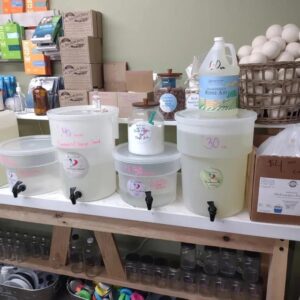
A table with products on it.“Low waste living focuses on reducing products that leave your home in the garbage bin and recycling bins,” said shop owner Jocelyn Blank. “Being mindful of the things you buy and what happens to them when you are done is the first step to reducing the amount of waste that leaves your home.”

Customers can bring their own bottles or jars to refill with a number of products, from household cleaners to personal hygiene items like shampoo or shower gel. The shop also offers products like refillable glass bottles, re-usable paper towel alternatives, and cleaning cloths.

“The shop has a variety of products for bath and body, hair care, oral hygiene, and household cleaning. All the products are free from single use plastic, made with biodegradable and toxin-free ingredients, and are not tested on animals,” Blank said. 

Blank is passionate about offering products that help families and help the planet.

A shelf with products.“It’s important to have access to products that are safe for families and the environment. By keeping costs low and having a physical store and online ordering, more people from a  greater range of economic situations can access products that help them reduce waste and keep toxic ingredients out of their home,” she said. 

Blank would love to see more households embrace low waste living.

“The more homes that have the ability to purchase and use safe products, the bigger the impact to our environment, too. Less waste to the landfill keeps waste removal costs lower and less toxic chemicals down the drain keeps our water safer,” Blank said. 


RELATED STORY: Kids at Work: Toledo Restaurants Run Family Businesses


Get to know Jocelyn Blank

Tell us about yourself! 

I grew up outside of Bowling Green, Ohio, graduated from BGHS, BGSU and UT.

Tell us about your family!

Myself, Joci, husband Jaime, 9 yr old twin boys Gavin and Evan, who are OBSESSED with space, science and nature, and my daughter, Natalia, 5. She’s a worm catcher, princess dressing and animal lover. They all love working the shop with me.

What do you like to do on a day off?

Toledo Zoo all day! We love going on hikes at the Metroparks, Oak Openings, and visiting the Lucas County libraries. 

Any hobbies?

Honestly, I homeschool and run the business, so I pretty much made the business my hobby.

Favorite local restaurant?

Mine is Mancy’s Blue Water Grill, and the kids love Red Robin.

Favorite “hidden gem” in the area?

Not sure if it’s a hidden gem, but we love the fossil park in Sylvania.

Are you a book person or a movie person?

Books all day. I’m currently listening to a mystery novel on the Libbey app through the Toledo Lucas County library.

Favorite motivational quote?

Honestly, don’t hate me for it, but I live by “Just do it” from Nike. It’s my go to for everything.

Dream vacation?

I don’t have a dream vacation because there is so much to do right here in Northwest Ohio that I never feel the need to escape. My boys really want to go to Florida for coconut trees and Hawaii to see a real volcano. My daughter isn’t thinking that big yet.

Do you have a secret talent or mom super power?

I love to sing and can make dinner out of just about anything!

Favorite beverage of choice and where to find it?

My favorite bev is Vineyard Breeze from Majestic Oak Winery, right around the corner from my house!

Advice for other mompreneurs?

Time moves fast. Do not miss out on the kids while growing the business. Business can be done little by little, but you only have small children for a short time with no do-overs. Business can end and restart as many times as you want. There is no failure, just learning opportunities. Being a mom and a business owner is tough, but you can do it!