Home Blog Page 572

Shape up!

When you have an idea, run with it. That’s what occupational therapist and inventor Elisabeth Wharton did when she came up with products to help special needs and typical preschool children develop their motor and visual spatial-perceptual skills.

“These children are learning basic geometry, coloring, labeling and what shapes are,” says Wharton. “It’s pre-math and pre-science, and it also helps with developing pre-writing skills, language, and fine-motor coordination, too.” With 20 years of experience as an Occupational Therapist and more than 16 years teaching children in Toledo Public Schools, Wharton has seen a lot of children through the integral early stages of development and education. Over the years, she noticed a lack of tools, support, and resources to help special needs children with basic motor skills and elementary activities, such as cutting and tracing. “I really don’t know why no one came up with this idea sooner,” she says. After searching for tools that could assist her students in learning these skills without success, Wharton decided to create her own. Developing the concepts was easy, but manufacturing them was the next step. She turned to her husband, a nuclear engineer.

As with any invention, test samples and prototypes were developed, discarded and expanded upon until the Whartons had created their signature “Cuttables” and “Traceables.”

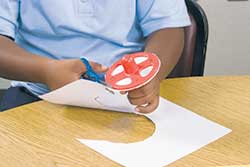
Cuttables, designed to help children cut out shapes and patterns to aid in the development of motor skills, depth perception, and hand-eye coordination, are two identical plastic shapes with magnets that children can place on either side of a piece of paper. Once positioned so the magnets line up, children can use the Cuttables as a cutting guide without having to keep the piece of paper in place, or worry about under-or over-cutting. “They can simply follow along the shapes of the Cuttables, and they’ll have a circle or a triangle or a square,” says Wharton. “Even blind children can use Cuttables to make the shapes and art that everyone else in their class is making.”

Similarly, Traceables are tracing aids that allow children to trace all the way around a shape with their pencil, crayon or marker. Traceables have thicker edges and external handles that make it easy for any young child to hold their shapes in place on paper and draw all the way around them without having to reposition their hands or concentrating on keeping the paper and tools perfectly aligned.

“It helps eliminate the frustration that a lot of children experience when they have one idea of how they’d like their picture to look, and then see what their picture actually looks like,” says Wharton. When her autistic, blind, special needs and even typical preschoolers have had to juggle the paper, pencil, scissors or stencil, she says it’s easy to tell by the look on their faces that they’re disappointed, and to a child, these are the things that matter. “Some of my students just refused to participate in projects because they knew it wouldn’t turn out like they wanted.” 

Convinced that these products could assist other teachers, the Whartons began to research mass production and how to market their product. In 2008, they teamed up with the Regional Growth Partnership, which assists local companies looking to grow in Northwest Ohio and Creatable Learning Concepts, LLC was born. “We’ve had a lot of help working with them,” says Wharton about the organization. “This process is daunting and expensive, but it’s worth it and they’ve been wonderful helping us develop and share these products.”

The Whartons and the Regional Growth Partnership have been marketing and selling their products at the local, national, and even international level since spring 2009. “We’re helping [children] express what they want to learn … it’s a different way of teaching that is attractive to all students,” Wharton says. “It’s been a lot of work, but it’s well worth it to see my students create art and projects that they couldn’t have before.”

Interested in Cuttables, Traceables, and the ideas of Elisabeth Wharton and the Regional Growth Partnership? Just visit www.CreatableLearningConcepts.com or call 419-873-5991.
November’s highlights

PLANET 51
Rated PG for mild sci-fi action and some suggestive humor. In theaters 11/20. Ok for kids 6+. 4 out of 5 Reels. Official Site: https://www.planet51.com
This fun animated tale centers on American astronaut Captain Charles “Chuck” Baker (Dwayne Johnson), who lands on Planet 51 thinking he’s the first person to step foot there. To his surprise, he finds that the planet is inhabited by little green people, living happily in a white picket fence world reminiscent of an innocent 1950s America. Their only fear? Being overrun by alien invaders – like Chuck! With the help of his robot companion “Rover” and his new friend Lem (Justin Long), Chuck tries to navigate through the bewildering landscape of Planet 51 and avoid becoming a permanent fixture in the Alien Invaders Space Museum. Also features the voices of Jessica Biel, Gary Oldman, John Cleese and Seann William Scott.

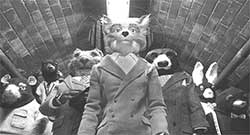
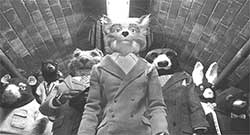
FANTASTIC MR.FOX 
Rated PG for action, smoking and slang humor. In theaters 11/25. Ok for kids 6+. 3.5 out of 5 Reels. Official Site: http:www.fantasticmrfoxmovie.com 
This is Wes Anderson’s first animated film (he’s known for quirky films like “The Darjeeling Limited” and “The Life Aquatic with Steve Zissou”). It’s a stop-motion tale based on the best-selling children’s book by Roald Dahl. George Clooney voices the title character, who’s the target of angry farmers tired of sharing their chickens with Mr. Fox and his family. Also features the voices of Meryl Streep, Jason Schwartzman, Bill Murray, Owen Wilson and Willem Dafoe.

JANE’S REEL RATING SYSTEM 
One Reel – Even the Force can’t save it.  Two Reels – Coulda been a contender. 
Three Reels – Something to talk about..  Four Reels – You want the truth? Great flick!
Five Reels – Wow! The stuff dreams are made of.

Jane Louise Boursaw is a freelance writer specializing in the movie and television industries. Visit her online at www.ReelLifeWithJane.com, or email [email protected].

Canine crazy

As far back as I can recall, my family has owned pets, or more accurately, they have owned us.  My childhood dachshund, Fritz, possessed many of the character traits that my brother processed during his teen years. He had a history of sneaking out at any open opportunity.  If he didn’t get his time to wander in the moonlight, he was downright cranky.

In the early years of motherhood I had a dog named Bailey. He was a Shetland sheepdog that, like me, was big for his breed. It is with him I realized that the words you say to your children eventually come back to bite you in the behind. That darn dog in my absence jumped up and ate a $70 chunk of Reggio Parmesan cheese that arrived from my friends in Italy. When the girls and I arrived home I told him he was a terrible, bad dog.  My little one looked up at me and said, “He’s not a bad dog. He just made a bad choice”.  He also made a bad choice when he got into the garbage and ate a discarded form of birth control. I had to call the poison control center and was horrified when they asked for my name. I told them I was Tishka Bambubkawitz. I came to this country for sexual freedom.  Bailey made it through the ordeal. The only thing lost was my sanity.

Liz, a pre-named little Yorkie, arrived as a gift from my uncle. It is funny how the universe works its magic. As one little furry Liz entered our lives, my dear friend Liz left this earth after fighting an outright war against breast cancer.  On the day we were to bury Liz, I went to collect the furry one from the backyard. I couldn’t find her anywhere even after repeatedly screaming her name.  My neighbor came outside thinking I was screaming for my deceased friend. If she didn’t think we were just plain nuts before, this pretty much solidified it for her. I looked over at her and told her the last time I saw Liz she was in the bushes. She told me that not only is she in the bushes but in the sky above us and in our hearts. It took ten minutes for me to explain that I didn’t need to be medicated.
Liz grew into a wonderful pet even though she was a challenging pup.  She loved to get into the diaper pail and savor her latest prize under the nearest bed. She also enjoyed chewing my children’s prized possessions. Their dolls looked as if there had been a serial killer on the loose with all the missing body parts.

Maggie arrived on the scene eight years ago. She is a Corgi with an attitude. I took her to the “Great American Mutt Show” and was informed by a pet psychic there that she had “height issues” especially in her relationship with me. I think, as the girls would say, that is a “no-brainer” considering I am a 5’10’’er and she has two inch legs.
Maggie is a great gal as long as I keep articles of clothing off the floor. If I leave anything with my scent on it she reacts with an,”Oh happy day!”  I can’t decide if I should be flattered or disgusted.  It is like having a stalker with fur.

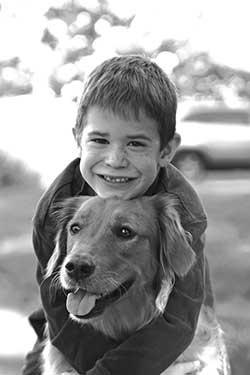
The critters that have graced our lives have one thing in common.  They love unconditionally.  They don’t care about your current GPA, hairstyle, PMS status, or if you got around to making the bed. If you love them an inch they will give back for miles. In times of stress, having a loving wet nose to come home to is the best therapy a girl could hope for.

Mary Helen Darah has been in marketing and development for nonprofit organizations for the past six years, but her greatest role is being a mom to three amazing and diverse young women. Mary Helen has an innate ability to find humor in her trials, and hopes her writing will give others comic relief and insight through the challenges of parenthood.

Water, water everywhere

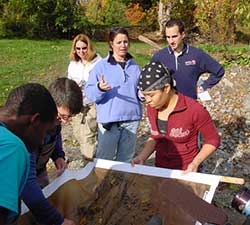
Local high school students are getting their feet wet in the field of environmental science thanks to the 20th annual Student Watershed Watch. On October 14, the students tested area creeks and rivers for dissolved oxygen, sediment, pH and other characteristics that relate to water quality. On Friday, November 20, students will gather at the University of Toledo, Nitschke Hall to share their findings in an all-day, all-school summit. Student presentations include both spoken presentations and table displays, and students will also have the opportunity to attend workshops.

For more information, visit www.tmacog.org/Environment/SWW_09/SWW_09.htm.

Talking with your teen

November is National Runaway Prevention Month, a time that encourages communication between parents and teenagers. According to the National Runaway Switchboard (www.1800runaway.org), here are a few signs that your teen may be thinking about running away:

Changes in Behaviors or Patterns
Teens who suddenly stop eating or begin to overeat, sleep all day or never sleep, spend all their time with their friends or never want to leave their room. Sudden mood swings mean teens are unsettled and restless. They're not coping well with stress.

Rebellious Behavior
Dropping grades, truancy, breaking rules at home, picking fights with the family are all symptoms that your child is having problems. 

Disclosure of Intentions to Run Away
Some teens will hint that they want to run away and some will outright threaten their family with running. Sometimes their family will hear rumors through friends, school, or other parents that their child is thinking of leaving home. 

Accumulation of Money and Possessions
To survive, runaways need money and resources. Some runaways prepare for their run by slowly withdrawing cash from their savings accounts. Keeping a bag or backpack of clothes in the closet might mean they are waiting to make a quick escape. 

If you notice any of these signs, talk with your teen clearly and calmly. Invite them to talk with you or someone else about what is troubling them, while finding supportive ways to deal with their stress.  Let them know you don’t want them to run away and you’re committed to helping the family work things out. If your teen is intent on running away, give them the phone number of the National Runaway Switchboard (1-800-RUNAWAY) so they can find safe options while out on their own. Tell them they can also use the NRS to stay in touch with you even if they choose not to stay at home.

For more information, visit www.1800runaway.org.

Dually diagnosed tweens on the rise

According to Toledo’s Unison Behavioral Health Group, the number of dually diagnosed youth is on the rise. “Dually diagnosed” refers to the presence of a substance abuse disorder and a mental health disorder. With the school year in full swing, Dr. Bonnie Kauffman, Unison Program Coordinator, advises parents, caregivers, and school personnel to recognize that youth diagnosed with the following mental health disorders are at an increased risk for substance abuse: attention deficit disorder, oppositional defiant disorder, post-traumatic stress disorder and psychotic disorders like bipolar disorder.
Some warning signs include a sudden change in personality, drop in school performance and attendance, sudden and frequent outbursts, increasing conflict with family members, changes in peer group, borrowing/stealing money, and loss of interest in hobbies.

Unison Behavorial Group treats youth ages 11-17. For more information or for support, call 419-693-0631.