Oregon/Northwood Rotary Club presents Breakfast with Santa, breakfast of pancakes, eggs & sausage. Saturday, December 3rd, 8-10 a.m., at Clay High School Cafeteria, 5665 Seaman Rd., Oregon.
Cost $3 per person.
419-693-0665 | oregoncityschools.org

Oregon/Northwood Rotary Club presents Breakfast with Santa, breakfast of pancakes, eggs & sausage. Saturday, December 3rd, 8-10 a.m., at Clay High School Cafeteria, 5665 Seaman Rd., Oregon.
Cost $3 per person.
419-693-0665 | oregoncityschools.org

I am a young adult who has autism and I work as an autism advocate. I am on a mission to teach what autism is like from my perspective to help others better understand autism. It is important to remember that each person with autism, like all people, is unique.
Sometimes, autism makes certain things more difficult for me. Social situations tend to be overwhelming at time— not because I don’t like socializing, but because sometimes I socialize differently than others. It is hard for me to read body language and social cues of others. I also get overwhelmed easily. Communication can be hard for me even though I am verbal. I always remind people that there is more to communication than being able to speak. Once you have the spoken words, or any form of communication really, you have to know how to use the words to express your wants, needs, feelings, likes, dislikes, etc. in order for them to be effective.
Typing has opened up a whole new world of communication for me. I find typing to be easier than using verbal words sometimes. Typing makes it easier for me to visually see what I want to say before I say it, allowing me to map out my thoughts and put them into words.
I think it is important that people remember that even those individuals with autism who are verbal may have communication challenges. Sometimes, throughout my life, I’ve had experiences where people have told me to “just tell them” versus reading what I wrote. These situations made me very nervous, and they still do, because if I could “just tell you” I would. It is not that simple.
There are other challenges that I face as an individual with autism. I want everyone to remember that even though individuals with autism may have trouble communicating, that they are still people who deserve to be treated with respect. Treat those with autism and those who are different from you with respect.
Chloe Rothschild is a young adult with autism.
She serves on the OCALI advisory board, is a managing editor for the
Autism Research Institute Adult’s with Autism eBulletin,
a calendar editor for Adam Street Publishing, and an advocate.
Read more about her advocacy work at her website, chloerothschild.com.
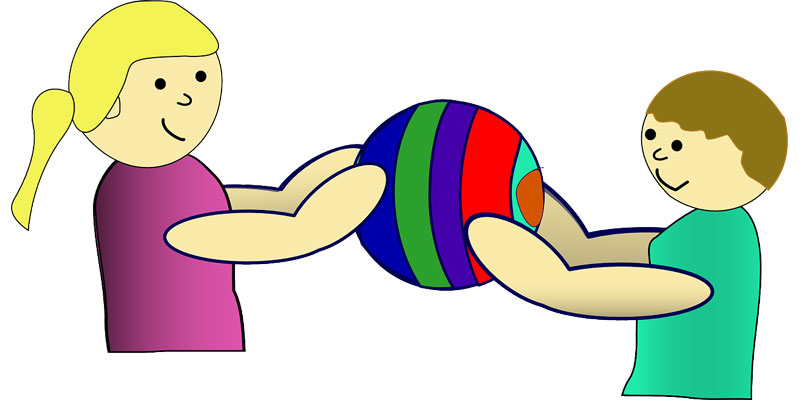
The holidays should be a time to count and reflect on our blessings. But when Santa pops up here, there and everywhere, kids are constantly thinking this must be the season of getting. Although most of us are able to provide our families with the basics of food, shelter and clothing, rampant commercialism surrounding the holidays can make kids feel deprived, even if their toy box is already overflowing. With easy credit and inexpensive toys made overseas, today’s kids often don’t want for anything—or—at least not for long.
When the holidays roll around, grandparents, aunts and uncles want to buy gifts for the kids. Add Santa to the mix and soon that present pile is growing. Small children especially can be overstimulated by all the toys and as a result may not play with any of them for long. So what can we do as parents to help our children be thankful instead of contributing to the next entitlement generation? Here are a few ideas:
Before the holidays, try doing a toy “clean out.” Help kids choose which toys they no longer play with and donate them.If your children already have more than enough toys, consider asking grandparents and other relatives to give something different such as a holiday outfit or book.
Build charity into your holiday budget. Many organizations collect new toys for children in need. Let your children help you pick out a small gift and let them be involved in delivering the donation. Explain that not every child gets all they want for Christmas. If they are old enough, encourage them to contribute some of their own money toward such gifts.
Do the same with food. Explain that not everyone has enough to eat. The little ones won’t quite get it, but you are planting a seed. Or consider volunteering with your children at a soup kitchen or with another group that feeds the hungry.
Encourage children to give presents. This helps to shift the focus to “giving” rather than “getting.” No need to always buy; your child could draw a picture or make a simple craft for relatives, or perhaps bake cookies for the neighbors.
Have them write thank-you notes. These are appreciated, especially for out-of-town relatives who don’t get to see your child open their gift. For the preschooler, you can write the note, then let them decorate or color the card. Older children can write their own.
Please say thank you. It sounds simple, but teaching basic manners at a young age does make a difference. At first, kids may only do it when reminded, but eventually it becomes a habit.
Start family traditions that focus on your blessings. One idea is to make a list of the things for which they are thankful. This can be done in the form of a craft, by having them make or color a “thankful tree” (draw a tree and write the things for which they are thankful on the leaves).
Finally, encourage thankfulness year-round. Many charities need help the rest of the year as well as during the holidays. Continuing charitable giving after the holidays is a good way to remind our children and ourselves of all the things we have that are worth appreciating.
Tiffany Doerr Guerzon is a freelance writer and the mother of three children.
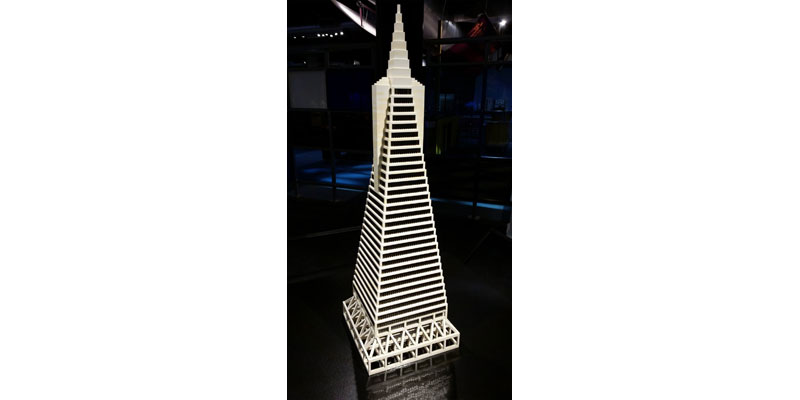
As most parents will understand, stepping on LEGO pieces are extremely painful. My room was a minefield of LEGOs that my parents had to traverse just reach my dresser, but these little plastic pieces expanded my imagination like nothing else could. I would build up skyscrapers with mismatched colors and knock them over, or recreate scenes from my favorite television shows and movies. And now kids all over Toledo can get creative, thanks to the newest exhibit at Imagination Station.
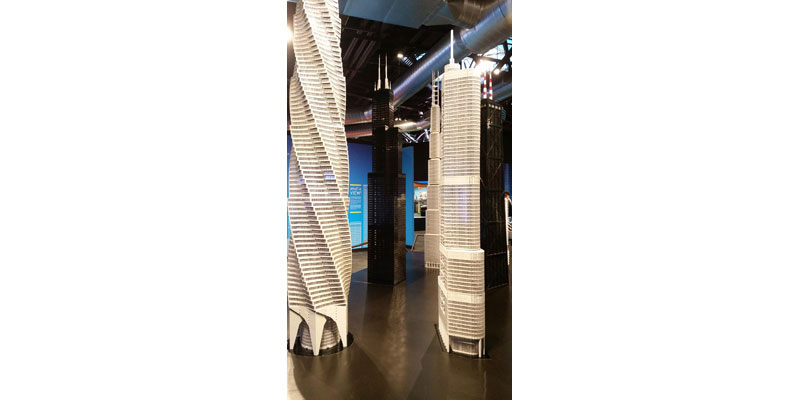
Certified LEGO Professional Adam Reed Tucker has taken a child’s toy to an entirely new level at the Imagination Station’s two-part exhibit, LEGO Brick Architecture: Sky High Science. The first part features 13 world-famous LEGO designed buildings from the Chicago Spire to the Sears Tower (now Willis Tower), also in Chicago and the Gateway Arch in St. Louis. The other half of the exhibit includes an Interactive Play Space for children to build their very own LEGO masterpieces.
Adam Tucker began his LEGO building career with the famous Empire State Building. His first masterpiece is just over seven feet tall from base to spire and includes 12,200 LEGO bricks, or 10 Hogwarts Castle LEGO sets that make up the LEGO building.
As a Chicagoan at heart, Adam also constructed numerous skyscrapers from the Windy City such as Trump International Hotel and Tower Chicago (11,100 LEGO bricks) and the John Hancock Building (16,450 LEGO bricks).
Nothing came close to the tallest building, not only at this exhibition, but also in the world— the Burj Khalifa. This monster of a creation is 450,300 LEGO bricks dense, 17 ½ feet tall, and took 340 hours to build in all. By far this was the most impressive of his creations, and my favorite.
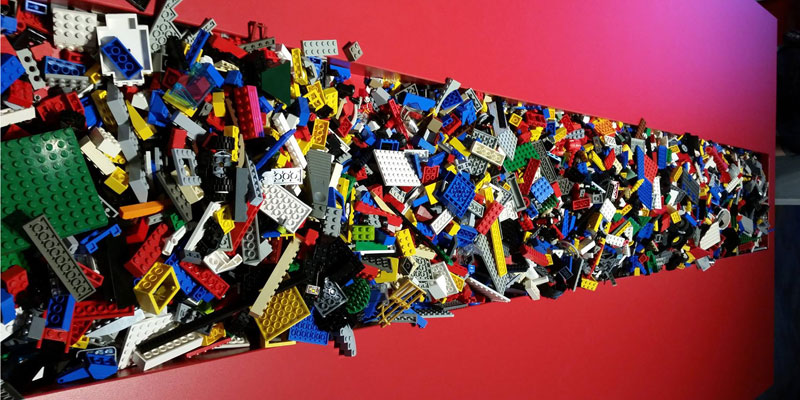
After gazing at these towering creations, I felt inspired to build my own architectural masterpiece in the Interactive Play Space, complete with tables split down the middle filled with LEGOs. As I dug in the brick-lined trenches for the perfect piece to top off my own skyscraper, I was reminded of my childhood and the various creations I built. Maybe it wasn’t Adam’s Burj Khalifa in both design and size, but my 6-inch tall building— complete with an oversized fountain— was good enough to satisfy my inner child.
Lastly, I attempted to create an earthquake-proof LEGO skyscraper at the Tower Builder Shake Table. Using larger LEGO blocks I built up to the required height of 18 inches and initiated an earthquake. I knew my high school physics class would come in handy someday, and today was that day— my building was still standing when the “earthquake” subsided.

“Personally, I view the LEGO brick first and foremost as an art medium. No different than, say paint to a painter or metal to a blacksmith,” said Tucker. “My creations are an artistic celebration, a sculptural exploration of architecture in its grandest most impressive form, the skyscraper.”
Adam Tucker’s exhibition is part of a larger LEGO themed event running that will officially open on Saturday, October 8 and run through January 29. 10am-5pm Tuesday-Saturday. $4/non-member plus price of admission. Kids 2 and under are free. Free for members.
1 Discover Way | 419-244-2674
Imaginationstationtoledo.org

It happened in an instant. Jackie Moore was in a stopped car when suddenly she found herself in the middle of a multi-vehicle collision. She lost consciousness only briefly and was diagnosed with a concussion.
Moore completed the requisite rehabilitation therapy, but perplexingly, a year post-accident when symptoms should have diminished, she still battled incredible challenges. “I was not able to read or write, do math, or produce spontaneous thought. I still had significant memory and cognitive issues. I could not work or drive,” Moore said.
Persistent and driven to find treatment options, Moore reached out to the Center for Neuroscience & Regenerative Medicine in Bethesda, MD, where she participated in clinical trials. After meeting with 13 specialists and three traumatic brain injury (TBI) therapists, Moore was told she had suffered significant brain injury/trauma.
“They helped me get established with several different therapies to help me recover, and alleviate some of the daily challenges of TBI,” Moore shared.
Slowly, Moore began to improve. Encouraged by her progress, Moore felt compelled to help others. “I woke up one day and said to my husband, ‘We have been doing research for three years to save my life. I think we should open up a non-profit and share it with everybody.’ ”
Thus the idea for the Traumatic Brain Injury Resource Center was born. On April 18, 2015, the dream became a reality when TBIRC opened its doors at 7430 West Central Avenue, in a building donated by Mercy Health. The center offers TBI sufferers, their families, and their caregivers a safe place to gather for support and resources.
“We help TBI survivors create a game plan to navigate through this new life they have. Focusing on their strengths and deficits, we give them the tools they need to have a better quality of life,” Moore said.
The mission of TBIRC is to promote prevention and increase awareness of TBI throughout the community. Daytime and nighttime support groups are available for survivors, as well as their families. Survivors of TBI are often left with extensive physical limitations, cognitive (thinking) problems, emotional/behavioral issues, and/or personality changes. TBIRC provides a place for sufferers to collaborate towards solutions to shared challenges, which can be tough to take on alone.
While pediatric support groups are not currently available, TBIRC is aiming to start them in 2017. “Pediatric care is so specialized, we want to be sure we have the right staff in place. We currently work with teens, and we can help connect parents of younger children with the resources they need.”
The Traumatic Brain Injury Resource Center is located at 7430 W. Central Avenue.
For more information visit tbirc.org or call 419-214-0555.

Are you a nursing mom? Looking for a place to feed your baby or pump in public? Well, there’s an app for that. Thanks to MomsPumpHere, nursing mamas on the go can easily find a clean place to pump or breastfeed their babies. Created by moms for moms, the app lists more than 5,000 room locations including quiet, private nursing rooms, lactation lounges and breastfeeding-friendly places in the United States, Canada, UK, Singapore, Australia and more, all vetted by moms.
App available through Apple iTunes and Google Play.
momspumphere.com

Explore
Magazines
© 2026 ToledoParent.com. All Rights Reserved. Website development by Web Publisher PRO