Home Blog Page 395

Don’t Leave Your Child’s Safety to Chance

It may not seem like there’s a large margin for error when it comes to properly installing a car seat, yet locally, there is an 80 percent misuse rate with car seats– that’s right, four out of five kids are not as safe as they should be, according to Gina Veres, supervisor, Injury Prevention & Community Outreach, Promedica Toledo Children’s Hospital, Safe Kids Greater Toledo. With odds like these, every parent should have their child’s car seat installed or inspected, a service provided at no charge by local police departments, hospitals, and fire stations.

“Parents and caregivers are encouraged to have their car seats checked by a certified child passenger safety technician to ensure proper use. CPS technicians have attended standardized training and are able to identify misuse and educate on proper installation and use,” according to Veres.

It’s the Law: Rear-Facing Seats

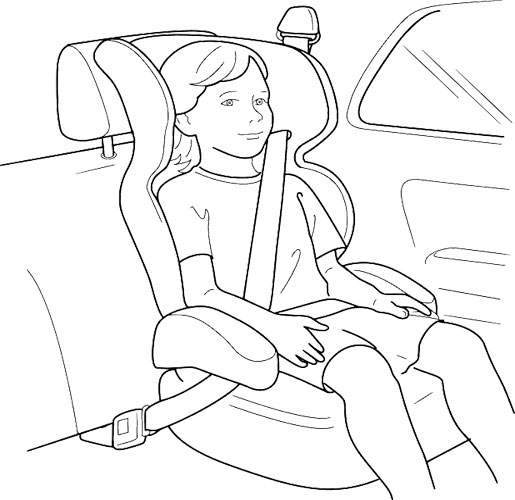
Veres says kids should ride rear-facing until at least 2 years old, or they have reached the weight limits of their convertible car seat (usually around 40 lbs.) Why? “Rear-facing is five times safer. The back of a rear-facing car seat supports a baby or toddler’s large head and weak neck. This lowers the chance of a serious head or neck injury in a crash. Ohio’s child restraint law indicates that children need to ride in a car seat that is appropriate for their age and size and used according to the manufacturer’s instructions. Children under age 4 and under 40 pounds need to ride in a car seat with a harness. Older children need to ride in a booster seat until at least age 8, unless they are over 4-feet-9-inches tall. Most car seat manufacturers require rear-facing use until at least 1 year old and 22 pounds, however some require rear-facing until at least 2 years old. Read and follow instructions carefully.”
Most vehicles have LATCH (Lower Anchors and Tethers for Children), but is it safer to use LATCH or the car’s seat belt system? “Use either LATCH or the seat belt, not both, unless otherwise approved by the car seat and vehicle manufacturers. Both systems are equally safe. Use the system that is easiest for you so that you will use it correctly every time,” Veres says.

Safety Over Comfort

Don’t worry if your child’s feet touch the back of the seat; it’s still safer for them than facing forward before age 2. “There is actually a higher risk for a lower extremity injury when children are forward-facing, when their legs are thrown forward so forcefully in a crash, hitting the back of the front seats,” explained Veres. “Young children’s bodies are very flexible, allowing them to bend their legs and prop their feet up on the back of the vehicle seat and still be safe and comfortable.”

Veres also said the center seating position in the back seat is safest due to the chance of a side-impact crash. She encourages children to ride in the center back if the car seat can be tightly installed.

“Two of the most common misuses that CPS technicians find include a loose installation and loose harness,” Veres adds. “Car seats should be installed tightly with a locked seat belt or LATCH strap that doesn’t move more than 1 inch at the belt path. Harnesses need to be tight on the child’s chest and shoulders so that none of it can be pinched and pulled away from the child’s body.”

Grant yourself peace of mind and have your child’s car seat (and even booster seats) checked for proper installation.

Postpartum body perception in today’s world

Being pregnant and sporting an “adorable baby bump” is all the rage these days. Celebrities proudly showcase their expanding bellies– oftentimes with little to no clothing– and even boast about gaining baby weight. Gone are the days of hiding from the camera during a pregnancy or starving oneself to keep the pregnancy weight at bay.

Unrealistic Expectations

However, while pregnancies may be portrayed a bit more realistically– although certainly more glamorous than either of my pregnancies– postpartum issues are still glossed over. Celebrities either reveal their flawless postpartum bodies weeks, or even days, after giving birth, or they hide from the camera for weeks or months until they’ve lost all of the weight.

The new mothers who dare to enter the spotlight while still carrying those extra pounds are often fat-shamed by the media.

Society demands that new mothers show no scars, no changes, from the 40 weeks we spent growing a human being. If we don’t drop the weight right away, it’s because we must be “doing something wrong;” we should have nursed, we need to eat healthier, we need to exercise more. The list goes on.

Baby Weight Dilemma

I know everyone says “Nursing helps lose the baby weight,” but for me, it was the opposite. I gained weight while nursing and couldn’t lose more than a few pounds until my babies weaned. Those postpartum and nursing hormones just told my body to hold onto every single calorie. I know other mothers who face the same side effect.

With my first, it took me almost two years to lose the baby weight, and that was with counting calories and daily exercise that amounted to one to three hours of my day. Now that I have a toddler and a baby, I’m lucky to get one hour of exercise a day, so I am inching up on two years postpartum with almost 20 pounds of baby weight still hanging around.
Do I feel ashamed? Yes. I know I am healthy and strong, but the embarrassment of still carrying that baby weight runs deep. I like to think I am a confident and body-positive woman, but it’s difficult to remain self-assured when society tells you differently.

A Way of Thinking

These are the mantras I repeat to myself when I get down: I created two beautiful, healthy human beings, and for that I should be thankful. I am strong, healthy, and capable; extra weight is not the end of the world. My body is still adjusting, especially my hormones (yes, even two years postpartum), so I need to give myself some grace and understanding. I would never judge another woman for her weight, so why am I so hard on myself?

The most important mantra: I want my daughter to grow up believing that she is beautiful and perfect just the way she is. I would never, ever want her to see herself the way I see myself. However, if I want that to be the situation, then I need to love and accept myself unconditionally so that she can do the same.

Preparing your child for a new sibling

Preparing your child for a new baby can go miles in ensuring acceptance of their sibling and minimizing feelings of jealousy that arise from shifting family dynamics. The most important thing parents can do is to talk to children about how they’re feeling and handle behavioral issues or regressions with compassion. Clinical Psychologist Dr. Rebecca Alperin of Psychological Resources, Ltd. in Toledo shares her tips for a smooth introduction to your family’s new addition.

How would you recommend parents
prepare children for a new baby?
Parents should just be honest and let the children know they are going to be a big brother or big sister. There are some good books out there for younger children, like the Berenstain Bears’ New Baby. Sometimes it helps to make a calendar with a countdown date for the baby’s birth, so the kids have something visual to help them. Reassure the child that they will have an important role as the older sibling and that they will be a great helper and teach the baby all kinds of important things like how to play, etc. Obviously, some of this depends on the age of the older siblings, and always be ready for the children to ask how the baby got in mom’s tummy.

What are some tips for introducing older
siblings to the new arrival?
A lot of hospitals allow older siblings to come visit mom and baby in the hospital, so that is helpful. Depending on the age of the older sibling, parents can help them practice holding a baby or feeding a baby with a doll. With a new baby a lot of siblings feel jealousy because of the focus and attention on the new baby, so it’s helpful to let the older sibling know they are important and have an important role as the big brother/big sister.

What are some ways to include siblings
when baby comes home?
The older children could help with decorating a nursery or picking out a special gift for the new baby. They could draw pictures for the new baby or give ideas for names. Allow the older siblings to help with feedings or bath time. Older siblings can also ‘play’ with the baby or be the parents’ helper. It’s also important not to ‘force’ interaction between the older child and the baby, as some kids can be a little hesitant when there is a new baby in the home.

Anything else you think it’s
helpful for parents to know?
If the older sibling is still very young, be aware that jealousy is not uncommon, and there may be some regression in the older child’s behavior. For instance, they may start having wetting accidents even if they are potty-trained, or they may want to eat out of a bottle or ask to wear a diaper. They may start attention-seeking, become clingy, or develop some separation anxiety from the parents. It is important to still have special time with the older siblings, even if it is only 10 minutes a day, when the baby is sleeping and there are no other distractions. A lot of this depends on the age difference between the baby and older siblings. School-age siblings are usually better at being ‘helpers’ with the baby, whereas toddler-age siblings still need their own attention.

Maternity & Baby Guide

Whether you’re a first time mom or delivering your third child, each pregnancy and birth is something to celebrate. We also know how it can be exhilarating and overwhelming (and yes, often at the same time) to welcome a new baby into the world. We hope our Baby & Maternity Guide can be a go-to for advice, ideas and a way to put you at ease so you can get that sleep you desperately need!

Got Milk? What’s Normal

It can take anywhere from two to five days for a woman’s milk to come in, a time when the new mom’’s body produces colostrum, a thick yellow substance high in nutrients and disease-fighting antibodies. Don’t worry! Your body is producing the perfect amount of colostrum for baby’s tiny tummy. It is suggested that moms breastfeed eight to 12 times within a 24-hour period, and avoid the use of bottles and pacifiers in the first month. “Feeding often will help milk supply and prevent engorgement. Cluster feeding is normal and does not mean you don’t have enough milk. Keep in mind that babies come to the breast not only to eat, but also to satisfy physical and emotional needs,” Hickman said.

Skin-to-Skin Contact

Ask to hold your infant as soon as possible after delivery, putting baby to breast within an hour of birth. Skin to skin contact is also an invaluable part of the bonding process between mother and baby and helps to accomplish a successful latch-on. If you have any concerns or questions, just ask!

Breastfeeding 101 for New Moms

By: Heidi Borst

Congratulations! You’re about to welcome a brand-new bundle of joy into your life! What could be sweeter? But let us warn (ahem, inform) you: giving birth isn’t the hard part, the devil’s in the details– swaddling, diapering, rocking, feeding (all the demands of a little human who depends exclusively on you). While the decision of how to feed your baby is a personal one, new moms are encouraged to try breastfeeding as a way to bond with baby emotionally, and to nourish them physically.

Breastfeeding Resources

La Leche League of
Toledo Meetings
734-847-0039
Every 2nd Wednesday at 10am (monthly)
St James Lutheran Church,
4727 W Sylvania Ave., Toledo
Every 3rd Thursday 7pm (monthly)
St. Charles Hospital,
Board Room in basement, Oregon

Wood County Hospital
419-373-7665
Breastfeeding support groups on
the last Tuesday of the month at 7pm
Wood Co. Hospital,
Bowling Green, OH

ProMedicaLactation Center Services
419-291-4577 Breastfeeding
WARMLINE Call for questions or
concerns or to schedule with a lactation
consultant Visit promedica.org for all
programs and services, including classes

Mercy Family Resource
Center Lactation Services
417-820-2327
Outpatient Lactation Clinic
Call from 9am-4:30pm M-F with
questions or concerns or to schedule
with a lactation consultant
Mercy Children’s Hospital, Toledo

Tweens and teens making headlines this summer.

Ohio Youth of the Year

The Boys & Girls Clubs of America named Toledo teen Keyaunte Jones the Ohio Youth of the Year. This honor is awarded to a young person in recognition of leadership, service, academic excellence and dedication to live a healthy lifestyle. Jones will serve as
an ambassador for all teens in the state, receive a $5,000 scholarship, and compete for regional Youth of the Year this summer. Jones graduated from St. John’s Jesuit High School &
Academy. A member of Christian service, meal delivery and academic tutoring programs, as well as the Ambassador Society and the baseball team. Jones will attend Grambling
State University this fall, where he will pursue a degree in biology and play baseball.

Tweens_Jones,Keyaunte

Senior Scholarship


Congratulations to Southview senior Hannah Tipton, the first recipient of the prestigious Marjorie M. Fitkin Memorial Scholarship. Tipton, who maintained a GPA over 4.0 while participating in extracurricular activities, volunteering and working, will attend Miami University this fall, with plans to study Early Childhood Education. This $2,000 scholarship will be awarded annually to a senior from a Sylvania high school pursuing a degree as an educator. This scholarship was made possible by Marjorie Fitkin a longtime Sylvania educator.

Tweens_Tipton_2c-Hannah-(2)

Taking the Stage

Grant Perry, a student at Sylvania Northview High School, was been chosen to be part of the 2017 International Thespian Festival in Lincoln, Nebraska this month. Perry is one of just 28 students chosen from more than 120 applicants. The International Thespian Festival is a celebration of student achievement in the performing arts and is attended by more than 4,000 students and teachers.

Tweens-Brief_-Grant-Perry-good

New Principal at Notre Dame Academy

Notre Dame Academy welcomes a new principal next month. When she takes over her new position on July 1, Sarah Cullum will bring 15 years of experience with Toledo Area Catholic Schools, most recently serving as principal of Rosary Cathedral Catholic School for the past six years.

“I look forward to continuing the important work of the Sisters of Notre Dame and impacting these young women on a higher level,” Cullum said. “NDA’s strong sense of community has led to its successes, so building meaningful and positive connections with NDA students, families, faculty, staff and alumnae will be a top priority for me.”

NDA_New-Principal_cullum