Home Blog Page 218

FiA: Females in Action

This group goes beyond fitness— community events and outings are part of the program.

By Kimberly Feldkamp

When the world is still dark and most of us are sleeping, there’s a group of Toledo women already up and at ‘em, exercising in the parking lot at local schools, libraries or parks. 

They are members of the Females in Action— or FiA— Group, a community of women dedicated to making each other stronger in all areas of life. 
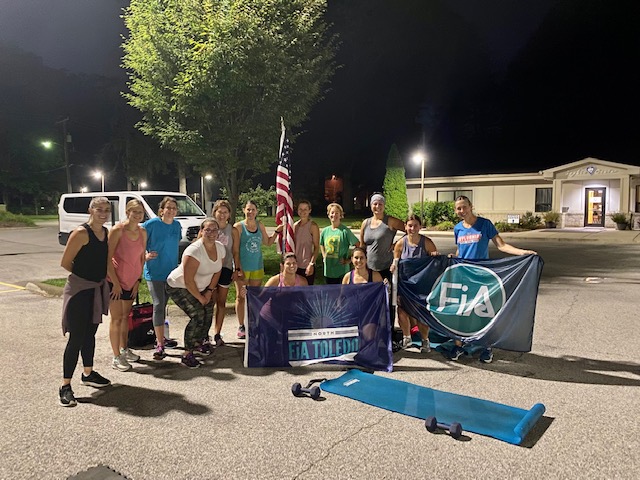
Bring a mat or towel, water bottle and a winning attitude. FiA workouts happen at locations throughout the area.

Bringing the action to Ohio 

The local Toledo chapters are part of a larger, national program. Currently, FiA is in 21 states across the country, and growing. 

F3, the men’s version of FiA, found its way to Toledo first. 

“There were many wives of these men that saw what the group was doing for their husbands, and they wanted something similar,” explained member Ashley Helton. “We saw our husbands getting healthier not only physically, but mentally.  We saw them giving back to our community, we saw them organize social events, and we saw friendships developing that would never have happened without the group. We saw this and we wanted it, too.”

Thankfully, FiA Nation, located in Charlotte, North Carolina, was excited to start a chapter in Sylvania, the first FiA in Ohio. 

 “After a few months of proving a need for this group in Sylvania, we were given the official go-ahead,” said Helton. “Four years ago, we launched, and on that day, we had 60 women show up. We have been successful ever since!”
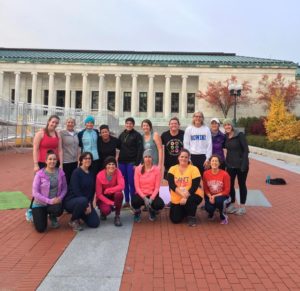
Up and at ‘em early – the FiA North Group poses post-workout.

In fact, the response was so great that organizers saw a need to create two groups in the area: Toledo North (Toledo and Sylvania) and Southside (Perrysburg, Maumee / Bowling Green). Leaders, however, weren’t surprised because they said this is what women are looking for in their lives. 

“Women want to be healthy, get exercise and be around like-minded women. They want to give back to our community, and develop genuine friendships that are not made through our children’s school or sports,” said Helton. “FiA provides all of this and more, and the women that come have found this to be true.”

FiA for all 

Amber Ferrell, a local mom of three, has been attending FiA workouts for three years. 

“A friend asked me to come along and I was hooked right away,” Ferrell said. “The ladies are so welcoming and you feel so accomplished after the  workouts. This is the most consistent I’ve ever been with working out”

FiA is open to ALL women; no prior fitness experience is required. The program follows five core principles:

  1. It’s always held outside, in rain or shine, hot or cold. 
  2. It’s always free. No exceptions.
  3. It’s peer-led. 
  4. It’s you against you.
  5. It offers a consistent and scheduled workout. 

“Any woman can show up and participate at any level of fitness. We pride ourselves in making workouts ‘you against you’ and always encourage (and demonstrate) modifications for various fitness levels,” said Janet Moore, a past regional leader of the Toledo North group. “Our group is supportive of meeting women where they are at. We also do philanthropy and social events, branching out from just fitness into fellowship and fun!”

You also don’t need any equipment for the workouts, beyond hand weights and a mat or towel. 

Although the workouts start bright and early (5:30am is the weekday start time), they wrap by around 6:15am each time, so you can get in a good sweat without a huge time commitment. 

Workouts end in a circle of trust, so each woman leaves with an inspirational thought or prayer. The group, however, is nondenominational, and welcomes those of any— or no— religious beliefs. 

There is also a private Facebook group, as well as Instagram and Twitter pages for members to follow for an even deeper sense of connection and community. 

Workouts promised rain or shine, hot or cold!

More than just fitness

But FiA is more than just about building muscle; it’s about building community and getting stronger in all areas of life. Women encourage each other, forge friendships, participate in book clubs and social events.

As women get busy with kids and careers, it can be hard to find time for themselves. Sometimes they may even feel lonely, craving female connection but unsure of where to find it. Sometimes, women may feel forced to choose between taking time to socialize with friends or taking time to hit the gym. FiA combines both. 

 “FiA is so much more than a workout,” Ferrell said. “It gives you accountability, a sense of accomplishment, leadership and friends. We lift each other up and encourage each other!”

“One of the best things about having FiA in my life personally is the relationships, for sure,” said Moore. “ We are so much more than a workout and have done so many things together to further ourselves individually, as a group, and help the community.”

Interested in giving FiA a try? You can find information, including workout schedules and ways to contact the local organizers, at fiatoledo.wordpress.com.
Breastfeeding Vs. Formula: A Conversation on Infant Feeding

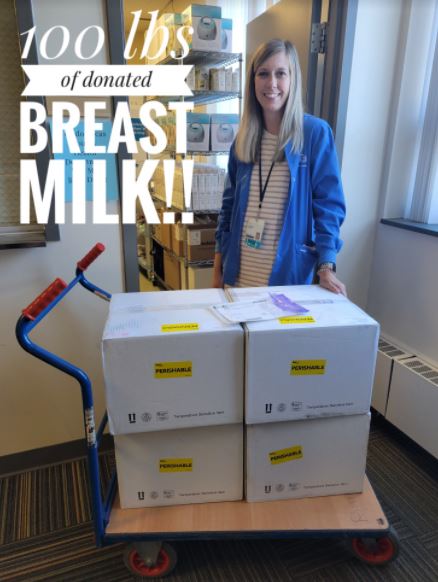
Donated Milk.jpg - Donated milk being shipped to the Ohio Health Milk Bank in Columbus.

By Mary Rose Kulczak and Julie Pompa

The phrase “breast is best” has come to be seen as a rather polarizing statement for parents who, for a variety of different reasons, must choose formula for their babies. In answer to the phrase, a campaign launched by Bobbie, a new Vermont-based European-style formula company, seeks to address why breastfeeding is not always the choice parents make (if it is a choice at all). One of their ads features parents saying, “Don’t assume that…” For example, “Don’t assume my breasts can make milk,” and “Don’t assume I want to feed my baby donor breast milk” (a quote by Tan France of Queer Eye fame).

Bobbie is debuting in the United States and wants to “start a conversation” on infant feeding. The new organic formula manufacturer recently introduced this marketing strategy with the howisfeedinggoing.com movement, which is aimed at discussing these situations that parents may encounter when making the decision on how to best feed their infant.

Breastfeeding vs. Formal Feeding

Formula feeding versus breastfeeding has long been a debated topic. Is it merely a matter of preference, like paper or plastic? Or is there something more at stake?

“When we talk about ‘preferred’, it sounds like breastfeeding is the same as cloth diapers versus paper diapers. It’s like a lifestyle choice versus breastfeeding being a public health issue,” said Barbara Roberston, IBCLC at the Breastfeeding Center of Ann Arbor. “We know science definitely supports this [the latter].”

Formula companies in the United States spend over $400 million a year marketing their products. Bobbie hopes to break into this market with their organic product aimed at a consumer who, for various reasons, chooses formula over breastfeeding options.

“Bobbie is coming to the U.S. because we do allow formula companies to market their products here, whereas in Europe and other countries, it is considered illegal to market to families,” adds Robertson. “They are looking for new markets.”

She agrees that there needs to be more conversations about breastfeeding, formula feeding,  and the health implications.

“I think we need to change the dialogue. We are not talking about it [breastfeeding] being warm and cuddly. We think it is a health imperative, just like the COVID vaccine. We are doing this to make our population healthier. That is how breastfeeding should be viewed.”

In fact, a recent study of breast milk from mothers who had been infected with Covid-19 continued to pass on antibodies for 10 months.  Lead by Dr. Rebecca Powell from Mt. Sinai Hospital, the study also found that mothers who had received a coronavirus vaccine passed on antibodies through their breast milk.


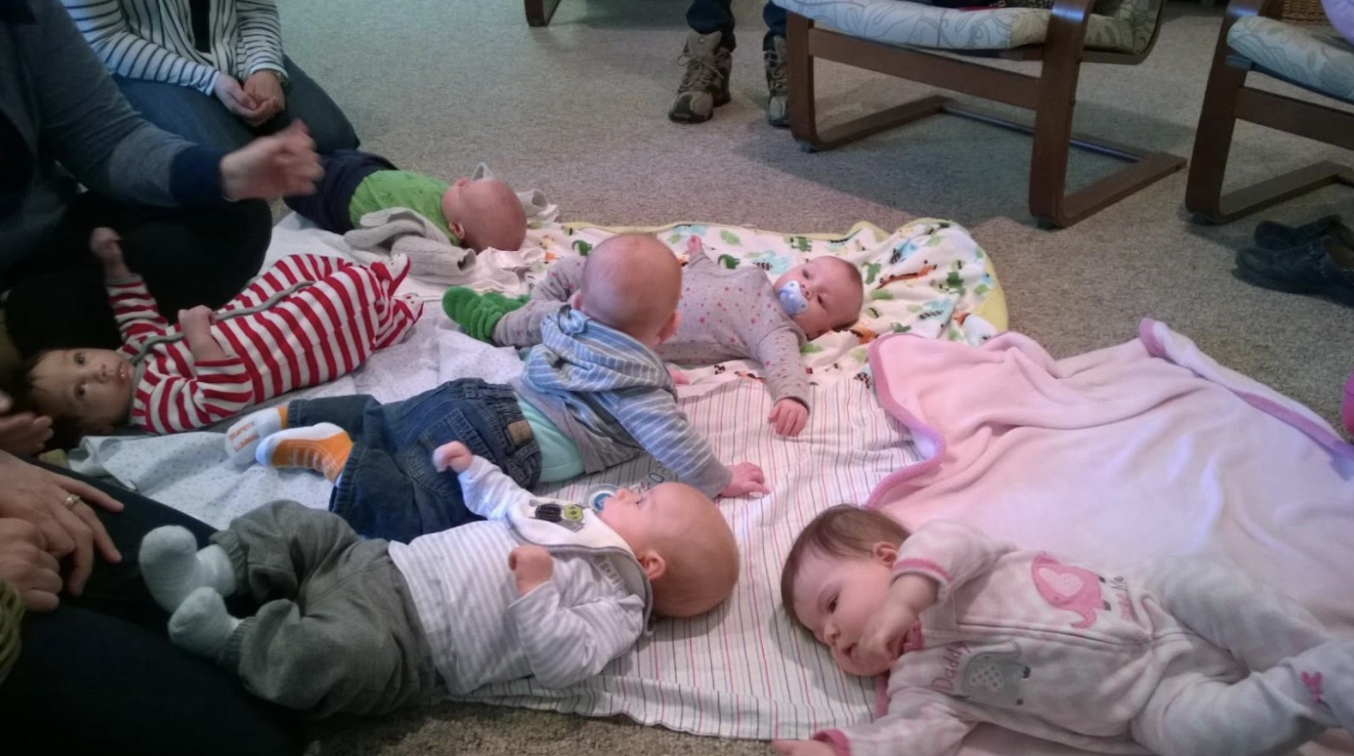
Infants enjoy tummy time at a class at the Breastfeeding Center of Ann Arbor. Image courtesy of Breastfeeding Center of Ann Arbor.

Infants enjoy tummy time at a class at the Breastfeeding Center of Ann Arbor. Image courtesy of Breastfeeding Center of Ann Arbor.

Breastfeeding Recommendations

The American Academy of Pediatrics recommends breastfeeding infants for at least one year, and studies show that nearly 85 percent of expectant parents wish to breastfeed; however, as many as fifty percent will give up within the first six months because they cannot reach their goals.

The Lucas County WIC program has been successful using peer helpers, WIC moms who have been trained to provide assistance and support to pregnant women. “They provide the initial contact with our moms, as well as ongoing support and references to lactation consultants,” Gloria Shortridge, a lactation consultant with Mercy St. Vincent Hospital.

Peers work with new moms until the baby reaches the age of one year. “Daily breastfeeding classes were held in person and then virtually during Covid-19,” Shortridge said. “We quickly found that having the program led by peers and having their baby with them modeling the breastfeeding, was as important as the class itself at encouraging breastfeeding.”

The Lucas County WIC program has also recently opened a Milk Bank drop off site, at the Health Department in Toledo, for donated breast milk that will be bottled, pasteurized and distributed statewide.

No need for blame
Still, not all moms can or want to continue breastfeeding. “I think it is so important that we never blame an individual family for not being able to reach their goals because there are so many barriers,” says Robertson. “It is a cultural issue. It is not an individual issue.”

Robertson cites the need for more support from insurance companies, doctors and midwives, and even legislators. The United States has no parental leave policy, making it difficult to juggle breastfeeding with full-time employment.

“They blame themselves rather than blaming the health system,” she says of struggling mothers. “Doctors are happy to tell us not to smoke or drink during pregnancy, yet they are not recommending breastfeeding for health reasons because they say they don’t want to make people feel guilty. With drinking, smoking, or car seats, we have no issue with guilt. Why would we not be pushing something that could save babies lives and parents lives? It’s just such a critical issue.”

Robertson also pointed out the cultural impact on formula feeding versus breastfeeding.

“The sad truth is that it is also a social justice issue,” she says. “Because when you have less resources, you tend to be less likely to breastfeed, which means your baby is more at risk for many health issues that can happen when they are an infant, but also when they are older. Also, when you are formula-feeding your baby and you are getting public assistance, at six months of age WIC stops paying for formula, yet infants need formula for six months to one year of age.”

“I am all in favor of healthier infant formulas,” Robertson continues. “European products are a healthier product in my mind. There is so much more oversight. But this conversation is going to be among rich people who can afford this formula [made by Vermont-based Bobbie]. Formula is already expensive, but this one is going to be even more expensive.”

Conclusions
Parents will continue to make the feeding decisions that are best for their families. Robertson hopes that increased awareness and support will help in the decision-making process.

“I think that breastfeeding can be really hard, and it is one of those things that we go from doing ‘not at all’ to doing 24/7, ten to twelve times a day, and it is very overwhelming,” Robertson admits.

Shortridge agrees. “I believe every mom wants what is best for her baby. Our program offers them ongoing support, education and supplies that will help them through the first year.”

Regardless of the decision families make regarding how to feed their babies, it is important to keep in mind that there are support systems out there to help mothers succeed at breastfeeding. But it is equally important to recognize the barriers that still exist for mothers who struggle to make this choice. 

Looking for a lactation consultant in the Toledo area? Visit lucascountyhealth.com/wic.

Home for the Holidays: Returning to Pre-Pandemic Traditions

This is the time of year during which I start to solidify my plans for family visits. Who is going to spend Thanksgiving at our house? Will we be making an 18-hour road trip to see my parents for Christmas? Last year threw all of those joyous anticipations into a flat feeling of disconnect. Holiday traditions went by the wayside as we all just tried to stay safe and make it through without engaging in super-spreader events. For me, it was a lot of watching bad Christmas rom-coms on Netflix and missing my family get-togethers.

This year is all about reclaiming that connectivity for our family, and it’s probably the same for many of you out there. We’ve included stories about maintaining family ties in this issue, like our Digital Age article about Dishtory, an app that promotes togetherness through cooking and sharing family recipes. In addition to our annual Holiday Happenings and Gift Guide, we tried to fill our pages with hopeful stories, like the feature on Fia, an organization that builds community among mothers. 

You’ll also find resources to help you navigate tough decisions that moms tend to feel intense conflict about, including the very touchy “breast is best” topic. The story includes local experts with different points of view, plus resources to get you through what is often a tricky postpartum adjustment. 

Whether you are looking for tools to help you in your parenting journey or tips for holiday fun, we know you’ll find inspiration in our November/December issue.

Happy Holidays!

XOXO.

Erin Holden

Assignment Editor 

Toledo Area Parent

Nov/Dec 2021

Open House Guide 2021

With so many education options in the Toledo area, deciding where your children should attend school can be a daunting task. Wherever your child is in their educational journey, our guides can help you through the decision-making process. You can also check out additional education guides at toledoparent.com.


EDUCARE ACADEMY CHILD DEVELOPMENT CENTERS
10 locations throughout Toledo
(419) 704-2009 | educareacademy.com

Open House: Schedule a tour online

With ten locations throughout Toledo, Educare Academy Child Development Centers make finding a local childcare option easy for parents. Children, from infants to school age, have a place at Educare. For parents with infants and toddlers, the school has partnered with Cuties Care, which provides diapers and wipes for little ones while at school for an extra $10 a week. The school has also partnered with the Lucas County Family Council and the Great Lakes Community Action Partnership to provide Early Head Start and Head Start programs. Early Head Start is for children under three and helps prepare children for the transition to preschool, while the traditional Head Start program helps promote and strengthen school readiness for preschool-aged children. Head Start programs help the children of low-income families succeed when starting kindergarten. Free Pre-K is also offered for four-year-olds whose families meet certain income requirements. School-age children also have a place at Educare, where they can receive assistance with homework, reading, playing games and engaging in crafting activities before and after school. During the summer, school-age kids participate in the Summer Camp program with learning opportunities and field trips.


CARDINAL STRITCH CATHOLIC HIGH SCHOOL
3225 Pickle Rd., Oregon
419-693-0465 | stritch.edu

Since 1961, Cardinal Stritch has been a leader in the Toledo area for Catholic education that focuses on helping students reach their academic and personal excellence. This year, Cardinal Stritch celebrates their 60th Anniversary in Catholic Education as the only Preschool-12 Catholic school in the Toledo area. Cardinal Stritch offers a wide range of courses, giving students the chance to discover new interests from Preschool-12. These courses include core classes along with Theology, French, Spanish, Engineering Technology, Performing arts, Visual arts, Health and Personal Fitness, and L.I.F.E. (Looking Into Future Experiences) Program classes.

We try to make learning fun as students transition to becoming more independent learners from academy to high school. Small group rotations help them with problem solving, independence, and taking ownership of their learning.

Cardinal Stritch also has college credit options through their six AP courses and their partnerships with Owens Community College, as well as The University of Toledo for college-credit-plus classes. To emphasize the importance of community service and life-long stewardship, students participate in Stewards of Stritch (S.O.S.) which requires students to meet a certain number of community service hours each year. As for after-school activities, 98 percent of students participate in extracurriculars such as athletics, performing arts and enriching clubs.


ST. FRANCIS DE SALES HIGH SCHOOL
2323 W. Bancroft St.
419-531-1618 | sfstoledo.org

Open House: Call to make appointment

At St. Francis, we not only want to be the best school, but the best school for each individual student. From the teachings of St. Francis de Sales, we encourage our students to ‘be who you are and be that well.’ This motto, imprinted on the hearts of our students and faculty, has formed our educational philosophy. Students at St. Francis understand that myPREP is “my path, my journey, and my plan for education.” myPREP (Professional Readiness Education Program) is our innovative, individualized approach to education, where students can explore areas of interest and go deeper into their passions. The goal of myPREP is to ignite the love of learning in students of all grades.


CHILDREN’S DISCOVERY CENTER
Locations in Toledo, Holland, Perrysburg, and Waterville
419-867-8570 | childrensdiscoverycenters.com

Open House: Call for an appointment

With centers throughout the Toledo area, Children’s Discovery Center is a great option for many families. This early care facility is a place where students learn through exploration, and the staff works hard to support children and families in a creative Christian environment. Children’s Discovery Center has programs for infants, toddlers and preschoolers, and offers a Discovery Express School for kindergarten-aged children.

Additionally, Camp Discovery is a summer program designed for school-aged children. The school follows Reggio Emilia’s approach to learning, which focuses on creating strong, powerful and capable children. The Center’s educators are degreed teachers who have ongoing training throughout the school year. The programs are all Step


TOLEDO PUBLIC SCHOOLS
419-671-0001|tps.org

Whatever your child’s interests academically, the Toledo Public Schools system offers many resources to help them excel and find their niche. From college prep to vocational training like carpentry, welding, auto collision, aviation, medical technology, and animal science, “It’s offered at TPS.” Students who attend TPS also have endless opportunities for extracurriculars in athletics, the arts, and much more.

TPS standards for early childhood education and special education are second to none, and they are well-recognized for their Intervention Response Teams (IRT) to help any student who is experiencing behavioral and/or academic difficulties. No matter what your child is going through, there are resources to help them overcome it and thrive.

Though open house events took place in August and early September, parents who are looking to send their child to a Toledo Public School can always visit.


CHILDREN’S THEATRE WORKSHOP
2417 Collingwood Blvd.
419-244-5061| ctwtoledo.org

Open House: Contact to schedule a tour

Children’s Theatre Workshop is a nonprofit organization that offers classes to kids ages three through 18, and provides an excellent introduction to the world of theater. Their mission is to make theater accessible to children of all backgrounds, providing them with experience in writing, performing, designing sets, and honing other organizational skills behind the scenes that make theater productions possible. With year-round courses available, the programs are divided by age group: Early Stages (3-6 years old), Players (7-9 years old), Ensemble (10-12 years old), and Teen Company (13-18 years old).

All CTW programs are beneficial for helping students develop important life skills, in addition to theater-specific insights. To find out how to get your child involved, give CTW a call or check out their website.


Special Needs Guide

By Toledo Area Parent Staff

All children deserve to have the best resources their communities have to offer, regardless of their abilities. Our annual Special Needs Guide is a valuable tool for parents of children with different abilities. It is a compilation of educational, recreational, social, and physical wellness programs available in the Toledo area that can serve as a support system for any child’s needs. From early interventions and immersive therapies to outlets for socializing with other kids, these organizations are sure to help your child grow and thrive.

Lucas County Family Council – Help Me Grow
419-665-3322| helpmegrow.org

When it comes to giving children with developmental challenges the best support possible, Help Me Grow’s Early Intervention (EI) program is an excellent resource. The program provides services to families whose children younger than three have either a developmental delay, or a medical condition that puts them at risk for delayed development. This early intervention ensures that the children can put their best foot forward, so the earlier they are referred, the better. Anyone can refer their child to the program, which includes free screening and eligibility determination. Developmental areas addressed through Early Intervention include vision, hearing, nutrition, cognition, communication, fine and gross motor skills, as well as social-emotional and adaptive techniques (self-help skills). 

Services are completely voluntary, and there is no income requirement for eligibility. Services at no cost to the family include (1) a dedicated service coordinator as the family’s point of contact, (2) assessment of all areas of development by qualified team members, (3) an Individualized Family Service Plan based on your child’s needs and your priorities, and (4) early intervention services in your home or other settings. Children learn best through everyday experiences and routines in places they know. Your service coordinator and primary service provider support your child where you live, play, and spend your day.Team members can help families identify and access resources to help pay for other services, such as therapies.  

The referral process is simple. Anyone can refer a child to EI, and families can self-refer their child if they have concerns. To find out more about early intervention for your infant or toddler, call 1-800-755-GROW or go to ohioearlyintervention.org.


Sunshine Communities
7223 Maumee Western Rd., Maumee
419-865-0251 | sunshine.org

Parents of children with special needs will find a wide range of support from Sunshine Communities, an organization that offers residential, clinical, and vocational services, in addition to occupational, behavioral, speech, and physical therapies. Along with a gym, their Maumee campus has a multi-sensory room and accessible pool to provide exercise and intellectual stimulation. Staff members at Sunshine are well-trained and qualified to provide care to your child throughout the day while helping them achieve their goals.

A scheduled visit to the Maumee campus could also include Sunshine Acres, a therapeutic experience complete with llamas, miniature horses, donkey and other farm animals. The whole community is filled with these types of experiences, making it an encouraging environment for interacting with others, which is a valuable part of the learning process.

Pediatric Center Inc. (PCI)
3900 Sunforest Ct., #215, Toledo
419-473-6670
2702 Navarre Ave., Ste. 106, Oregon
419-697-6777| pediatriccenterinc.com

The Pediatric Center Inc. (PCI) provides a holistic approach to support all children. In addition to pediatric medical care, they offer mental health, behavioral, and academic assessments for children ages 3 to 18.  PCI has a licensed school psychologist on staff who meets with parents and guardians who have concerns regarding their child’s mental health and wellbeing. Their school psychologist, Stephanie Dillabaugh, Ed.S., has worked for PCI since 2014. She completes evaluations for attention deficit/hyperactivity disorder (ADHD), autism spectrum disorder (ASD), and any school-related concerns with either academics and/or behavior.  Stephanie specializes in working with school-age evaluations, developing behavior and academic intervention plans, educational disabilities, ADHD, ASD, and other social and emotional difficulties. Please call the Toledo or Oregon office to schedule an appointment.

Green Options for Autism of Lucas County (G.O.A.L. Academy)
1660 Amesbury Rd.
419-720-4350 | goal4autism.com

The staff at Green Options for Autism of Lucas County (G.O.A.L. Academy) believes all students deserve a high-quality education that supports them in developing the academic, social, and emotional skills they need to become contributing members of society. G.O.A.L. is a program for students with autism and adults with developmental delays.  G.O.A.L. serves children,  young adults and families throughout Lucas County and the surrounding region, running a school for students with autism, as well as a day program that allows adults on the spectrum and with developmental delays to go out into the community and work.

This organization aims to empower participants by teaching them functional life and job skills. Highly trained instructors use technology, visual aids, and project-based learning to teach independence and communication skills.

Some of the foundational beliefs of G.O.A.L. include keeping a calm, clean environment to avoid sensory overload, maintaining a predictable schedule (providing a soothing sense of structure), and using clear, concise language that aligns with how students with autism learn. Learn more about the G.O.A.L. mission by visiting their website today.

Ability Center of Greater Toledo
5605 Monroe St., Sylvania
419-885-5733 | abilitycenter.org

The Ability Center of Greater Toledo (ACT) has a multitude of programs to promote independent living to youth and young adults. Participants in the Youth Program’s Life Skills classes get the added benefit of joining the Rec Club, a chance to socialize with peers in a variety of settings. The ACT Rec Club has coordinated all kinds of fun activities in the past, including trips to Cedar Point, bowling excursions, trips to the movies and to sporting events, and explorations of local festivals, just to name a few! Not only are these activities joyful occasions for the young people involved, but they also present a chance to gain important social skills.

ACT’s Rec Coordinator who helps facilitate these activities, acting as a support system for the young people who get involved in community activities. The position entails reaching out to families in the community who have kids with disabilities, while creating opportunities for their enrichment in innovative ways. Find out how to get your kids involved in the youth programming, along with other ACT programs, by visiting the Ability Center of Greater Toledo’s website, abilitycenter.org.

The Brody-Wargo Vision and Sensory Therapy Center
840 W. Boundary St., St. Rt. 25 Dixie Hwy., Perrysburg
419-931-2020|sensorylearning.com

The Brody-Wargo Vision and Sensory Therapy Center helps children and adults learn using a three-pronged approach. Using three modalities (auditory, visual, and vestibular), they offer a learning intervention, which consists of two 45-minute sessions each day for 12 consecutive days. The consistent, targeted approach engages the senses to improve children’s ability to cope with sensory stimuli and adopt new learning strategies.This intense treatment is then followed by weekly, direct occupational therapy services that target visual perceptual and visual motor needs.

“Before the Sensory Learning Program, Christopher wouldn’t allow me to trim his nails, became very upset with loud noises such as hand dryers, and would impulsively run off in the grocery store,” said one parent. “Now, he doesn’t mind grooming and isn’t bothered by bathroom hand dryers! He also walks with me throughout the store.” 

Another parent’s review of the Program: “David struggled with speaking and, although he still needs help to communicate, he is speaking more and learning new words every week!”

After the 12-day program, the child will go home with a portable light instrument to continue the program for an additional 18 days. Call the Perrysburg location to find out how your child can receive therapy at the Sensory Learning Center.