Home Blog Page 179

How to Keep Kids Safe Online as a New School Year Begins

With school back in session, kids will be spending more of their time completing schoolwork online, making it an important time to talk with them about safety in the digital world.

According to a recent survey conducted by Norton, parents of children under 18 are overly trusting of their children using devices. In fact, over half (66 percent) of American parents let their kids go online without supervision. What’s more, nearly three quarters (72 percent) report that their kids have participated in risky online activities, like accessing mature content and giving away personal information.

With kids having access to the internet at their fingertips, here are some things parents can do to ensure their kids stay safe online when they’re at school, whether they’re on a computer or their own smartphone.

    1. Lock your devices. Check your child’s device to ensure there is a simple password or pin code enabled. 
    2. Know school internet use policies. Familiarize yourself and your child with the student handbook and sign the internet policies if required.  
  • Follow school guidelines. Be aware of the times available for device usage opportunities and make sure that your child is following the guidelines set forth by the school.  
  • Be cautious around others. Remind your child of the importance of asking permission before taking a photo or video of another individual.  
  • Only use trusted websites. Stay aware of the risk of viruses that can damage your device even by simply going to a website that has been infected. Stay on the sites that the teacher has provided and always ask parents/guardians if you are not sure. 
  1. Do not click open unsolicited messages. Text, email, and social media-based attacks are common and can be disguised as spam accounts posing as people we know. Remind your child that they should only open attachments or messages if they are certain that it is from people they know. 
  2. Use private meeting rooms. If your kids set up virtual study groups, ensure the platform they are using has all privacy settings enabled, with passwords for invitees to attend. 
  3. Don’t believe everything you read. Students may be asked by their teacher to do some research online for more information on a topic they are working on in class. Be cognizant that not everything online is true, or safe for viewing.  
  4. Talk to your kids about cyberbullying. Cyberbullies often send hateful and harmful messages to victims via text and email. Remind your kids that cyberbullying is wrong and should be reported to a trusted adult. 
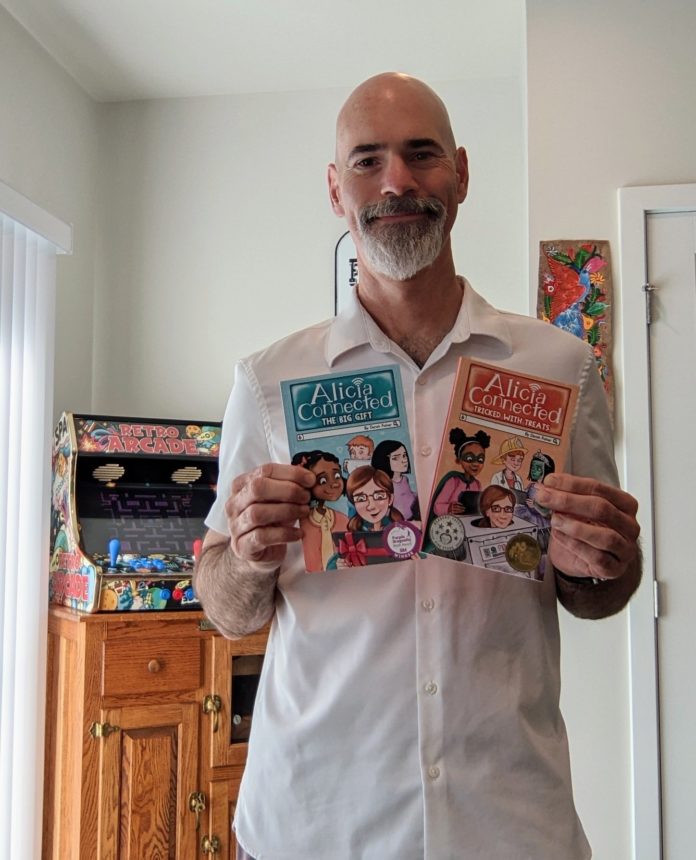
  5. Find resources and literature, such as the award-winning Alicia Connected series to help kids safely navigate through a digital world. The series reminds young readers that “with great power comes great responsibility.”


Today’s children are growing up in a cybercentric culture. While it seems cumbersome to employ every safeguard for cyber activity, it is vital to keep your kids secure by avoiding risks. Teaching them how to be safe online with the right resources and guidance is more than doable.

Fisher has spent decades in the computer engineering field, with the last 10 years in cybersecurity as a leader, speaker, and instructor. His passion has been to take complex security topics and make them simple and easy to understand. He holds several security certifications and teaches cybersecurity at Temple University, where he is also an external advisory board member to the cybersecurity program.

He is also the author of middle grade series, Alicia Connected, which aims to build on his theme of helping kids safely navigate through a digital world. The series has garnered glowing reviews and multiple prestigious industry awards.
Tips for Talking to Kids About Disabilities

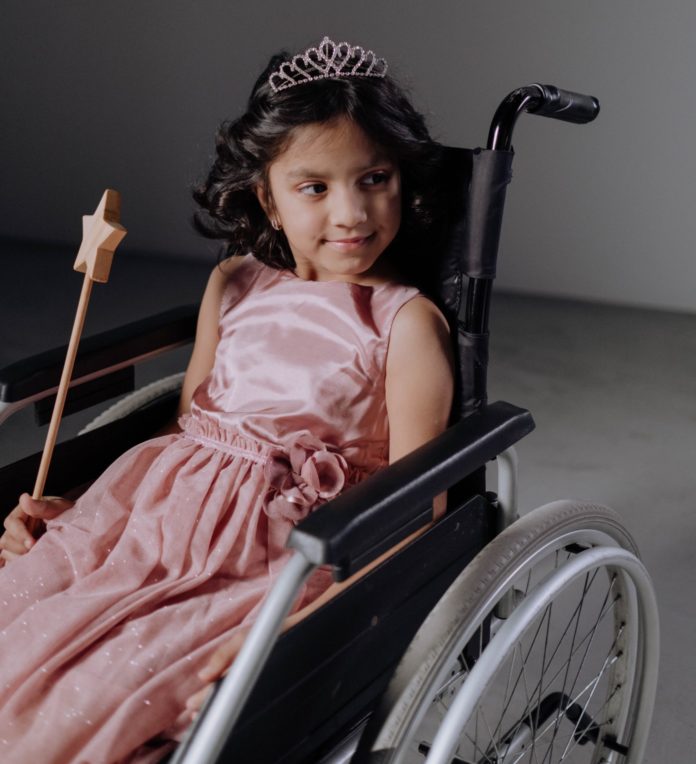
Photo by cottonbro.

“Why do you talk like that?”  I heard the question come from behind me as I helped another child in the Sunday school class. 

“It’s just the way I am.” I heard my sister-in-law wisely answer the curious boy. 

My sister-in-law, Kara, was born with cerebral palsy. She was helping me in the classroom that day when one of the kids noticed her speech was different. Kara has been taught to answer, “It’s just the way I am” after years of questions about how cerebral palsy affects her speech and other aspects of her life.

Our kids have grown up around their beloved Aunt Kara and accept her as she is, but there came a time when each of them has asked about Kara’s disability and why it makes her different. 

Chances are, at some point, your child will meet someone at school or in the community that has a disability. It is normal for children to have questions about people who are different from them, which means parents should be prepared to answer their questions in an intelligent and appropriate way. Here are some tips to get the conversation started:

Everyone is different but the same

All of us have unique gifts, personalities, and challenges. No two people are the same, which is a great thing, because diversity makes life interesting and fun. While we are all different, everyone has things in common too. All people, including people with disabilities, want to have friends, be shown respect, and have the desire to be accepted. 

Encourage your child to embrace the differences of others and find common ground as well. If your child is interested in a popular television show, book, toy, or game, chances are a person with a disability is too. Encourage your child to find out what they love to do in order to find shared interests.

Types of disabilities

Some disabilities are obvious and some are not. Some people may need a walker or wheelchair to help them move around. Others may have a cognitive disability that is not as visible. Explain in simple terms that people struggle with different things and may need a little extra help from a physical tool (like a wheelchair) or help from others. 

People can have impairments with sight, hearing, walking, speech, cognition, and many other things. It is important to note that just because someone is in a wheelchair, it does not mean they have a cognitive disability. Also, disabilities are not contagious and children are not going to “catch” the disability. These things may sound obvious to adults, but children process things differently than we do, and many have these questions.

Name calling is never okay

Emphasize that people with disabilities have feelings too. Name-calling is hurtful, disrespectful, and is a form of bullying. People with disabilities need others to stand up for them when they cannot stand up for themselves. Encourage your child to tell an adult if kids are teasing another child. Your child can be an example to others by being kind and respectful. Parents can set an example by using positive language and behavior towards others as well.

A note about “rude” comments

Kids are curious and love to ask questions. Many times they will speak exactly what is on their mind without thinking about whether the comments will be hurtful. This can be very embarrassing to parents. So what do you do if your child blurts out a rude and embarrassing comment? 

Start by answering calmly and matter of factly. If, for example, your child says “Why is that boy in a wheelchair?” Simply answer, “He needs it to move around. Why don’t you say hello?” If the child is reluctant, say hello to him yourself along with something like “John likes trains. Do you like trains too?” If the person accompanying the child responds, follow their lead. It is always better to treat others as you would like to be treated than to hurry away in an embarrassing situation. Later, when you are at home, you can ask your child if they have any other questions about others with disabilities and reinforce the value of treating everyone equally.

My sister-in-law, now thirty-eight years old, has been asked many questions over the years, some rude and some just curious. She has learned to handle them well because she knows that, just like anyone else, she has challenges to overcome and successes to celebrate. Kara loves watching movies, dancing to music, and taking care of animals. She loves eating candy, pizza, and tacos. She is fun to be around and loves to get out and explore new places. People with disabilities are just people. Sometimes that simple fact is all kids need to know.

Open House Guide

iLEAD SPRING MEADOWS
1615 Timberwolf Drive,
Holland, OH 43528
419-491-7423

At iLEAD Spring Meadows Kids are Free to Think and Inspired to Lead Tuition-Free K-8 Public Community School At iLEAD Spring Meadows, we see the leader in your child. As a tuition-free community school driven by project-based learning and social-emotional development, we are devoted to providing kids in grades K-8 with education that prepares them to be the leaders of tomorrow.

We provide students the best academic and emotional support through small class sizes and individualized attention. We are now enrolling.

Schedule a tour by calling 419-491-7423 or visiting ileadspringmeadows.org.

St. Ursula Academy
4025 Indian Rd., Toledo
419-531-1693 | toledosua.org

St. Ursula Academy is Toledo’s oldest all-female Catholic college prep school for girls from 6th grade to 12th grade. The ultimate mission of the school is to ensure that the young women embrace their own possibilities, explore new passions, grow in their faith, and become leaders in school and the community. The school has 20 Advanced Placement courses and 18 honors courses to challenge students and provide them with the possibility of earning college credits while in high school. Additionally, the school provides a one-of-a-kind “best fit” College Quest program.