“The third annual Christmas at the Cabin event is a wonderful way for families to create special memories together,” Museum of Fulton County’s Judy Warncke said in a press release. “For only $15.00 per car, families can visit the cabin, blacksmith shop and Junior Fair Building where you will find Fulton County employers and organizations offering fun activities for all ages to enjoy!”
Gather with the community to meet Santa and Mrs. Claus at the historic Canfield Cabin and watch the blacksmith working at Reighard Blacksmith Shop. There will also be hands-on activities and crafts in the Junior Fair Building as well as a holiday light display, free popcorn and hot chocolate and a chance to meet the Grinch.
The event runs from 5-8 p.m. on Friday, December 8 and from 4-8 p.m. on Saturday, December 9. Reservations are not required and admission is only $15 per car.
Christmas at the Cabin is presented annually by the Museum of Fulton County in partnership with OhioMeansJobs|Fulton County, Fulton County Visitors Bureau, Worthington Steel, NorthStar BlueScope, Northwest Ohio Educational Service Center and many other community organizations.
The Museum of Fulton County and Legacy Gift Shop are located at 8848 State Highway 108, across from the Fulton County Fairgrounds. The Museum is open Monday through Saturday from 10am-4pm.
For more information, call 419-337-7922 or visit museumoffultoncounty.org. Information is also available on the Museum Facebook and Instagram pages.
For your Sagittarius child 2023 is going to be an extraordinary birthday because your little one wants you to be involved. You’ll find a curiosity coming from your child about family history.
If your child is over the age of three, the planet Mars was over Pluto connected to their Sun Sign and was clouding their ability to feel like they belong, so they created their own stories. Most of them felt the way Pluto feels: very cold and isolated. The good news is that this aspect has finally moved away, giving them a sense of relief.
This is why your child may have sometimes separated themselves, or had anxiety or anger in the past, because they felt boxed in, and their emotions felt trapped. Sharing stories about family members will anchor them in the self-esteem they need. Be prepared, because they will want to know more! 
If you have a child over four, that child may sometimes have insecure feelings and be afraid of being abandoned. Belonging is what they came here to learn. This is a decisive year in helping them feel how much they are loved and belong.
For a gift, buy them something that you know they’ve been wanting to try. It will feel special because it will show that you remember what is important to them. Their sense of belonging will blossom as you’re helping them write their story and adding to your family history.
Health and fitness classes at Families for Fitness locations.
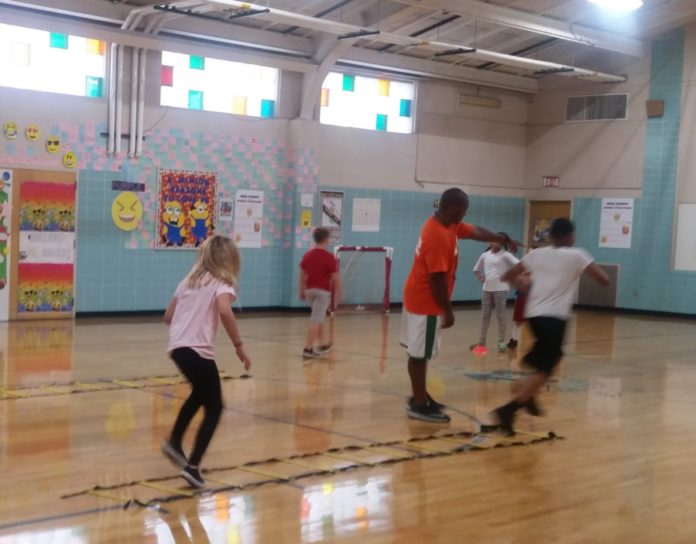
A local healthy lifestyle program for kids has received a validation in the form of a $15,000 grant from the Greater Toledo Community Foundation’s (GTCF) Equity & Access Initiative Fund. Families for Fitness, Inc., which emphasizes changing behaviors over diet and exercise, has offered in-class and after-school programs since 2011.
“We work on cause and effect,” explained Families for Fitness Executive Director Marsha Hill.
Marsha Hill, executive director of Families for Fitness.
The program offers health and fitness classes to elementary school students, with a message of replacing bad behaviors with good. “We try to emphasize the good things kids are doing – naturally – and then build upon that.”
Making good choices, getting more exercise
In-class programs are 8 weeks in length, focusing on one topic (such as hydration, food choices, reading food labels and the importance of sleep) each week. In addition, professional trainers are there to lead fitness activities. After-school programs are centered on physical activity, indoors and outdoors, 2 or 3 days per week, with leadership from trainers.
Programs are currently underway with Springfield Schools (meeting at Holland Elementary) and Toledo Public Schools (TPS) (meeting at the Martin Luther King Academy for Boys). A program will begin next spring at Holloway Elementary School. Families for Fitness has collaborated with the Ohio State University Extension Service, Mercy Health and the TPS program Partners with A Purpose in developing programming. Monnettes Market has provided fruit treats for some of the classroom programs.
“We’re trying to change the environment for kids,” Hill said. The program is committed to addressing health disparities (such as youth obesity) and fostering well-being among marginalized youth and families. “For kids, obesity can lead to bullying, depression and isolation. We’ve designed this program so kids can blow off steam. They need to be able to step away for a time.”
Funding the organization
Equity & Access Initiative Fund grants are made to nonprofit organizations that are working to remove barriers that impact marginalized communities. Grants focus on organizations’ nonprofit capacity, economic development, employment or advocacy. Hill said the funding will help Families for Fitness to take the next steps for future growth in 3 areas: strengthening administrative and development efforts, revitalizing programming and expanding community reach.
“We have just recently been able to get back into schools after the pandemic,” Hill said.
The extended break meant revision of some of the organization’s programming, and re-connecting with partners, teachers and parents.
The grant also offers the opportunity for the organization to have its own facility. “It’s difficult to have time with parents, to continue our training after the school programs,” Hill said. “Having a facility will allow us to expand our programming to more communities while adding staff to lead programs there and at schools.”
Hill surveys parents and teachers to measure the impact of the program on kids’ behavior and attitudes about diet and exercise. She’ll even send a recipe home with kids at the end of the week’s program.
Families for Fitness is hosting a fundraiser on November 25. The “Crowns, Bows and Pearls” brunch will take place at The Pinnacle, Maumee. And schools interested in adding Families for Fitness programs to their school day should contact Hill directly at 419-917-2557 or [email protected].
“By collaborating and thinking inclusively, we can creatively address our community’s challenges,” said Greater Toledo Community Foundation President Keith Burwell in making the grant. “This grant reflects our shared commitment to creating a healthier, more equitable Toledo.”
The Ohio Department of Administrative Services has recently introduced Carey, their virtual assistant. This is a new system integrated into their public site on October 30. It is used to answer frequently asked questions, including topics from Medicaid, food and cash, child care assistance and more. This will allow for easier and quicker navigation across the confusing website and provide information, resources and guidance about benefits and using the self-service portal account.
To get the full benefits, anyone working with the Ohioans Benefits page online can click the “Ask Me A Question” Carey icon and open the chat box. From here, one should start asking simple questions, using clear and concise language so the chatbot can fully understand the question. However, Carey will not be able to answer questions based on personal information, just general topics and how-tos. If Carey is unhelpful, the chatbot will be able to provide the Ohioans helpful links and phone numbers that can give further assistance.
Carey will be able to provide guidance and bring even more benefits to the Ohioans that have trouble navigating the Ohioans Benefits website.
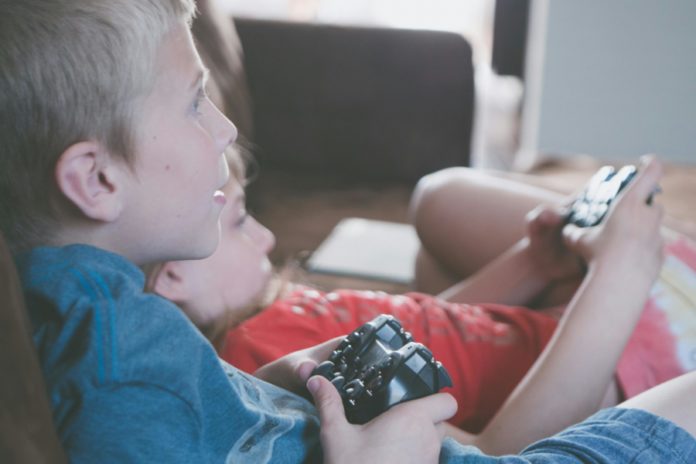
It is important to monitor how much your child is gaming and how it affects them. Photo from Pexels.
When I was growing up in the 80’s, we couldn’t afford a Nintendo Entertainment System, but it was always the highlight of weekend sleepovers at Granny’s house. By the 90s, our Friday nights were consumed by endless rounds of Tekken, Twisted Metal and teenage banter. Now, as a father of 3, I game to relieve stress at the end of a long day in the office.
Obviously, with a gamer as their father, my kids are avid gamers. And that’s usually fine. Usually. At various points in their lives, it has been a problem though. And who can blame them? Video games allow them to escape the troubles of reality, express themselves in ways impossible in real life and explore situations and worlds only limited by the culmination of human creativity. All from the comfort of home.
As parents, it is our duty to guide our children around the pitfalls of life, and this is no different. So, when does gaming become a problem?
Lack of motivation
Gaming can be so immersive that your child may find enough fulfillment in-game to replace the need to pursue interests in real life. A quantifiable warning sign is a slip in their grades, but others may be a lack of interest in participating in extracurricular activities or showing no desire to get a first job, learn to drive or any other normal childhood milestones.
Social disconnection
Many modern games have social aspects built into them. Children may see this as a replacement for face-to-face social interaction — even with members of their own household. Ever have your child tell you that they don’t know how to talk to people, but always seem to be talking to friends online? Another warning sign is when they stop attending, or show aversion to, attending social events like school dances and family parties.
Health problems
For the most part, gaming is a sedentary activity, which often spans several hours or longer. Health issues such as weight gain and eye strain are not uncommon. And that’s not to mention the host of problems that accompany sleep deprivation.
Gaming addiction
This may come as a shock to some, but gaming can become a true addiction. Some signs of gaming addiction include thinking about gaming even when not playing, lying about how much time is spent gaming, being unable to stop playing even when knowing it’s an issue and showing withdrawal symptoms such as irritability and apathy when not gaming.
What can you do?
If you think your child may have a gaming problem, the first step is to talk to them. Talk about why you feel it’s a problem, and what you can do together to solve it. If that still doesn’t work, you may need to set gaming time limits. Just remember, this may not alleviate the underlying issues causing the desire to game. And if you believe your child is truly suffering from gaming addiction, please reach out to your doctor or mental health provider for help.