

Happy birthday to your Aquarius child! This year, they will experience growth and transformation. Some may find change exciting, while others might struggle. Support them by encouraging new activities and exploring their humanitarian side. A perfect birthday idea is a party at Urban Air Adventure Park. There are two locations in Toledo. Find vibrant, futuristic decorations to build the theme. For a unique cake, try Eston’s Bakery in Toledo. These elements will help them express their creativity and humanitarian insights, making their birthday memorable and even more meaningful because you will be able to share this experience with them.
The CEO Project of Ohio: Empowering Providers and Parents
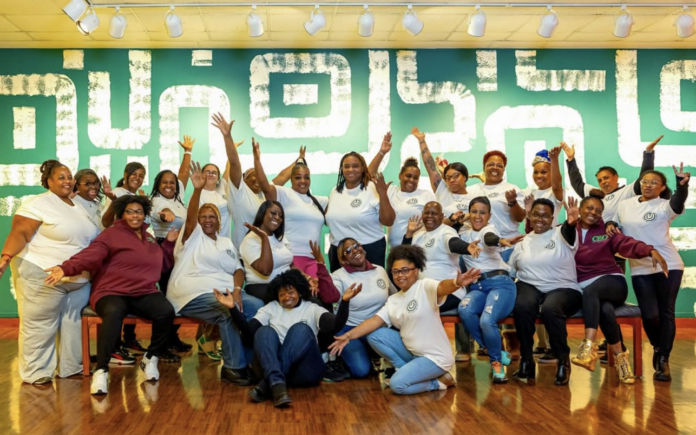
“Now that I’m doing childcare, I see so many obstacles as a provider, but also as a parent.”
Alescia Harris, from Toledo, has five children (ages 5-26), one granddaughter, and runs her own daycare center.
Her unique perspective of being on both ends of the current childcare crisis, as provider and parent, highlights the need for increasing childcare services, and the danger of the current government push to end parent telework options.
The CEO (Care Economy Organizing) Project of Ohio, an advocate for early childhood education and care, works with parents and childcare providers and teachers (like Harris) to support and unite them in fighting for our children’s rights to quality care and education.
“I was introduced to The CEO Project through one of their members,” Harris said. “I attended their meetings and trainings, and truthfully, every time I go to one of these events, even if it’s just a zoom meeting, I leave feeling empowered.” The CEO Project is “kind of like the unions that childcare workers often don’t have,” Harris said.
“They keep us informed on what’s going on with childcare currently, what obstacles we may be faced with, what they want us to get together, how to get more people involved. They enlist everyone. This group is like a sisterhood where they encourage you, give you information and advice, you have questions, they make sure you leave there with clear concise answers.”
Quality, accessible childcare faces attacks from many levels. Federally, president Trump wants to mandate that federal employees return to the office full-time. Some non-federal employers also want to end remote and hybrid options.
To support parents returning to on-site, full-time work, more childcare slots must be made available. But with so many daycare providers and teachers leaving the workplace in droves, the opposite is occurring.
Without proper pay, benefits or structural support, the childcare crisis will only increase.
Harris has seen firsthand how structural difficulties have impacted her ability to provide care.
“There’s insufficient compensation. Many providers struggle with low reimbursement rates for kids, which means they can’t even cover supplies, let alone the cost to run a center,” she said.
RELATED: Education Opportunities in the Toledo Area
Harris lists some of the obstacles: the government wants the staff to have degrees and do extended training, but they’re not giving them any benefits. Daycare providers often don’t have medical benefits or 401Ks, and the government isn’t expanding those options. “To retain staff, you want them to do all this training and get all this credentialing, but are they getting loan forgiveness?” Harris said. “They’re not acting like they’re partnering with us, they’re policing us.”
She describes system changes that don’t respect the work that providers do, like moving from a 5 star rating system where providers did a lot of work in developing curriculum and lesson plans to get their stars. When Ohio abruptly decided to change the ratings system, the providers lost all their stars without anything commensurate as replacement, and felt like it negated all their hard work.
“Changing the ratings system affects whether a child can continue in the program they’re already enrolled in, and how it affects a younger sibling coming into the system,” said Harris.
Harris noted that recent legislative changes introduced new requirements for providers, but there’s lack of clear and acceptable information on how to comply with the new information, and this means providers and parents will face disruptions to services.
“The people who are supposed to be in charge, with inspections or licensing or their roles, it doesn’t seem like they want to help the provider,” said Harris. “It’s policing. They’ll mark you for any and every little thing.” She hastens to add that rules are rules, and she absolutely gets that. But when licensing specialists tell her, “I have to mark you down for something or my bosses will think I’m not doing my job,” she finds that discouraging.
There are wider systemic issues that can play into parents being able to access quality childcare, like an overloaded medical system. “I’ve had to take my kids out of county to get dental care because the place in my county was booked up for the whole year,” said Harris. “One of the requirements for Head Start, a high quality childcare program, is that your child has to go to the dentist. My child had to get all their cleanings out of county. I wonder, is this why people aren’t sending their children to Head Start? Is this why some of the children I’m servicing have cavities and rotten teeth?”
Harris works another job because owning her own childcare center doesn’t pay enough to support her family. So, she decided to create a daycare that covers the difficult 6pm-6am hours for parents.
Her daycare is in-home, and she noted that once she received a negative mark from an inspector because her own child had some lotion marks on his clothing. “My child has eczema and needs to lotion his skin,” she said. Why aren’t the licensing inspectors trying to help the providers who are wanting to make a difference, she asks? Why isn’t it based on providing resources that they need, rather than just marking down the flaws? The inspectors often make her feel like she’s failing or needing to be on edge.
Many daycare providers are women, and Harris feels that The CEO Project really focuses on pushing women empowerment for the parents and providers involved. She has experienced the struggle firsthand of finding quality childcare when she was returning to work fulltime after the pandemic. Her child’s first daycare would send home her kid with no clothes on — just a diaper–and her kid would get very bad rashes. “As a parent, you have to go to work, but you love your children and don’t want to leave them somewhere that’s not safe,” she said.
For parents stressed about finding good childcare, Harris recommends looking at daycares like an interview. “If it’s in-home, inspect the home, speak with the provider, don’t just drop your kiddo off with anyone. Ask the provider, ‘What type of other children do you have? What do you feed the children? What are your extra curriculars? What are your activities?’ Everyone in the home is supposed to have a fingerprint and background check. Bond and talk with your provider.”
For providers, Harris urges them to remember why they got into this field in the first place. “At the end of the day, we’re making a difference in that child’s life. That child is gonna pick up on some of our positive ways. They’re gonna mimic us, they’re gonna remember us, they’re gonna think, ‘I went to daycare and we ate that delicious meal and my teacher didn’t care how much I wanted — I got full.”’
Connect with grassroots groups like The CEO Project, who believe in treating daycare providers and teachers with respect and value, and want to make sure parents have the quality childcare they and their children deserve.
“At the end of the day, I really wish that everybody would realize it’s a full circle,” Harris said. “We all need each other. We need the parents to be on the same focus as the providers to make this a better system. We’re all together, fighting for childcare as a whole, so that the parents CAN go to work and have all their benefits. If we don’t stand together, then we’ll all fall. We need to stick together.”
Toledo Center for Live Arts Phase 1 Opening: A New Hub for Collaboration, Education and Performance in Toledo
The Toledo Alliance for the Performing Arts (TAPA) prepares for the Phase 1 opening of the Toledo Center for Live Arts, a facility designed to foster collaboration, education and performance. The new hub marks the beginning of an exciting new chapter for the arts in Toledo and the surrounding region.
“For more than 80 years, the Toledo Symphony, Toledo Ballet, and Toledo Jazz Orchestra have inspired audiences and students alike,” said Zak Vassar, president and CEO of TAPA. “We now honor that legacy by creating a home where students, performers, and our entire community can unite in the transformative power of live art.”
The 56,000-square-foot Toledo Center for Live Arts is a redevelopment of the historic Masonic Temple. The new facility consolidates TAPA’s administrative and educational programs, bringing together more than 650 students from the Toledo Symphony School of Music, Toledo Symphony Youth Orchestras and Toledo Ballet under one roof.
Phase 1 of the center’s opening will include the relocation of TAPA’s administrative teams and the start of classes for both the Toledo Symphony School of Music and Toledo Ballet. The center will also host the “Carnival of the Animals” performance as part of the Buckeye Broadband & The Blade Chamber Series.
RELATED: Arts Opportunities in Toledo for Those With Disabilities
In addition to offering educational programs, the center will provide spaces for small and medium-sized performances. TAPA’s major performances will continue to be staged at the Peristyle Theater, Valentine Theatre, and Stranahan Theater.
“Our goal is to create a lasting, dynamic space for Toledo’s artists, audiences, and music and dance students” said Marna Ramnath, TAPA board chair in a press release. “This facility nurtures collaboration, innovation and the development of the next generation of performers. I’m certain the Toledo Center for Live Arts will bring many exciting performances to life, some of which we can’t even dream of today.”
A revitalized landmark
Attorney Richard Karcher, TAPA Board Vice Chair, explained that after evaluating more than a dozen potential sites, the Masonic Temple stood out as the perfect location.
“It was clear that our different constituencies had many items on their wish lists for a combined facility,” he said. “We evaluated more than a dozen properties, including new construction, former retail spaces, and historic reuse. And locations that were rural, suburban and urban. When we were introduced to the Masonic Temple, largely empty since the 2000s, it seemed that our answer was hiding right in plain sight. It was unusually ideal for our needs.”
TAPA turned to local developer David Ball, known for revitalizing several iconic Toledo buildings, to transform the Masonic Temple. Ball, who has worked on projects such as the Ohio Building and Pythian Castle, believes the building is uniquely suited for TAPA’s needs.
“When you look at this building’s characteristics, you just can’t imagine a better place for TAPA to be,” Ball said. “It’s got big rooms that are ideal for dance classes and symphony rehearsals. We added windows and a significant amount of natural light to the second story. You just can’t build this kind of structure today—everything here is stone, concrete, and marble. This is going to be an absolute palace for the performing arts!”
TAPA acquired the building in November 2023, with the total project cost estimated at $8 million.
More to come
The Phase 1 opening is only the beginning of TAPA’s vision for the Toledo Center for Live Arts. Future phases will include the addition of a student lounge, a large recording studio and a flexible performance space capable of hosting up to 400 attendees. A grand opening is scheduled for Summer 2025, marking the full realization of the space.
In Fall 2025, the Toledo Symphony Youth Orchestras will begin residency at the center, further cementing its role as a hub for arts education and performance.
“We send our thanks to the countless supporters who share our vision for what this building will become,” said Brett Loney, TAPA’s vice president of development. “This includes individual donors, foundations, and corporations who have helped us raise more than $3.4M toward this project. We share their enthusiasm and can’t wait to introduce this building to our community.”
Learn more about the Toledo Center for Live Arts and upcoming events at artstoledo.com.
Scholarships Available for Students Pursuing Careers in Environmental Science and Conservation

Friends of Ottawa National Wildlife Refuge is offering two $2,500 scholarships to graduating high school seniors who are passionate about environmental protection and eager to make a difference in the field of conservation.
The Josh Project Offers Low-Cost Water Safety Lessons for Toledo Area Kids
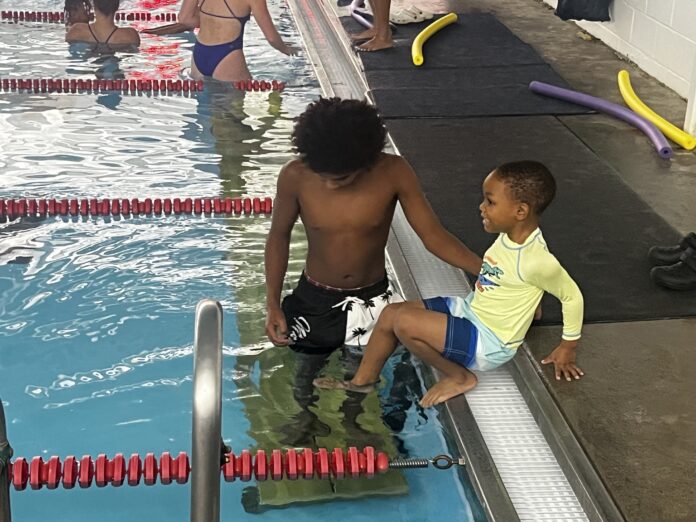
Teaching children about water safety is important, but not all children have access to public pools or lessons to make that happen. The Josh Project is committed to changing that by helping children in the Toledo community learn to swim.
“The Josh Project is a drowning prevention and swim safety program which offers low cost swimming lessons and water safety education to youth ages 5 to 17 years of age,” said Lawrence Butts, executive director. “We aim to prevent drowning and other water-related injuries.”

Butts and his family know the tragic outcomes of childhood drownings personally.
“The Josh Project was founded in March of 2007 by my aunt, Wanda J. Butts, due to the drowning death of her 16 year old son, Joshua, on August 6, 2006. He never had swimming lessons, nor did he know anything about water safety. The goal is to ensure that kids in every school and church in our community know how to swim,” Butts said.
RELATED: Tangible Habits Provides Support for Parents, Educators and Caregivers
Low-cost lessons
The project has partnered with Greater Toledo Aquatics Club and St. Francis de Sales High School to offer low-cost water safety programs throughout the year. The sessions, which cost $45, consist of six thirty minute lessons. A limited number of scholarships are also available. While participants are learning to swim, their parents are also participating in water-safety lessons.
“The parents also benefit from our sessions. While their children are learning how to swim, they are learning valuable life-saving skills like CPR. Not only are our youth learning how to swim, but we are also helping them to develop self-confidence and resilience, while providing a space to build healthy relationships,” Butts said.
A life of service
Butts has a long history of public service in the community. After graduating from Libbey High School, he enlisted in the United States Army, serving in Ft. Jackson, South Carolina, Darmstadt, Germany, Belgium, and Ft. Bragg, North Carolina. He also served in Afghanistan, and worked for a decade as a government contractor in the Middle East.
Today, Butts is an active volunteer, working with the Cherry Street Mission Ministries, Winterfield Venture Academy and the Canaan Manifested Word Church. He also serves as a behavior coach for New Leaf Group’s after school and summer basketball programs at the Wayman Palmer YMCA.
“I am a proud father of three children aged 22, 19 and 11. I bring a wealth of knowledge, experience, and passion for service to the Josh Project, where I will continue to make a positive impact on the community,” he said.
Butts continues to be a role model for so many of the youth that he serves.
“In addition to my professional and volunteer work, I am dedicated to personal growth. I hold an Associates degree in sociology, and I am on track to complete my Bachelor’s degree in spring of 2025.”
Community support
The Josh Project has received support from many local businesses and community groups, who have helped fund scholarships for students.
“We are extremely grateful for our funders, collaborators and supporters like Groth and Associates, the City of Toledo, Toledo Fire and Rescue Department the Toledo Chapter of Jack and Jill of America, Canaan Manifested Word Church, CC419 Initiative, Safe Kids of Greater Toledo and The New Leaf Group.”
“Our ultimate goal is to have affordable, year-round swim lessons,” he said.
For more information, visit The Josh Project on Facebook.
Connecting Kids to Meals Helps Reduce Child Hunger in Northwest Ohio
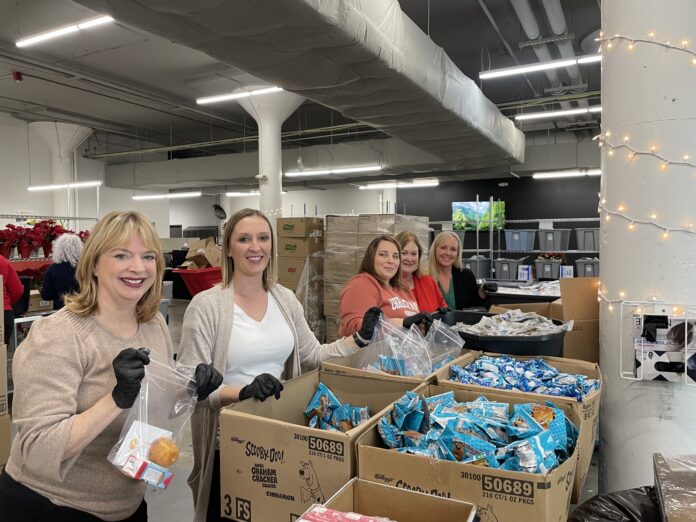
With roughly one in four children in Lucas County facing food insecurity, Connecting Kids to Meals provides children in northwest Ohio with the nutritious food they need to grow and thrive.
Since 2002, Connecting Kids to Meals has been providing hot, nutritious meals at no cost to youth ages 18 and under in low-income and underserved areas. As a non-profit organization, they fulfill this mission by working with community locations where kids gather, including schools, libraries, community centers, and other nonprofit organizations.

Wendi Huntley, president and CEO of Connecting Kids to Meals, along with her team of employees and volunteers, currently serve an average of 2,300 meals during the Afterschool Meal Program at 90 partner locations. Throughout the summer, the number of meals increases to about 6,000 meals each day at 150 partner programs.
Preparing food for thousands
The Connecting Kids team prepares and packages meals in a state-of-the-art kitchen at their downtown location. The organization shares its kitchen space with Cherry Street Mission Ministries. The operation runs like clockwork to prepare after-school snacks, after school dinners and weekend snack bags. During the summer months, the organization also offers breakfast and lunch for children. The meals are then delivered to partner locations throughout Lucas, Wood, Seneca and Sandusky counties.
RELATED: The Program Inc: Toledo Nonprofit Inspires the Next Generation of Young Men
With the help of community partners, social media and their website, Connecting Kids to Meals promotes the availability of these snacks and hot meals to families throughout the region. On the organization’s website, families can find information about meal locations, snack menus and monthly hot meal menus.

The Connecting Kids team is dedicated to meeting the needs of children with compassion and creativity. The team works hard to be thoughtful as food plans are prepared. They pay close attention to school lunch schedules and survey the children to learn what type of snacks they enjoy, and the meal plans have a three-week rotation, so children are not frequently eating the same foods.
A mission to reduce child hunger
“The importance of the mission of Connecting Kids To Meals can’t be easily explained. There is so much that goes into providing healthy meals at no cost to kids ages 18 and under who are in low-income and underserved areas of Northwest Ohio,” Huntley shared. “We need strong partners like our schools, summer sites, libraries, community centers and other places where kids gather. We also need great staff members who get the job done day in and day out. Combine that with the needed generosity of donors and grantors who help us cover the costs of our programs and operations. Of equal importance are the volunteers who serve on the Board, pack meals, help us serve meals and do so many other things to support us. To be able to feed a hungry kid and provide nutritious meals is something that we value and feel privileged to do.”
Help make a difference
As a non-profit organization, it takes the help and support of many people and organizations to serve nearly 600,000 meals to children each year.
“I would like to thank our donors, partner sites and volunteers whom help us do this important work,” Huntley added. “I would also encourage people to consider a monetary gift of any amount. We need help covering about $2 per meal to ensure kids get hot, healthy, free meals during out-of-school time when they need them the most.”

The organization has periodic fund-raisers to help raise awareness, participates in the Souper Bowl of Caring in January and hosts Hunger Action Month in September to encourage people to advocate and donate. From online donations to gift cards and Kroger Rewards . . . there are a variety of ways to support Connecting Kids to Meals. To learn more visit connectingkidstomeals.org/take-action/ways-to-give.

Volunteers are also an invaluable part of the effort to feed children throughout northwest Ohio. The Connecting Kids team welcomes individuals or business groups to be part of the team! Volunteers often gather in downtown Toledo to package plates, utensils, condiments and snacks to help make meal distribution more efficient. More information about volunteer opportunities can be found online at connectingkidstomeals.org/take-action/the-volunteer-experience.
It takes the help and support of a generous community to help the Connecting Kids team work to ensure that no child is left hungry. To learn more about donor and volunteer opportunities visit the Connecting Kids to Meals website and follow their Facebook page.