
Paul Wehman, Ph.D. has written, co-authored, or edited 40 commercially published books and has written over 200 journal articles, mostly in the sector of transition and employment. As the father of two children with disabilities and his extensive background in vocational rehabilitation, he shares his experience and knowledge in the Autism Society of Northwest Ohio’s workshop, Transition for Youth with Autism – School to Adulthood: What Teachers and Parents Need to Know!
Join Dr. Wehman at the Toledo Hospital Croxton Memorial Auditorium on Wednesday, February 24 or the Education Center Auditorium of the Toledo Hospital on Thursday, February 25 to learn from evidence-based transition literature as it applies to youth with autism. Assessment, transition planning, and an ecological approach to curriculum will be presented, as well as the role of the family and how to implement supported employment.
For more information, visit www.asno.org.
Making the transition

Sleeping tight

Researchers at the Sleep Disorders Center at Vanderbilt University are working to find a better way for autistic children to get a good night’s sleep. Though the research is ongoing, they have been following a small group of children with autism who struggle to fall asleep after 30 minutes at least three times a week. Together with parent education on good sleep habits, the researchers provided the children with a low dose of the sleep hormone melatonin, which may be deficient in children with autism. The researchers have yet to find any side effects from the supplement.
Chronic headaches: what’s the cause?

 According to the National Headache Foundation, more than 45 million Americans suffer from chronic headaches. And with busy schedules and limited sleep, headaches are certainly no stranger for many moms. We’ve all experienced headaches, they are easy to identify; but you may not know that there are several headache types that occur for different reasons. Knowing which type of headache you have can help you treat or prevent them.
Tension Headaches
This is the most common type of headache among adults. It is usually caused by muscle contractions in the head and neck that create mild to moderate pain. These contractions may be from fatigue, hunger, anxiety or mental stress. Usually, rest and over-the-counter (OTC) medication can help relieve the pain.
Sinus Headaches
Between the bones of the face are moist air spaces called sinuses. When these hollow cavities become swollen or irritated, they can cause facial pain around the cheeks, eyes and nose. Your doctor can help determine the cause of your sinus headache. If the root of the problem is an infection, antibiotics may be needed. The symptoms of a sinus headache may be relieved with decongestants or the use of a humidifier.
Hormonal Headaches
Many women suffer from headaches associated with changing hormone levels during menstruation, pregnancy and menopause. Treatment options vary depending on the cause, but OTC medications, prescription medications and vitamin supplements may help. If you are pregnant, you should talk with your obstetrician before using any headache treatments.
Migraines
According to the National Headache Foundation, women are affected by migraines three times more than men. Migraines are thought to be caused by contractions in the blood vessels of the brain. Symptoms may include pulsating or throbbing on one side of the head, nausea and vomiting, and sensitivity to light or sound. Some people experience an aura, or visual cue, such as flashing lights or blind spots in vision before a migraine attack.
A migraine can last anywhere from 4 – 72 hours. Treatments for migraines vary, depending on the severity. OTC medications may be used for mild migraines, while prescription medications may be used for stronger migraines.
When to call your doctor
OTC medications with acetaminophen (e.g., Tylenol®) may be useful in treating mild headaches. Remember to check the label for possible side effects and dangerous drug interactions. Prolonged use of these medications can also be harmful, potentially causing liver damage. Always check with your doctor before using OTC medications to make sure treatments are safe.
While headaches are common, pain beyond an occasional, mild headache could be a cause for concern. Let your doctor know if you experience a headache that is unusually severe or lasts more than a couple of days. If your headache is accompanied by dizziness, slurred speech or persistent vomiting, seek emergency medical care.
Dr. Katrapati is a ProMedica Physician specializing in internal medicine at Alexis Medical Center. For more info visit www.promedica.org/doctors.
Claiming independence

A main concern of the families of individuals diagnosed with autism has been whether or not independent living can be achieved. The Self Reliance Center, located at 2040 W. Central Ave., is holding a day hab program for autistic teens and young adults focused on daily living, social interaction and vocational skills. The program began on August 23 and will run Monday through Friday throughout the school year. The registration fee is $40. The program runs daily from 2:30 to 6:30 p.m. and the cost is $20. When school is on break, the hours will be from 8:30 a.m. to 6:30 p.m. and the cost will be $40. For more information and an application, call 419-450-1298 or 419-508-4505.
Getting by with a little help
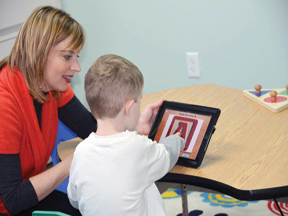
Mercy Autism Services (MAS) has been prominent in the Toledo area since 1992. Focusing on children, birth to age 12, and offering services to increase communication, sensory, behavior, socialization and age-appropriate skills acquisition. Mercy’s new facility on Briarfield Boulevard engages patients with the most up-to-date therapies and interactions to prepare youth for integration into schools and their surroundings. The 12-month program consists of six hours of intervention (8:30-2:30 daily, four days per week) from professionals and specifically educated program assistants to help autism spectrum disorder children acquire the critical foundation for language, social, physical and academic skill development.
MAS has an unassuming entrance, but behind its door is a wealth of knowledge and services to suit children with ASD. "We hope to one day take over the whole building," says Michelle Nagel M.Ed. CCC/SLP, the co-founder and lead coordinator of MAS. It feels like a typical preschool, but the therapy that lies beyond the waiting room is a sensational step forward for treatment of autism spectrum disorders, supervised by MAS' Medical Director Dr. Robert Solomon.
The first stop on our tour was one of the center's gymnasiums. “This is one of our gym areas. We have big sensory equipment with balls, swings and bikes. We have a couple of different programs to keep kids going simultaneously, so you’ll see different age groups running around. We come in and do some sensory work and work on social skills, then we transition into an activity where the kids can sit down and focus more on learning activity,” Dr. Nagel explains.
Up and active
Rooms across the hall are used for Mercy's applied behavioral analysis (A.B.A). Children who utilize MAS, spend two and a half of their six hour day with Mercy's onsite behavioral therapists. “The skills they learn during A.B.A., they take with them and we try to spread the therapy out throughout the day, so they're exposed to it all day long.” In another room, with brightly colored carpet squares, is a massive, mobile Smartboard. "We do all sorts of special activities. It's meant to be very interactive so children can engage in therapy. We have them get up and point to a moving balloon or find the right object to make sure they have a clear understanding. It kickstarts learning, but makes it more meaningful for students," she says. "In our last facility [in Holland] the board was mounted to the wall, now we can wheel it in for parent seminars or the kids can walk right up to it. It's made a world of difference."
Mercy Autism Services' specialized, intensive intervention exposes children with autism to experiences they would most likely encounter at any typical preschool or special needs school. "We do art and music time," Nagle adds. Peeking into the art room at MAS, you'll see a vast array of colorful supplies and children bustling around a table. " We can address social and fine motor skills or a variety of other specific skills with art, making every activity multi-dimensional."
Ready for school
MAS' Giant Steps room has the feel of a preschool classroom with posters to ignite a sense of learning and seats for every student. “These are the kids who are here four hours a day, and it’s more of a school setting to bridge the gap for school readiness. They leave our program ready to participate in a much more efficient way. Our goal is to get our kids into school. It can be very difficult for children in the school system, here it’s one on one attention which helps.”
In addition to a Smartboard and ten iPads for student use, MAS provides lunch at the facility. “Some of our kids have significant eating issues, whether it be texture-based or another issue. It allows us the opportunity to focus on that.” Toilet training is also provided. For students who are a bit older, MAS has licensed teachers on staff, so students stay on pace. “There’s a need in the community and we keep adding programs. MAS is the type of program where we try to fit our programming around the child’s needs and that child's family’s needs for an incredibly individualized program."
For more info on Mercy Autism Services call 419-794-7259 or email [email protected].
The power of being relentless

Born three months premature at only 31 ounces, Jordan Levin overcame a series of operations to correct conditions that threatened his life. But, as a toddler, his parents soon learned that one of his conditions wasn’t correctible — he was diagnosed as being profoundly deaf. Martin J. Levin’s book, We Were Relentless: A Family’s Journey to Overcome Disability, is the story of Jordan and his family’s courage and determination, which led Jordan to learn how to speak, graduate with a B.A. from Michigan State University and grow up to be a successful and confident young man.
Join author Martin J. Levin and Family with a special luncheon presented by the Special Needs Committee and Miriam’s Well of the Toledo Board of Jewish Education on Sunday, February 7 at 12:30 p.m. at the Congregation B’nai Israel, 6525 Sylvania Ave. For more info, contact Nancy Newbury at [email protected] or 419-885-2561.