Home Blog Page 517

Welcome to West Side Bistro

Nice atmosphere. Delicious food. Great music. After stopping in for dinner, I was feeling guilty I wanted my return visit to West Side Bistro to be kid free and with some fun friends. I have since ditched the guilt and made plans to have an adult night out in the near future!

Fun night out sans kids in tow

It’s true. Most restaurants these days are able to accommodate guests with children in tow; as it has been the growing trend for people to bring their children just about everywhere with them. Times have certainly changed. Being the youngest of six children, getting Burger King was a big deal. My children, however, are no strangers to restaurants. Then again, look what I do?

All that being said, sometimes you might just have a more enjoyable time with a group of adults and leave the kids for their own night of fun with the sitter. After all, an occasional break is good for everyone. West Side Bistro opened in January and is owned by Stan and Sherry Burton, and managed by Brian Gump; who has owned and managed many restaurants in his time. Though they have two high chairs available, Gump said their clientele is usually an older crowd.

If you didn’t know it was located in the strip mall, you may just miss it. With its frosted windows and covered patio, you would be hard pressed to guess it was nice inside. But once inside, you’ll say “Wow, how’d I miss this?”

We were there early on a Saturday and my kids and I certainly felt welcome. However, they didn’t offer a kids’ menu and if you have little ones, you won’t find kid friendly cups or changing stations in the restroom.  My boys split one of the burgers and fries. It was a generous portion and delicious, but at $11.50 plus drink, I was glad I had two children that could split the meal and the cost. The kitchen had divided the meal in even portions on two plates without my asking. The thoughtful gesture was certainly noted.  Artisan flatbread pizzas would have been another option for them to share.

We began our meal with calamari because it’s our family rule to try it everywhere we go. The breading and their signature sauce was yum, and gone as quickly as it hit the table. “It’s an eclectic menu, definitely,” said Gump. Not only are the appetizers unique, such as duck wings, chicken livers, and green beans tossed in a Szechuan sauce and peanuts, but so are the entrees. They offer burgers, salads, steaks, and a variety of fish and pasta dinners. I highly recommend the lobster fettuccine but I’ll have my eye on the pesto and shrimp rigatoni when I return.

Music, music, music

The kids and I had ventured out to dinner around 6pm to not make it a late night for my already exhausted boys. But just as we were heading out, many guests were streaming in and the musicians were preparing to start playing for the night. I LOVE music and I was so bummed to be leaving just as the fun was about to begin. Ahh.. next time.

According to Gump, Tuesdays are blues night, while Thursdays are jazz and Fridays and Saturdays are a mix of music. It appeared many of the people coming in had been there before and obviously knew what time to roll in so they could enjoy the music during and after their meal. I know for next time. There is also ample bar seating if you choose to stop in just for the music and not make it a big dinner out on the town.

Bottom Line: 

Though West Side Bistro is most likely not the first place you’d choose to drag your little ones, they will certainly accommodate you if you do arrive with them in tow. If you love music, you might want to time it right. Evenings out sans kids can certainly help maintain parental sanity.

Karen Zickes is a mom of three active children and freelance writer who resides in Holland, OH. She can be reached in c/o [email protected] 

West Side Bistro
3324 Secor Rd. Suite 10, Toledo
419-531-2427
Tue-Thur: 3pm-11pm
Fri-Sat: 3pm-1am
Sun: 3pm-8pm
www.WestSideBistroToledo.com

 

The Dish on Being a Dad

Patrick Dougherty

Father to Roz, 5
Hometown: Holland

Patrick Dougherty waited a long time to become a father. He and his wife, Katie, adopted Roz from China, after almost four years of patiently waiting, when Roz was just shy of nine months old. Patrick reflects on the first time he realized he was a dad: “When it really hit me was when we were in China. We went into our hotel room, and there was a crib sitting there. That was the moment I realized it wasn’t just a process anymore; it was real.” Patrick’s favorite part of Father’s Day is spending time with his wife and little girl. He explains, “Any day that I get to spend with Roz and Katie is great. It just makes me realize how lucky we are.” They don’t have any special traditions for the holiday, but, weather permitting, they will probably go outside and “mess around” which usually means riding bikes or throwing/kicking a big, inflatable ball back and forth.

Spencer Bailey

Father to Evangeline (Eva), 7 months
Hometown: Sylvania

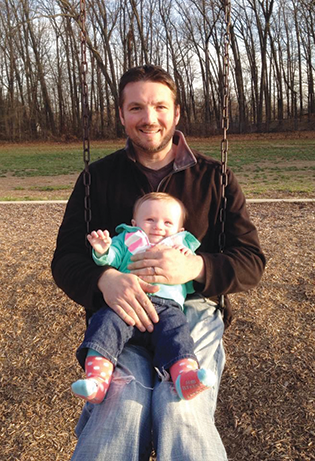
Spencer will be celebrating his first Father’s Day this year with his 7-month-old daughter, Evangeline (Eva). While Spencer says they don’t have any plans for the holiday, he reflects that his wife, Erin, “usually surprises me with something, so most likely she has something planned.” Spencer has one wish for his first Father’s Day, “I would just like to spend time with my daughter.” Spencer recently took Eva to the park for the first time, and he loved watching her smile as she tried her very first swing, and he hopes to be able to do that again with her for Father’s Day. For Spencer, being a dad means many things. “It means responsibility, it means fun, it means a lot of learning, and it means patience, lots of patience.”


Pete Mann

Father to Noah, 2, and expecting a baby boy in July
Hometown:  Toledo

Pete Mann explains that his family doesn’t have any Father’s Day traditions because, as he says, “Well, I guess there’s only been two of them so far, so I’m drawing a blank here. They usually make me a nice card and make me dinner, pamper me a little bit. Oh, and my wife Sloan says, ‘Every year we go to Imagination Station for Father’s Day.’” He laughs and adds, “There’s your plug!” (Sloan, is assistant director of STEM education at Imagination Station). One of Pete’s favorite moments as a father involves watching Noah light up with excitement when he is doing what he loves. “Noah gets really into baseball and music. He listens to music, dances around, and plays his guitar. He gets so excited when he’s ‘rocking out.’ It makes me feel proud, since I play, watching him get so into his music.”Spencer will be celebrating his first Father’s Day this year with his 7-month-old daughter, Evangeline (Eva). While Spencer says they don’t have any plans for the holiday, he reflects that his wife, Erin, “usually surprises me with something, so most likely she has something planned.” Spencer has one wish for his first Father’s Day, “I would just like to spend time with my daughter.” Spencer recently took Eva to the park for the first time, and he loved watching her smile as she tried her very first swing, and he hopes to be able to do that again with her for Father’s Day. For Spencer, being a dad means many things. “It means responsibility, it means fun, it means a lot of learning, and it means patience, lots of patience.”


Dominic Perna

Father to Aria, 3, and expecting a baby boy, Angelo, in June
Hometown:  Sylvania

For Father’s Day, Dominic’s daughter, Aria, who is only three, likes to “write” her dad little notes and then “read” them to him. Besides spending time with his family for Father’s Day, Dominic says, “I like having my own day; it’s pretty cool. Being a father is tough–it’s hard work–and it’s nice to get a little recognition for that.” While being a dad can be exhausting, Dominic says his favorite part of fatherhood is hearing his daughter call him “Daddy.” He explains, “When I come home from work, if Aria is home, she’ll run up to me yelling, ‘Daddy!’ It’s like something out of a movie. It makes my heart melt.” To Dominic, being a father means being a mentor and providing for his family. He hopes that his children learn what it means to have a good work ethic and to hold solid values from watching him.

Go Au Pair: Building a bond with live-in childcare

 
Nine families in Northwest Ohio are reaping the benefits of an at-home cultural experience as well as having someone help them with the needs of their children.
Young women from Colombia, China, South Korea, Russia, South Africa and Ecuador journeyed to the United States to be a part of the Go Au Pair program gaining fast momentum in the Toledo area. 
Their services include providing part-time or full-time live-in childcare in addition to duties such as driving, homework help, housekeeping and anything else pertaining to the children they are caring for. Although the women travel from all over the  world, fluency in English is mandatory making it easy for them to communicate with the families. 
Nicole Khuong, the Northwest Ohio representative, discovered the program two years ago and quickly decided she wanted to be a part of it. 
"I'd done some nannying in the past and I'm a strong believer in care provided in the child's home so that they are in their own environment and comfortable in their surroundings," she said. "It's something that feels natural talking about because I truly believe in it as a wonderful childcare option for kids."
When Khuong started with the program, only one family enrolled. Since then, she has seen a significant increase in knowledge and demand for Go Au Pair services.
The benefits of using an Au Pair are extensive, said Khuong, noting that language and cultural exposure give children an opportunity to "open up their world" and see that everybody is different and special in their own right. 

She added that by having live-in childcare, the Au Pair becomes a member of the family. "It's very much like having a relative stay with you," said Khuong. "They know what your child is allergic to and their likes and dislikes by being there all day even when they're not working."
Parents can enjoy reliability, schedule flexibility, and peace of mind knowing Au Pairs have gone through a detailed application process and been approved by the U.S. Department of State. The program has been providing childcare nationwide for 27 years, and was one of the original Au Pair curriculums designated by the U.S. Department of State in 1989. 
In order to ensure that Au Pairs are a good fit, families conduct a "meet and greet" via Skype interview before committing to someone. Families also have to apply to the program by agreeing to a site visit where Khuong has a chance to talk to the families about expectations, including an agreement to make sure Au Pairs get an opportunity to experience American culture outside of their 30 to 45 hour work week. 
Khuong coordinates monthly events to bring local Au Pairs together for a chance to form friendships and subside feelings of homesickness and isolation. Au Pairs are also required to take six credit hours at a university which broadens each Au Pair’s social circle. "Between their college courses and our monthly events, they build a solid community of friends on their own which is very important," Khuong said. 
Khuong says the cost of the program is more affordable than people assume, and is often the same if not less costly than a nanny or daycare. The price for an Au Pair is the same regardless of number of children or their ages. She added that room and board does play a factor because families are responsible for the living expenses of the live-in childcare providers. 
Most Au Pairs stay with their host families for one year, with the option of extending to two years. If for any reason there were a life event such as job loss that would make the program unaffordable, the agency would need two weeks' notice to make other arrangements. "Ultimately, we want to make sure that the host families and Au Pairs are happy."
Ask now about discounts available ($750 off and application fees waived). Visit www.goaupair.com/toledo for more information.

End the 'But I Don't Want to Go to Bed!' Drama For Good

Who doesn't love the sunny days and starry nights of summer? As late summer days grow shorter, back-to-school preparations grow more demanding. New shoes, fresh supplies, open houses and 'what to wear?' dilemmas fill hours with a nervous, excited energy for the pending school year.

In this bustle of activity, it's easy to overlook establishing a bedtime/wake up routine until the night before school. And by then it’s almost too late.
Transitioning into a bedtime routine is necessary for getting your child to bed earlier to wake more refreshed and to give their growing bodies the rest they need for physical, psychological and emotional growth.  "A lack of quality sleep can lead to a number of other health issues in children, such as poor attention, behavioral issues, hyperactivity and can worsen current diagnoses like ADHD," says Dr. Benjamin Fields, Ph.D., M.Ed., Child and Adolescent Psychologist at Nationwide Children’s Hospital in Columbus, Ohio.

Establish a Bedtime Transitional Period
Moving from the openness of summer days to a more structured school schedule takes time. Children, or adults for that matter, do not maintain a new behavioral expectation without a period of time where the new behavior is practiced and becomes part of a regular routine. Demanding kids get into bed two hours earlier the first night before a new school year starts is setting up a potential disaster. Instead, start the process two or more weeks before school begins to get children used to the idea of ending daily activities earlier.

Even better, Dr. Fields suggests the idea of keeping a regular bedtime throughout the summer months to help improve success. “Keeping a range of consistent bedtimes, within an hour either way, will make things easier on families when the time comes to adjust,” he advises. This is a good practice to adopt for weekends during the school year as well. Creating and maintaining positive bedtime routines helps foster your child’s ability to practice self-relaxation skills and learn the value of calming themselves down, both excellent skills.

Create A Regular Bedtime Routine
Just as kids rely on behavioral clues from teachers to know what comes next in the classroom, they will look to you for bedtime routines. They may test your resolve (”Ten more minutes at the computer, please!”) or naturally want more time with friends or social activities, so making the transition time a non-negotiable item will relay the seriousness of the expectation.

Interruptions to the routine, especially in the beginning stages, drag out the process. Don’t be afraid to be firm. Building, establishing and maintaining a consistent bedtime routine increases the hormonal cues within the body to start winding down. Disturbing that pattern can result in insomnia or a lack of quality sleep.

Keep in mind, too, that every child internalizes and develops independence at an individual rate. "Some children take two weeks, some longer," according to Dr. Fields.
Make the bedtime routine a joint venture between you and your child. Discussing what they like to do to wind down or what they feel helps calm them gives great insight. Then, add in a habit or two they enjoy. You want to create a routine that children look forward to. Experiment and ask for feedback from your child about what works and what does not. Praise and encouragement go a long way in making the habit a pleasant one.

One way to signal the transition to bedtime is with a cornerstone activity. The cornerstone activity is always the same, and cues your child that bedtime is about to begin. It is critical to set up the cornerstone activity as a positive action within itself, not as an end of the fun of the regular day. A few cornerstone activities to consider are closing curtains, gathering and preparing things (backpack, lunch, coats, boots) for the next morning and assembling them near the door, taking a shower or bath, putting away and shutting down electronic devices to charge for the night (in a specific location outside of bedrooms), having a cup of tea together or turning off the television.
Along with the cornerstone activity, offer verbal and/or emotional connection by asking how their day went, their goals for tomorrow, or what lessons they learned today.
Following the cornerstone activity, add a physical action that induces relaxation. Choose meaningful activities that you and your child enjoy doing together. Find a quiet spot not in the bedroom for this activity. Some ideas include:

Read a mutually-chosen book (even older children enjoy being read aloud to). Pre-determine a length, such as five pages, a chapter, or fifteen minutes, to counter the ‘just one more page!’ argument.

Listen to them read to you. Not only is this excellent at reinforcing academic skills, it affords you an opportunity to see their reading progress without pressure.
Tell an ongoing, creative story. Carry this further by setting aside non-bedroom time to write down the tale and have your child draw illustrations.
Gently massage their shoulders, back, and head. Slow strokes from the forehead and down the bridge of the nose relax facial muscles and encourage sleep..
Journal in words or pictures. Start a new journal each school year or each season to fill with stories and memories.

Review their plan/schedule for tomorrow. What are they looking forward to?

Share gratitude or prayer. You could also choose an element of character each week, such as honesty, loyalty, creativity, etc., and discuss who displayed that trait during the day.

Learn a new, low-key activity, such as yoga poses or meditation. Before bedtime, use a video to try a singular pose then try to replicate it together.
Share emotional reactions to their day. This is also a good way to have them think through events where they had options. What if had chosen to do something differently?
Study an educational topic together, based on interest. Gather picture books in advance and compare facts and new knowledge.
Each new school year begins with a combination of excitement and anxiety—but bedtime routines should not. By creating a solid foundation of activities for unwinding, transitioning into earlier bedtimes can be an enjoyable process for both you and your child.

Sidebar
Dr. Fields stresses the importance of developing a habit of sleep hygiene to improve a child’s quality of sleep once they are in bed. Considerations for this include:
-the importance of developing a bedtime routine
-ending all screen time (even ebook readers and tablets) at least one hour before bedtime
-nothing except sleeping to take place in bed. This means no eating, reading, television, toys or games in bed
-keep the lights low in the bedroom
-keep the room cool
-if your child (or you) awake during the night and struggle to go back to sleep within 15 minutes, get up and do something monotonous or unexciting to get your body to return to sleep.

Beth Morrow is a freelancer and middle school teacher in Columbus, OH. Connect with her on Twitter: @BethFMorrow

Source:
Dr. Benjamin Fields, Ph.D., M.Ed, Child and Adolescent Clinical Psychologist at Nationwide Children's Hospital, Columbus, Ohio. (614) 355-9580

TAP Tested: Kids’ Yoga Party

Tester’s Take: Heather McKinney, mother of four and a Brownie troop leader, devised the innovative idea of throwing a kids’ yoga party at Harmony in Life so that the girls could earn their badges for “My Best Self.” Parents have also added yoga to their birthday celebrations, either at a yoga studio or in their own homes. Kids’ yoga is an original activity that allows kids to have fun, learn a few things, play games, interact with their friends, and engage in physical exercise.

Goal: A yoga party to introduce kids to the basics of yoga through fun and games

Age range: 3-16 years (although it is best to group kids in similar age brackets)

Cost: $10/child for an hour class ($60 minimum). Discounts are available for groups larger than 10.

Time: Class times can be decided by party participants.

Things to consider: Throwing a yoga party at a studio has the advantage of a large, safe yoga room with all of the needed yoga materials. Sometimes kids also focus a bit better when they are in a learning environment, such as a yoga studio, as opposed to the comforts of a familiar home. However, throwing a yoga party at a residence allows for other pre- and post-yoga celebratory activities.

Additional benefits: Besides playing games and having fun with their peers, kids are introduced to yoga poses and breathing techniques. Yoga has been shown to be effective in helping kids develop social skills, pay attention, focus on the present moment, and slow down their thoughts. Yoga at an early age can also encourage self-esteem and acceptance through exercise in a noncompetitive, fun atmosphere.

What It’s Like: 12 girls, ages 8-10, from the Brownie troop arrived at Harmony in Life on a Saturday. The hour-long class was segmented into 8 different activities, each one lasting 5 -10 minutes, in order to keep the girls engaged. The class began with some general guidelines, then we went over “bear breath” (a deep, slow-breathing technique), followed by a short warm-up of 10 simple yoga poses that all flowed together. Next came a fun yoga game that all of the girls seemed to enjoy. The game encouraged moving, stretching, and being silly. We then slowed down the pace with 5 more advanced yoga poses, and then we moved onto partner work, which the girls seemed to absolutely love. The class ended with some balancing poses, followed by cooling stretches on the floor, with final relaxation for the last few minutes. Several of the girls mentioned after class that they either wanted to continue yoga or become yoga teachers, so I think it’s safe to say they enjoyed themselves.

Harmony in Life, 5747 Main St., Sylvania. 419.517.0047. www.harmonyinlifecenter.com. 

Count Me In: Volunteering

There is nothing more valuable than the gift of your time and energy. Volunteering at your child’s school is a wonderful way to be involved in your child’s school life and give back to your community. Not only will you be building a closer bond with your child, you will be sending a positive message you consider their school and education worthy causes. Not sure how and where to begin, let these tips guide you to becoming an important role model in your community.

Ways to Help Out
Every school offers a variety of volunteer opportunities. Helping in your child’s classroom could include reading to the class, tutoring literacy in small groups, or assisting in math workshops. Volunteering in your child’s classroom will give you the opportunity to get to know your child’s teacher much better. The more face time you have with their teacher, the more likely you will have a higher level of parent-teacher communication.
Classroom volunteering will give you the chance to meet your child’s friends and get a better understanding of the friendships your child is forming. You will see firsthand your child’s daily activities and get a clearer understanding of school structure and curriculum. These valuable insights are gained only by being in your child’s classroom.
There are many volunteering opportunities outside the classroom such as helping out during a school event, chairing a committee, or serving on the Parent Teacher Association board. It is a great way to get to know teachers, administrators and other parents. You will increase your knowledge of the school through your experiences and the people you meet.

Class Parent
Another excellent way to connect with your child’s classroom is being the Class Parent. The role of the Class Parent is the liaison between the classroom teacher and parents. Duties could include organizing and maintaining a class contact list for families, handling communications via email, organizing classroom events, or coordinating chaperones for field trips.

Let Your Child Know
Prior to signing up for in-classroom opportunities, have a talk with your child. Most children enjoy having their parents involved, if you get the feeling your child would be uncomfortable or distracted by you in their classroom, go a different route. Take a behind-the-scenes approach by volunteering in the school library, for a special event or during the book fair.

Words of Caution
If you are volunteering in the classroom, be careful not to give your child special treatment. Keep everyone on the same level. Showing favoritism could potentially cause more harm than good to your child. If you encounter an unruly child, always defer to the teacher to handle the situation. Let the teacher give the discipline. Don’t overstep your boundaries. You are there to support a teacher, not co-teach.

For The Greater Good
Volunteering requests will arise throughout the school year. Pitch in whenever you can. Any way you can lend a helping hand to your child’s school, your efforts will be greatly appreciated by teachers and administrators. There is no better way to spend a few hours for a chance to inspire, educate, and motivate future generations.

Sara Kendall is a freelance writer who has volunteered in her daughter’s elementary school for five years. Her volunteer duties included Volunteer Coordinator, Class Parent, and weekly fluency tutoring in the classroom.