Home Blog Page 407

What we’re loving

Yoobi Craft Chest perfect for curing winter boredom, the Yoobi Craft Chest is full of supplies for your youngsters to get creative! From pipe cleaners and googly-eyes to feathers and foam, everything you need for a variety of projects is tucked neatly in this chest. For every Yoobi item purchased, Yoobi donates an item to a classroom in need in the U.S.

Crafts-Kids-Parenting-Giveaway
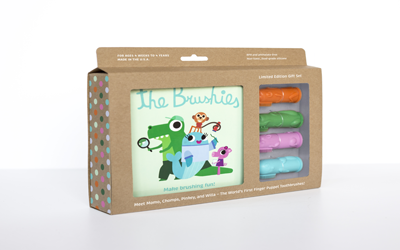
The Brushies a finger puppet toothbrush for infants and toddlers, The Brushies make it easy to start healthy habits at an early age. This book and puppet system makes a once challenging daily routine fun. The Brushies are non-toxic, BPA and phthalate-free and perfect for babies four weeks to kids four years.

Is Your Child Ready to stay Home Alone?

Giving kids the responsibility to stay home alone can be a positive and confidence building experience, a rite of passage. Every parent reaches the point where they are faced with the decision whether their child is ready to stay home alone. How do you know they are ready? Children must have the skills and maturity to handle being on their own safely.

Showing signs

There is no magical age that determines a child is ready to be home alone but kids who are ready show the following signs:

  • Desires to stay home alone and is not fearful being alone in the home
  • Exhibits good decision making
  • Shows that he is aware of others and his surroundings
  • Proves herself to be responsible and trustworthy
  • Knows home address and phone number as well as how to get in touch with parents
  • Can make a snack for themselves
  • Knows how to use a phone, call a neighbor for help, and dial 911
  • Follows simple rules and instructions
  • Knows basic first aid

Planning and preparation

Leaving kids home alone for the first time is a big step. Even if kids are not planning to babysit, consider enrolling them in a babysitting class because the skills taught there can be very useful for kids who are beginning to stay home alone. If you believe your child is ready, there are a few things you can do to help prepare them for success.

  • Go over the rules. Are friends allowed to come over? Is the child allowed to leave the house? Are there cable channels the child is not permitted to watch? Go over these and any other family rules and determine that your child clearly understands.
  • Discuss possible situations. If someone comes to the door what is the child to do? If the phone rings is the child to answer? How will they respond if someone asks to speak to the parent? “She is busy right now. Can I take a message?” is a good response.
  • Kitchen safety. Make sure the child knows how to use kitchen appliances and tools and discuss what they are allowed to make in the kitchen. Only cold snacks? Can they use the microwave?
  • Emergency preparedness. Does your child know what to do in case of smoke or a fire? What should he do if there are severe storms? Does she know basic first aid? Post emergency phone numbers and contact information so your child has it in case of an emergency. Discuss who to contact if parents are unreachable (a neighbor, family member or friend).
  • Create a list of “Dos” and “Don’ts.” Don’t play with matches or lighters. Don’t let anyone in the house. Don’t leave the house, except in an emergency situation. Do call and check in when you get home from school. Do work on homework and chores. Each family is different and will have their own list of what is expected.
  • Role play. Act out different scenarios that may arise. Pretend that the child needs to reach you, what will they do? How would they call 911? What would they do in case of a fire? Pretend the phone rings, how will they answer? By walking through different situations kids will be better prepared if the unexpected happens.
  • Start slow. Begin by leaving the child for a short 15-30 minutes at a time and slowly increase the time. Talk about any questions or problems that may have arisen. Ask your child about their feelings when home alone. If the child is fearful, they may not be ready to be on their own.

Once your child is ready to stay home alone, hopefully it means more date nights for you and your spouse!

St. Ursula Juniors prepare for new graduation requirements

Juniors at St. Ursula Academy are getting a head start on meeting the new Ohio graduation requirements. Their curriculum already includes the coursework required by State regulations, but they had an opportunity to get library cards so that they can access resources at the Toledo Lucas County Public Library. One of those resources is a practice ACT test, which the students can take in advance of the real ACT. The girls can choose to take the test timed and with/without answers (and explanations).

Mary Pat Clark, Lin League, James Dickerson, and Emily Konecki, representatives from the TLCPL, visited the school on January 13 to explain some of the resources for college and career prep available online from TLCPL. They also issued new library cards or updated older cards for those students and teachers who needed or wanted them. Nearly 100 teachers and students of all ages took advantage of the SUA Loves the Library day, and most echoed the sentiments of teacher Ms. Roxy Antonio. “I am in love with the library!” she told girls waiting in line to get their cards. “They have so many resources; students are crazy if they don’t take advantage of all of it!”

Junior Sarah Hack applied for a new card, and is looking forward to using the online resources. “I’ll be sure to practice for the ACT using these practice tests!”

Director of the SUA Learning Commons, Mrs. Tina Johnson, explains, “The juniors will all take the ACT here on March 21, so they have some time to practice. We were grateful to the library staff for giving our students this great opportunity before that date to practice taking the test stress-free. We think they will gain confidence, which will lead to better test scores.”

7 Valentine’s Day Traditions to Start with Your Kids

Valentine’s Day is traditionally a time for couples to express their love for one another, but it is also a great chance to show your children how much you love them too. While children typically exchange cards and small gifts on Valentine’s Day, this year try starting some fun new traditions for your family.

Dessert first

Just once a year it can’t hurt to have your sweets before your meal. Offer cake or ice cream first and let the kids enjoy their dessert without having to eat their veggies first.

Make it heart-shaped

After your dessert first dinner, serve up some fun Valentine’s Day themed meals. Heart-shaped pancakes or heart-shaped pizza are both fun and easy. Get the kids involved in the kitchen and you will have more time to make special memories of your Valentine’s Day dinner.

Go on a “date”

Many people go on a date with their significant other to celebrate Valentine’s Day but consider taking your child on a “date” to a place of their choice. If you have more than one child, each parent can pair off or take turns so all kids get to participate. Spending quality time together is a great way to show your kids you care and get the conversation flowing.

Cuddle up

If going out isn’t for your family, set aside time to cuddle up on the couch with those you love. Make popcorn, put on some comfortable pajamas, rent some movies, and spend some time together relaxing and cuddling in the comfort of your living room. To make it extra special for Valentine’s Day, add red sprinkles to the popcorn and choose movies that have a love theme.

Bake and share

Bake some Valentine’s Day themed cookies to share with someone you love. While you are at it, double the batch and share them with someone who may be spending Valentine’s Day alone this year. Cookies are a great way to show others you care and bring some cheer.

Hide the hearts

Hide paper hearts around the house and have the kids go on a search for them. Whoever finds the most wins a prize such as a small toy or a book. You might want to have a prizes on hand so that everyone gets a turn being the winner. You can enlist the winners to be their siblings assistant as a way of demonstrating their love for each other too.

Declare your love

The simplest way to show others you care is to tell them. Have each family member state one reason why they love the others. You can also write these on scraps of paper and read them as a group. Tuck them away in a special envelope and pull them out year after year to reread them.

New Rules for Ohio High School Graduates

There are changes coming to Ohio high school graduation requirements that will affect students beginning with the Class of 2018. Students and their parents are wise to talk to school college counselors for the particulars, but a general overview includes these points:

*A student must take and earn a state minimum of 20 credits in specific subjects. While some districts may require more than 20 credits, the minimum includes

4 credits in English language arts 4 credits in Mathematics 3 credits in Social Studies ½ credit in Health ½ credit in Physical Education 5 credits in Electives, chosen from “one or any combination of foreign language, fine arts, business, Junior ROTC, family and consumer science, technology, agricultural education or English language.

Students must receive instruction in economics and financial literacy, and complete at least two semesters of fine arts courses. The new regulations require that students also choose one of three options to show they are ready for college or a job.

The student must take college and career readiness tests, and earn “remediation-free” scores on either the SAT or the ACT. That means ACT scores of 18 or higher on English, 22 or higher on Mathematics, and 22 or higher on Reading tests Or obtain a score of 430 or higher on the SAT Writing test, 520 or higher on the SAT Mathematics test, and 450 or higher on the SAT Reading Test.

Each school district chooses to administer one of the two tests for Grade 11 students at no cost during a one-time statewide spring test each year. Ohio’s university presidents set these scores, which are subject to change.

The student must earn at least 18 points (out of 35 total) on seven end-of-course tests: Algebra I or Integrated Math I Geometry or Integrated Math II American Government American History English I English II Biology.

Or the student can choose to earn a minimum of 12 points by receiving a State Board of Education-approved, industry-recognized credential or a group of credentials in a single career field. The students must also take a workreadiness test, WorkKeys, and score at least a 13. The State of Ohio will pay for the student to take the test one time.

Each test score earns the student up to 5 graduation points according to this scale: Performance level of 5 indicates Advanced, 4 indicates Accelerated, 3 indicates Proficient, 2 indicates Basic, and 1 indicates Limited. The student must have a minimum of 4 points in Mathematics, 4 points in English, and 6 points across Sciences and Social Studies.

The importance of being an involved dad

Fathers play an important role in children’s lives and futures. Brothers United, a program offered at Pathway, teaches dads the importance of being involved in children’s lives and ways to overcome roadblocks. One goal of Brothers United is to empower fathers to create healthy families by creating healthy relationships. The program, offered throughout the year, also helps dads with job searches and job skills training.

505 Hamilton Street | 419-242-7304 | PathwayToledo.org.