Home Blog Page 362

The Village Candy Shoppe opens in downtown Sylvania

Patricia Wahl, a licensed massage therapist at Harmony In Life, is now offering something even more sweet than rest and relaxation. Wahl opened The Village Candy Shoppe inside the downtown Sylvania building that also houses Harmony In Life. Offering modern and retro candy, this confectionary makes for an oh-so-sweet stop during a walk in downtown Sylvania.

11am-5pm, Tuesday-Friday. 11am-4pm, Saturday.
5727 Main St. | 
419-246-7838 facebook.com/TheVillageCandyShoppe

Raising Good Sports

If you have a naturally competitive child, one who must finish first, you know how tricky losing can be. Whether it’s a friendly game of backyard ball or a board game with family, how to be a good sport can be a hard thing to teach.

Before turning to team sports to help teach sportsmanship, consider your child’s age. Gail Masse, occupational therapist with Sylvania Special Needs Preschool, says that research indicates that team sports are generally geared for children ages 6 and older.

Preschoolers may be naturally competitive, but “if children are signed up before t hey are physically and emotionally able to manage the demands of team sports, the experience may leave all parties frustrated, and can turn the child off from the activity,” Masse explains.

If you have a Type-A, perfectionist child, the very idea of losing may be so intimidating that he avoids any task he can’t do impeccably. What can parents do to help kids learn how to face a daunting challenge and lose graciously?

Mentally preparing your child before a game can be helpful. If your child knows that “Go Fish” is a game of chance or that you only have three attempts to swing at the ball in baseball, he may be less surprised when he has to draw another card or he’s out after three strikes. It can also help remove a sense of unfairness or wrongdoing.

Learning to lose

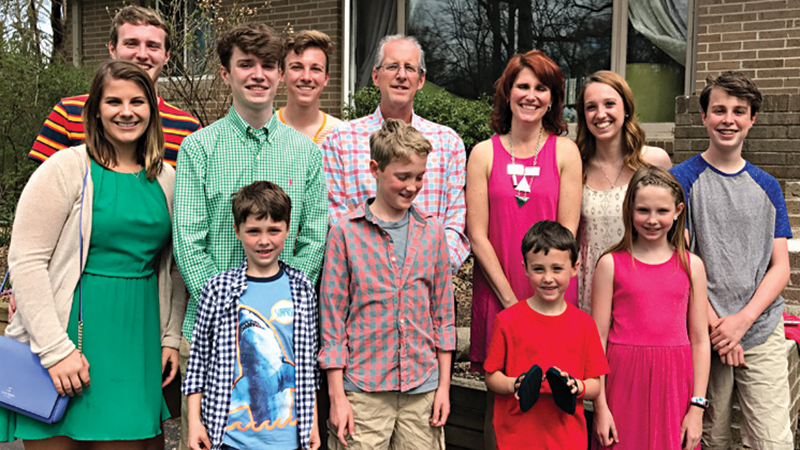
Chris Platz, wellness director at Sylvania YMCA/JCC and mother of nine children ranging from age 6 to 22, adds, “Starting at an early age, it’s important to allow kids to lose when playing simple board games. Kids will inevitably get mad when they lose, but I try to have them look ahead to the next game.”

“If it’s a game of chance, I will usually encourage them to play another round. If it’s a game of strategy, I ask them what they could do differently next time. We learn best from our failures,” Platz continues.

What about those instances when a tantrum ensues and the child cannot hear our wise, thoughtful words?

Platz offers gentle and simple advice: “I typically advocate letting a child work through his or her feelings.”

Masse echoes this sentiment: “I think generally parents [have] to learn not to take it personally when their child gets angry about losing. It’s just an emotion that should be validated. ‘I can tell you are (sad, mad, or angry) about not winning the game today. Maybe you’ll win another time, just not today and [that’s] okay.’”

How to be a good at winning

It’s not only about teaching our kids how to lose; we must also teach them how to graciously win. Running around excitedly and screaming, “I won! I won!” won’t earn your child any friends, but it’s difficult to temper a child’s sincere pride and elation.

“Empathy is key,” Platz explains. “I always ask how my child would feel if the other team members acted like he/she was acting. I also stress that he/she will be most successful with the help of teammates. A goal with an assist is way cooler than one on your own.”

Even though it can be hard to see our children lose and endure feelings of defeat, it’s important to allow them to fail. After all, that’s real life. We are not all winners all of the time.

Instead, focus on other aspects besides triumph. Praise children for their teamwork, effort, dedication, support of others and perseverance. Those traits are more important than scoring points in a game that, after all, means very little in the grand scheme of things.

Thinking Outside the Box Basket

Parents, it might be hard to believe, but Easter is right around the corner. If you haven’t checked the calendar yet, it’s the first day of April this year.

No need to worry. We’ve got some ideas to help you think outside the basket for fun alternatives to the usual— though somewhat tasty— sugar-filled marshmallow Peeps and Cadbury eggs.
With Spring in the air, now is a good time to replenish children’s outdoor gear. Fill baskets with bubbles, sand toys, sidewalk chalk, sun hats, bug catchers, sunglasses, beach towels and even swim gear and flip-flops.

Outdoor sports will soon start up again, so baseball mitts, jump ropes, tennis rackets and street hockey gear are all fun, useful items to add if you have active kids at home.

Learning Express, with locations in both Sylvania and Maumee, is a one-stop shop for basket fillers. Nichole Freiheit, assistant manager at the Sylvania location, said the store again will offer its popular “Bunny baskets.” Shoppers who spend $25 from the “bunny buffet,” a designated area with toys such as putty, pens, bath toys, balls, fidget spinners and more, can receive a personalized pail gift-wrapped with cellophane and ribbons.

“Another hot toy around Easter would be L.O.L. Dolls,” Freiheit said. “They’ll be good basket stuffers.” L.O.L. Surprise Dolls are a ball with several layers to unwrap. Children find doll accessories along the way as they unravel the ball, ultimately ending at a little doll.

Other popular toys at Learning Express that would make great basket stuffers are bath bombs, thinking putty, small LEGO or Plus-Plus building sets, Squishy Squad toys, Ty Beanie Boos and Pop Sockets, Freiheit said.

Other ideas for small fillers include plastic eggs with blind-bag items, mini dinosaurs, stickers, and temporary tattoos. Tweens may appreciate new ear buds, iTunes gift cards, nail polish or jewelry.

Here’s a list of some of our favorite items you can grab nearly anywhere to place amongst the Easter grass in your kid’s basket:

Shake Me Rattle. For the youngest in your family, this battery-operated, motion-activated rattle has sounds, music and multiple textures to enhance tactile and visual stimulation and introduce children to cause-and-effect processes. It also comes with an on/off button for silent play. $9.95; Amazon.com.

PopSockets For the smartphone-wielding tweens and teens in your life. These expanding stands can be attached to a mobile device to allow for a better grip, which is especially handy when taking selfies. Ranging from $7.99 to $14.99.

Hatchimals CollEGGtibles Spring Basket This cute tiny basket includes four ombre eggs full of “CollEGGtibles” as well as two characters who’ve already hatched. $14.99; available locally at Target.

Boogie Board Scribble ‘n Play A sturdy ewriter made for kids’ hands that allows them to write, scribble and draw over and over without wasting paper. It erases with a click of a button. Favorite masterpieces can be saved with the app. $26.00; Amazon.com.

Learning Resources Flower Garden Build and Spin Toddlers can work on fine-motor skills by attaching colorful garden characters such as bees and butterflies to chunky gears and then turning the handle to watch them spin. $19.99; Amazon.com.

Educational Insights Playfoam Classic 4 pack Mess-free Playfoam provides preschoolers with tactile and sensory stimulation while sculpting and squishing shapes. $6.47;
Amazon.com.

Wake Up, Toledo!

I have a confession. This wasn’t my inaugural trip to First Watch. Or my second. Or third. It might have been my fourth. I never told the older two kids, first timers, that their little brother had already been there. Sshhhh. They would say I was playing favorites. Recently, however, we all had time to enjoy brunch together.

First Watch will fast
become “first choice”

At First Watch you will find new flavors and new twists on old classics and so much more. The rustic down-on-the-farm atmosphere is as warm and inviting as the staff. “We like to say our dining rooms are like visiting our home,” said Eleni Kouvastsos, public relations and communications manager.

First Watch, the military term for first shift, is a breakfast and lunch café. The first shift arrives before the sun rises to begin juicing, baking and prepping so they’re ready by 7am. Originally started in 1983 in California by Ken Pendery, it finally made its way to Toledo in June 2017. Currently Ohio locations include Cleveland, Toledo, Columbus and Cincinnati.

Pendery developed a business plan so that employees could get in a full day of work and then be home in time to coach Little League or participate with family in other afternoon activities and the business still adheres to that idea.

first-watch-breakfast

Expect different

If you’re looking for a Western omelet, you won’t find that here. However, if quinoa, avocado, lemon-dressed arugula, cremini mushrooms, Gruyere cheese, artisan toast and lemon ricotta pancakes sound interesting, then you are in the right place to find those and many other delectable options: omelets, frittatas, bowls, a variety of skillet hash, unique pancakes, wraps, salads and more with five seasonal menus.

Our cheerful waitress even brought out samples of the fresh-squeezed juices for us to try as we were intrigued by the colorful drinks going by our table. The Morning Meditation, a daily juice selection, had orange, lemon, turmeric, organic ginger, agave nectar and beet. Ahhhhmazing.

The kids’ meals include beverages for $5.79. First Watch, a partner with the National Kids LiveWell programs, highlights menu options that meet specific nutritional criteria, emphasizing lean proteins, fruits, veggies, whole grains and low-fat dairy. By donating a portion of proceeds from every kid’s meal sold, the company provides at least 500,000 meals to hungry kids each year through Share Our Strength No Kid Hungry.

On the morning we stopped in, we enjoyed fresh-made chilled pear cider, Eggs Benedict Florentine ($10.99), cinnamon chip pancakes with bacon and two eggs ($9.99), frittata rustica ($9.99) and a Bacado omelet ($10.25). I enjoyed the side of greens drizzled with a light house-made dressing, but the seasoned potatoes are oh-so-good as well. First Watch is a tad pricier than other breakfast places, but not by much, and the quality, freshness and unique offerings make it money well spent.

first-watch-brunch-toledo

Bottom Line:

First Watch will become a fast favorite with your family, if you are game for a twist on the same ol’ same ol’ for breakfast and lunch. The kids’ menu offers seven options at an affordable price. A word of caution: Due to the growing popularity with Toledoans, you could be waiting on the weekends.

The Short Course

Kid-friendly: Yes
To avoid wait: Plan on waiting on Saturdays and Sundays
Noise level: Loud
Bathroom amenities: Changing station in both restrooms
High Chairs: Yes
Got milk? Yes as well as fresh-squeezed juices
Kids’ menu? Yes
Allergy info: Alert the server to ensure glove changes, new pans, etc. But there is always a chance for cross contamination

First Watch—The Daytime Cafe
3410 Secor Rd., Toledo 43606
419-930-8036
Daily: 7am-2:30pm | firstwatch.com

Never Too Late

Dr. Sherri Thomas, a Bowling Green pediatrician, is the living embodiment of the old adage, “It’s never too late to be what you might have been.” When she was 34, despite having four young children, Thomas returned to college to pursue medicine. Years later, she is one of three developmental/behavioral pediatricians in the area and the residency director at Mercy Children’s Hospital.
“I had always had an interest in medicine. I started off as a medical assistant, and I stayed home with my kids for a couple years,” Thomas says. “I thought to myself, ‘If I don’t try to pursue medicine, I will never be satisfied. If I try and I can’t do it because I have four children, then at least I will know I tried.’”

Pursuing a medical degree while raising a family

Thomas began by taking undergraduate classes to meet admission requirements. After two years of part-time classes, she was accepted into medical school. “It all fell into place, one thing after another,” she says.

When Thomas began medical school, she and her husband, Chet, had four kids, then all still school age: Derek was 11; Manya, 10; Katie, 7; and Laura, 5. On top of juggling four kids, their school work, and their extracurricular schedules, Derek, who they had adopted at age 4, had special needs that required ongoing medical attention.

“My husband and I always wanted to do something bigger than ourselves— something that made a positive impact,” Thomas explains. “Before we settled down to have a family, we were volunteers in Alaska for three years. Our daughter, Manya, was born in Alaska, and when we returned in 1982, my daughter [was 6 months old].”

Expanding their family
through adoption

The Thomases desired to make family their primary focus once Manya was born, but they also wanted to continue their humanitarian work in some way. Their answer was adoption. “There were so many special needs kids who needed homes. We found Derek, who was just a few months older than Manya,” Thomas recalls.

Derek had substantial medical needs due to abuse from his biological family. He was taken by Child Protective Services at just 5 weeks old, but the damage was already done. Derek, who is legally blind, paralyzed on one side, and suffers from frequent seizures, was in foster care from infancy until the Thomases added him to their family.

“On our way back from picking Derek up from his foster parents, I found out I was pregnant (with Katie). Katie was 9 months old when the next child [Laura] was born. In five years, I had four children,” Thomas says with a chuckle.

Developing a professional niche

Once Thomas began working as a pediatrician, parents gravitated to her with their questions about and concerns with developmental issues.

“People in the community knew of Derek, and the people in our practice started coming to me with their questions. Because of Derek, I had experience with schools and intervening and knowing where some of the resources were,” Thomas reflects.
After 10 years of working as a general pediatric doctor, Thomas needed and wanted to know more about developmental and behavioral pediatrics, so she returned to school once again. Three years later, Thomas became one of the three specialized developmental/behavioral pediatric doctors in the area.

Thomas-Sherri

Sherri Thomas’ story reminds us that we are limited only by the stories we tell ourselves. It’s never too late to follow our dreams, and Thomas is living, laughing proof of that.

What’s your favorite activity to do with your family?
When the kids were young, camping. Now, we have family campouts once a year. The highlight of my year is to plan the family campout.

Best holiday memory you have from when you were a kid? Barbecues on the Fourth of July. My dad always grilled out and we could play outside and chase the fireflies.

What’s your go-to activity when you finally have a few minutes to yourself? Gardening when the weather is good. I’m currently teaching myself to knit.

Describe your life in five words or less. Active, thoughtful, focused.

What is your favorite Bowling Green hangout? Grounds for Thought, a bookstore and coffee shop.

Describe BG in three sentences? Small, friendly community. I like the small, local shops all along Main Street. I’d rather spend my money there as opposed to the large department stores.

PB & Jammies: March is Hungry Party!

Wear your PJs to make PB&J sandwiches. Help stock the shelves by bringing donations of creamy peanut butter and jelly or your favorite late night snacks to pack weekly lunches for the Food for Thought weekly outreach.

6-7pm. 316 Adams St.
Floor 2 | 419-972-0022
feedtoledo.org