Home Blog Page 358

Making YouTubeKids Safer for Kids

Kids love videos— the sillier the better. And it’s a rare parent who hasn’t used them to secure a little quiet time. Today YouTube is, by far, the largest source of videos of all kinds. When they created an app for children in 2015, many parents assumed the content would be carefully curated and reliably child-friendly.

Much of it is. YouTubeKids lets young children happily swipe through a vast collection of content, much of it featuring familiar characters like PAW Patrol to educational clips from sources like PBS Kids.

Screening Content

But mixed into this video stew is user-created content with enormous variation in subject and quality.  A small percentage include bizarre and even traumatizing images, sometimes of those same beloved characters doing lewd and violent things.   

How does this happen? Google uses artificial intelligence to decide whether a video is suitable for children. Although AI has come a long way, it doesn’t always spot problems that would be glaringly obvious to people.

In its defense, Google warns that children may encounter inappropriate content and asks that parents flag such material so other kids won’t see it.Google also keeps changing its policies in an effort to stay ahead of so-called bad actors, but often it seems the robots and their handlers are playing catch-up.

Commercial Messages

Even when content is properly curated, parents need to be aware that children see a lot of commercial messages on YouTubeKids. The Red subscription may be free of paid advertising, but children still have access to entire channels created by companies like Hasbro or McDonalds.

Unfortunately, the parental controls for YouTubeKids are very limited. Parents can’t set their own filters for content or create playlists of acceptable videos. Most kids will still explore by swiping, so it’s good to know about these options:

Change the password. Find the Grown-ups only section in the YouTubeKids app, and unlock it by using the random four-digit passcode. The numbers are spelled out so pre-readers can’t use the code.

Disable search. Searching for videos increases the likelihood that children will see something unsuitable. Google allows parents to set up a profile for each child, so search can be enabled or disabled depending on the child’s age and self control. Off should be the default.

Review history. Because YouTubeKids doesn’t have filters, parents can’t necessarily keep kids from seeing something they don’t want them to see. The app does make it easy to review history which at least allows a conversation, after the fact, about why a video is objectionable.

Block videos you don’t want your child to see. 

Report videos no child should see. Reporting gets the attention of human screeners who are actually counting on conscientious parents to let them know about unsuitable content that slipped by the AI screening.

Set limits. To its credit, YouTubeKids does include a timer.  Once it’s set, a colored progress bar lets your child see how much time is left in a session. When the clock runs out, a “Time’s Up” animation appears and the app locks until a parent enters the access code.

Consider other options. Last but not least, consider other options. YouTubeKids may have the largest collection of videos but, when it comes to kids, quality is preferable to quantity. Companies like Disney, Nick Jr. and PBS Kids have brands to protect so they are likely to be more careful about what appears in their apps.

Mothering in the age of #MeToo

I was having coffee the other day with a friend and our discussion inevitably turned to the recent #MeToo campaign. We are both mothers of young children and we are both committed to modeling and sharing our values with our kids. But we were both struck by how difficult it is to navigate this particular social issue with our children. My kids are younger (under 8 years old) and she has a few older children, but we both related to each other’s struggle to find the right words to have this particular “talk.”

From my perspective, besides an awareness of basic anatomy, my children aren’t aware of sex at all. So our first conversations are not going to be about assault and sexual violence. My friend’s children are a little older, but she still has the impulse to protect them and let them remain children. She does not want to burden them with fears and adult concerns. How do we keep them safe without cutting their childhood’s short?

The Dr. Nassar case makes it painfully clear that there are people who most certainly cut childhoods short and it is our job to do the best we can to protect and prepare children for whatever they may encounter when outside of our care.

How do we parent in the age of #MeToo? For me, the answer is in 3 personal core values that I hope to continue to share with and model for my kids regardless of their age: consent, empathy, and courage.

Consent. Consent is not about sex, it is about respect. Children can begin to learn this from their first day of life. As they grow and begin to interact with siblings and friends they learn that their touch can be a gift or a power to wield against others. We can teach them to ask permission before they touch a friend or take their toy. Your friend doesn’t want a hug right now, that’s ok! Let’s ask if they’d like a high-five instead. And they can learn to speak up for their own bodies: Stop. I don’t like to be tickled. Please don’t touch my body that way. In these everyday interactions they learn the valuable lesson that their body is theirs alone. That their desires are good and deserve to be respected. They learn to reciprocate and listen to others, regardless of how they may want to play or be affectionate. And they learn if someone doesn’t respect their body they can come ask for help, no matter what. 

Empathy. Young children are learning how to step outside of their own egos and interact with the people around them in a healthy way. A key step in this process is learning to empathize, to put themselves in someone else’s shoes and feel how they feel. It’s our job, as the adults in their lives, to help them slow down enough to understand how their actions and choices make others feel. The social skills our kids learn on the playground with friends lays the groundwork for their future adult relationships. Both sharing how they feel and listening to how someone else feels are building blocks for self-worth, greater empathy, and positive adult connections. Read books together and ask, “How do you think that character felt…” or “How would you feel if that happened to you?” Giving kids real and fictional examples to practice flexing those emotional muscles will help them grow to be adults who listen to and respect others.

Courage. #MeToo stories are so powerful because they broke the silence. Time magazine even honored the “silence breakers” because we know that a lie gains power when it silences the truth. The courage it takes to tell the truth when no one wants to hear it is so hard. Emboldening our children to be courageous in their lives now – in small, everyday ways – prepares them to be courageous, compassionate adults. Stand up to a friend who says something mean, sit with the lonely kid at lunch, tell the truth even if their are consequences are all examples of small, courageous moments we can celebrate with our kids. They are especially powerful when shared alongside a story of your own courage: a time when you were scared to have a hard conversation with a loved one but did it anyway, a time when you had to do a difficult project or confront a colleague at work but chose to be brave even when it was scary.

Wouldn’t the world be a better, safer place for everyone – not just women – if we all had more empathy, respect for each other, and courage? These three values can continue to be taught as kids grow and can expand to include & support more complex sex education. These are the values we can model and celebrate, stories we can share around the table. I want to see a  world where our kids can say, “I was safe. I felt respected. I was heard and understood.” And their friends can say, “Me too.”

Dining With Da Vinci

The Short Course

Kid-friendly: Yes
To avoid wait: Anytime
Noise level: Moderate
Bathroom amenities: Changing stations in all museum restrooms
High chairs: Yes
Got milk? Yes as well as juice
Kids’ menu? Yes
Allergy Info: Let them know ahead of time so food can be prepared separately. Gluten-free bread is available upon request.

Museum dazzles all the senses— including taste!

Let’s play 20 questions. OK, maybe that is too many, let’s reduce it to six. When was the last time you were at our fabulous Toledo Museum of Art? Did you know admission is free? Did you know the museum is open until 9pm on Thursdays and Fridays? Have you and your children ever taken part in The Family Center activities for kids ages 1-10?  Have you been to the incredible Egyptian exhibit on display until May 6? And did you know you could grab a great meal at The Museum Café?

 chickenalfredo

Change up the scenery

Hey Toledo! It’s always a great time to head to our Toledo Museum of Art— a wonderful Toledo gem. There’s so much to delight the senses, including your taste buds. But more on that in a just a bit.

The Museum is open until 9pm on Thursdays and Fridays, making it much more accessible. Due to my family’s multiple mismatched schedules, heading to the museum on a Friday after school was the only way we were able to view the exhibit together.  Many times they offer special evening events as well.

“The Mummies: from Egypt to Toledo,” on exhibit until May 6, is fascinating. Brought to Toledo in 1906 by museum founders Edward and Florence Libbey, the mummies have not been on display since early 2012. The exhibit is free for members and only $5 for children and $10 for adult non-members.

FF-TMA-sandwhich

An unexpected culinary surprise

Whether you are at the Museum taking in an exhibit or sharing quality time with your little ones in the Family Center, if you find yourself hungry, the Museum offers a full-service restaurant with excellent food. I don’t mean to sound surprised, but honestly I expected, maybe, a snack bar, until a friend of mine asked if I’d ever eaten there and suggested that I check it out.

Executive Chef Joe Felix, who has been with The Museum Café for over 11 years, has overseen its transformation from one-time snack bar to upscale, fast casual service, made possible by a kitchen renovation two years ago. Their menu, much larger than I anticipated, offered sandwiches, soups, entree salads and a variety of dishes with handmade gnocchi. 

“I do try to keep the menu seasonal,” said Felix. “We have a chef’s garden and a perennial garden.” The large chef’s garden, adjacent to the museum, has 28 raised beds!

There are two dining areas: one with white tablecloths and another, with windows for walls that make you feel like you are almost dining al fresco, where the tables are covered in white paper, with colored pencils supplied for drawing. You’re at the art museum, so let your little Picassos have fun!

The kids’ menu offered gnocchi and cheese, half Italian bread pizzas, three cheese grilled cheese, jumbo hot dogs and mini cheeseburgers. Prices ranged from $5.75 to $8 and drinks are extra; not the cheapest kids’ menu in town, but some portions could be shared by two.  And, for dessert, you’ll be tempted to enjoy a delectable cupcake from Eston’s Bakery, among other treats for your sweet tooth.

My youngest had to wrestle with the stadium pretzel burger with nacho cheese, mushroom and stadium mustard, but he made it disappear. My daughter opted for the grilled Portobello sandwich with mascarpone cheese, balsamic cabbage slaw, tomato and garden- herb mayo on a 12-grain wheat roll. Oh so good. Since gnocchi was an in-house specialty I savored the chicken Alfredo gnocchi that included asparagus and tomatoes. The menu, a far cry from the chicken tenders and grilled cheese I was expecting, frankly, was a delightful surprise!

Bottom Line

The Museum Café at the Toledo Museum of Art might be a surprise for many. You’ll find a little hallway leading to all things flavorful located near the back entrance across from the information counter. Most days the café is open until an hour before closing and a kids’ menu has ample selections. And your budding artists will love coloring on the table cover without being scolded!

Karen Zickes, a mom of three active children and freelance writer, resides in Holland, Ohio. She can be reached in c/o [email protected].

Serving Teens with Autism

With a stated mission “to positively impact the lives of individuals with autism and those whose lives they touch,” Bittersweet Farms provides opportunities for adults and adolescents with autism to grow, work and live to their fullest potential.

Bittersweet’s history

Bittersweet Farms began in the mid 1980’s when Bettye Ruth Kay, a high school special education teacher, realized the future looked bleak for many of her students once they left high school. Kay realized adulthood for these students often consisted of tedious and repetitive tasks in workshops, living at home with their parents or even being placed in institutions. With a dream to change the future for individuals with autism, Kay traveled to England to visit a farmstead community, which became the inspiration for Bittersweet Farms.

Today Bittersweet Farms’ main campus is an 80-acre farm in Whitehouse that provides residential services, day programming and vocational services for adults with autism. Farm activities, including agriculture, horticulture, maintenance, marketing, animal care and woodworking, not only create vocational training, but also have excellent therapeutic value. The residential activities range from creating and selling artwork to producing basil pesto and tomato chutney, sold commercially in local stores.

SLC-TMA-painting-2017-3_preview

A focus on youth

With the success of the adult programs, Bittersweet Farms has also focused great attention on helping adolescents with autism. The Pemberville site offers a school/transition program where a full-time teacher provides pre-vocational training, academic help and homemaking skills for adolescents from 13-22 years old.

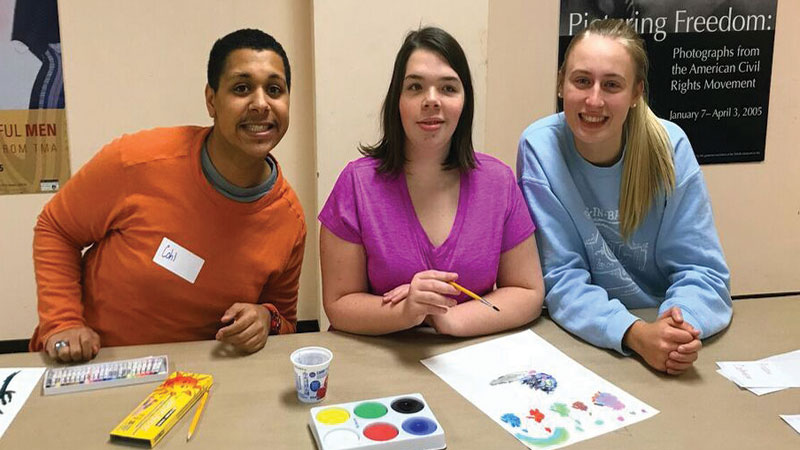
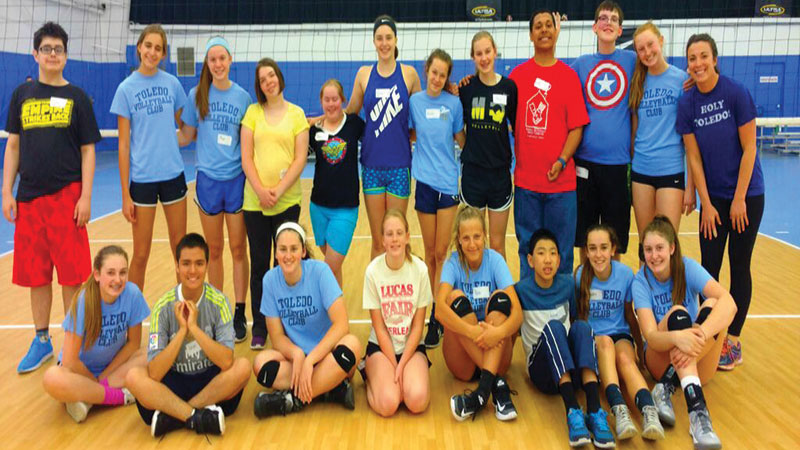
Bittersweet Farms also offers various other programs at all locations— Whitehouse, Pemberville and Lima (Betty’s Farm)— that are geared towards teens. Friday night fun, social skills classes, life skills classes and summer enrichment programs, all dedicated to helping adolescents with autism to develop the skills necessary for the transition into adulthood.

SLC-Volleyball-5_preview

Getting social

As part of their mission to help people and families with autism, Bittersweet Farms hosts a full schedule of social activities, outings and fun nights. Want to get involved? Children, teens, and their parents will enjoy these upcoming opportunities:

Held at each location beginning in June, the popular Summer Enrichment Program gives participants the experience of life on the farm. The varied programming includes themed weeks, gardening, taking care of farm animals, creating art in the studio, and more. Find more information online at bittersweetfarms.org/services/summer-enrichment.

On the second and fourth Friday of each month, teens can enjoy outdoor activities, meal prep, family-style meals, activities like crafts, games, movies, and more, during the Friday Night Fun program. Each session costs $35. 5-9pm. Hope United Methodist Church, 10610 Waterville St., Whitehouse. For more information, contact Taylor Barndt at [email protected] or call 419-206-7803 for more information.

The Social Living Club, a recreational program that focuses on providing community activities for adolescents with autism, is held at each location. “This is a great opportunity for the SLC teens to find a passion for reading, as well as an opportunity to discuss the various books and develop social skills. We are thrilled to be participating in this awesome opportunity!” said Taylor Barndt, community outreach specialist for Bittersweet Farms.

Club activities have included culinary classes, visits to the zoo, volleyball, painting and an upcoming five-week bowling class, held from 6-7pm Wednesdays from April 18 through May 16. Register in advance. $45. 20th Century Lanes, 547 S. Main St., Lima, OH. For more information and to sign-up, please contact Robert Foreman at [email protected] or call
419-205-2841.

What It’s Like Being an Autism Mom

By Karla Akins 

5:30 AM on a Monday morning. I fumble with the keyless entry to my bedroom door after unloading the dryer. I plop the basket of clean clothes on the bed and remember I left my cell phone in my office. I’m late, as usual. I punch the code into another locked door and chuckle to myself. If someone didn’t know better, they’d think we lived in a top-secret, danger-sensitive facility, and we were high-level agents with elite security clearances.
But, no. It’s nothing that exotic.
It’s autism.
autism-mom-book
I’ve often wondered how many minutes I lose punching in those keyless lock codes. The problem is, if you punch them incorrectly, you have to wait for the lock to clear, and punch the numbers in again. When I’m in a hurry, as I usually am, I almost always punch them in wrong.
There’s no simple running back to the bedroom to grab my forgotten cell phone or cup of coffee. Nothing is that easy around here. Keyless entries make one pause, punch in the code, wait for the beep.
Clear. Tap, tap, tap, tap, tap. Beep. I’m in.
Now, what was it I came in here for?
I know I’m getting older, but I also suffer from battle fatigue. At least according to researchers. Scientists have found that autism moms are as stressed out as soldiers on the battlefield. I could have told them that and saved them a lot of time and money.
Sometimes, I envy my co-workers who go home to regular lives without keyless entry doors. I wonder what it’s like to have a home where rooms are expertly appointed with the latest décor. Our style is more, shall we say, rustic, but there are memories in these walls. Each broken doorknob and crack in the drywall is a reminder that adventure has taken place.
That paint all over the freshly stained bedroom doors and floors in the basement? That’s from when the twins were twelve and decided to be like daddy and help paint. Those holes in between those two bedrooms there? That’s when we had the bright idea of giving them their own bedrooms. They tunneled through the wall to see each other. (No, they were not locked in their rooms.)
Autism’s tentacles stretch like clinging vines into every empty space in our lives. From our physical home to our daily routines and sleepless nights.
If I could wear a t-shirt every day explaining the bags under my eyes, here’s what it would say:
  1. I’m tired. I’m always tired. My kids don’t sleep all night. Never have. Never will. I have to check on them to make sure they’re not eating everything in the refrigerator or painting another room. I sleep with one eye open. Seriously. It’s a thing.
  2. One does not grow out of autism. It is a life-long condition. You cannot make a fish a duck. A fish will always be a fish. A person with autism will always have autism unless someone comes up with a cure.
  3. Autism is a diagnosis. It’s not who my child is. I know I wax dramatic about how it affects us, and while I’m not being hyperbolic, I do hope you’ll see past my sons’ diagnoses and see them as the clever, fascinating, funny people they are.
  4. Autism is different in every person.
  5. Autism is isolating for many families. It’s not easy to find a babysitter. My husband and I rarely get out on a date by ourselves. If we do, it’s maybe once a year on our anniversary, and even then, it’s not on the actual day due to trying to make arrangements for the twins.
  6. When you can’t accept every invitation, friends drift away and families avoid staying in touch. By the time the teen years arrive, there is no network of support. It’s a lonely road for far too many.
  7. While some autism symptoms may be reduced by special diets, it is not a cure. The diets don’t work for all people with autism.
  8. Don’t underestimate the power of a battle-fatigued Mama. Ours is a fierce love. We love our children with autism as much as you love your typical child. We will fight to the end of ourselves to get what they need, when they need it.
  9. Don’t pity us. Don’t admire us. But please do help us. We need friends, a cup of coffee with an ally, a chat on the phone, or a visit on the front porch.
  10. We are stronger than we ever imagined we could be. We like that about ourselves, but even strong warriors get tired and discouraged and need someone to help them keep going.
Thanks for checking in. I hope you’ll forgive me for being late.
It’s those pesky keyless entry doors.

autismmomauthorKarla Akins is the award-winning author of A Pair of Miracles: A Story of Autism, Faith, and Determined Parenting and a Special Education teacher. She resides in northern Indiana with her husband, Eddie, twins, Isaiah, and Isaac, who have autism, and her mother-in-love who has dementia. When she’s not teaching and writing, she likes cuddling her two dogs and two cats, or riding her motorcycle and looking for treasure.  

You can find Karla at www.KarlaAkins.com, and she is also on Facebook (KarlaKAkins) and Twitter(@KarlaAkins).


Creating Leaders For The Future: Sylvania STEM Center

STEM Students.
STEM Students.

STEM stands for Science, Technology, Engineering and Mathematics. Creating opportunities for students to develop in these fields not only benefits the kids, but also helps ensure a bright future for our society.

Open since 2015, the Sylvania STEM Center originally began when teacher and parent Crystal Burnworth introduced extracurricular STEM education in the Sylvania School District. As interest grew, STEM-based teams started to multiply and eventually a central location was established with the help of grants and investors Sylvania STEM Center became a reality.

The Center opened and interest continued to increase last year, with about 250 kids involved in teams and a few hundred more involved through the Center’s camps. The Center also hosts two tournaments for kids from grades 4-8, which last year involved over 1,500 participants.

Something for all ages

Open to students from first through 12th grades, Sylvania STEM Center follows a worldwide program, FIRST, which allows kids from Sylvania to compete with kids from all over the world. The Center participants are split into three levels based on age groups.

First through third grade students participate in the Junior FIRST Lego League (JFLL) where they are guided by adult coaches to use Legos to design models. Additionally, teams develop a Show Me Poster, illustrating the journey of designing and creating the models. This not only allows the kids to reflect on the process, but also helps them practice presentation skills. Kids in this age category can also participate in expos, if they choose.

When students get a little older (grades 4-8), they join the First Lego League (FLL) which allows them to work more closely on real-world science and technology problems. Groups work to answer a scientific question and build a Lego robot to perform a series of tasks that revolve around a specific theme. In FLL kids can participate in official tournaments.

The last tier is the First Tech Challenge (FTC), designated for high school students. At this level, students design, build and program robots to compete head to head against other teams’ robots to complete specific challenges, which require real-world engineering processes and sound engineering principles. Along with the opportunity to compete in various tournaments and the World Championship, FTC students also can qualify for many scholarships to over 130 different colleges.

With the continuing growth of STEM occupations, it is important to maintain students’ interest in these fields.

Sylvania STEM Center is a great place for students to become immersed in science, technology, engineering, and mathematics.

Want to get involved? Visit sylvaniastem.org to find Spring programs.