

Setting Family Goals for the New Year

A new year comes with a clean slate and 365 days to achieve new goals. Maybe you’ve tried the same resolutions year after year. Exercise, eat better and lose weight. Sound familiar?
It’s time for a new approach. This year, try incorporating a few family goals along with the usual list of self-improvements.
“Family goals are an important part of what keeps a family together,” says Lindsay Stormer, LSW, OCPS, ECMH, director of prevention and lifespan supports at Harbor of Toledo. “When we can engage in shared traditions and moments of pleasure, we are more likely to trust our family in times of stress. Working towards a goal, like keeping the house clean, can also remind everyone in your family that we all take care of each other and that each person in your family has an important job, no matter how small.”
We spoke with local experts to come up with some unique goals for 2026. If you are looking for ways to improve family life in the new year, here are a few ideas to consider.
Get organized
 If you’ve got kids, you’ve got clutter. School papers, art supplies, toys and books. How do you keep on top of it all? We asked professional Jen Hill of Jen Hill Organizing for tips.
- Be specific: “Define exactly what success looks like so you can track progress and know when you’ve achieved your goal.”
- Write it down: “Document both your goal and why it matters to you. Keep it visible as a daily reminder when motivation is nowhere to be found.
- Make a plan: “Schedule dedicated time and decide specifics. How many items to declutter weekly, where donations go, when you’ll drop them off.”
- Start small: “Begin with just 15 minutes daily. Quick wins build momentum and keep you motivated.”
- Find accountability: “Partner with someone who’ll check in on your progress. It’s harder to quit when others are invested in your success.”
- Expect setbacks: “Missing a day doesn’t mean failure.Simply restart the next day and keep moving forward.”
Read more books
Have you binged on too many holiday shows? Are you in a reading slump? Maybe it’s time to get the family back into the reading habit. We asked Denise Phillips at Gathering Volumes for some suggestions.
- Set a reading goal: “I try to read a book a week, or 52 books a year. I moderate a Facebook Group where we track our reading for the year.”
- Try a book club: “My favorite book club meets at Earnest Brew Works each month and the author joins us as we discuss the book.”
- Pick a time: “For me, it is at night at bedtime. I know I will have 10 minutes and I commit to reading at that time. I try to get through at least a chapter, but I consider the task accomplished even if I only get one page read.”
- Read as a family: “My kids are teenagers now and we still enjoy reading together. I appreciate the quiet time with them, as well as the discussions we get to have about the books we are reading.”
- Try new genres: “I read a lot of young adult and middle grade titles each year and I have never regretted it. Just because the protagonist is decades younger than me doesn’t mean I can’t appreciate the story, the writing or the message, or that I won’t fall in love with the characters.”
Find Times to connect as a family
 Our calendars fill up so quickly. School, work, sports, activities. How can we find time to sit down and connect with our family members? Lindsay Stormer, LSW, OCPS, ECMH at Harbor of Toledo offered some ideas.
“Reflect on the moments from your own childhood which inspired joy and connectedness. These moments, which may be something as simple as sharing the responsibility of making a meal together over music and conversation, can make all the difference in the life of your child.”
Tips for connecting as a family
- Create new routines and traditions. Decide on how often this tradition or ritual will be feasible and appropriate for your family.
- Ensure you log face-to-face time with your loved one every day.
- Lean into activities and events that matter most to you.
- Decline invitations that would overfill your schedule.
Holiday Pro-tip!
“The best advice around the holidays is to keep your heart generous but try to slow down and enjoy time with family. We cannot possibly attend every event or party, and that is okay,” Stormer said.
When Sibling Rivalry Is Really About Safety: A Trauma-Informed Look at Jealousy at Home

Few things test a parent’s patience like sibling rivalry. The constant arguing, comparisons, hurt feelings and cries of “That’s not fair!” can leave caregivers feeling overwhelmed and unsure of how to respond. It’s tempting to see sibling conflict as competition, bad behavior, or something children should simply “grow out of.”
A trauma-informed lens invites a different understanding: sibling rivalry is often less about rivalry and more about safety, connection and belonging.
Jealousy is a stress response, not a character flaw
Jealousy is frequently misunderstood. When a child reacts strongly to a sibling—by acting out, withdrawing or demanding attention—it’s easy to label the behavior as manipulative or immature. In reality, jealousy often signals fear: Will there be enough care, attention and safety for me too? As a mom of three, I notice that when one child is struggling (case in point, my teen suffered a bout of moderate depression last year) that another will seek attention in different ways (my then eleven-year-old son would come to me and just nap on me).
For children, especially younger ones, love can feel like a limited resource. Changes such as a new baby, different needs among siblings, school stress or parental exhaustion can activate a child’s nervous system. When children feel uncertain, their bodies respond before their words do. When my youngest daughter was born, my oldest was starting school. Despite the excitement over having a baby sister, there were tears and fits every morning for months about why she had to go to school when baby sister got to stay home with mom.
This doesn’t mean siblings shouldn’t have limits or expectations. It does mean that behavior is communication, and jealousy often communicates a need for reassurance.
Why “just be nice” rarely works
When emotions run high, parents often default to quick fixes: separating children, assigning blame or insisting everyone calm down and get along. While these strategies may stop the conflict temporarily, they don’t address what’s happening underneath.
When a child is dysregulated, their brain is operating in survival mode. Logic, perspective-taking and empathy are temporarily out of reach. Telling a child to “use your words” or “stop overreacting” assumes a level of regulation they may not have in that moment.
Trauma-informed care reminds us that regulation comes before resolution. Before children can problem-solve together, they need help settling their nervous systems.
RELATED: Health Literacy for Kids, Families
The role of adult regulation
One of the most powerful tools in sibling conflict isn’t a strategy—it’s the adult’s presence.
Children take emotional cues from the adults around them. When parents remain grounded, speak calmly, and avoid taking sides, children feel safer. This doesn’t mean parents ignore harmful behavior, but rather that they address it without adding fear or shame.
A regulated adult can say, “I see that you’re really upset right now. I’m here, and we’ll figure this out,” instead of escalating the situation with raised voices or immediate consequences.
Over time, children learn that big feelings don’t threaten their relationships—and that reassurance is available even when emotions run high.
Fair isn’t always equal
Sibling jealousy often flares around fairness. Trauma-informed parenting reframes fairness not as equal treatment, but as meeting each child’s needs.
One child may need more reassurance. Another may need more space. A third may need help naming feelings. When parents explain that different support doesn’t mean less love, children slowly begin to internalize a sense of security.
Naming this explicitly can be powerful: “Everyone in this family gets what they need to feel safe and supported. That won’t always look the same.” For example, my oldest wants physical touch and affection to connect. My son in the middle prefers his space until he is regulated and ready to talk. Forcing him to interact in the same way as his older sister would be inappropriate.
Teaching repair, not perfection
Conflict between siblings is inevitable—and not inherently harmful. What matters most is what happens after the conflict.
Trauma-informed parenting emphasizes repair over punishment. Helping children reflect once they’re calm, encouraging empathy and modeling apology and accountability teach skills that last far longer than forced apologies in the heat of the moment.
Repair sounds like: “That was hard. What do you think your sibling needed in that moment?” It teaches children that relationships can bend without breaking.
A gentler way forward
Sibling rivalry doesn’t mean something is wrong with your family. It means children are learning how to navigate relationships while their brains and nervous systems are still developing.
When parents respond to jealousy with curiosity instead of criticism, boundaries instead of blame, and connection instead of comparison, children learn a powerful lesson: there is enough safety, care and belonging for everyone.
And in that safety, rivalry slowly gives way to trust.
Glass Art Escape Transforms Glass Pavilion into Winter Wonderland
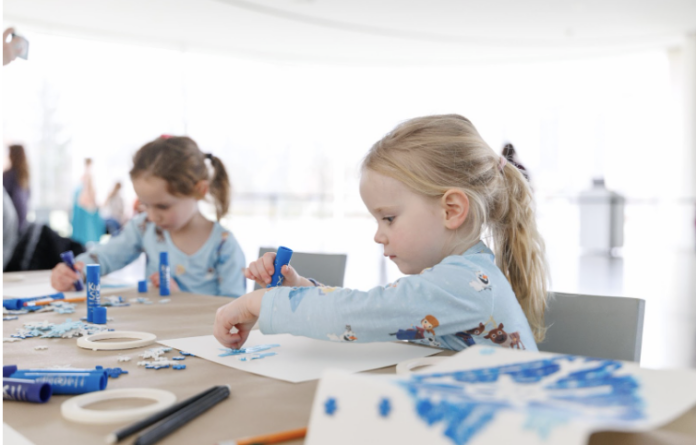
The Toledo Museum of Art is bringing seasonal cheer back to campus during winter break with the return of its popular Glass Art Escape. The 2025 edition introduces a new setting, transforming the Glass Pavilion into a festive, snow globe–inspired destination for visitors of all ages.
Taking place over two days, the event invites families, friends and community members to enjoy a warm and creative retreat from the cold. It will be held from 11am-6pm on Dec. 27 and 11am-5pm on Dec. 28.
RELATED: Indoor Play Spaces in the Toledo Area
The event includes hands-on art experiences, storytelling and shared seasonal moments.
Throughout the Glass Pavilion, visitors can take part in a wide range of family-friendly activities such as Glassblowing Fairy Tales brought to life in the Hot Shop, Winter Story Time with the Lucas County Library, live music, screenings of “Frozen 2” and “Happy Feet” and more.
In addition to the holiday programming, guests can take tours of “Radiance and Reverie: Jewels from the Collection of Neil Lane.” Access to these docent-led experiences requires an exhibition ticket, which is free for museum members and available for $10 for non-members.
“Now that we’re reimagining our galleries, we also have to reimagine how we’re doing some programming, including moving this event to the Glass Pavilion,” Grace Toth, TMA’s Emma Leah Bippus Director of Education, said. “A lot of families come into the museum looking for something to do during the holiday season before heading back to school, and this event is still the perfect solution for that. This provides an opportunity for visitors to shake off the winter blues, get out of their houses, and engage with their community through this winter wonderland we’re creating.”
Glass Art Escape is free and open to the public. No registration is required, though capacity is limited and early arrival is encouraged. Additional details are available at https://toledomuseum.org/events/glass-art-escape.
Applications Open for Toledo’s Next Kid Mayor

Fourth graders across Toledo Public Schools and Washington Local Schools have a unique opportunity to step into civic leadership as the City of Toledo opens applications for its annual Kid Mayor and Kid Council program. Thirteen students will be selected to serve a one-year term, learning directly from city leaders and gaining an inside look at how local government works.
Throughout the year, Kid Mayor participants will meet with the mayor, city council members and various department staff to explore how decisions are made and how city services support daily life. Students will take part in community projects, attend meetings, and learn how to share their ideas through presentations and proposals. The program is designed to help young people think creatively about improving their neighborhoods, strengthening the community, and making Toledo an even better place to live, work and play.
Participants will also have the chance to serve as a voice for their peers, offering perspectives on issues that matter to young residents. From learning how city budgets work to understanding public safety, parks and community development, the experience provides a strong foundation in leadership, teamwork and civic responsibility.
All fourth graders in eligible schools are encouraged to apply. Applications will be available through teachers and principals and will be accepted from December 15 through January 9.
Families or educators seeking additional information can contact Caryn Maloney at [email protected].
To learn more about the program, visit: https://toledo.oh.gov/get-involved/kid-mayor
Toledo Ballet Introduces the Smallest Dancers to Movement
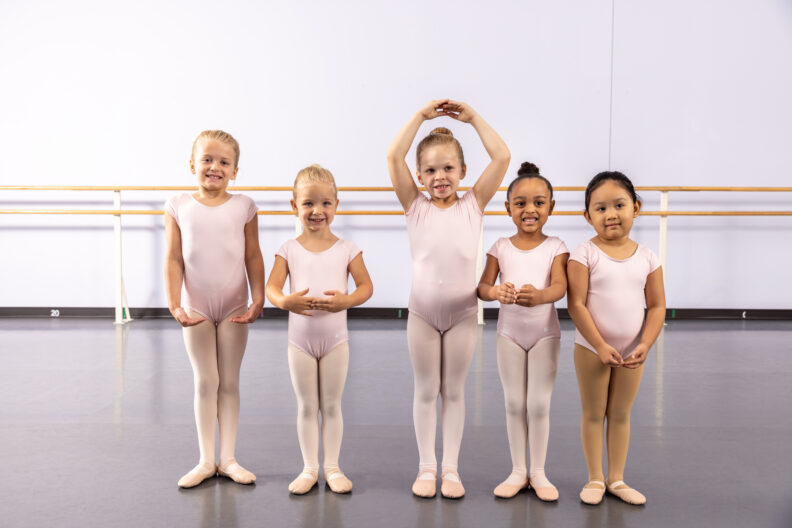
Around this time of year, people of all ages attend the classic Christmas show The Nutcracker, which Toledo Ballet is performing for its 85th year. For the littlest members of the audience who will gaze up in awe, Toledo Ballet regularly offers two different opportunities for them to try out ballet for themselves: 6-week-long Preschool Enrichment classes and semester-long Pre-Primary classes.
Mariah Neil, one of the dancers in The Nutcracker, is the instructor for both the Preschool Enrichment classes and some of the Pre-Primary classes. She explained that the Preschool Enrichment classes offer a good first taste of ballet for little ones, as children can start attending them as young as two and a half. The children also do not have to wear the normal ballet dress code, and are able to attend the class in normal, comfortable clothing.
Each six-week session focuses around a particular theme, with the upcoming January session being a “Frozen” theme. Neil said they incorporate a lot of props to keep the kids engaged, such as parachutes or fake snow. During the hour-long session, the children learn ballet fundamentals, have storytime and participate in a craft. At the end of each six-week session, parents get to join the class to watch a dance that the children have been working on.

“It is nice that it is just six weeks, so it is not a big commitment,” said Neil. “If the kids really like it, they can enroll in the Primary or Pre-Primary class.”
The Pre-Primary classes are designed for three and four-year-olds to learn the fundamentals of ballet and become comfortable with movement. These classes are weekly, 45 minutes each, and operate on a fall and spring semester schedule (although parents can enroll children at any time). In the spring semester, there is a recital or showcase for the Pre-Primary and Primary classes.
All of these classes follow the American Ballet Theatre National Training Curriculum, which Neil has been certified in.
“I am not just teaching ballet steps to these kids, I am teaching them to love and appreciate the art of dance, but also music as well,” said Neil. “…That is really inspiring to me, investing in the younger generation of dancers.”
The next Preschool Enrichment class runs Fridays from 11am-12pm, beginning on January 16. Tuition for that class is $95. The Spring Semester of the Pre-Primary classes begins in early January, with two options: Tuesdays from 5:30-6:15pm with instructor Audrey Ziemke, or Saturdays from 9-9:45am with Mariah Neil. Tuition for those classes is $60 per month. All of these classes take place at Toledo Ballet’s new location that is adjacent to the Stranahan Theater (4747 Heatherdowns Blvd). More information can be found at liveartstoledo.com.