Home Blog Page 31

Marnie’s Message: A Children’s Book with a Big Heart Supports Planned Pethood and Teaches Compassion

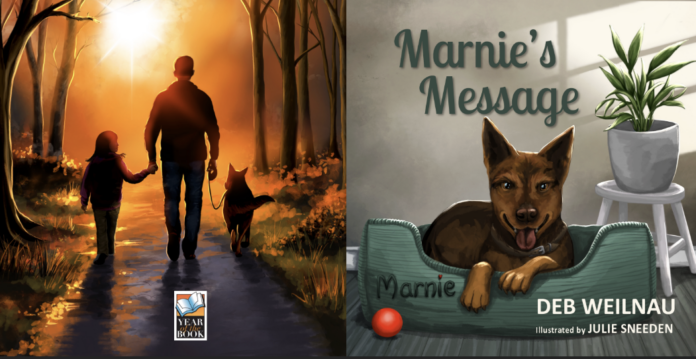
The front and back cover of "Marnie’s Message."
Deb Weilnau recently released the children’s book titled, “Marnie’s Message.”

A gentle mama dog, a litter of puppies and a second chance at love are at the heart of “Marnie’s Message,” a newly released children’s book by local author Deb Weilnau. Beautifully illustrated and rooted in real-life rescue work, the story delivers an important message for young readers: family can be built in many ways, and healing begins with kindness.

“Marnie’s Message” follows Marnie, a dog who finds herself scared and alone with her newborn puppies—until a rescuer brings them to safety. Through foster care, patience and love, Marnie learns what it means to trust again. As her puppies are adopted into forever homes, Marnie discovers that love doesn’t have to look the same to be real.

The front and back cover of “Marnie’s Message.”

The story is inspired by an actual rescue connected to Planned Pethood, Inc., a nonprofit dedicated to animal welfare in northwest Ohio. To support that mission, Weilnau donates $1 from every book sold directly to Planned Pethood, helping fund rescue, fostering, spay/neuter programs, and community education.

“This book is about treating animals with respect and understanding what they’ve been through,” Weilnau said. “Kids connect deeply with animals, and through those stories, they learn empathy, patience, and responsibility.”

A story born from real rescue work

The idea for “Marnie’s Message” came after Weilnau connected with Planned Pethood board members and volunteers to learn about animals who had experienced neglect, abandonment and recovery. One particular real-life case stood out—but rather than retelling every difficult detail, Weilnau intentionally shaped the story with young readers in mind.

“There are parts of rescue stories that aren’t appropriate for kids,” she explained. “I wanted to give them hope. I wanted them to see that no matter how scary things start, they can get better.”

Planned Pethood staff worked closely with Weilnau during the development process, reviewing drafts to ensure the story honored the spirit of rescue while remaining age-appropriate. The result is a two draft collaboration that balances honesty with gentleness.


RELATED: What’s on Our Bookshelf this January 2026


Writing with purpose—and heart

“Marnie’s Message” is not Weilnau’s first children’s book, but it represents a continuation of a deeply personal creative journey. She began writing in 2023 with a story inspired by her cat, Tinker, and the simple idea that humans could learn a lot from animals—especially about love, loyalty and resilience.

Since then, Weilnau has released multiple children’s books, often inspired by real people, animals and places. Her works explore themes such as foster care, disability, grief, single parenthood and belonging—always through a lens of compassion and hope.

“All my books are for children, but the messages are for everyone,” she said. “If I can help even one child feel seen, or help a parent start a difficult conversation, then it’s worth it.”

Supporting animals—and children—through story

Weilnau regularly visits schools, libraries and community spaces to read her books and talk with children. She believes stories can be powerful tools for helping kids process big emotions, including loss, change and feeling different.

That philosophy aligns closely with Planned Pethood’s mission, which emphasizes education alongside animal rescue. By connecting children to real rescue stories through books like “Marnie’s Message,” both organizations hope to foster a new generation of compassionate animal advocates.

“A dollar a book isn’t enough to fix everything,” Weilnau said, “but it’s a start—and it opens the door to bigger conversations.”

Book details and availability

Marnie’s Message
Paperback – December 11, 2025
By Deb Weilnau | Illustrated by Julie Sneeden

The book is currently available on Amazon, with additional local bookstore availability and community readings planned in the coming weeks. Planned Pethood has paperback copies available as well.

Looking ahead

“Marnie’s Message” is not the only collaboration Weilnau has planned. Additional rescue-inspired books are already in development, including future projects supporting Planned Pethood and other animal welfare organizations.

“I’m incredibly grateful to Planned Pethood,” Weilnau said. “They trusted me with these stories, and I’m honored to help share their work in a way kids can understand.”

For Weilnau, the goal is simple: create stories that help children—and animals—feel less alone.

“Life can be hard,” she said. “But stories remind us that kindness matters, that healing is possible, and that every life deserves love.”

L.E.A.D. Program Delivers Anti-Drug Messages To Students

Sylvania L.E.A.D. (Law Enforcement Against Drugs) has a program mascot named Leo.

Leo is Sylvania’s L.E.A.D. or Law Enforcement Against Drugs program mascot. L.E.A.D. teaches students important lessons about drug and alcohol resistance by covering topics such as understanding peer pressure, developing refusal skills and discussing the effects of substance abuse. The goal is to empower students to make healthy choices and build confidence in resisting negative influences.

Officer Lindsay Russell is one of three local officers coordinating the program for fifth graders. “We educate them on issues and things they might face before they head into those junior high and high school years.”


RELATED: Health Literacy for Kids, Families


The program replaced the DARE project in Sylvania. It is part of a nationwide initiative. “We focus a lot on alcohol as that’s something that we find our younger generation trying to get into. We also focus on nicotine use, tobacco and vapes. That’s definitely been a hot topic in recent years. And we look at marijuana.” Bullying and social media messages are also part of the curriculum. “We talk about making responsible decisions, identifying and managing emotions and those things come into play.”

But the L.E.A.D. program isn’t limited to lectures. The police instructors try to make it enjoyable. “We learn how to facilitate the material, work with our teachers and how to get this across for the kids to make it fun, make it engaging.”  The 10-week program includes board games, skits and card games. “It’s funny. We’ll finish a lesson and the kids will be like, why would anyone even do that?”

Students and their parents have responded positively, especially to Leo. The mascot gets plenty of face time to connect with kids at events. “My favorite was at the Northview-Southview game. We had a little guy and he absolutely loved him,” Officer Russell said. “He kept running up and jumping into his arms.”   

Russell adds they have also introduced the program at St. Joseph’s and Toledo Islamic Academy. 

“I see parents out in the community, and they’ll come up and say hey, you’re my student’s lead instructor and we’ll talk about it. They’ve thanked me for what the kids are learning.”

What’s ahead for Leo and the L.E.A.D. program? Officer Russell don’t hesitate. “I would love to see it expand” and grow through the years. 

For more information go to LEADRUGS.org.

It Takes a Village: Toledo’s Network of Teen Support

It really does take a village to raise a healthy teen—and in Toledo, that village has deep roots. More than a century ago, early institutions like the YMCA helped shape the city’s commitment to youth development, introducing recreation, mentorship and community service long before “after-school programs” were part of the national vocabulary. Over the decades, that network of support expanded to include everything from leadership programs and tutoring to sports leagues and arts education.

A city that invests in its youth

Today, Toledo’s investment in young people shows up in the data. According to the Trust for Public Land’s ParkScore Index—which measures the nation’s 100 largest cities based on park access, acreage, investment and equity—Toledo ranks within the top half. The ranking reflects the city’s extensive parks and recreation system, including its network of recreation centers, youth employment programs and outdoor learning opportunities that keep kids active and connected.


RELATED: Top Hangout Spots for Teens in Toledo


Community support

And the support doesn’t stop there. Beyond the city’s own youth services, dozens of local organizations provide mentorship, creative outlets, wellness programs and safe spaces to build confidence. From hands-on environmental education to leadership training and mental-health support, these groups form the heart of Toledo’s village — one that keeps evolving to meet the needs of every new generation.

Local Toledo Organizations Empowering Teens

The Ability Center – Teens & Young Adults Program
Prepares youth with disabilities to live independently through hands-on life skills training, recreation and community engagement activities that build confidence and connection.
1157 Environ Way, Toledo. 419-885-5733.

Believe Center Inc.
Offers athletics, tutoring, mentoring and family programs designed to build confidence, teamwork and opportunity for youth in historically underserved neighborhoods.
1 Aurora L. Gonzalez Dr, Toledo. 567- 200-2027. 

Boys & Girls Clubs of Toledo
Provides a safe, structured environment where kids and teens can explore academics, leadership, the arts and athletics while developing resilience and healthy habits for life.
2250 N Detroit Ave, Toledo. 419-241-4258.

Center of Hope Family Services
Delivers trauma-informed programs for teens and families, including counseling, education enrichment and workforce development—all focused on breaking cycles of poverty and adversity.
4447 Talmadge Rd, Suite H, Toledo. 419-861-4400. 

East Toledo Family Center
One of the city’s oldest neighborhood hubs offers after-school recreation, mentoring, and youth fitness programs tied to nearby parks and sports fields.
1020 Varland Ave, Toledo. 419-691-1429. 

Homies Youth Empowerment Program
A paid 16-week leadership and workforce training for teens and young adults that blends community organizing, job readiness, conflict resolution and civic engagement.
1221 Broadway St, Toledo. 419-243-3456. 

Keep Toledo/Lucas County Beautiful – Youth Education
Connects young people to environmental action through classroom workshops and community cleanups that promote sustainability, civic pride and a sense of shared responsibility.
425 St. Clair St, Toledo. 419-213-2255. 

Metroparks Toledo – Youth & Family Programs
Offers year-round outdoor education, volunteer programs and leadership experiences that connect teens to nature and healthy living through hands-on exploration.
5100 W Central Ave, Toledo. 419-407-9700. 

Salvation Army Northwest Ohio
Helps teens build leadership and life skills through safe, structured programs focused on service, community engagement and faith-based mentorship.
620 N Erie St, Toledo. 419-241-1138. easternusa.salvationarmy.org

Toledo GROWS – Youth Earth Literacy Programs
Encourages hands-on learning through gardening and environmental education, teaching teamwork, nutrition and respect for the natural world.
354 4th St, Toledo. 419-720-8714. toledogrows.org.

Toledo Lucas County Public Library – VolunTEEN Program
Gives teens ages 13–17 opportunities to volunteer, lead and serve their community while gaining valuable experience and confidence.
325 N Michigan St, Toledo. 419-259-5200. toledolibrary.org.

Toledo Police Athletic League (PAL)
Combines sports, mentoring and enrichment programs to strengthen relationships between law enforcement and youth, fostering trust, teamwork and positive community engagement.
525 N Erie St, Toledo. 419-276-4764. toledopal.org.

Young Women of Toledo
Connects girls and young women ages 12–24 with mentors and professional role models through intergenerational dialogue, leadership workshops and community-building events.
425 Jefferson Ave, Toledo. 567-970-7172. womenoftoledo.org.

YMCA of Greater Toledo
Supports teens in building healthy lifestyles and leadership skills through programs like Teen Achievers, combining academics, career readiness, fitness and service learning.
200 E Bancroft St, Toledo. 419-729-8135. ymcatoledo.org.

YWCA of Northwest Ohio
Empowers youth through school-based programs that teach healthy relationships, self-advocacy, and informed decision-making to prevent teen pregnancy and promote personal growth.
1018 Jefferson Ave, Toledo. 419-241-3235. ywcanwo.org.

Valentine’s Day Photo Contest

Rejuvenated Facebook Page Connects Parents of children with Down syndrome

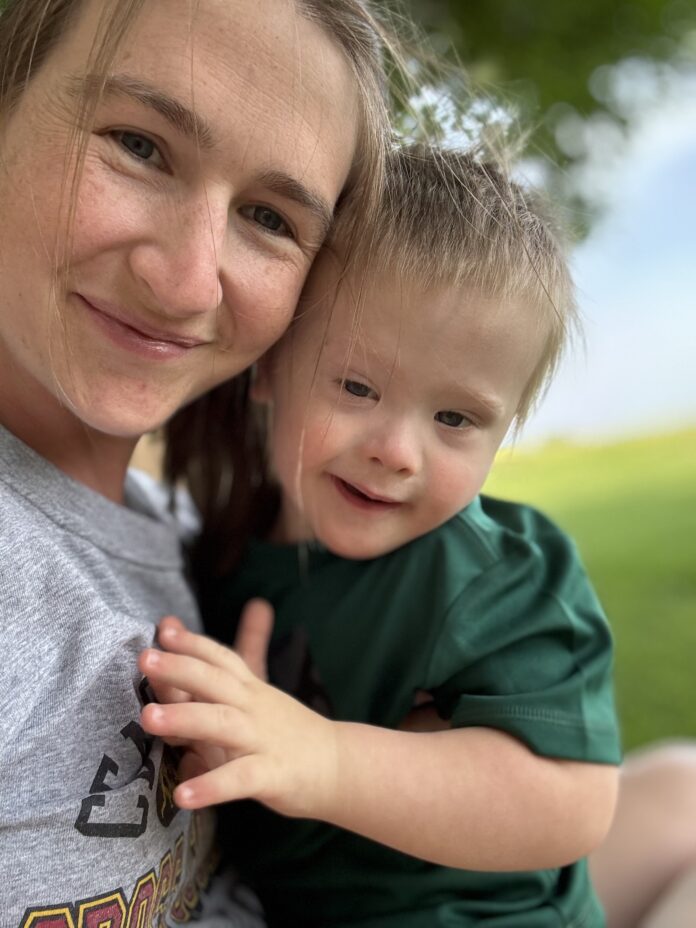
Photo of Lauren Stout and her son. Photo provided by Lauren Stout.

Facebook is a fun way to share personal news and photos while learning about what’s going on in the community. A Toledo nonprofit is using the platform to make a positive impact on families.  The Down Syndrome Association of Greater Toledo has increased the emphasis on its longtime private Facebook page for parents of infants, children and young adults with the genetic disorder, usually associated with developmental delays and mild to moderate intellectual disability. 

According to the Centers of Disease Control and Prevention, down syndrome is the nation’s most common diagnosed chromosomal condition; about 5,700 babies are born with it in the U.S. each year. Down syndrome is a condition in which a person has an extra copy of chromosome 21. Chromosomes, small “packages” of genes in the body’s cells, determine how the body forms and functions. When babies are growing, the extra chromosome changes how their body and brain develop.

“We’re trying to enhance the connection among parents,” said Krista Jensen, the Association’s executive director. “The purpose of the Facebook group has been to connect local parents, giving them a space to ask questions, share local resources and seek advice and input on everyday issues.” The Association’s Parent Support Group page has been around for about a decade and, in a sense, has been an unintended, best-kept secret, she said. “We’ve been paying more attention to it in the past couple months,” she added. “We inform new families about it to get them connected.”

Screening participants

To be admitted to the private-use page – accessed through the association’s website, dsagt.org – parents or caregivers are asked several questions as a safeguard. “We try to keep it as a safe place for parents where they can feel comfortable asking sensitive questions or sharing sensitive information,” she explains, adding,  “They might ask about referrals and recommendations for area providers, haircuts, eye doctors, specialists – kids with Down syndrome tend to have a lot more medical issues,” she said, with specialist recommendations often sought for hematologists, pulmonologists and chiropractors. Parents also ask about schools, or pre-school recommendations.

Recently, the Association, with an office at 204 West Wayne St. in Maumee, began Topic Tuesdays, where a question is posted each week on the Parent Support Group page “to get parents to respond and share ideas with each other.”

Past questions include, What goal is your child working on? What’s your go-to easy dinner on busy nights? What snack does your child love? Does your child work or volunteer and where? Is your child a big sibling and what tips do you have for bringing home a new baby? How long does bedtime take? What’s your best way to explain down syndrome to other kids?

Connection through community 

Jensen explained DSAGT’s role: When a family gets the diagnosis, they’re told about the Association’s services and can reach out. “Once the baby’s here, we get them connected to the community and the services available to them. We serve people with Down syndrome of all ages. As the child grows, we have different programs for each stage.”

That’s the path Lauren and Tyler Stout took. Three years ago, the Waterville couple learned that Lauren was carrying a baby with Down syndrome. She said the Association “welcomed us with open arms,” and connected them with the parent support group. “The Facebook page was a nice ease-in. It showed us what other parents were experiencing,” she said. “People would post photos of their children. It was a breath of fresh air to see joy and happiness and that it’s not all scary.”

The Stouts welcomed their son, Miles, now 3 years old, and continued in the parents’ group. Then Lauren became more involved with the Association, and two years ago she became its early matters coordinator.

The Facebook page “is one of the first places I send a new parent,” she said. “We have over 500 parents in the group — representing a wide variety of ages and skills and experiences. We get new members every month.”

Changing times

Jensen noted the difference in how those with Down syndrome are treated and accepted. “Before the 1980s, a child with Down syndrome would live to about 20. Now, they live to their 50s and 60s, for a multitude of reasons.”


RELATED: Building an Individualized Disability Support Team


Previously, families were not encouraged to take a Down baby home, she said. Often the baby was institutionalized. As time went on and more information was available, parents turned to taking home their babies with Down syndrome and raising them like other children. Also, Jensen said, medical advancements allowed babies with Down syndrome to live longer – more than half are born with heart defects, and now many have heart surgery in the first few months.

“Another piece is early intervention. Associations like us promote inclusion in the community, so these children have a reason to live longer, full lives. They go to school and make friends and work in the community,” Jensen said.

The DSAGT Parent Support Group page “is such a great tool for us,” Jensen said. “We serve 23 counties – it’s a big service area. This connects families who might not have an opportunity to meet. It’s an easy way to chat and ask questions, which is our goal.”

 Visit dsagt.org. 

Building a Sustainable Quality Sleep Routine for the Entire Family

Annie Babkiewicz is a pediatric sleep consultant who creates personalized sleep plans for families.

If you are struggling with rough mornings and feeling like your family is not well rested, you aren’t alone. Pediatric sleep consultant Annie Babkiewicz answered questions regarding quality rest for the entire family. 

Babkiewicz explains what a “sleep consultant” does, “As a pediatric sleep consultant, I help families with 4 month old babies to 7 year olds who have nonmedical sleep issues that are preventing quality days and nights. These families are exhausted and feel that their current situation is not sustainable. They may have had a good sleeper for a while and then everything changed. They aren’t sure of what the next steps should be. At Edelweiss Sleep Consulting, I start by learning about the child’s sleep and feeding patterns, temperament and schedule, along with the parents’ sleep philosophy, schedules and sleep goals. From this information, I create a customized family sleep plan that outlines everything from sleep needs, routines, recommended schedules, naps and the steps needed to meet their goals. I then support families as they implement this plan with daily check-ins by phone, text or email.”

Personal experience as a foundation

She continues, “As a mom of four, I know how hard sleep deprivation can be. My company was born from my own sleep struggles with my first child. I had always wanted to be a mom, but I was unprepared for the misery that sleeplessness brought and how it affected so many aspects of our lives. After learning everything I could about how to help my baby sleep, I was able to turn it around and more fully enjoy motherhood. My passion was ignited, and I knew I wanted to help other families who struggled like I did. I chose the name Edelweiss (“Ā-del-vice”) because it is a meaningful song (from the classic film “The Sound of Music”) that I grew up singing and I now sing to my children before bed.” 

So much information exists on exactly how much sleep various ages and stages of development need per night. Annie affirms, “Sleep duration recommendations come from decades of sleepresearch; however, they can’t take individual differences into account. This is why we see such a range for each age. We want to use these guidelines as a general foundation for optimizing sleep in a 24-hour day.”

  • 0-3 months: 14-17 hours
  • 3-11 months: 12-15 hours
  • 1-2 years: 11-14 hours
  • 3-5 years: 10-13 hours
  • 6-13 years: 9-12 hours
  • 14-17 years: 8-10 hours
  • 18 and up: 7-9 hours

Annie offers these suggestions for creating a quality family sleep routine. All members of the family should be engaged in the process of creating a routine as much as developmentally appropriate. Some general tips to follow include:

  • Start your routine 20-30 minutes before bed with the same few calming activities done every time.
  • Avoid screens an hour before bed for kids and at least 30 minutes for adults to prevent the disruption of melatonin production.
  • Try to go to sleep and wake at roughly the same time every day.
  • Keep the environment cool, 68-72 degrees F.
  • Make sure to get some exercise or physical activity during the day,

and don’t stress if your partner is roughhousing with the kids at the beginning of the routine. This has its benefits!

Nutrition is important for sleep too

The importance of nutrition cannot be ignored. Annie explains, “In those early months, feedings every 2-3 hours are crucial for a baby’s sleep and development. As your baby gets older, those feedings will stretch to 3-4 hours and the quantities will go up, increasing their caloric intake during the day. You will also start introducing nutrient dense meals. Start with lots of fruits and vegetables, adding in grains, protein, fats, dairy and superfoods. Also try for fiber and iron-rich meals. Keep in mind sleep-promoting foods especially for active toddlers: kiwi, blueberries, cherries, yogurt, almonds, pistachios, eggs, cottage cheese, fish, avocados, bananas and sweet potatoes. On the other hand, foods that are high in sugar and saturated fats and low in fiber have been linked to less sleep and disrupted sleep.”

There are times when a larger problem exists. Families may be wondering what steps to take if the issue appears to be the result of a larger medical problem, rather than simply lack of a quality sleep routine. Annie educates, “In these cases, some signs to look out for are loud snoring, gasping for air or pauses in breathing while sleeping, mouth breathing, difficulty falling or staying asleep, daytime sleepiness, frequent bedwetting, excessive sweating at night, not feeling rested after sleeping, and difficulty paying attention during the day.

If you notice any of these signs or have a concern, please consult with your child’s pediatrician (or your own doctor!) to help identify a sleep disorder and recommend possible behavioral strategies or, in some cases, a sleep study.

Babkiewicz offers this advice to families, “Prioritize sleep in your home. Have routines in place and don’t rush through them. Emphasize intentional connection before bed. And don’t forget about yourself. A well-rested functional parent is truly what’s best for the well-being of your child. If you are struggling, reach out. It’s never too late to get the rest you deserve.”

For more information visit edelweisssleepconsulting.com.