
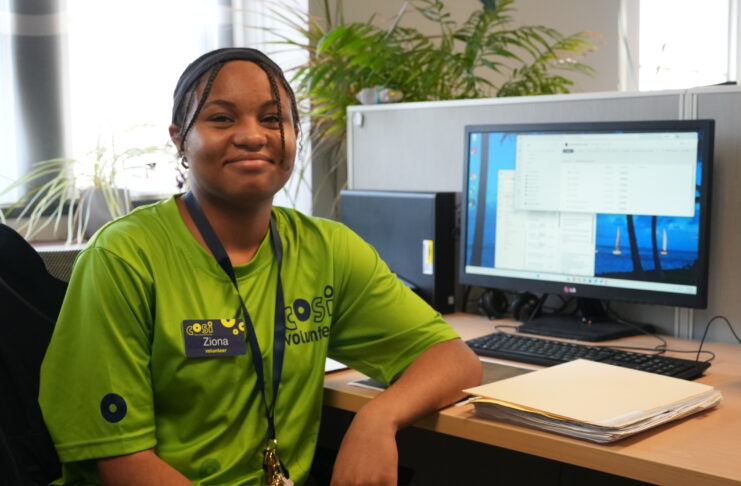
People with disabilities are vital members of our communities, bringing diverse skills, talents and perspectives that enrich everyone. They deserve the same opportunities and protections as all other people, yet too often, they encounter discrimination or are confronted with barriers in systems that are not designed with their needs in mind.
That’s where care teams come in. Individualized wrap-around supports work best because everyone’s needs look a little different. Connecting the right people— based on an individual’s disability, age and goals—helps ensure people with disabilities can flourish at home, in school, at work and in the community. Across all ages and life stages, strong care teams share four principles:
- Person-first: The individual’s goals and voice are central.
- Clear communication: Family, professionals and the individual stay in coordi-
nated contact. - Flexibility: Needs change over time—the team adapts.
- Advocacy: Everyone has a role in protecting rights and dignity.
Family, parent and kin
These are the foundational points of every care plan, providing daily encouragement, advocacy and decision-making support.
• Family and friends: Love, practical help, advocacy.
• Guardians or decision-makers: May hold legal authority when needed.
Resources
Ohio Early Intervention
A statewide system that provides coordinated services to parents of infants and toddlers with disabilities or developmental delays.
30 East Broad St, 12th Floor, Columbus. | [email protected].
Ohio Parent to Parent Statewide Mentoring & Support Program (P2P)
Trained volunteer parents mentor families of children with disabilities or special health needs.
Virtual | 513-803-5557.
Education
Ensures children and youth with disabilities can learn and thrive.
• Special education teachers and paraprofessionals: Tailored instruction and
support.
• School social workers and psychologists: Counseling and behavior management.
• IEP/504 team members: Develop and monitor education plans.
• Transition coordinators: Prepare students for college, work or independent living.
Resources
Ohio Coalition for the Education of Children with Disabilities (ODDC)
Ohio’s Parent Training and Information Center (PTI) provides information, advocacy
and training on special education services.
125 Executive Drive, Suite 200, Marion | [email protected].
Independent living
Promotes independence, dignity, and quality of life.
• Direct Support Professionals (DSPs): Personal care, meals and
transportation.
• Respite providers: Short-term relief for family caregivers.
• Peer mentors: Guidance from people with disabilities.
• Independent living skills trainers: Teach cooking, budgeting and housekeeping.
Resources
The Ability Center of Greater Toledo
Independent living support, advocacy, assistive technology, peer mentoring.
5605 Monroe St, Sylvania. abilitycenter.org. 419-885-5733.
Lucas County Board of Developmental Disabilities
Service coordination, housing assistance, respite programs and community support.
1154 Larc Ln, Toledo. lucasdd.org. 419-380-4000.
Employment
Helps people prepare for, find and succeed in meaningful jobs.
• Job coaches: On-the-job support and training.
• Vocational rehabilitation counselors: Career planning and placement.
• Supported employment programs: Long-term workplace support.
Resources
Opportunities for Ohioans with Disabilities (OOD)
State vocational rehabilitation agency helping people with disabilities find and keep jobs.
1501 S Detroit Ave, Toledo. ood.ohio.gov. 614-438-1200.
Medical and rehabilitation
Addresses medical needs and supports recovery, mobility and long-term health.
• Primary Care Providers (PCPs): Oversee health and referrals.
• Specialists: Neurologists, audiologists, dentists and dietitians.
• Therapists: PTs (mobility/strength), OTs (daily living), SLPs (communication).
• Mental health professionals: Psychologists, psychiatrists, social workers and counselors.
Resources
Ohio Family to Family Health Information Center (F2F)
Individualized support to help families of children with disabilities and special health care needs navigate the health care system.
Virtual | Contact number varies on location.
University of Cincinnati Center for Excellence in Developmental Disabilities (UCCEDD)
Training, research, clinical services, and programs for people with developmental disabilities.
Cincinnati Children’s Hospital Medical Center, 3333 Burnet Ave, Cincinnati | 513-803-0653.
Advocacy and legal rights
Protects the rights of people with disabilities and promotes inclusive policies.
• Advocates: Guide individuals and families.
• Legal services: Enforce rights and protections.
• Family/friend caregivers: Often
the first line of advocacy.
• Self-advocates: People with disabilities speaking for themselves.
Resources
Disability Rights Ohio (DRO)
Federally mandated protection and advocacy system offering legal help to protect the rights of people with disabilities.
200 Civic Center Drive, Suite 300, Columbus | 614-466-7264.
Ohio Developmental Disabilities Council ODDC
Funds projects and advocates for better policies and services across Ohio.
899 E Broad St, Columbus | 614-466-5205.
Know of another resource that you have found helpful? Send the informa-
tion to us at [email protected] and we will add it to our online resource guide.
Common disability terms & acronyms
The disability world is full of acronyms and specialized terms that can feel overwhelming at first. Parents, caregivers and individuals often hear these words in schools, medical offices, and community programs—sometimes without clear explanations. Over time they become familiar, but when you’re just starting out, it helps to have a quick reference guide.
Here are some of the most common terms you’re likely to encounter:
- ABLE Account: Savings account for people with disabilities that doesn’t affect Medicaid or SSI benefits.
- Accessibility: Making environments, services or technology usable by people with disabilities.
- Americans with Disabilities Act (ADA): Federal law banning disability discrimination in jobs, schools, government and public spaces.
- Assistive Technology (AT): Devices that improve independence, like wheelchairs, speech apps, or adapted keyboards.
- Competitive Integrated Employment (CIE): Work alongside peers without disabilities, at minimum wage or higher.
- Councils on Developmental Disabilities (CDD/DCC): Federally funded state councils that promote policies, fund projects and support inclusion for people with developmental disabilities.**
- **Developmental Disabilities Network Partners (DD Network / Triad of Care): The three federally mandated disability programs in every U.S. state and territory: UCEDD, CDD/DDC, P&A. Together they promote inclusion, protect rights, and improve services for people with developmental disabilities and their families.
- Direct Support Professional (DSP): Staff who help with personal care, daily living and community activities.
- Early Intervention (EI): Services for children birth–3 with developmental delays or disabilities.
- Employment First: Policy that makes community jobs the first option for people with disabilities.
- Family to Family (F2F): Statewide programs where trained family members help other families navigate health, education and disability systems.
- Guardianship: Court process giving someone authority to make decisions for an adult with a disability.
- Home and Community-Based Services (HCBS) Waiver: Medicaid program that funds care at home or in the community instead of institutions.
- Individualized Education Program (IEP): Legal school plan with special education services and goals for a student.
- Inclusion: Ensuring people with disabilities take part fully in school, work, and community life.
- Least Restrictive Environment (LRE): Rule that students with disabilities should learn with peers without disabilities whenever possible.
- Medicaid: Government health insurance covering disability services, therapies and waivers.
- Medicare: Federal health insurance for seniors and some younger people with disabilities.
- Opportunities for Ohioans with Disabilities (OOD): State agency that helps people with disabilities find and keep jobs.
- Parent to Parent (P2P): Statewide programs that match parents of children with disabilities or special health care needs with trained peer mentors for emotional support and guidance.
- Parent Training and Information Center (PTI): Statewide, federally funded centers that provide families information and advocacy on special education rights and services.
- Person-Centered Planning (PCP): Process where individuals lead planning for their future, supported by others — often includes practices like self-determination and supported decision making.
- Person-First Language: Saying “person with a disability” instead of “disabled person.”
- Power of Attorney (POA): Legal document allowing someone to make certain decisions for another person.
- Protection & Advocacy Systems (P&A): Federally mandated agencies in every state and territory that protect the legal and human rights of people with disabilities. They provide advocacy, investigation, and legal representation. i.e. Disability Rights Ohio (DRO).**
- Reasonable Accommodation: Job change or adjustment that helps an employee with a disability do their work.
- Respite Care: Short-term care that gives family caregivers a break.
- Self-Advocacy: Speaking up for your own needs and rights.
- Self-Determination: Making choices and directing your own life.
- Social Security Disability Insurance (SSDI): Federal benefit for people with disabilities who have worked and paid into Social Security.
- Subminimum Wages: Wages below the federal minimum, legally allowed under Section 14(c) of the Fair Labor Standards Act for some workers with disabilities.
- Supplemental Security Income (SSI): Federal benefit for people with disabilities with limited income/resources.
- Supported Decision-Making (SDM): Using trusted supporters to help make your own life decisions instead of guardianship.
- Transition Services: School supports that prepare students with disabilities for adult life.
- University Centers for Excellence in Developmental Disabilities (UCEDDs): Federally funded programs housed at universities or medical centers that provide training, research, clinical services, and community programs to improve the lives of people with developmental disabilities and their families. Every state and territory has at least one. i.e. University of Cincinnati Center for Excellence in Developmental Disabilities (UCCEDD).**
- Universal Design (UD): Designing spaces or products to work for as many people as possible without special changes.

