
Facebook is a fun way to share personal news and photos while learning about what’s going on in the community. A Toledo nonprofit is using the platform to make a positive impact on families. The Down Syndrome Association of Greater Toledo has increased the emphasis on its longtime private Facebook page for parents of infants, children and young adults with the genetic disorder, usually associated with developmental delays and mild to moderate intellectual disability.
According to the Centers of Disease Control and Prevention, down syndrome is the nation’s most common diagnosed chromosomal condition; about 5,700 babies are born with it in the U.S. each year. Down syndrome is a condition in which a person has an extra copy of chromosome 21. Chromosomes, small “packages” of genes in the body’s cells, determine how the body forms and functions. When babies are growing, the extra chromosome changes how their body and brain develop.
“We’re trying to enhance the connection among parents,” said Krista Jensen, the Association’s executive director. “The purpose of the Facebook group has been to connect local parents, giving them a space to ask questions, share local resources and seek advice and input on everyday issues.” The Association’s Parent Support Group page has been around for about a decade and, in a sense, has been an unintended, best-kept secret, she said. “We’ve been paying more attention to it in the past couple months,” she added. “We inform new families about it to get them connected.”
Screening participants
To be admitted to the private-use page – accessed through the association’s website, dsagt.org – parents or caregivers are asked several questions as a safeguard. “We try to keep it as a safe place for parents where they can feel comfortable asking sensitive questions or sharing sensitive information,” she explains, adding, “They might ask about referrals and recommendations for area providers, haircuts, eye doctors, specialists – kids with Down syndrome tend to have a lot more medical issues,” she said, with specialist recommendations often sought for hematologists, pulmonologists and chiropractors. Parents also ask about schools, or pre-school recommendations.
Recently, the Association, with an office at 204 West Wayne St. in Maumee, began Topic Tuesdays, where a question is posted each week on the Parent Support Group page “to get parents to respond and share ideas with each other.”
Past questions include, What goal is your child working on? What’s your go-to easy dinner on busy nights? What snack does your child love? Does your child work or volunteer and where? Is your child a big sibling and what tips do you have for bringing home a new baby? How long does bedtime take? What’s your best way to explain down syndrome to other kids?
Connection through community
Jensen explained DSAGT’s role: When a family gets the diagnosis, they’re told about the Association’s services and can reach out. “Once the baby’s here, we get them connected to the community and the services available to them. We serve people with Down syndrome of all ages. As the child grows, we have different programs for each stage.”
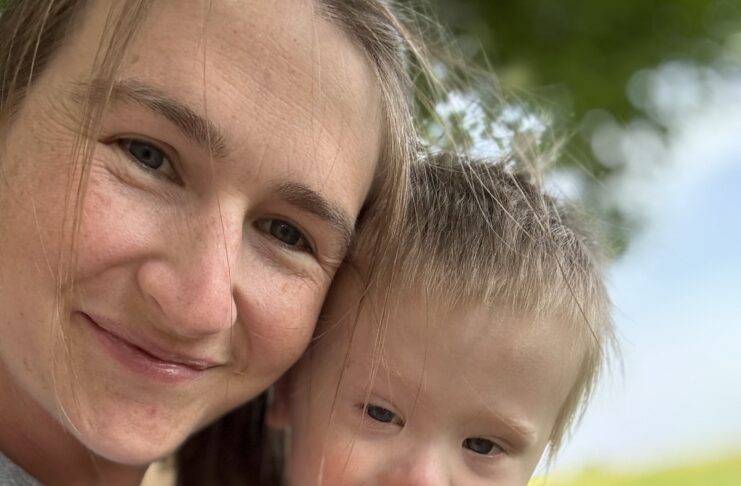
That’s the path Lauren and Tyler Stout took. Three years ago, the Waterville couple learned that Lauren was carrying a baby with Down syndrome. She said the Association “welcomed us with open arms,” and connected them with the parent support group. “The Facebook page was a nice ease-in. It showed us what other parents were experiencing,” she said. “People would post photos of their children. It was a breath of fresh air to see joy and happiness and that it’s not all scary.”
The Stouts welcomed their son, Miles, now 3 years old, and continued in the parents’ group. Then Lauren became more involved with the Association, and two years ago she became its early matters coordinator.
The Facebook page “is one of the first places I send a new parent,” she said. “We have over 500 parents in the group — representing a wide variety of ages and skills and experiences. We get new members every month.”
Changing times
Jensen noted the difference in how those with Down syndrome are treated and accepted. “Before the 1980s, a child with Down syndrome would live to about 20. Now, they live to their 50s and 60s, for a multitude of reasons.”
RELATED: Building an Individualized Disability Support Team
Previously, families were not encouraged to take a Down baby home, she said. Often the baby was institutionalized. As time went on and more information was available, parents turned to taking home their babies with Down syndrome and raising them like other children. Also, Jensen said, medical advancements allowed babies with Down syndrome to live longer – more than half are born with heart defects, and now many have heart surgery in the first few months.
“Another piece is early intervention. Associations like us promote inclusion in the community, so these children have a reason to live longer, full lives. They go to school and make friends and work in the community,” Jensen said.
The DSAGT Parent Support Group page “is such a great tool for us,” Jensen said. “We serve 23 counties – it’s a big service area. This connects families who might not have an opportunity to meet. It’s an easy way to chat and ask questions, which is our goal.”
Visit dsagt.org.

