Home Blog Page 304

Strategies for Communicating with Teenagers

Accepting that your 15-year-old is no longer five

I have worked in child care centers with babies, toddlers and preschoolers for years. I also teach college level early childhood education courses. With the advent of dual enrollment programs, I now have high school students in my college courses. It has become quickly apparent that communicating with teens requires different skill sets than those needed for small children or adults.

Here are some strategies that have been effective in communicating with teens.

Grab their attention.

Today’s teens are constantly multitasking. They eat lunch, do school work, text multiple friends and download their favorite music, all at the same time. You’ve got to be interesting to compete with that! Do the unexpected from time to time. I’ve even showed up for class wearing a blue wig to grab the attention of my teen students.

Give them the benefit of the doubt.

Start off assuming that they are mature enough to handle the information. You can always scale it back later, if needed. Addressing them on a younger level from the beginning can be insulting and can send up defensive walls. I speak to the teens in my college class in the same manner as I speak to the adults, and then, if it seems warranted, I bring it down a notch.

Ask them to repeat the information back to you.

The high school students in my classes were asking me the same questions repeatedly. I started asking them to recite the information I was teaching back to me. I also told them to write it down. This reduced the repetitive questions.

Don’t attempt to compete with electronics.

Trying to talk when they are playing with their phone, tablet or other devices is useless. I’ve noticed that many young people seem to go deaf once they have electronics in their hands! Many times I’ve had to softly put my hand on a student’s arm to get their attention. Make sure your teen is focused on you before you attempt to ask a question, give instructions or have a conversation.

Find some common ground.

I had a student who was extremely withdrawn. She entered class at the last minute and rushed out as soon as it was over. She didn’t voluntarily participate in discussions and gave one word responses when called on. When I brought up one of my favorite authors in class, the student told me that she had read one of his books and asked for my suggestion on which one to read next. After that, she started opening up in class. Sometimes it takes finding something in common to open the lines of communication.

A few other tidbits

Sometimes teens feel like they just can’t talk to their parents. I’ve had teenage students come to me with issues big and small that they were embarrassed, ashamed or afraid to discuss with their parents. A few students have told me that they simply didn’t want to worry their parent with the problem. Make sure your teen has other responsible adults in their life who they can turn to when talking to you is just out of the question for them.

Teens want to have strong relationships with their parents. Numerous times, I’ve heard them express jealousy of another students close relationship with a parent.

They tell their friends everything. I’ve overhead some very private information being exchanged between pals. If you want to know what is going on with your teen, get in good with their friends!

Teen communication revolves around texting. If you don’t know how to text, learn. In fact, ask your child for help! Then start texting them daily.

My own daughter is eleven. Working with my teenage students has provided good preparation for her teen years, which are right around the corner. My texting speed is improving each day!
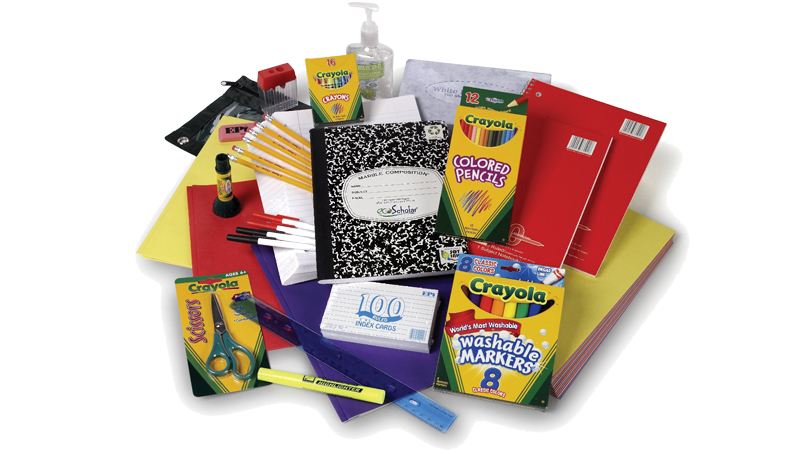
Stock the Teacher’s Supply Pantry at UT

Did you know that teachers spend their own money— often as much as $500 per year— on school supplies for their classroom? To assist with this issue, The University of Toledo is leading efforts to provide Old Orchard Elementary teachers with supplies for their students. Following a model developed by Grace Church, UT has organized a donation drive to stock teachers’ supply cupboards. Donations can be dropped off at several campus locations through September 26 and teachers can access the supplies starting in October. Old Orchard Elementary is the pilot school for this pantry program but UT hopes to expand to more schools in the future.

Find more information, visit utoledo.edu/education.

Snow Plow Parenting

The importance of failure in parenting

As generations change, new titles are developed—Baby Boomers, GenX, Millenials— along with parenting techniques. Helicopter parenting, the practice of hovering anxiously near your children, monitoring their every activity, is now considered a thing of the past.

What is Snow Plow Parenting?

The newest parenting term is “snow plow parenting,” which is associated with affluent and middle-class parents who eradicate obstacles in their children’s paths so they aren’t faced with failure or frustration. It’s the “everyone gets a trophy” parenting concept.

Helicopter parenting evolved into “intensive parenting,” which translates to constantly monitoring children and always educating them, filling up afternoons and weekends with lessons, tutors and traveling sports. Snow plow parenting is essentially intensive parenting raised to a higher level.

Studies show that parents now spend more money on child rearing than any previous generation. Other sociological data reveals that working mothers spend as much time doing hands-on activities with their kids as stay-at-home moms did in the 1970s.

Mounting evidence reveals this over-the-top education doesn’t necessarily benefit children, and parents, particularly mothers, are feeling the pressure of being all things to all people. Mothers must excel in the workplace and then come home to be supermom, completing all the activities of a stay-at-home mom in a quarter of the time.

This parenting fervor does not end with high school graduation either. In a new poll of parents with children ages 18 to 28 by The New York Times and Morning Consult, 75% of parents had made appointments for their adult children, such as doctor visits or haircuts, and the same percentage had reminded their kids of deadlines for school. 11% said they would contact their child’s employer if their child had an issue.

16% of those with children in college had texted or called them to wake them up so they didn’t sleep through a class or test. 8% had contacted a college professor or administrator about their child’s grades or a problem they were having.

Toledo-area professors share their experiences

Local professors and administrators confirming this shift in parenting were reluctant to be quoted for this article due to fear of parental backlash.

One administrator at a nearby university admits he regularly receives phone calls from parents about safety concerns. Most of those concerns are unwarranted and amplified by social media, but that doesn’t diminish parental worry and involvement.

A professor at a nearby college confessed that she regularly receives phone calls and emails from parents asking about assignments and grades. They make excuses for their children’s missing work and argue about grades. The professor is often blamed for the mistakes of her students.

Students now “grade” their teachers, explained yet another professor from a local university, who learned quickly that her students’ grades directly impacted their reviews of her. When students earned anything less than an A, the reviews reflected that. While students are ready to take the credit for their high grades, they refuse to accept the blame for less-than-perfect scores.

Operation Varsity Blues

A recent college bribery scandal, code-named Operation Varsity Blues, reveals the extreme— and criminal— choices some parents made to snow plow obstacles from their children’s paths to college. Fifty parents are charged with varying levels of fraud, from bribing SAT proctors to paying off college coaches to get their children into elite colleges. The parents then went to great lengths to ensure their children never realized their involvement and manipulation.

According to the investigation, one father lied about his son being on the water polo team to increase his perceived extracurriculars and his chance at gaining admittance. Another mom paid someone to take the ACT for her son–and then pretended to proctor the test herself, at home, so her son would think he was the test-taker.

How does snow plow parenting begin?

Wondering how “snowplow parenting” begins while raising young children? It starts early, putting your child on a waitlist for an elite preschool, making sure your toddler never encounters frustration on playdates or in the classroom. Once your child enters elementary school, it morphs into running assignments to school when your child forgets, calling teachers when a grade is less than stellar, and confronting a coach when your child doesn’t make the team.

This may seem like acceptable behavior when raising young children, and perhaps it is as they transition into school-age, but at some point, the child needs to learn to deal with failure and become responsible for his/her own choices. When your child forgets a large assignment and is docked points for tardiness, he will learn from his mistake. If he knows mom/dad will bail him out, then he learns that his mistakes do not merit negative consequence and, on a deeper level, he internalizes that someone else is at fault, not him.

Failing to stop the snow plow effect by high school often leads to it continuing into college, and then into the workplace. It’s a parenting habit that is difficult to break. If young adults do not learn life skills by the end of high school, they will be ill-equipped to face the real world in college and beyond.

The GenX and Baby Boomer generations love to complain about Millenials who can’t take responsibility for their actions, assume every mistake is the fault of someone else and are unable to take any sort of criticism.

But did those generations not create the issues commonly associated with Millenials? When “everyone gets a trophy,” is it not surprising Millenials would have a hard time facing any perceived failure, even something as trite as constructive criticism? And if a parent always bailed them out in a time of need, it’s not a stretch to understand how the young adult would have trouble accepting the blame for a mistake. If mom always delivered, and then she didn’t, isn’t it really mom’s fault?

Importance of failure

Learning to solve problems, take risks and overcome frustration are crucial life skills, child development experts say. If parents don’t let their children encounter failure, the children won’t acquire those skills. We learn just as much, if not more, from our mistakes as we do from our successes.

When a first-grader is obligated to eat a lunch he doesn’t like because he forgot his bagged lunch at home, he is much more likely to remember his lunch in the future. When a 20-year-old fails to finish a paper on time and receives a zero, he’s likely not going to make the same mistake again.
We all make mistakes; the true test of growth is whether or not we can learn from and improve on those blunders. Not everyone can be a winner, and no one is perfect. As parents, we perform a disservice to our children if we let them believe anything else.

Young people are experiencing record rates of anxiety, in part due to their lack of problem-solving skills and their inability to experience failure. Clearing the path in order to avoid failure does not help them to develop those important life skills. Instead of preparing the road for the child, we need to focus instead on preparing the child for the road.

New Director for Toledo Lucas County Public Library

Toledo Lucas County Public Library has named a new director. In early August, the Library Board of Directors named Jason Kucsma as the Library system’s Director. Kucsma, working as the acting director since February, was hired in 2015 as the Deputy Director. In his new role, Kucsma will lead a team providing world-class library services to the diverse communities of Lucas County.

Swimming Safety

Chris Peters, owner/operator of SafeSplash + Swim Labs.

Learning a critical life skill

Chris Peters holds an impressive list of personal and professional accomplishments, but the one he’s most proud of is opening a new swim school in Northwest Ohio. “My heart sinks when I hear about a drowning,” said the owner/operator of SafeSplash + Swim Labs. “That’s why we’re here. My passion is to start kids swimming when they’re babies and keep the skills going when they’re adults. Learning to swim is a critical life skill – something that can save a life.”

Peters, who qualified for the 2000 U.S. Olympic Trials in the 100 and 200 backstroke, is organizing fundraisers to help sponsor youngsters whose families cannot afford swimming lessons. “We are also constantly looking for third party funding – no child should be turned away because of cost.” The school is exploring offering lessons at other pools in the community. “If they can’t get to us, we want to take lessons to them,” he said.

Peters, the former head coach for the University of Toledo women’s swimming team, led the Rocket teams that broke numerous school records, set MAC Conference records and qualified for the NCAA Championship Meet and the 2016 U.S. Olympic Trials. Before coaching at UT, Peters served as an assistant coach for men’s swimming at the Ohio State University.

In addition to a 15 meter indoor swimming pool, the school features two smaller, endless wave pools that allow swimmers to learn in an individual setting. In-pool cameras and mirrors capture 360-degree views of each stroke. Pool-side video analysis provides swimmers with instant feedback—while displaying their strokes side-by-side with the world’s best swimmers—to help students become more efficient and faster in the water.

Dream come true

The self-professed “optimist and go-getter” called building the swim school, an “ultimate dream.” His wife, Marianne, Director of People and Performance for Savage and Associates, a local investment advisory and insurance firm, is credited by Peters for “taking a chance” to truly make a difference in people’s lives. Marianne helps manage the business and lends a hand, teaching swimming lessons on weekends.

“I’ve never been much of a corporate guy, I prefer to be hands-on and being in the pool is definitely my happy place,” Peters explains. His other favorite place is his home in Whitehouse, where he and Marianne live with their two children, Sydney, 13 and Cole, 11.

“Opening a new business is draining but my wife and I always make time for family,” Peters said. Those that work for him know that he will drop everything to attend his son’s swim meets or daughter’s soccer games or volleyball matches. “No doubt, this is a tough year but my family knows they always come first.”

SafeSplash + Swim Labs is located at 1510 Spring Meadows Drive in Holland. For more information or to schedule lessons, call 419.370.2801.

Q&A with Chris Peters

What’s your favorite activity to do with your family/kids?
Family basement night, where we play ping pong, darts and foosball. We also enjoy going out to eat together and going on family walks with our dog, Charlie.

What’s your go-to activity when you finally have a few minutes to yourself?
Swimming!

Describe your life in five words.
Chaotic. Fulfilling. Family. Caring. Ambitious.

What’s your favorite Toledo hangout?
The Toledo Metroparks and my house.

Describe Toledo in a sentence.
Toledo is a family friendly area that I’m proud to call HOME.

Parents, Check out Lateral Gigs

With the back to school shopping completed for your kids, maybe now you want to pick up something new for yourself. Check out Lateral Gigs, a local female owned company helping to spread Toledo love. Offering screen printing, embroidery, engraving and super cute clothing, stock up on some threads from Lateral Gigs’ Mom Life Collection to help you adjust to the new school year. If you’re going to be caught in a messy bun and t-shirt in the carpool line, you’ll want to be sporting one of these.

Shop online at
lateralgig.com/collections/shop-the-mom-collection