Home Blog Page 234

What’s briefly happening…

Toledo makes healthy drinks default options for kids

A recent vote by the Toledo City Council is aimed at cutting down on kids’ consumption of sugary drinks at area restaurants. On April 13, Council approved a measure that makes healthy drinks— such as low-fat milk, fruit juice or water— the default options offered with kids’ meals at area restaurants. Parents will still be able to request different drinks, if they wish. The program will be rolled out gradually over a period of six months to allow restaurants to change their menus and to retrain staff.


Amazon donates to TPS

Amazon presented a check for $7,500 to Toledo Public School

s on May 6. The donation was made in part to celebrate the opening and completion of Amazon’s

150,000 square foot sorting hub on Reynolds Rd. (at the former site of Southwyck Mall). The donation was made in a ceremony at Byrnedale Elementary School with a check presented to TPS Superintendent Romules Durant. Amazon noted that the company hopes to partner with the school district in the future, including

collaborating on educational programs and offering internships.


Area celebrities share their favorite children’s stories

Gather around the computer, kids— it’s time to hear a story! In defiance of the pandemic, the 8th season of the Valentine Theatre’s popular Gretchen Zyndorf School Days Educational Theatre Series is showcased on the Valentine’s YouTube channel and webpages, with notable locals reading some of their favorite children’s stories to young listeners. Participants this season included former Toledo Mayor Mike Bell, current Mayor Wade Kapszukiewicz, City Council member Dr. Cecelia Adams and Ohio First Lady Fran DeWine. To join the storytime, visit valentinetheatre.com.


Oregon Theatre presents the Bare Necessities of the Jungle Book

The classic Rudyard Kipling novel and beloved Disney musical comes to life with an Oregon Community Theatre (OCT) production of The Jungle Book Kids. Presented as part of OCT’s Summer Children’s Theatre Camp, the show presents an abridged version of the animated musical featuring its classic songs. Two separate stagings of the show will be produced simultaneously as part of OTC’s summer camp, with one session presenting their show on Saturday, July 17, and the other performing on Sunday, July 18. For more information on Jungle Book Kids, visit facebook.com/OCTKidsShow.


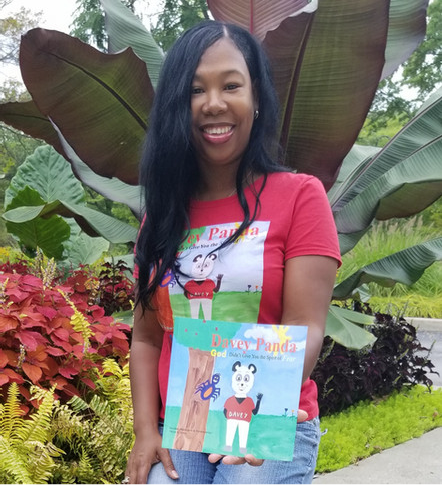
Spreading love through stories of a panda

Local author and illustrator Myra G. Love released the third book in her series of tales for children focused on a character named Davey Panda. God Will Bless Those Who Are Sad follows its young protagonist as he helps his friends deal with experiencing loss. Written in the style of a nursery rhyme, Love’s book series spreads the word of the gospel and helps her young audiences remember scripture. Visit Love’s website at myraglove.com.

Wedding Guide Questionnaire!

Want to be included in the upcoming
Toledo City Paper Wedding Guide?

Take Survey

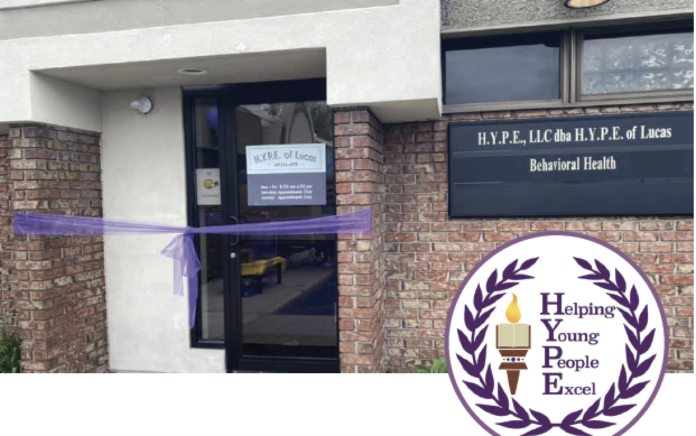
Aid to Excel: H.Y.P.E.

According to the National Alliance on Mental Health, 1 in 5 adults in the United States has experienced mental illness. The National Survey of Children’s Health states that 1 in 6 children in the United States from ages 6-17 have a treatable mental health disorder. And with the global pandemic, those numbers are sure to have increased. When it comes to mental health issues, there are a number of local options for help.

What is H.Y.P.E?

H.Y.P.E. (Helping Young People Excel) is a Toledo-area behavioral health company that assists those struggling with mental and behavioral health. The organization started as a tutoring service for students in grades 1-9 but, as CEO Claudia Romero stated, “We began to notice education was not the only barrier many of our clients were struggling with. Many showed struggles with anxiety, depression and traumas.”

H.Y.P.E. developed a holistic approach, addressing external and internal struggles, such as mental health awareness.

Services offered by H.Y.P.E. include individual therapy, case management, psychiatric services and day treatment– all supported by professional health care providers. H.Y.P.E. also provides education programs to assist students in summer school, as well as job training programs.

Serving the public, no matter what

Recently, H.Y.P.E. underwent some changes, relocating to the Monroe Medical Plaza. This larger space allows more people to be served while multiple group sessions to take place at once.

With inviting colors and themes in the building’s rooms, they serve people where they are most comfortable, with meetings at their office, in the community or at an individual’s home. To ensure that clients are able to make their appointments, H.Y.P.E. provides transportation to scheduled sessions as well.

H.Y.P.E. also offers integrated telehealth services which aid those in need. According to Romero, “H.Y.P.E. has noticed an increased need in services due to the state requirements of COVID-19 guidelines. We saw an increase in depression and anxiety rising as young people were forced to transition from their everyday routine to being restricted from having face-to-face encounters with others.”

To ensure that everyone received assistance during quarantine, H.Y.P.E. team members, provided with proper equipment, continued to offer their services. H.Y.P.E. also provided clients with headphones— and sometimes even iPads— to ensure they could attend sessions virtually.

With the mental health strains imposed upon so many by the pandemic, H.Y.P.E. has truly been, and continues to be, a lifeline.

For more information about H.Y.P.E. and their services, check out www.hypeoflucas.com.

Free Junior Conservationist 2021 Summer Program

Photo by Akil Mazumder

This summer, the Northwest Ohio Soil & Water Conservation Districts will be offering a Junior Conversationalist Summer Program with many educational activities involving soil, water, plants, animals, community, and nature exploration, all of which can be learned about from home. Amazingly, the program is also completely free! Junior Conversationalists are asked to submit photos of their completed projects to their local county’s SWCD contact—you can find it on their website— by the August 25 deadline. A certificate of achievement will be awarded after completing the program and the first 40 will receive a free T-shirt by the Lucas SWCD. You can also  purchase one for $10. It can be picked up at your local SWCD office or sent by mail for an additional $5. To register your child or learn more about the program, visit www.lucasswcd.org/jrcc. You can also contact Jamie Kochensparger. 419-893-1966, ext. 2.

Reflecting on COVID

We’re all aware of the adjustments children have had to make during the pandemic—wearing masks, schooling from home, and social distancing, for instance—but what we might not always realize is the immense impact on children with special needs. As COVID restrictions are finally lifting, families of children with special needs can breathe a sigh of relief. 

Understanding autism

All children with special needs have unique challenges, but those with autism need a consistent routine. According to Kate Schwartz, Executive Director of the Autism Society of Northwest Ohio, COVID resulted in routines being altered. With less opportunities for children with autism to go to school or go out, there were less opportunities for them to use social skills that they likely had been developing. As autism is a social communication disorder, social skills are very important to practice and develop for children with autism. Due to the lack of opportunities to practice social skills, a loss in that area—or regression—has been the result for many children. 

Another major challenge for children with autism during COVID was online learning. Every child learns differently, so meeting over Zoom made it difficult for those needs to be met. And for children with autism, the supervised learning, hand-over-hand ability assistance, and manipulatives for learning that help immensely in the classroom were not really possible. There were also a lot of unknowns with online learning, and for children with autism, not having a sense of what might happen next can lead to anxiety. 

When it came to masks, Schwartz explained that people with autism “have a heightened sensory system, so wearing something extra that touched the face and ears was simply too much on their sensory systems. The tug on the ears to keep the masks secure could be magnified in a person with autism.” So while most people did not enjoy wearing masks, it was even more uncomfortable for individuals with autism.

Introducing Eli
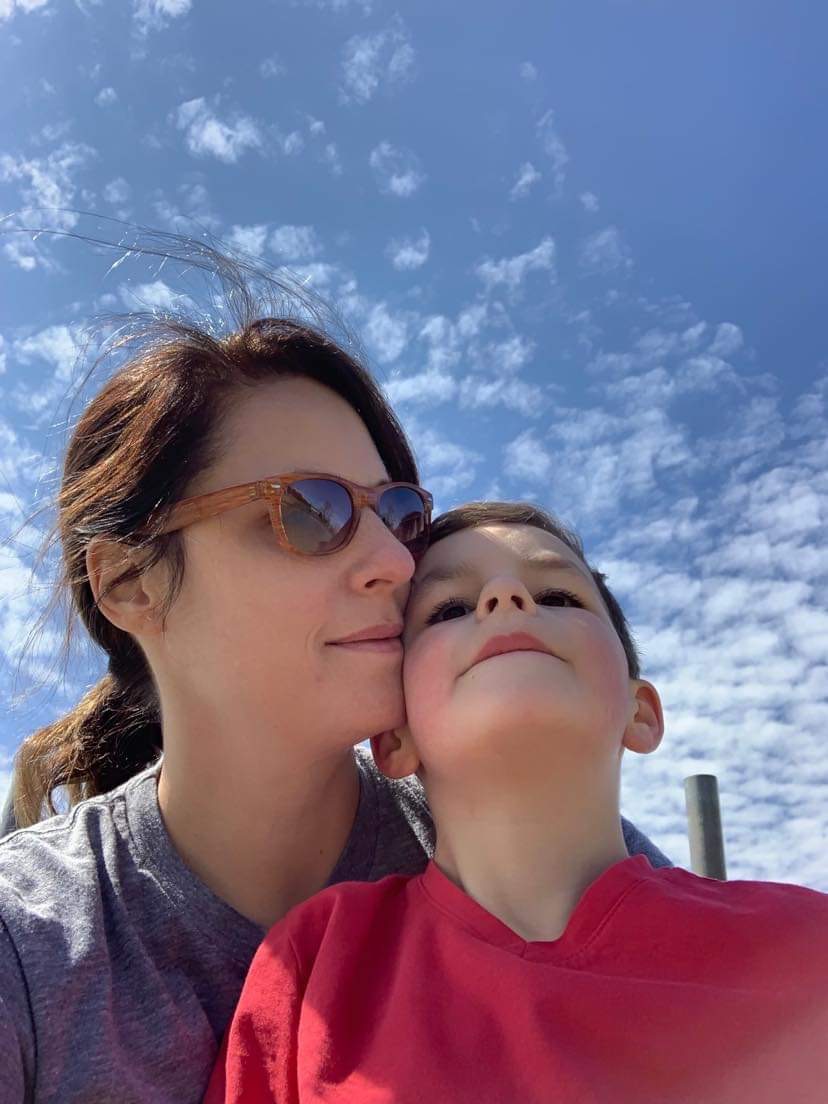
Recently I had the opportunity to speak with the family of a child with autism about their experience going through COVID. Lisa Rozanski and her husband Scott are the parents of seven-year-old Eli, a child with special needs. In an interview with Lisa, she explained that Eli is both on the autism spectrum and nonverbal. She described Eli as a “very happy, lovable little boy. Everyone who meets him falls in love with him. He hugs with all his might…he touches everyone he meets. It’s awesome to watch.” Even so, Lisa noticed the stress that the pandemic brought to her child.

For most children with special needs, not only is it very important to have a routine and to be consistent with it, but it is also important to have an outlet to release energy and emotions. Doing this in a way that is sensitive to sensory issues is also crucial. Unfortunately, during COVID, routines changed drastically and some of those typical outlets were no longer available. 

Prior to COVID, Eli was used to going to school, visiting his grandparents, playing in the park during the warmer months, and visiting fun indoor activities like SkyZone during the winter. Many of these activities were suddenly unavailable during COVID; even if they were still accessible, they required children to wear masks, a very difficult feat for Eli. 

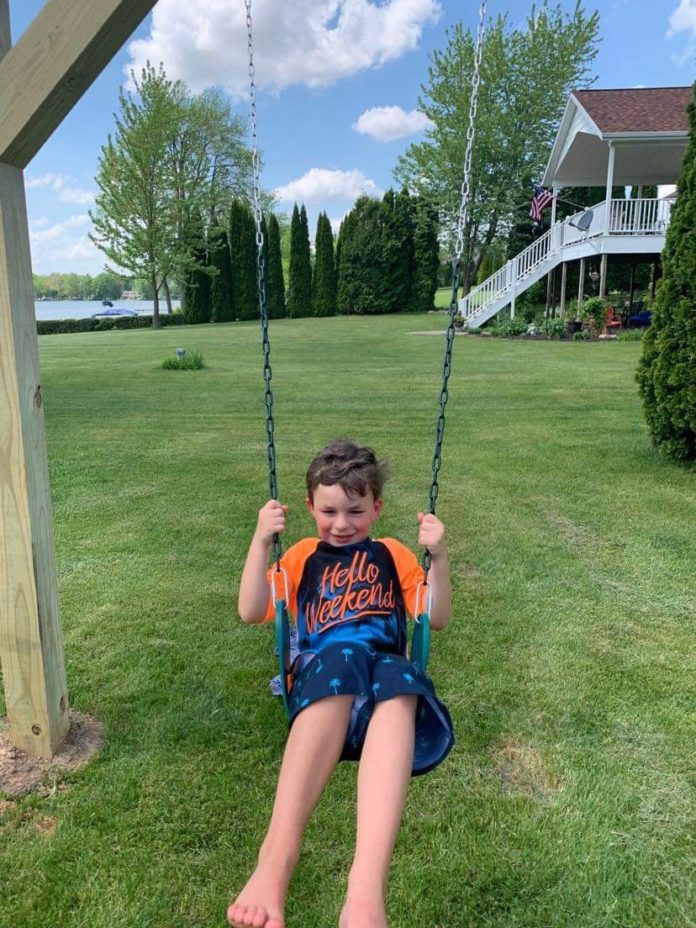
Eli has always had problems with wearing additional clothing like gloves, hats, or sunglasses, so having a required mask mandate made it even tougher for the family to get out of the house, as most places required school-aged kids to wear masks. This led the family to spend a lot of time at home, where Eli enjoyed playing on his swing in the backyard, jumping on his indoor trampoline, sitting in his indoor sensory swing, building blanket forts, and working on school activities throughout the day.

School routines shattered
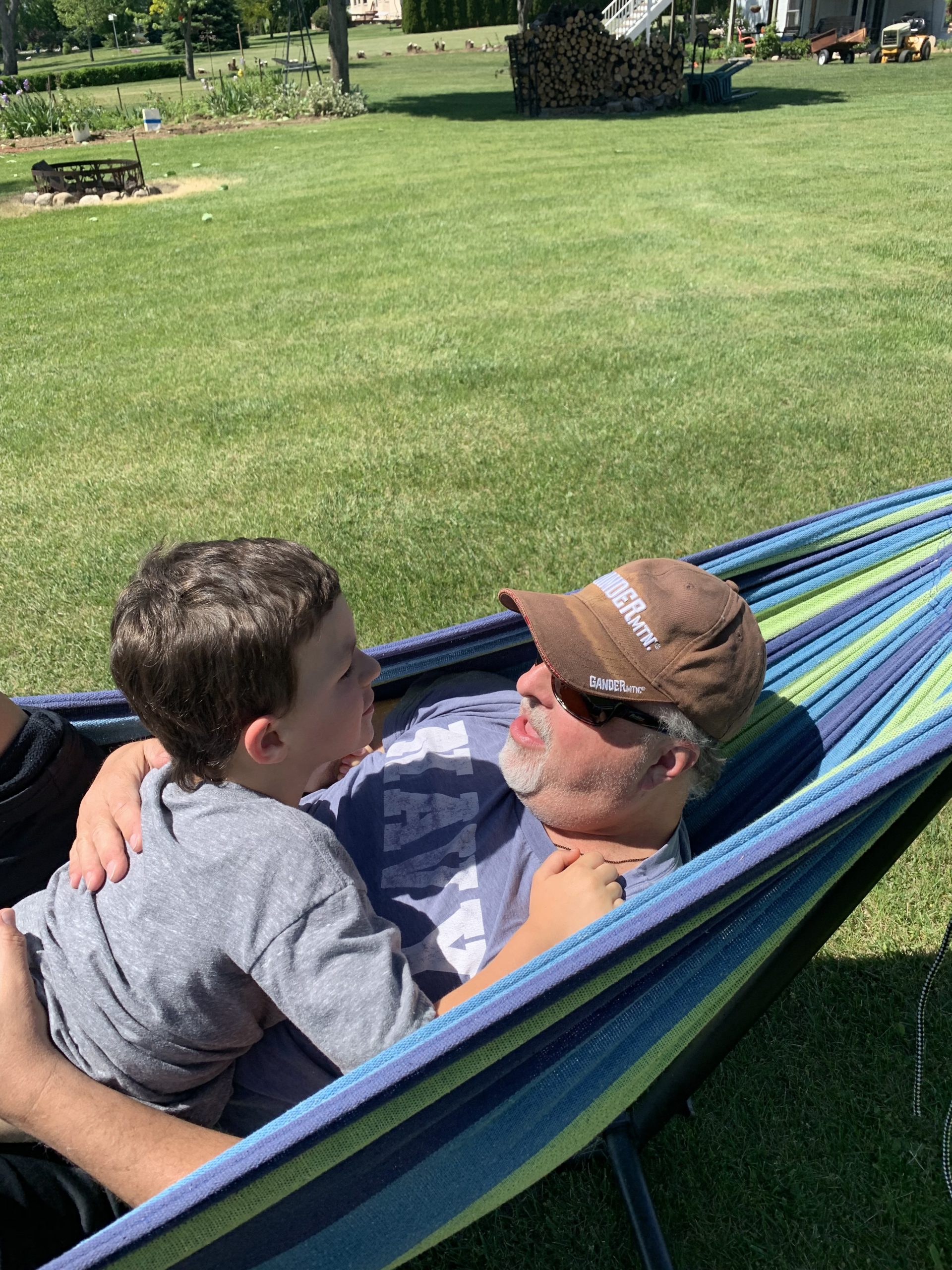
Like all schools in the spring of 2020, Eli’s school, a school for children with special needs, was closed down. Lisa explained that Eli “was used to a routine every day and going to school with friends, but then he was separated from them.” 

For Eli, it was difficult not to be in school. He didn’t grasp the idea of FaceTime or Zoom, so his interaction with other kids was limited during the school closure. “It was just a battle,” said Lisa. “At one point,  we had to talk to some of the administration about why we felt like our kids needed to come back.” Lisa faced some pushback and judgment from others who were concerned it was too dangerous to send children back to school, “but being back in school was what was best for [Eli],” she said. 

The school did eventually open back up for in-person instruction in the fall, but it was on a half-day schedule with a lot of strict rules. Naturally, if a student were to test positive for COVID, the school would move to remote learning for two weeks. The lack of consistency made it really difficult for Eli and other children with special needs. Lisa explained that he became very stressed, causing his behavior to change when he couldn’t communicate how he was feeling. Using sign language or a talker on his iPad, he would often tell his parents, “I want to go in the car.” He was very eager to go back to school, or even to leave the house at all. 

When Eli attended school in-person, Lisa praised the teachers and staff for keeping the facilities clean and sanitized, while also helping the kids learn to wear masks. “It’s amazing! A lot of the educators with special needs kids really stepped up to the plate, just like the caregivers and nurses who have been called heroes,” she said.

Transitioning from COVID

Fortunately, it is looking like the 2021-2022 school year will regain some normalcy, which will help alleviate the stress that children like Eli and their families were feeling during the pandemic. However, Kate Schwartz explained that just like the transition to safely staying home was difficult, the transition for children with autism back to going out could also be difficult as it is yet another change to routine. 

Schwartz suggested starting slowly with the transition. “Start smaller transitions back into the world. Lower expectations of what needs to be accomplished per day,” she stated. She also suggested that parents prepare and practice a script in case of meltdowns. Something simple like “My child has autism. COVID has been hard. Thanks for your understanding,” could do the trick.  

While COVID hasn’t been easy for any of us, those living with autism have had an especially tough time. It will be a difficult transition back to school, camps, after school programs, or even something as mundane as going to the grocery store, making it more important than ever to practice empathy and understanding toward these kids. Even so, the lifting of mask mandates has undoubtedly made a huge difference for these families to reclaim the ability to engage with the outside world. 

For families of a child with autism, Lisa Rozanski recommended Acoustics for Autism, particularly their Project iAM which helps grant scholarships to families for therapies, sensory activities, and more. 


New Beginnings

With businesses reopening, I can’t help but feel like I’ve gotten a new lease on life. The grass looks greener, people seem friendlier and every trip to the grocery store is a joy that doesn’t involve white knuckling a shopping cart while hoping I don’t have to sneeze in my mask again (ugh, the worst). I hope all of you are feeling the same profound sense of gratitude that this edging toward normalcy has given me!

The relief my husband and I have experienced being vaccinated is palpable—  I feel the tension I’ve held in my body for the past year and a half easing up more and more every day. Back in March, when I was closing in on nine months of pregnancy, I talked to my doctor about getting the vaccine. Without hesitation, she said, “Do it!” explaining that my child would benefit from the antibodies both in utero and during breastfeeding. I got my first shot of Moderna while pregnant and the second two weeks after Townes was born. No regrets.

This issue of Toledo Parent is all about embracing the things we’ve missed—  see Family Favorites for fun activities—  and the back-to-basics practices we learned to enjoy in the pandemic—  like family gardening. This issue is a guide for families who are ready to make up for lost time, enjoying the rich experiences Toledo has to offer. Here’s to (carefully) revisiting the Old Normal— hopefully with a new appreciation for all the little moments we might have taken for granted before the virus.

Now go forth and summer!

With love,

Erin Holden

Toledo Parent Assignment Editor