Home Blog Page 212

The Toledo Zoo program pairs science and service

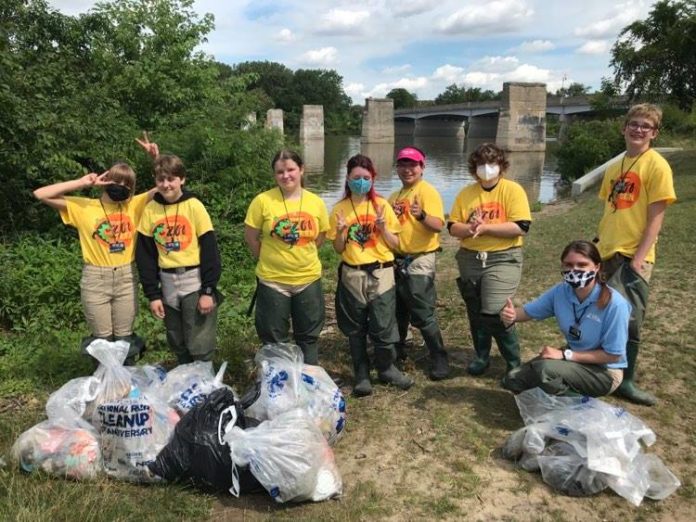
ZOOTeen volunteers help clean up waterways with Partners for Clean Streams.

Know a teen who likes to walk on the wild side? They may be the perfect candidate for the ZOOTeen Program at the Toledo Zoo.

“The ZOOTeen Program, launched in 1999, provides an opportunity for teens to connect with the Zoo, animals, nature and the community at large,” explains Bill Davis, Director of Volunteers. “Since its inception, the program has grown, not only in the number of participants, but in the range and depth of the opportunities that are available. Through the ZOOTeen Program, teens meet new friends, learn about the animals and the zoo and develop a range of personal skills, including interpersonal communication, time management, problem-solving and team-building.”

ZOOTeen Volunteers working
with TOLEDO Grows.

A rewarding experience

For Alyssabeth LaPlante, 17, the zoo was the perfect environment for growing, learning, and connecting with others. She became a ZOOTeen in June 2018. “I joined because my sister was already a part of the program, and I saw all the amazing opportunities she was a part of,” LaPlante said. “I also have loved animals my whole life and plan on going into biology and animal sciences after high school, so I wanted more experience with different available jobs.”

LaPlante, a senior at Clay High School, has served as the ZOOTeen enrichment chair as well as the organization’s vice president. Some of her favorite community activities include working with the Being Project and the Humane Society. “Being Project was created by ZOOTeens. We go downtown to a parking lot by the Toledo library and we play with kids, talk to adults and help the Fellowship Matters team pass out food and essentials to the unhoused population of Toledo,” says LaPlante, adding that “the best feeling is when you turn the corner into the parking lot and the kids recognize our yellow shirts and run over to give hugs.”

At the Humane Society, ZOOTeens will often help walk dogs, clean the cat and kitten rooms, and socialize the animals. ZOOTeens also offers enrichment for the animals in the zoo exhibits.

“Enrichment is a huge part of running a zoo,” she said. “Enrichment is anything that makes the animals work their minds. Without it, the animals would be bored and pacing. As an enrichment team member, I use papier mache and cardboard to make non-toxic hollow cutouts, and I decorate with non-toxic paint. I made enrichment items for every animal in the zoo besides the primates and animals with water enclosures.” The hard work pays off when volunteers see the animals benefit. “The most rewarding part was to see how the animals interact with the enrichment, such as elephants who eat [the items] whole, while the bears just rip them open,” LaPlante said.

As part of Keeper Help, teens are given opportunities to go into exhibits to clean and renovate enclosures (when animals are not in those locations). They also feed animals under supervision, as there is a no touch policy while working in exhibits.

Developing future leaders

A love of animals prompted Kennedy Koontz, 17, to join the ZOOTeens program. Through a unique program, Koontz, a senior at Bedford High School, learned that she also loved working with teens with disabilities. “I’ve been in the program since 2017,” she says. “I heard about the program through friends and decided to join because I wanted to learn more about animals, but quickly discovered my passion for leadership.”

Koontz joined the ADaPT program in 2018, which allows teens with disabilities to participate by providing personalized accommodations to meet their needs. “This has been one of my favorite experiences, as I have learned a lot about people. It has been really cool to see teens reach a level of independence that they may never have thought they could,” Koontz added.

Learn more at upcoming information sessions

Interested teens can attend informational sessions in January and February with a parent or guardian, where they will meet staff and current members while learning about various opportunities.  Registration is now available on the Zoo’s website.

“ZOOTeens have the opportunity to support a range of activities at the Zoo, including staffing educational carts and stations, assisting summer camps and helping with special events. In addition, ZOOTeens can choose to support different projects and organizations throughout the community,” Davis says. Projects include Partners for Clean Streams, Toledo Metroparks, Toledo GROWS and the Seagate Food Bank, among others.

“Ultimately, what ZOOTeens take away from this program will depend on their level of participation,” Davis said. “Much like life, the more they put into it, the more they will receive from it.”

BGSU Grad Creates MagnaHalter for Riders with Disabilities

Sara Yarger can’t remember exactly when she developed a passion for working with individuals with special needs, a thread woven throughout her life. Looking back, Sara recalls being designated to accompany another young girl to church on Sundays and befriending another child at daycare with special needs. Now a college graduate with a degree in Special Education from Bowling Green State University, Sara worked her way from Paraprofessional to Intervention Specialist at Ohio Virtual Academy.

Aside from developing Individualized Education Programs (IEPs) and teaching, Sara has spent the past six years developing a horse halter that enhances accessibility for participation in equine recreation and hippotherapy. MagnaHalter has a magnet and bracket instead of a snap or buckle that allows individuals with fine motor limitations to remove and place the halter independently. The magnet and bracket also make it easier to use the halter in cold temperatures or while wearing gloves.

Equine therapy— a treatment that uses the bond between people and horses to promote healing— offers benefits such as decreased anxiety, improved self-esteem and communication. Hippotherapy, which focuses specifically on physical healing, can be used for speech, as well as occupational and physical therapy by individuals who have a variety of conditions such as learning disabilities, Cerebral Palsy or Traumatic Brain Injury. 

Going back to her roots

At the age of 12, Sara began to show horses with her 4-H club. After completing all available horse programs through 4-H, she showed horses and also became an advisor, teaching others about riding and horse care. “My experience in 4-H truly laid the foundation for who I am today. It taught me the leadership skills I needed.” Sara says.

During college, Sara rode for the BGSU Western Equestrian Team. The team participated in the Intercollegiate Horse Show Association competitions throughout the region. Sara also volunteered at Serenity Farm Equestrian Center in Luckey prior to their October 2021 closing. It was during her time in 4-H and volunteering that Sara noticed how many people were struggling with limitations of fine motor skills, detracting from their ability to halter horses on their own.

Hatching new ideas

The journey for inventing and producing the MagnaHalter began in an assistive technology class at BGSU where students had to design and develop a product. After completing the class, Sara was chosen to be one of eight students to present her idea at The Hatch. “The Hatch is a Shark Tank-style forum where BGSU students and alumni have two minutes to present their products to a room of alumni who are there to serve as investors,” she explains.

After having several investors make offers, one man, Ed Reiter, stood up and offered to invest $10,000 in her product with no equity required in return. The MagnaHalter went through three rounds of testing by Serenity Farms and other equine centers located through PATH (Professional Association of Therapeutic Horsemanship) International, which allowed the product to be tested in 20 states. Sara also collaborated with Healing Strides Therapeutic Center in Virginia and the US Equestrian Federation of Excellence, working with people who are training for the Paralympics. One of MagnaHalter’s biggest supporters is Heather Smith, Para Reining gold medalist. 

Sara’s business partner, Mark West, gave her the rest of the investment she needed to create the product. With all manufacturing done in the USA, MagnaHalter is currently sold online and in two brick-and-mortar stores, one in South Carolina and the other in Texas. Halters have been donated to equestrian centers and competitors. Sara and her husband, Trey, also sell the halter at various events and shows. “Trey comes to every show with me and carries a lot of heavy things and he helps me with assembling. I literally could not do this without his support.”

Halters can be purchased through
MagnaHalter.com.

Toledo’s Kid Mayor and Kid Council Program

The City of Toledo Mayor’s Office is giving fourth graders a once-in-a-lifetime opportunity to act as mayor and members of city council for a year. In partnership with the Human Relations Commission, Washington Local Schools, and Toledo Public Schools, the Kid Mayor Kid Council program is a wonderful opportunity for some of Toledo’s youngest residents to get involved in local government to learn firsthand how a city works.

The selection process ran from November 22 to December 6 for fourth graders in the greater Toledo area. Today, thirteen finalists have been chosen from fourth grade classes in Toledo Public and Washington Local Schools. Each student that applied was asked to write about the following prompt: “If I were Mayor of Toledo, I would…” to get the creativity moving and to see which candidates would be best for the mayoral position, as well as who should serve on the council. 

Part of the fourth grade school curriculum is learning about civics and government, which is why they’ve been chosen for these positions. The program is a wonderful hands-on way to teach kids about how important local government is and how it can positively affect the lives of all individuals within the city. 

The Kid Mayor and Kid Council members will meet quarterly for engaging and educational sessions. Trips will include attending a City Council meeting, a tour of the City of Toledo Water Treatment Plant, meeting with Toledo Police and Toledo Fire Departments, and attending a Toledo Mud Hens game. Students will also have the opportunity to attend additional meetings, ribbon cuttings, and other public events around the city. 

At the end of their terms, the Kid Mayor and Kid Council will present a policy or initiative they would like to see implemented on behalf of their constituents to Mayor Wade Kapszukiewicz and the Toledo City Council. 

Though the time to submit an application for your child has passed, the success of the program in 2022 may open up more opportunities for the Kid Mayor Kid Council program in future years, so keep an eye out for more news!

For any questions about the Kid Mayor Kid Council program, reach out to Caryn Maloney from the Human Relations Commission at [email protected]. 


Gathering Holiday Reads

Photo by Marta Dzedyshko from Pexels

By Jeff McGinnis

Looking for some great options for the readers on your list this holiday? We asked Denise Phillips, owner of Gathering Volumes Bookstore in Perrysburg, for a few recommendations!

Keeping it local

If you want to support Ohio authors, Denise suggests the following titles:

New for grownups

Maybe you have someone on your list who is looking for their next great literary adventure. Denise recommends the following books for adults:

  • Louise Erdrich – The Sentence (Harper, $28.99) Literary Fiction
    When a small independent bookstore in Minneapolis is literally haunted by a dead customer, an employee attempts to solve the mystery of this unwelcome guest.
  • Colson Whitehead – Harlem Shuffle: A Novel (Doubleday, $28.95) Thriller
    Two-time Pulitzer Prize winning novelist Whitehead presents a new tale of heists and cons set in 1960s Harlem.
  • TJ Klune – Under the Whispering Door (Tor Books, $26.99) Fantasy
    A recently deceased man is given one week to cross over to the afterlife, and decides to try and live a full life in seven days.
  • Richard Powers – Bewilderment (W W Norton & Co, $27.95) Literary Fiction
    An astrobiologist searches for life in the stars while trying to raise a troubled son as a widowed parent.
  • Lauren Groff – Matrix: A Novel (Riverhead Books, $28) Historical Fiction
    A seventeen-year-old, cast out of the royal court, is sent to England to be the new prioress of an impoverished abbey.

The good stuff

Want some of the very best to be found at the Volumes? Here are some Denise’s personal favorites:

  • Richard Powers – The Overstory (W W Norton, $18.95) Literary Fiction
    The 2019 winner of the Pulitzer Prize for Fiction, this book tells several interlocking fables in a variety of time periods.
  • Fredrik Backman – Anxious People (Washington Square, $17) Humor
    This hilarious novel, about a mysterious kidnapping where the hostages turn up fine but the kidnapper disappears, is being adapted into a Netflix series.
  • Naomi Novik – A Deadly Education (Del Rey, $17) Fantasy
    A young sorcerer works to control her destructive powers while trying to survive until graduation at a famous school for black magic.
  • Brian Alexander – Glass House (Picador, $18) Social Science
    Journalist Alexander delivers a profile of Lancaster, Ohio and gives readers a window into the erosion of the American Dream and the rise of Trumpism.
  • Octavia Butler – Parable of the Sower (Grand Central Publishing, $16.99) Science Fiction
    A seminal work by the late sci-fi author, the book provides a powerful fable about climate change and social inequality. 

What Type Of School Is Best For Your Teen?

Photo by Yan Krukov from Pexels

By Cheryl Maguire

Next year my twins will be entering the ninth grade, their first year of high school. Their grades will soon “count” if they apply to colleges. The type of high school they attend will also be a considered factor by the college admission boards.

I attended a typical public high school, but my husband attended a public magnet high school after attending a private school for elementary through middle school. We both feel as if we received a good high school education that prepared us for college, but since we attended different types of high schools, we wanted to explore all of the options for our twins.

Our different upbringings led to a discussion about what type of high school would be best for them. We also wonder if they should attend the same school since they have different needs and personalities.

Before we are able to answer these questions, we need to explore all the different types of high schools. Even though I’m focusing on high schools, most of these options are also available to younger grades

Types of Schools

Public 

Public schools offer a free education to students living within the district. The funding for public schools is from local, state and federal tax dollars. These schools are supervised by local government authorities. There are different types and options of public schools such as school choice, vouchers, tax-credit scholarships, magnet and charter schools.

 School Choice: Some public schools offer school choice, which means you can attend a school outside of your district. The school is still free, but normally you provide transportation. Most schools have a limited number of openings. Students are selected based on a lottery system.

Vocational Schools: Vocational schools are free public high schools that offer specific trade or career training programs. In the past, these programs focused on mechanics, carpentry, plumbing, and construction but now some schools offer other trades such as engineering, performing arts and nursing.

Vouchers: Vouchers are a type of school choice. Currently, twelve states and Washington DC, have a voucher program. A voucher is issued to students who can then use it to pay for private school tuition. The amount of money received through a voucher varies by state and may cover part or all of the private school tuition.

 Tax-Credit Scholarships: This is another type of school choice. Seventeen states offer this program. These programs enable people and businesses to pay some of their state taxes to private nonprofit scholarship-granting organizations that issue scholarships to K-12 students. Similar to vouchers, a student uses a tax-credit scholarship to pay for private school tuition.

 Magnet: Magnet schools are free public schools that are highly selective and competitive. Students must submit applications and complete tests to be admitted.

Charter: Charter schools are free public schools that are independently run by teachers, parents, community leaders, and businesspersons. Charter schools do not adhere to the same rules and regulations of a typical public school. These schools receive funding from public schools, state and federal grants, and private fundraising. 

Private

A student must pay tuition and submit an application to attend a private school. A private school is funded by student tuition payments, endowments, grants, and donations. Some private schools are affiliated with a religion.

Home School 

A homeschool is when a student is educated at their home by either a parent, tutor or an online program. States regulate and have requirements for homeschools.

Factors to Consider When Making a Decision

Cost: If you are unable to afford the private school tuition – the national average is $10,000 per year – then you would be limited to the free public school options. Depending on the state you live in, you could use vouchers or the tax-credit scholarships to help fund the tuition. Another consideration is the cost of transportation to the public school.

School Size: The class size may be an important factor if your teen is easily distracted or requires assistance to learn. Even though public schools can make accommodations for students with special needs, sometimes a smaller class is more helpful to the child. A private school usually offers small class sizes. 

How Does Your Teen Learn: If your teen is more of a hands-on learner, then they may benefit from attending a vocational school, charter school or other similar less traditional public schools. Whereas if your child thrives from competition, they might benefit from attending a magnet school.

Friendships: Friends are a key component for teens in developing their identity. Through their friend relationships, they can learn about trust, respect, and acceptance. If you are considering other schools, you should have your teen visit for the day to see how they interact with the other students. Also find out about the social clubs, sports and other activities offered. 

School Reputation: There are many different resources for comparing a school’s reputation, including the school’s graduation rate, spending per pupil and college readiness. Some websites that review these factors are US News and World Reports, GreatSchools.org, and The National Assessment of Educational Progress (NAEP).

What Will We Decide?

After my twins receive their grades this year, we will then determine if their educational needs are best being served at their current school. We will discuss with them the factors such as class size and ways they feel they learn best. Then we will visit other schools in the surrounding area to compare those options to their current public school.

We will also ask our twins which type of school they would prefer to attend since they are the ones that will be going there. Since we are actively involved in their education, hopefully any school they attend will help prepare them for college or the workforce.

Cheryl Maguire holds a Master of Counseling Psychology degree. She is married and is the mother of twins and a daughter. Her writing has been published in The New York Times, Parents Magazine, AARP, Healthline, Your Teen Magazine, and many other publications. She is a professional member of ASJA. You can find her at Twitter @CherylMaguire05.

Educational Winter Family Getaways

Photo by Pierre Blaché from Pexels

By Kimberly Blaker

 Getting away for a winter vacation is an excellent way for families to bond and rejuvenate. But working in a vacation over a school break can sometimes pose a challenge, so know the factors to consider before taking your kids out of school. Then, if you do decide to go, find an educational destination to make the most of your kids’ time away from class.

Taking kids out of school to travel

Winter is the only time of year some families can travel because of work vacation policies. Travel during peak season is also unaffordable for many families. So going during the school year is sometimes the only option.

Still, parents often feel torn over the decision to take their kids out of school for a few days. There’s much debate among parents and educators over the practice. Therefore, the best approach is to weigh the pros and cons as they relate to your family.

First, find out if your child’s school permits it. Some schools do have policies against parents taking kids out of school for vacations or trips. Typically, teachers and administrators may frown on it but don’t have a policy against it.

Usually, schools and teachers are willing to work with students and their families. Teachers may provide homework in advance of the trip or arrange a makeup schedule for missed work. So talk to your child’s school and teachers well in advance so that a workable plan is in place.

Another factor to consider is how your child is doing in school. If your child is maintaining As and Bs without too much effort, a few days off school probably won’t hurt. But if your child struggles in one or more subjects, it may be difficult for your child to catch up.

Also, contemplate the type of trip you want to take. If your travels will include educational opportunities, it’s much easier to justify. Historical sites, science and art museums, and experiencing other cultures are great learning opportunities. These can offer kids deeper understanding and appreciation than reading from textbooks, listening to classroom lectures, and doing rote work.

On the other hand, a vacation that lacks any educational opportunity may weigh more heavily on your conscience.

Finally, find out how your child feels about missing school for a trip. Are there any school events your kids will miss that are important to them? If so, try to plan around the events.

EDUCATIONAL TRIPS

Whether you’re planning a weekend getaway or a week-long trip, consider the following fun, educational destinations.

New York City. The Big Apple is loaded with family-friendly activities year-round. At Discovery Times Square you’ll find displays of large interactive traveling exhibits the whole family will enjoy. The theater and performance-based Toy Museum of New York is also sure to enthrall. NYC is home to other museums, as well, including the New York Hall of Science and Children’s Museum of Manhattan. Also, don’t forget to check event listings for a family-friendly Broadway show.

Washington D.C. Visit the Supreme Court of the United States and listen to oral arguments open to the public. You’ll also want to get a close-up view of the White House and other federal buildings. The enormous Smithsonian has many art, science, and history museums. You can also tour President Lincoln’s cottage where he drafted the Emancipation Proclamation. Then visit George Washington’s Mount Vernon estate along the Potomac River.

Savannah, Georgia. Old Fort Jackson is a fun, family adventure where you can watch live cannon firings and weapons demonstrations. You’ll also want to check out the Savannah Children’s Museum. Downtown Savannah, the largest urban historic district in America, offers trolley and horse-drawn carriage tours of this fascinating town. You can also visit Tybee Island, just 18 miles away, and explore its arts, history, and culture.

New Orleans. If your kids like winged creatures and creepy crawly things, they’ll be in heaven at the Audubon Butterfly Garden and Insectarium. A bayou kayak tour is also a fun way to expend some energy if you have older kids. New Orleans also has a family-friendly jazz venue, Preservation Hall. At the Ogden Museum of Southern Art, kids can get creative with hands-on art projects designed for families. There’s also the National World War II Museum, Louisiana Children’s Museum, historic Jackson Square, and more.

The Four Corners. This favorite western travel destination is loaded with history, culture, and nature exploration. The adjoining four corners of Arizona, New Mexico, Colorado, and Utah is often cold in the winter months because of high elevations. But you won’t want to miss the Hopi villages. In Walpi, on the First Mesa, Hopis live much the same way as they did a hundred years ago. There are also many awe-inspiring sites to visit. Arches National Park, Monument Valley, and Canyon de Chelly National Monument are but a few.

Southern Arizona. If you prefer warm weather, the Sonoran Desert of Southern Arizona is a great family destination. The region offers numerous fascinating historical and nature sites. You can check out petroglyphs in Phoenix. While you’re there, visit the Heard Museum and discover the history, arts, and culture of the many Native American tribes of the Southwest. You can take a detour a couple of hours north for a scenic drive through Sedona’s beautiful red rock. Then head south to Tucson for a stroll, hike, or tram ride through Sabino Canyon National Park. Just outside of town, you can drive up to Mount Lemmon for breathtaking views. Tucson’s fascinating Arizona-Sonora Desert Museum, which is a small live zoo of unusual mammals and reptiles that reside in the Sonoran Desert, is a must-see.

San Diego. This beautiful coastal city has museums of all kinds. There’s the Museum of Man, San Diego Air and Space Museum, and San Diego Children’s Discovery Museum, among others. You also won’t want to miss gray whale watching and go on a seal tour. The massive San Diego Zoo Safari Park, which boasts more than 3,500 different animals, is another favorite.

San Francisco. There’s so much to do and see in the city for the famed Golden Gate Bridge. First, there’s the fascinating Alcatraz prison tour. The Exploratorium, which offers hands-on exhibits, will also keep kids engrossed for hours. San Francisco has an array of other kids museums too. The California Academy of Sciences, one of the largest natural history museums in the world, has something for everyone. Your family will also be in awe checking out the redwoods at Muir Woods National Monument. Then you can visit Yosemite National Park just a few hours away to see the giant sequoias.

Cincinnati. This mid-western city is home to the National Underground Railroad Freedom Center. There your family will learn about the history of slavery, African Americans’ journey to freedom, and much more. You’ll also want to visit the interactive Newport Aquarium where your kids will thrill at touching a shark and meeting a penguin. Then, just a couple hours drive away, spend a day at the COSI science center, which boasts more than 300 interactive exhibits.

Chicago. If your family likes art, you’ll want to visit the enthralling Art Institute of Chicago. It houses 300,000 works in its permanent collection, as well as numerous special exhibitions each year. Other museums in the windy city include the National Museum of Mexican Art, The Field Museum of Science, the Museum of Science and Industry, and the Money Museum at the Federal Reserve Bank. Your kids will also love the Shedd Aquarium, which is home to 32,000 aquatic creatures.

Kimberly Blaker is a freelance writer. She also owns an online store, Sage Rare & Collectible Books, specializing in out-of-print, scarce, signed, and first editions and fine bindings at sagerarebooks.com