Home Blog Page 206

Parenting the Video Game Fanatic: How To Encourage Other Interests

Photo by EVG Kowalievska from Pexels

“It’s time for karate class,” I said to my 13-year-old son.

“Do I have to go?”

“Yes.”

This has been a common exchange between us for a variety of activities over the past 10 years. He has tried everything from baseball to cooking class—yet nothing holds his interest as much as video games. 

Every now and then I wonder if it is worth investing money and time into classes or sports he doesn’t want to participate in. But if I hold off on signing him up for things, he does nothing except play video games until we try something new again. It’s a never-ending cycle. 

ARE VIDEO GAMES HEALTHY?

My son is not an anomaly. According to the Pew Research Center, 72 percent of teens—and 84 percent of teen boys—play video games.

There is a lot of conflicting information about video game use, so it can be hard for parents to know what to allow. It’s screen time, of course, but video gaming is often also a social activity played together with friends either in the same room or online. And if it’s a popular pastime among a teen’s peer group, some parents may be inclined to let them play for an unlimited amount of time with their friends.

Playing video games can have positive benefits, says Dr. Larry D. Rosen, a professor at California State University and author of The Distracted Mind. Gaming “can offer some skill-building, including reaction time, executive functioning, and strategic thinking,” says Rosen. He cautions, though, that “playing video games can be very addictive and create problematic thinking, including desensitization to violence.”

VIDEO GAME OBSESSION?


Rosen recommends that video game play should be limited, since research shows physiological arousal increases when playing—and kids need breaks from that. He suggests limiting gaming for teens to 60-90 minutes at a time, even if parents decide to allow more total time daily.

Maria Sanders, a licensed social worker and certified parent coach, also recommends creating clear boundaries with your teen regarding when and how long they are allowed to play. She says an example of boundaries might be letting teens choose to play an hour of video games either before or after completing homework.

She encourages parents to learn more about their teen’s interest in video games. Sit down and play the games with them. “The child will see that you have an interest in what they are doing,” she says, “and you will learn about why they are so attracted to the game.”

ENCOURAGING OTHER ACTIVITIES


Teens should live “balanced lives and not live solely in the video game,” says Sanders. But if your teen doesn’t express interest in anything else, it may be difficult to figure out which activity or sport to encourage. Sanders suggests asking your teen about the type of video games they like to play. Then you might be able to figure out an activity that uses similar skills or gameplay. An avid Fortnite player, for example, might enjoy a laser tag league.

Parents should avoid simply announcing which activities their teen must do. Rosen stresses the importance of including the child in the decision-making process. With your child’s input, create a list of the types of activities they could do at home during unstructured times or when they feel bored. Similarly, involving your child in discussions about organized extracurriculars will prevent them from feeling forced into participating in certain activities.

STAY POSITIVE ABOUT VIDEO GAMES

Often parents make comments like “video games are a waste of time” or “video games are unhealthy” in an effort to decrease video game use. Rosen says this almost always backfires. Instead, parents could reward the child for responsible behavior. For example, when a child demonstrates that they can stop playing on their own without parent badgering, parents might loosen strict time limits on screen time.

Instead of making negative statements about video games, Sanders says, “The best thing a parent can do is guide their child down a path of self-reflection. Asking questions like, I notice you seem pretty tired after playing video games. How are you feeling? will help your child figure out their own beliefs about video game use.” 

Parent negativity can make a teen feel as if they are being judged and misunderstood. Focus on their strengths while playing a video game—perhaps, for instance, their ability to help a friend get to another level. A parent should notice that ability and point out how it might connect to real-life situations. Next step: Parents can help them get out there and do just that.

TOO MANY VIDEO GAMES: WHEN TO WORRY 

Video game addiction is not yet a disorder recognized by the American Psychiatric Association. The World Health Organization, however, recently recognized the existence of “gaming disorder” for the first time. Excessive video game play and other types of addictions do show similar patterns, says Rosen. 

  1. Some signs parents should look for are:
  2. Isolating behavior or ignoring family and friends
  3. Sneaking video game play at night or at friends’ houses
  4. Changes in eating or sleeping patterns
  5. Decline in academic performance or not doing homework
  6. A need to continue playing video games beyond a time limit
  7. An interest only in playing video games, at the expense of other activities
  8. Always thinking about video games

If you are concerned about your teen, you can contact a mental health professional to discuss counseling options.

Cheryl Maguire holds a Master of Counseling Psychology degree. She is married and is the mother of twins and a daughter. Her writing has been published in The New York Times, Parents Magazine, AARP, Healthline, Grown and Flown, Your Teen Magazine, and many other publications. She is a professional member of ASJA. You can find her at Twitter @CherylMaguire05

Special Needs Kids Often Don’t Respond to Tried-and-True Discipline Methods

Photo by cottonbro from Pexels

Finding healthy, effective approaches to gaining children’s cooperation while improving their behavior isn’t always easy. The tried-and-true methods often turn out to be true, but temporary at best, especially for children with behavior problems stemming from attention deficit disorder or other behavior disorders.

One approach that works well is a token system. With this method, children earn tokens for a variety of good behaviors and lose tokens for misbehavior. Then they purchase rewards or privileges with the tokens they’ve accumulated.

Benefits of the token system


The token system has several advantages over other forms of discipline and behavior management plans. First, it can be carried out at any time and in any place. Children often act up in stores or public places, leaving parents with few options for immediately settling the problem. But with the token system, you and your child will carry a supply of tokens everywhere you go. Before you head out, just remind your child that good behavior will be rewarded and that inappropriate behavior will result in immediate loss of tokens.

The second advantage is that the token system teaches children how to save, budget and plan expenditures because tokens are used similarly to money.

This system also prevents inappropriate or useless measures that parents often utilize in the heat of the moment. The token system makes empty threats a thing of the past. Because your child is aware of the consequences and your ability to administer them immediately, he’s less likely to act up.

The token system is a positive approach that eliminates criticism, yelling, arguing and other unhealthy, ineffective ways parents often get caught up in dealing with problem behavior.

Finally, the token system can be altered regularly to keep kids’ interest, thereby increasing its effectiveness. This system, or one of its variations, can be used from about the age of three into the preteen years, depending on your child’s level of maturity.

Getting started


Make a list of the behaviors you’d like to work on with your child. This should include positive behaviors you’d like your child to improve on, such as using good table manners or putting dirty clothes in the hamper. If your child is five or older, also make a separate list of problem behaviors you’d like to reduce, such as name-calling or hitting.

For children under five, the token system should be used only for reinforcing positive behavior. The frustration caused by losing tokens for poor behavior will not be helpful to the preschooler. That said, when a preschooler misbehaves, you can simply tell your child she will not be receiving any tokens as a result of the bad behavior.

Next, go through each list, choosing only four or five behaviors to work on at a time. Once your child has improved on a particular behavior, remove it from the list and add a new one.

You should then determine how many tokens to reward your child or to confiscate for specific behaviors. Your list might look similar to the one below. Keep in mind the number of tokens assigned to a particular behavior should fit the severity or difficulty of the behavior relative to the other behaviors on which you are working.

  • Hang up your book bag and jacket – Earn 3 tokens
  • Eat supper without complaining – Earn 2 tokens
  • Say please and thank you – Earn 1 token
  • Complete homework – Earn 6 tokens
  • Hitting – Lose 5 tokens
  • Tattling – Lose 2 tokens

Also, try to estimate the number of tokens your child is likely to earn and lose in a week. Your child should be able to earn enough tokens to pay for problem behaviors. It’s not a good idea for your child to go into debt. If this becomes a problem, adjust the distribution of tokens accordingly.

You’ll also need to choose rewards your child can purchase with the tokens. Determine what will be most enticing to your child. While a trip to the toy store might be a real winner with some kids, others won’t be interested by it.

As you plan the rewards, include privileges your child asks for or does regularly that would be devastating for them to lose. Those rewards will be the strongest motivators. To make such rewards effective, you’ll need to place limits on those privileges unless your child has earned and purchased it.

Be sure to set guidelines for rewards that require your time or attention. For example, a trip to the apple orchard might require a two-day notice. While for a board game, you might agree you’ll play within four hours of the request.

Set a variety of values to the rewards. That way, your child has the option to either make frequent purchases or to save for something big. Small children require frequent opportunities to purchase rewards to maintain their interest.

Poker chips make good tokens. For older kids, assign different point values to each color.

Finally, when handing out tokens, always verbally praise your child. Say you’re proud of his actions or appreciate her thoughtfulness. When your child is no longer earning tokens for the behavior, continued use of praise will reinforce it.

Variations

If your child struggles to complete schoolwork and turn in assignments, use the token system for this alone. Ask your child’s teacher to send home a daily report of what your child has completed and turned in, then reward your child’s efforts. Use grade rewards only if your child is capable of achieving high marks without too much difficulty.

As your child approaches the teen years, tokens may be perceived as childish. If your preteen still struggles behaviorally and with completing tasks, offer a checkbook ledger for tallying points instead. When points are earned, your preteen should fill in the ledger with the specific behavior or task and the number of points earned. Then immediately initial to show you’ve approved the points.

 Fun reward ideas for gaining your child’s cooperation

  • a trip to the ice cream parlor
  • a movie or video game rental
  • collector cards
  • gel pen
  • a trip to the park
  • favorite fast food
  • play a board game with Mom or Dad
  • a new book
  • a pass to stay up late
  • a friend overnight
  • an hour of TV
  • a packet of colorful modeling clay
  • bowling or roller skating
  • a treat from the ice cream truck
  • a favorite meal for supper

OutDoors at Olander Park: Temporary Public Art Exhibit in Sylvania

The Olander Park System will be installing a walk-through outdoor art exhibit in October 2022. The exhibit will feature up-cycled doors, painted by local artists to represent the connection between community and natural space. The exhibit is inspired by two different art installations, the New York High Line’s En Plein Air exhibit and The Umbrella Art Center’s Go Out Doors exhibit. 

The doors will be installed along a walking path for community members to enjoy. All designs will showcase an artistic interpretation of a connection to natural spaces. Signs will be posted at each door to credit the artist, and chalkboard doors will be included throughout the exhibit to encourage visitors to join in on the artistic fun. 

TOPS is accepting design proposals from artists within 50 miles of Sylvania. The proposal should include a design, sketch or description of your art piece. Submissions should include an artist statement specific to the proposal, your contact information, bio, a two-page CV, and three representative images of your work. 

All proposals must be submitted to [email protected] by March 10. Selected artists will be notified by July 25, and will be able to pick up their doors by August 1. Doors must be completed, weather-proofed and returned to TOPS by September 9 for installation on October 1.

For questions or more information, please contact Erik Buri, executive director of The Olander Park System, at [email protected].

Tips For Childproofing Your Home

Getting ready for a baby’s arrival involves a lot more than just buying a crib, stroller, and boxes of diapers. According to the 2022 Annual Childproofing Report by SafeHome.org, 40 percent of parents believe a child’s injury could have been avoided had they taken proper child proofing precautions in and around the home.

Toddlers have an incredible way of getting into just about anything they see! Safehome dadfluencer Patrick Quinn from “Life Of Dad” shares useful pointers for how to childproof each section of your home.

Living Room

  • Keep your window-blind cords either cut short or tucked away so that children don’t get entangled in them.
  • Install door stops and door holders. They work wonders to keep little fingers from being pinched. 
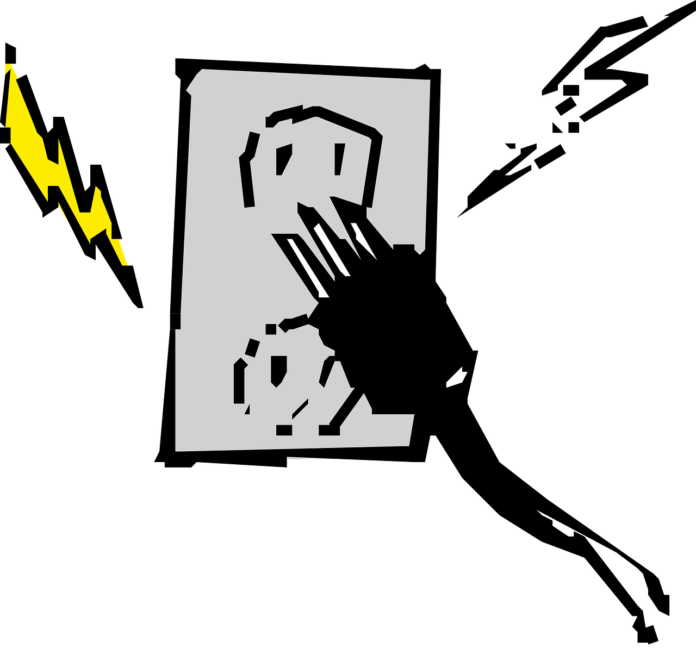
  • Cover unused outlets so that children are not tempted to stick their tiny fingers in and get shocked.
  • Use safety gates if your home has stairs.

Kitchen

  • Lock your stove knobs. You never know when your kid will decide to ignite your stove burners!
  • Secure low drawers in your kitchen, especially if they contain dangerous items like scissors or knives.
  • Make sure electric appliances are unplugged when they are not in use.

Bathroom 

  • Install safety locks and latches on your toilet so that your child doesn’t get into them. 
  • Place a rubber slipcover next to the bathtub to avoid your child slipping and falling when the area is wet. 
  • Make sure that the cabinet containing chemicals in the bathroom is locked.

Dining Room

  • Make sure that glass objects are stored out of reach. 
  • Check if your child’s highchair features a safety strap between the legs. 

Content provided by Safehome.org, an organization driven to educate people and help them find the best products and services to protect themselves, their homes, and their families.

How to Keep Kids Active in the Winter

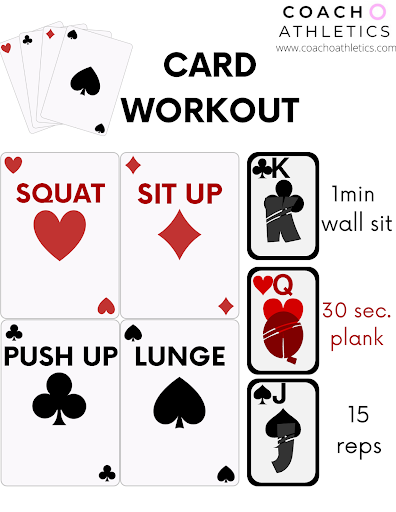
A card workout is a fun way to get the whole family to participate in exercise.

It’s no secret that with the pandemic, lockdowns, and spending more time inside our homes, most people (including our kids) have become more sedentary.

Under normal conditions, youth-athletes can often struggle during the winter to maintain physical activity until the warm weather returns and they can venture outdoors. At times, even as a trainer, I can struggle as the winter months set in!

It’s tempting, especially in places like Michigan, to stay cuddled under some blankets to stay cozy and warm. But, what’s another way to warm your body? Get your sweat on! 

I work with young athletes daily to motivate and empower them by building their confidence through movement. Young kids naturally want to be active; our bodies are made to move.  Providing opportunities to step away from screens and get oxygen flowing throughout our bodies has been proven beneficial in many ways for both children and adults.  

Changing your kids’ mindset when it comes to exercise is a great way to encourage them to move without a fight. And, YOU have the power to be an excellent role model for your children in creating a healthy lifestyle.

Turning Excuses into Routine

NO SPACE. 

To stay active in the winter, you don’t need equipment or a facility. Working out indoors can be as simple as moving the couch and coffee table out of the way and using your living room as your workspace. 

NO TIME. 

Look at your family’s schedule and see what could be adjusted or even combine activities with the workouts. They could do the workout with the TV (jumping jacks during commercial breaks) or music playing in the background if that motivates them or find ways they can multitask with their workouts. Make it a positive experience.

LACK OF MOTIVATION.


This is where YOU come in. Make it fun and set a positive example. Get the kids excited about the workout, and do the movement with them. Winter months naturally make this challenge even harder. 

How to get your kid excited about the workout

  • Create a routine within your schedule! – Consistency and expectations help to minimize pushback. Create a movement routine with your family and hold each other accountable. Many of the kids I work with have a weekly appointment with me, so we’re able to set expectations and goals, knowing when we will meet next. 

Ideas:  After-dinner family walk / Weekly adventure (change up the activity!) 

  • Make it a family event! Not only is working out with others more fun and engaging, but it keeps everyone motivated and accountable. Kids thrive in the presence of role models. Doing the workouts with your kids/family means that you are also checking off your workout box for the day!  Tie movement into your other activities: take the stairs instead of the elevator, add push ups to the board games you play, or simply walk to school/other locations when you can.
  • Let the kids create the workout! It’s so important to give kids the autonomy to build and create something on their own. Let them choose exercises they enjoy, know how to do, and feel confident performing. That helps them to establish a positive attitude towards working out. 
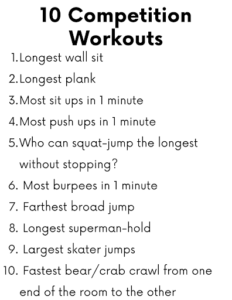
  • Make it fun! Whoever said fitness can’t be fun has left the chat. Make the workout into a game, use timers, or make it a competition!

Card Workout – all you need for this workout is a deck of playing cards!  Click HERE to download the full Card Workout with directions and a blank template so your kids can create their own workout!

Use Timers – It allows kids to distract their brains to focus on a fun goal. 

Examples: 30 seconds work / 30 seconds rest  OR 

“Let’s see how long it takes you to run 10 laps.”

Competition – Brother vs. sister, Parents vs. Kids

Winter Exercise Ideas for Kids

Lean into the weather : Sledding + Ice Skating + Skiing + Snowshoeing 

+ Build a Snow Fort 

Create an Indoor Obstacle Course

Join a Local Indoor Organized Sport

Go on an Outdoor Winter Hike with a Scavenger Hunt

Finding ways to empower kids and motivate them to build their confidence is my passion.  Please email me (Coach O) with any questions.  For more information on my services and scheduling workouts, please visit my website or follow me on Instagram.

Family Favorites Nominations 2021

The polls are open! It’s that awesome time of year where we ask “what was your favorite” with the Family Favorites nominations.

Each year, we love seeing who shined the brightest. It’s the perfect chance for your favorite, family-oriented place to get the recognition they deserve!

Enter your favorite business, company, non-profit, or person into the entry below to nominate them as being one of this year’s Family Favorites. Who has stood out amidst COVID? Who had the best teaching curriculum? What was the best takeout or dine in experience you had this year? We want to know!

You can submit as many or few entries into the corresponding categories below to nominate your favorite local businesses and people. Nominations will be open to the public until February 15, so be sure to support your favorites before then! The top six nominees will make the final ballot, which will go live for voting on March 1!

We can’t wait to see who is your family favorite this year!

Advertiser Collateral Here