Home Blog Page 16

Back to School Guide

New year, new routines, new challenges. Our Back-to- School Guide covers homework hacks, the debate over whether parents should track their kids, and how tweens and teens can navigate the ever-changing world of friendships. Everything families need to start the school year feeling prepared, connected and confident.


The “In Between” Years: Helping adolescents navigate friendship, conflict and belonging

By Brandy Browne

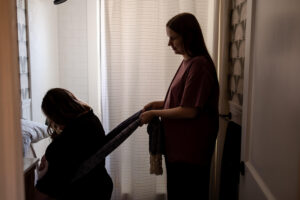
Parenting a child in middle school is emotionally complicated. One day, your child is happily chatting about recess and asking for help packing their lunch; then the next day, they are deeply invested in friendships, social circles and whether someone left them “on read” on Snapchat. The “in between” years— early adolescence, the tween and early teen years— are a season of tremendous growth, but also tremendous vulnerability. Friendships become more layered, peer approval carries more weight than familial approval and many children are simply trying to figure out where they belong socially.

Belonging in the “in between” years

According to Scott Buker, principal at Perrysburg Junior High School, much of what parents observe during this phase is rooted in one core need: belonging. Humans are wired for connection with peers, and there is no phase of development where this becomes as painfully obvious as the “in between” years.

“In junior high, students are exposed to different peers and that generates different interests, hobbies and connections,” Buker explains. “You start to see the birth of social circles a bit and everyone wants to be included into one of those circles, but at the same time, they have fear over the possibility of being excluded from those circles.”

Emotional highs and lows

That push and pull can create emotional highs and lows not only within peer relationships, but also at home. Parents may notice their child becoming more sensitive, more reactive or suddenly devastated by what may seem like small social moments to adults. These years are marked by significant social “firsts” as your child is learning to navigate the intense feelings stemming from a desire to belong for the first time. “Everyone is seeking a sense of belonging in some shape or form,” Buker adds, “and that leads to a whirlwind of relationship emotions.” Many parents may feel tempted to immediately jump in and fix friendship struggles. However, Buker encourages families to reframe conflict as a learning opportunity rather than something to avoid entirely. “The first step is understanding and embracing the idea that their child will have conflict,” he said. “Learning to navigate and work through the stress of that conflict equates to personal growth and helps build long-term resilience.”

Direct Communication

In an age dominated by texting and social media, many children (and adults) struggle with direct communication. Small misunderstandings can snowball quickly when conversations happen through screens instead of face-to-face interaction. Buker encourages parents to coach children toward open, honest conversations when conflict arises. “Encouraging their child to have open and real conversations, face-to-face, with their friends when conflict arises and showing them that vulnerability doesn’t show weakness and that it is important for others to connect through empathy,” he explained.

Children often need guidance in learning how to express hurt feelings appropriately, apologize when needed and move forward after disagreements. “I think too many times children let things linger and they dwell on the feeling it causes as opposed to being direct and honest about what they felt,” Buker said.

Parents can help by modeling healthy communication themselves or even role-playing difficult conversations with their child.

Trusting instincts

At the same time, parents often wrestle with a harder question: When is friendship conflict normal, and when is a relationship unhealthy? Buker said occasional stress in friendships is not necessarily a bad thing. In fact, working through disagreements with established friends can strengthen emotional skills like empathy, perspective-taking and conflict resolution. However, repeated negative interactions or sudden shifts in behavior may warrant a closer look. An important concepts for students is the difference between genuine inclusion and being “used” socially. “Oftentimes, the student will acknowledge to me that they ‘don’t feel good,’” he said. “That’s a strong indicator that it’s time to move on from that new relationship.”

For parents, this can be an opportunity to help children learn to trust their instincts. If a friendship consistently leaves a child anxious, excluded, embarrassed or emotionally drained, those feelings deserve attention.

Parents often have concerns about bullying during the middle school years. Buker emphasizes that understanding the relationship dynamic is critical before jumping to conclusions. “I think sometimes behaviors can get misinterpreted, so it’s important to understand the context and dynamics of those relationships,” he explained.Not every rude interaction or disagreement rises to the level of bullying. Sometimes children engage in certain behaviors while trying to gain attention or fit in socially. In those cases, helping a child communicate that a behavior bothers them may resolve the issue quickly.

Buker also warns that there are clear signs parents should take seriously. “If a child is feeling intentionally targeted, it’s repeated, and done with the intent to hurt or embarrass then those are obvious signs of bullying and needs to be reported to an adult,” he said.

The middle school years are often less about avoiding discomfort and more about helping children develop the emotional tools to navigate these enhanced emotional times Parents can provide a safe place to process those experiences when the social world feels uncertain. For many tweens and teens, knowing they are fully accepted at home becomes the anchor that helps them weather the ever-changing social landscape of adolescence.


Back to School Homework Hacks: Local parents share their best tips

By Mary Rose Kulczak

Back-to-school means back to routines like packing lunches, early bedtimes and backpack checks. We spoke with area parents to get some tips and tricks to help school kids maintain healthy habits for the academic year ahead. From dedicated work spaces to rewards and snacks for brain fuel, we found some great ideas to make this school year the best one yet.

Krystal Szabo

 

Mother of two children; Owner of Green Bubble Gorgeous

The greatest system in our house is our chip reward system. Our kids earn chips for completing homework, age-appropriate chores and good deeds. They can cash in the chips they have earned for screen time, an extra bedtime story, a trip for ice cream and more.

Parenthood is our greatest opportunity to prepare little people for real life, and teaching them early that rewards are earned, not given, is one of the best lessons we can pass along.

LaKedria Lozano

 

Homeschooling mother of four; Master of Arts, Education

Just a few tips from a teacher.

1. Make it fun! Play games with the kids.
2. Divide the material to get kids engaged more quickly! Try taking frequent breaks especially if you have a resistant kid.
3. Talk to your child’s teacher if you feel that the work is excessive and your child isn’t able to complete it.

Vincent Flowers

 

Father of Zion and Zoe; Entrepreneur, industrial engineer and author of Zoe and Zion Love to Bounce and Zoe and Zion Love to Build

We have a points system. Our kids love their devices, so we have an earning time program that if they do things like homework, small chores, outside play for 30+ minutes they can earn additional tablet time.

Taylor Holloway

 

Mother of Andrew, Hannah, Moriah and Norah; Owner of Callisto Terra LLC

We have snacks on hand as soon as they get home! They get to choose, too. Snacks help everything! We also make sure the space for doing homework is clear & consistent. They do their homework in the same spot each day.

We’re readily available for them — to help or to give them a break! They just spent all day at school. We snack & then start homework to knock it out.

We watch them, if they get overwhelmed, we take breaks. We’ve even gotten up early to finish homework & given them the evening to relax. Sometimes I’m overwhelmed by work I have to complete & need a break. I try to remember that the kids may feel the same way. We’ve also spoken with teachers about overloading the kids. Some teachers have agreed to provide a homework sheet early that includes the assignments they need to complete by the end of the week.

It’s all conversations & adaptation! Each kiddo is different so each kiddo will be handled differently! But we do try to keep the atmosphere and the snack option the same.

My oldest daughter has ADHD & needs to take breaks a lot more often. Sometimes, when her day is really rough, we let her do her homework in her room. Adapting!


The Digital Umbilical Cord

 

By Nathan Jacobs

In the wake of Ohio House Bill 250, which required schools throughout Ohio to create and enforce formal cell phone policies, digitally connected parents were left with a conundrum: How can you track students at school if cell phones are required to be powered down?

The “old-school” mindset — once you put them on the bus in the morning, they are safe and sound at school until they return home in the afternoon — is adopted by many of us that made it safely through our school years under those conditions. However, this is the digital age and parents enjoy the peace of mind that comes with knowing their kids’ real-time location. There are many reasons why that knowledge is pertinent, ranging from ensuring a student isn’t skipping class to human trafficking prevention.

Since the HB250 mandate took effect, Toledo-area schools have complied in various ways. Toledo Public Schools high schools have employed magnetically locking Yondr pouches to make phones physically inaccessible until the final bell, while the TPS K-8 buildings use morning lockboxes for student phones to make phones unavailable. Perrysburg Schools and Anthony Wayne Schools have taken an “out of sight and powered down” approach where phones must be turned off and stored in lockers or backpacks throughout the day.

With restrictions in place, parents yearning for a digital connection are scrambling to find ways to track their students, while still following the rules. Smartwatches seemed like the obvious workaround, but unfortunately – because they have screens and are not inherently silent – they fall under the same rules as cell phones.

Technology offers an option

Rewind to 2014: a startup called Tile released a small electronic device that connected to your cell phone via Bluetooth. This device could be attached to items prone to go missing — like keys, backpacks and luggage — tracked with an app.

These inexpensive devices have seen huge advancements over the past decade. Tile is still around (now owned by Life360), but most major phone manufacturers have their own versions, most notably Apple AirTags and Samsung SmartTags. Though functionally similar, these trackers are now much more reliable and, more importantly, precise. Even with your student’s cell phone powered off, these tracking devices provide a real-time location.

Parents can also opt for true GPS tracking devices like Jiobit or AngelSense. These devices connect directly to cellular networks, completely independent of a cell phone. Historically, these devices were reserved for those with special needs, the elderly, or — with Jiobit — pets. However, with 26 States mandating some form of restriction on cell phones in K-12 schools, these devices are quickly gaining traction across the country.

Ultimately, Ohio’s new law wasn’t meant to create a safety issue; it was aimed at reducing distractions caused by cell phones in schools. And it seems to be working. School administrators across Northwest Ohio have been celebrating the return of verbal socialization. Many districts report noticeably louder lunchrooms and hallways as schools return to a more analog experience.

But for parents who don’t want to cut that digital umbilical cord, these small, silent trackers offer a reliable way to maintain peace of mind while still following the rules. 

 

Baby and Maternity Guide

First Summer with an Infant

By Chelsea Devona

Summer is a wonderful season, but it can also be a confusing and even dangerous time for raising an infant. How much sun exposure can the baby get? How do you navigate exposing them to the elements? Can you leave the house on a hot summer day without risking bug bites or excessive heat? This guide lets you feel confident, making informed decisions about taking your baby out into the world this summer.

Sun exposure

The American Academy of Pediatrics recommends that infants under 6 months be kept out of direct sunlight — caregivers are urged to use an umbrella or other source of shade to shield them from the sun’s rays. Older babies should also be kept out of the sun as much as possible, especially between the hours of 11am-3pm, when the sun is at its peak.

If it’s not possible to protect them physically with shade, the AAP recommends that sunscreen is applied to small areas of the baby’s body, such as the face and hands. It is also recommended to dress them in long sleeves. While sunscreen is not recommended for babies under 6 months, it’s use is preferable to burning.

Do not cover the stroller or carseat with a blanket, as this can lead to over-heating.

AAP also recommends that infants wear sunglasses whenever they are in the sun for an extended period of time. So when you’re going out on a summer day, dress your baby in lightweight breathable long sleeves and bring an umbrella, or at least a hat, if you may be in an area with no shade.

Bug bites

Most bug bites on an infant won’t be serious, although they may cause your baby discomfort. Many bites produce itchy red bumps. On a baby under 6 months, you can treat with a cold pack and try to prevent them from scratching the bite by covering it with a bandaid while keeping their nails short. Antihistamines are generally only recommended for older babies. You should call your pediatrician if the bite looks infected, is near the eye, is causing severe swelling, if your child has trouble breathing or develops hives.

Consider using mosquito netting over the stroller to reduce the need for insect repellent. Dressing your baby in long sleeve clothing with closed-toe shoes also protects them. Parents are advised by the AAP to weigh the risks of exposure against potential serious illness spread by insects and the possible risk of absorbing chemicals from bugspray into the body. It is recommended that parents of newborns and premature infants be especially cautious about using insect repellent, using other forms of bug protection instead when possible.

Late sunsets

Once it’s evening, usually after 5pm, you no longer need to worry about sun exposure for your child. However, the long summer days may affect your baby’s sleep schedule. If your baby is having difficulty falling asleep because it’s light out, try installing blackout curtains where the baby sleeps. If your baby is still struggling, begin your bedtime routine earlier in the room with blackout curtains, perhaps by reading books for a half hour before beginning bedtime.

Excessive heat

Excessive heat can be dangerous for everyone, but it is especially dangerous for infants. Infants cannot regulate their body temperature like adults, so they are highly susceptible to heat. The most obvious element is to avoid dehydration, which is the most common heat related health issue in children. Infants lose body fluids quickly; look out for fewer than 6 wet diapers in 24 hours, a sunken soft spot on their head and no tears when crying.

Breastfed babies do not need water until they’ve started eating solid foods, but they may want to breastfeed more frequently when it’s hot out.

Signs that your child is becoming dangerously affected by the heat include faintness, extreme tiredness, a headache, a fever, being intensely thirsty, experiencing nausea, vomiting, hyperventilating and experiencing skin numbness or tingling. Children can become very ill when left in a closed car, even if the temperature outside is not too hot the closed environment acts like an oven, so never leave a child unattended inside a vehicle.


Where to get an ultrasound in NWO

By Melissa Lee

Finding out you’re expecting comes with a whirlwind of emotions—excitement, anticipation and a deep curiosity to see the life growing inside you. For many families, ultrasound appointments are meaningful milestones, offering first glimpses, movements and features that make it all feel very real. Today, beyond traditional medical visits, a variety of local businesses provide unique, family-centered ultrasound experiences designed to celebrate these moments in a personal and memorable way.

Whether you’re looking for a cozy boutique setting, advanced 3D and 4D imaging or even the convenience of a mobile service that comes to you, here’s a guide to some of the trusted places to see, connect with and celebrate your baby before the birth.

Baby Bloom Ultrasound Boutique
3100 Main St. #1599 Maumee | 419-770-2727
babybloom3d.com

At Baby Bloom Ultrasound Boutique, expecting families are invited into a warm, serene space. Known for a heartfelt approach and spa-like atmosphere, Baby Bloom offers advanced 3D, 4D and HD Live ultrasound experiences that allow parents to connect with their baby before birth. Skilled ultrasound technicians guide families through a personalized experience, seeing baby’s face for the first time to begin forming a bond.

Sneak Peek 3D
148 E South Boundary St. Perrysburg | 567- 331-4215
sneakpeek3d.com

At Sneak Peek 3D, expecting families are welcomed into a modern, comfortable studio. Founded by a Registered Sonographer with more than a decade of experience in abdominal and OB/ GYN imaging, the boutique blends medical expertise with a heartfelt, personal touch. Offering ultrasound sessions from as early as 7 weeks through 39 weeks, Sneak Peek 3D provides reassurance scans and early gender determination as well as detailed views of baby’s facial features.

First Hello Ultrasound Studio
6450 Weatherfield Ct #1B, Maumee | 419-866-2833
firsthello3d4d.com

At First Hello Ultrasound Studio, families are welcomed into a warm, comforting space for the first glimpse of their baby. Founded by a mother who understands the excitement, anticipation and occasional anxiety of pregnancy, the Maumee studio blends advanced 3D and 4D imaging with a personal and compassionate approach. Each visit is designed to create a meaningful bonding experience, in a cozy environment that invites loved ones to share in the joy. To ensure the best images, families are guided with preparation tips, including staying well-hydrated and enjoying a light snack before their appointment, to encourage baby’s activity.

My Sonogram
419 Mobile Service, Maumee | 419-552-5654
mysonogram419.com

My Sonogram 419 Mobile Service provides an ultrasound experience which brings comfort, convenience and unforgettable moments right into your home. Designed for expecting families who want a more personal setting, this unique mobile service transforms a familiar space into a place where you can connect with your baby in a relaxed, meaningful way. With more than 25 years of experience, the team combines professional expertise with a caring, compassionate approach. Offering 2D, 3D, 4D and HD ultrasounds, My Sonogram 419 provides the convenience of mobile service with no waiting rooms or travel. With flexible scheduling and affordable pricing, Sonogram 419 is an accessible option for families at every stage of pregnancy.


Midwives and Doulas Provide Maternal Health Care to Local Families

By Mary Rose Kulczak

Families in Northwest Ohio have many choices when it comes to maternal health care. Obstetricians, nurse practitioners, midwives and doulas can all become part of a team that works with parents to design a birth plan. But there can be confusion regarding the overlap of services provided by these caregivers. Christine Scarlett, a local doula and lactation consultant, explains the differences between the care provided by midwives and doulas.

“While there is some overlap in services of midwives and doulas, the major difference is that midwives are health care providers caring for the clinical/medical needs of women and babies during pregnancy, labor, birth and postpartum. Doulas are non-medical providers of education, physical and emotional support, and advocacy for the woman and her partner,” Scarlett said.

These are some of the Midwives and Doulas serving Northwest Ohio/ Southeast Michigan:

Lauren Coats


Lauren Coats is a doula working in Northwest Ohio, Northeast Indiana, and Southern Michigan. As a mom of three, she has experienced birth in a hospital, birth center and at home— each one uniquely beautiful. She believes every family’s story deserves to be honored and she is passionate about planning births for others. She offers both birth and postpartum doula support. sites.google.com/view/laurencoatsdoula

Melanie Krempec

Melanie Krempec is an IDI-certified birth and postpartum doula serving Northwest Ohio. She provides family-centered care throughout pregnancy, birth and postpartum, and believes doula support should be accessible to all families. Melanie offers flexible, suggested rates to help meet clients and their financial restrictions and is also available for virtual/online doula care. Her services include prenatal visits, on-call availability, continuous labor support, and postpartum care. https://doulamatch.net/profile/39434/melaniekrempec

Meredith Edwards

Meredith Edwards CD(DONA), LCCE is a certified childbirth doula and Lamaze childbirth educator at Birth with Meaning. She takes on doula clients in eight NWO counties (Erie, Hancock, Huron, Lucas, Ottawa, Sandusky, Seneca and Wood) and teaches childbirth classes at Flatlands Spine & Rehab in Fremont. birthwithmeaning.com

Erin Marten


Erin Marten, DNP, MPH, CNM is a certified nurse midwife and founder of Solace Health and Solace Health & Wellness, where she provides inclusive, evidence-based reproductive care with a focus on fertility, gynecologic health and midlife wellness. Her work centers on reproductive justice, with particular emphasis on expanding access to midwifeled care for those who exist within traditionally medically marginalized communities. Erin integrates clinical expertise with public health leadership to advance equitable, community-rooted models of care in Northwest Ohio. solacehealth419.com

Joselyn McCann

Joselyn McCann is a Full Spectrum Doula, certified by Birth with Spirit, who serves clients in Northwest Ohio/ Southeast Michigan, and, virtually, throughout the world. Joselyn is also currently a student midwife at Midwife’s College of Utah. Her services include care planning sessions, on-call labor support, postpartum day or overnight care, referrals to other birth professionals, birth photography, and bereavement and loss support. Joselyn offers free consultations for prospective clients, and will soon be able to accept Medicaid to ensure that her care and services are accessible to all. Her care is trauma informed and personable, and tailored to each family’s unique needs and desires. birthwithspirit.com

Christine Scarlett

Christine Scarlett is a wife, mother of seven, and grandmother of many. She is a former pediatric nurse who pivoted to birth and postpartum doula work after decades as a home educator. She is also a Certified Lactation Consultant and a Certified Educator of Infant Massage. She enjoys helping parents build sensible baby registries and organizing their homes for success with their growing families. Search Christine Scarlett on doulamatch.net.

Hanna Rabe

Hanna Rabe is a certified birth, postpartum doula and infant care specialist serving families across Northwest Ohio and Southeast Michigan. As a pregnant mother with two boys, she has personal experiences with labor and postpartum recovery that have deepened her empathy and commitment to her work. Rabe offers birth, postpartum doula support and postpartum meal preparation. hannarabedoula.com

Keana Lofton


Keana Lofton is a doula and Community Breastfeeding Specialist providing pregnancy, birth and postpartum support to families across Southeast Michigan and Northwest Ohio. Through her practice, KENDI, she offers holistic, family-centered care with a focus on education, empowerment and nurturing mothers beyond the birth experience. betterbirthjackson.com/keana-lofton

Danielle Nicole Reddick


Danielle Nicole Reddick is a Northwest Ohio–based full-spectrum and State of Ohio Doula, miscarriage and pregnancy loss doula and social worker (MSW). She provides compassionate, trauma-informed support to families during pregnancy, birth, and postpartum. Danielle also specializes in emotional support, advocacy, and resource navigation, centering care for Black and marginalized families. She is the Founder and Executive Director of Tiny Hearts Remembered, Inc., a nonprofit supporting families impacted by loss and maternal-infant health disparities. Supporting families through birth, postpartum and loss has been one of the greatest highlights of her life as she believes that no one should navigate either journey alone. tinyheartsrememberedinc.org

Hannah Tansel

Hannah Tansel is a native Toledo birth and postpartum doula serving Northwest Ohio and Southeast Michigan. Hannah is a DONA certified birth doula and a Lamaze Certified Childbirth Educator. She is a VBAC Mom with two children of her own who loves educating and empowering families so they can have their healthiest and happiest birth possible. hannahtanselbirthdoula.com

Marcy Headley

Marcy Headley is a birth doula, photographer and ‘Home-Birth Midwifery Apprentice’, currently precepting with a wonderful midwife team in Tiffin, Ohio. She supports families throughout Tiffin’s surrounding areas near Fremont, Port Clinton, Sandusky and Huron. maplerosephotography.mypixieset.com


Toledo Parent Family Favs 2025 Winners!

Toledo Parent readers showed their love for their favorite local businesses by nominating and voting for them in Toledo Parent’s annual Family Favorites contest. Use this list as a guide, compiled by Toledo Parent readers, to the best restaurants, schools, activities and more throughout the area. Thank you for reading and for participating in this year’s Toledo Area Parent Family Favorites!

Letter From the Editor: Summer Days Fueled by Sundaes

For my family, the middle of summer is full of warm days, weekend trips to the beach and lots of ice cream. My two-year-old has been soaking up the sun at the Toledo Zoo and the Metroparks. She even got a taste of her first Buckeye Sundae from Mr. Freeze.

Even though it’s the peak of summer, back to school time is near. Easing back into school prep can start the school year more smoothly.

Make a check list of everything you have to do before the school year starts, and slowly make your way through that list. Allow yourself to enjoy summer, rather than being stressed about shopping for school supplies. Our Back to School Guide includes relevant topics to consider for parents and caregivers, along with helpful tips for the new school year. In this issue, we also feature resources for new and expecting parents in our Maternity and Baby Guide which provides helpful resources for various stages of pregnancy and early parenthood. One of the stories focuses on tips for navigating your infant’s first summer. My daughter was born in June and I remember having many questions about my infant’s involvement with summer activities.

And remember, online exclusive content and stories from past publications are available at toledoparent.com.

Enjoy the summer,

Mary Genson
Assignment Editor
Toledo Area Parent

July/August Giveaway