

Truancy in Toledo Area Schools: School Officials Speak Out

When it comes to school attendance, the saying is true: miss a day, miss a lot.
What happens when students miss more than just a day? While sickness and other excused absences are to be expected, what happens when a student has multiple unexcused absences? How many missed days are too many? What are the schools doing to combat truancy and highlight the importance of daily and weekly attendance?
Ohio’s laws regard habitual truancy as any student who has missed more than 30 hours (five days) of unexcused absence, 42 or more hours (seven days) of unexcused absence in one school month, and/or 72 or more hours (12 days) of unexcused absence in one school year.
We spoke with administrators of local schools to hear their plans to keep students on track.

Rebecca Schwann, Communications Specialist
Is truancy a problem in the schools? Anthony Wayne Local Schools typically averages around 92-98% of students being at school on any given day, so thankfully, truancy isn’t usually a huge problem for us.
Has there been an increase/decrease in truancy in recent years? Student attendance fluctuated greatly over the past several years due to illness and other factors related to the COVID-19 pandemic, but the number of students identified as habitually truant within our district has remained relatively steady.
What are the policies in place regarding truancy? The Anthony Wayne Local Schools Board of Education’s attendance policy requires enrolled students to attend school in accordance with Ohio’s laws.
What is the district doing to combat truancy? Some individual students struggle with attendance, and those situations are handled individually due to the wide variety of reasons that a student may not be regularly coming to school. As such, Anthony Wayne Local Schools does not have a district or building-wide attendance program or incentives in place to promote regular school attendance.
Our school administrators, counselors, and school social workers address any individual attendance concerns with students and their families should they arise, and work to provide the necessary support and resources to help ensure students are attending school consistently.

Melissa McDonald, Director of Student Support Services
Is truancy a problem in our schools? Poor attendance directly affects academic performance. It is an issue schools are faced with, but when you are able to break down barriers and get to the root cause of the issue, it is easier to provide support to ensure success.
Has there been an increase/decrease in truancy in recent years? The issue of truancy has always existed, but I feel that the way we are addressing it has changed. The days of sending a truancy officer to a house are long gone. The schools are trying to find more proactive ways to improve the attendance of children and assist families.
What policies are in place regarding truancy? Our policies are based around Ohio Revised Code which requires that a parent/guardian receive notification when their child has missed either 38 hours of instruction in one school month or 65 hours of instruction in one school year. When a student reaches one of these levels, a letter is mailed home by the school to notify the parent/guardian.
When a student reaches the level of habitual truant, an Attendance Intervention Plan Meeting is held at the school. The goal of the AIP is to identify barriers and resolve attendance issues through interventions. The AIP is then monitored by the building.
If attendance does not improve, the family is referred to Student Support Services to meet with the Attendance Hearing Officer. At this point we are looking to add more interventions and use legal action as a last resort.
What is the district doing to combat truancy? Attendance improves when schools engage families in a positive way. Our district has added a district social worker and a psychiatric nurse this school year to assist with some of the social-emotional needs of families. The social worker has been a huge asset in connecting families to community resources.
We also follow our building Positive Behavioral Interventions and Supports (PBIS) expectations and look at restorative practices to solve the problem versus punitive consequences to address the issue.
 Christina Harper, Licensed Social Worker
Is truancy a problem in our schools? Truancy will always be an issue. However, districts have been diligent in building programming in order to either prevent it, or provide support to the family.
Considering we are just coming off a global pandemic, and the impact that had on our students and families, we have had an opportunity to increase the support and interventions to address this issue.
Has there been an increase/decrease in truancy in recent years? That is hard to answer because the last few years have been so impacted by the pandemic. I can say, however, that it seems to be improving a little bit each year the farther we get from 2020.
What are the policies in place regarding truancy? The Ohio Department of Education has established guidelines that each school district must follow. This includes letters to families and team meetings when necessary to discuss specific interventions that will help in each case.
What is the district doing to combat truancy? In addition to the already established programs in our district, we have implemented a full school social work department that makes home visits as well as a student and family engagement liaison who meets with students and helps to keep them and their families engaged. Our local county agencies have also made changes to their programming as we are all collaborating to support our families and eliminate barriers to accessing education.
Our district has started using a program called SafeArrival which calls parents/guardians when the student(s) are not present at school.
 Is truancy a problem in the schools? Toledo Public Schools saw an increase in truancy in recent years, most likely linked to the COVID-19 pandemic.
What is the district doing to combat truancy? Toledo Public Schools began implementing the Get Connected Truancy Prevention Program in an effort to curb excessive absences. Each school was assigned an Attendance Champion to work with the truancy intervention team of students, parents and staff. The Attendance Champion checks on students and helps them and their families get connected to community resources. The Truancy Intervention Team develops an individualized plan for each student.

Kim Eltschlager, Attendance Specialist
Is truancy a problem in the schools? Truancy has definitely increased, and since the pandemic it has skyrocketed.
What are the policies in place regarding truancy? Washington Local Schools employs a three-tier approach. In the first tier, we employ teachers and staff as well as the student. It starts in the classroom. Do kids feel safe and secure? Is the classroom warm and welcoming? In the second tier, we send a 5, 10, and 15-day attendance letter to the parents, notifying them if there is a problem. In the third tier, the district and the attendance specialist get involved to set up a meeting with the parents and get a plan in place.
What is the district doing to combat truancy? This spring, Washington Local Schools will be partnering with attendanceworks.org to conduct an attendance audit and diagnosis. Our goal for next year is to get the community involved as well.
Toledo Area Expert Offers Tips on Car Seat Safety
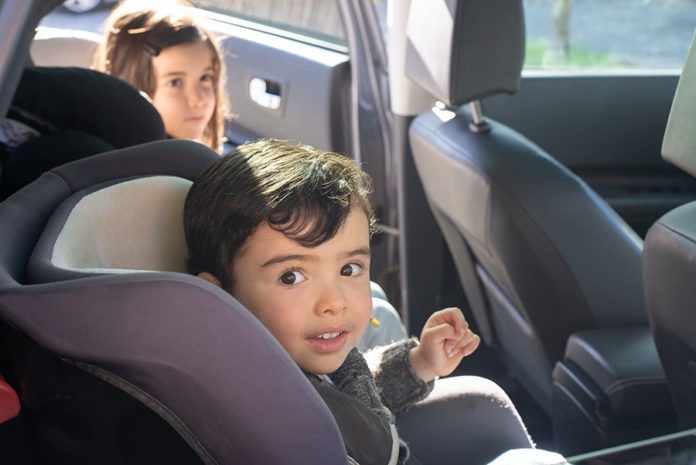
Rear-facing, forward-facing, boosters, convertibles … There are a lot of choices when it comes to car seats for infants and children. How can parents be certain they are choosing the right seat that will keep their child safe?
“Every car seat sold on the US market meets the current U.S. safety standards, no matter what brand or price,” said Heather Kelso, a certified car seat safety inspector with Sylvania Police Department. “Those standards have been met only after the manufacturer performs the crash tests required. The height and weight, as well as age, are specific for the car seat.”
Rather than relying on a child’s age, Kelso cautions parents to take their physical size into account when choosing a car seat.
“As a child grows, their age may not factor in as much as their height and weight because each child grows differently.”
 Some Assembly (And Installation) Required
Purchasing a car seat is only the first hurdle. The next hurdle? Installing the car seat properly in the family vehicle.
“Following the instruction manual for the car seat and checking the vehicle’s manual (usually under ‘child restraints’) is the best installation tip I can give,” Kelso offered.
“The height, weight, age, as well as location where the seat is installed in the vehicle, all factor in. The best installation depends on those details, as well as what works for the family. A family may have multiple car seats or special needs, such as what side a school drop–off is on or who travels in the vehicle. All of these affect the installation. There is no general best installation type. It all depends on the seat and the vehicle.”
When In Doubt, Check It Out
Kelso urges parents to have their car seat installation inspected by a certified technician.
“Almost every seat that I have checked that has been installed by a parent or caregiver has been incorrect,” Kelso said. “Car seat installation may seem easy unless you realize there are many factors that go into a proper installation. There are so many different car seats and so many different vehicles. Making a seat fit into a vehicle can be tricky.”
An inspector will check both the car seat manual and the vehicle owner’s manual to ensure that there is less than one inch of movement from side-to-side.
“Each installation is like a little puzzle to make sure the seat and vehicle work together to get the perfect fit.”
 Ages and Stages
A child will need a variety of car seat options as they grow. Kelso suggested a perfect time to consider the possibility of a car seat change.
“At each child’s well visit, I ask the parents to take note of their child’s height and weight. As they strap in their child after that visit, I tell them to check the recommended height and weight on the car seat label. That way, they will be more aware of when it’s time to transition to a seat that is compatible.”
Sylvania residents can make an appointment Monday through Friday between the hours of 9am to 4pm by contacting the Sylvania Police Department at 419-885-8902.
In Toledo and the surrounding area, parents can contact Safe Kids Greater Toledo at 419-291-7945 to schedule an inspection at the ProMedica Russell J Ebeid Children’s Hospital.
For more information on car seats and inspection sites, visit nhtsa.gov
Did you know?
- 325 children under the age of five are saved by car seats every year.
- Car crashes are the leading cause of death for kids 1-13.
- 46 percent of car seats and boosters are used incorrectly.
- 42 percent of children killed in car crashes in 2020 were unrestrained.
- Children should remain in the back seat at least through age 12.
- A heavy winter coat can impede the car seat’s harness mechanism. It is best to cover a child after they are strapped into the car seat.
Do not hang or attach anything to a car seat or headrest. Items can become an airborne projectile in a crash.
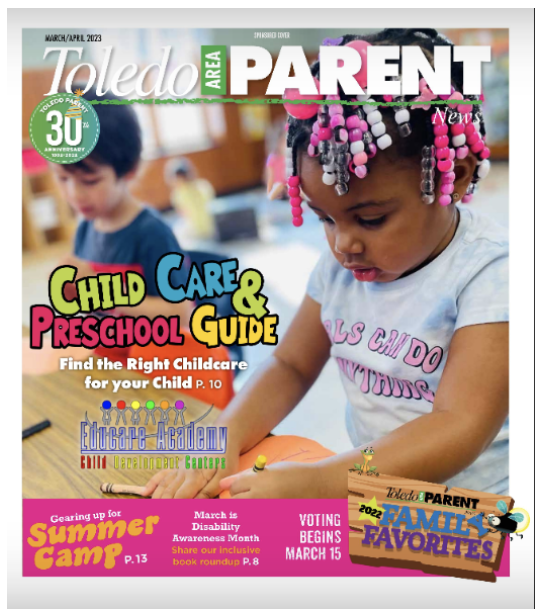
BeInstrumental in Need of Instrument Donations for Underserved Local Youth

BeInstrumental is a local charity dedicated to promoting the availability of musical instruments, education, and performance. The organization was established in 2008 as a response to an article by the Toledo Blade that emphasized a lack of musical resources in Northwest Ohio and Southeast Michigan.
Right now, the organization is in need of used flutes, trumpets, violins, guitars, saxophones, trombones, clarinets, and drums that can later be distributed to underserved youth. Instruments that are donated will contribute to the BeInstrumental’s Instrument Bank, a warehouse of refurbished instruments that are donated by community members and then distributed to local schools.
After being awarded a $50,000 grant through the Pepsi Refresh Project in 2010, the Instrument Bank continues to operate as a center of instrument distribution for students in need. BeInstrumental’s Instrument Bank is just one example of the organization’s initiatives to improve music opportunities for local students.
Through partnerships with various community organizations such as The Boys & Girls Clubs of Southeastern Michigan, The Friendly Center, The Maritime Academy, Queen of Apostles, and Wildwood Environmental Academy, BeInstrumental has provided local youth music instruction opportunities that they might not otherwise have had. Collaborations between BeInstrumental and these educational partners have also enabled the charity to organize recitals and performances for underserved youth, who would otherwise have few opportunities to showcase their musical talents.
To learn more about BeInstrumental, visit their Instagram @beinstrumental.419 or their website.
Trains on Rt. 20, hosted by ProMedica’s The Commons
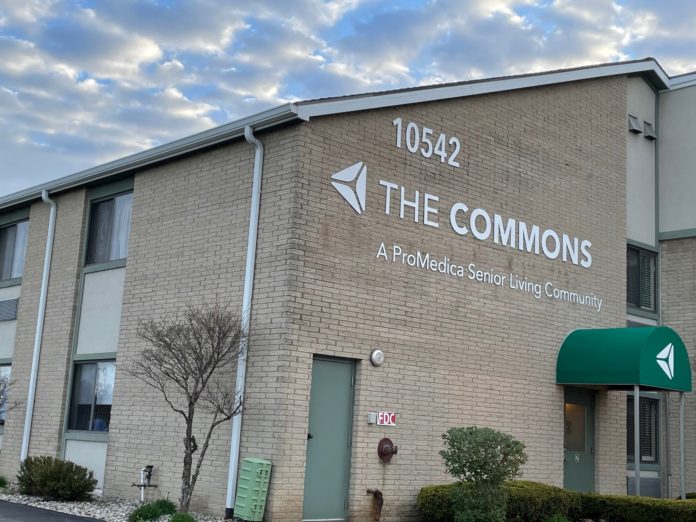
From March 30 through April 1, community members will have the opportunity to attend Trains on Rt. 20. This event, organized by a ProMedica Senior Living Community called “The Commons,” will feature an 18-foot model train exhibit, kids activities, speakers, and live entertainment.
This family-friendly event is an opportunity to learn about trains and the significance of Route 20 in Toledo. Admission to the event and participation in activities is free.
ProMedica’s The Commons is located at 10542 Fremont Pike, Perrysburg. Call 419-874-1931 for more information, or visit the event listing online.
Dates:
March 30, 1-8pm
March 31, 1-8pm
April 1, 10am-4pm