

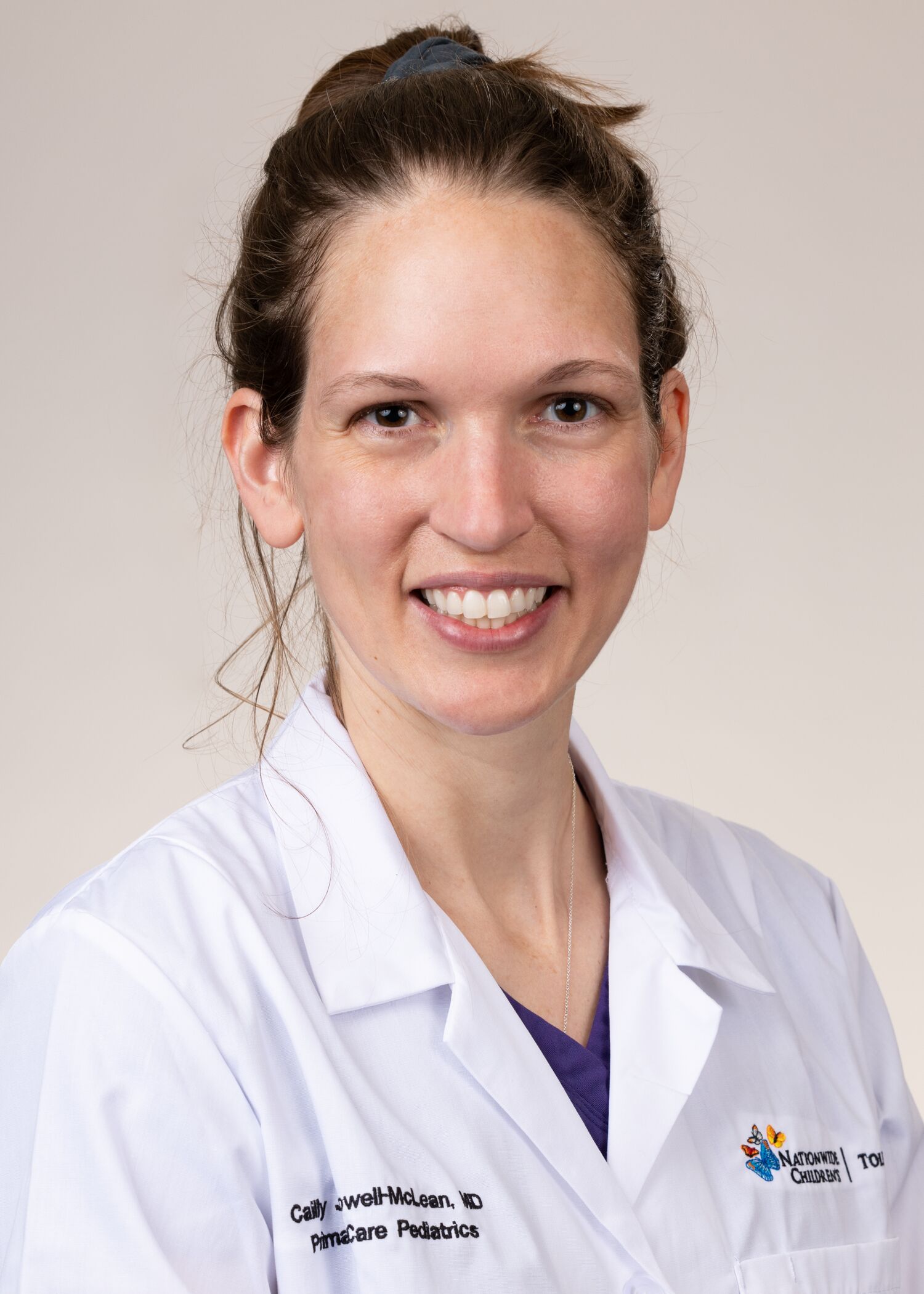
By Cailly Howell-McLean, MD, Pediatrician and Medical Director of Ambulatory Services at Nationwide Children’s – Toledo
 Welcoming a new baby into the family is an exciting time for everyone, bringing countless special moments along with plenty of questions about how to keep their baby safe and healthy. While there are many decisions parents will make during their baby’s first months, creating a safe sleep environment is one of the most important. October is Safe Sleep Month, making it a great opportunity to learn or revisit the latest recommendations for preventing sleep-related infant deaths and creating the safest possible sleep environment for your baby.
The ABCs of Safe Sleep
One of the easiest ways to remember safe sleep recommendations is to follow the ABCs of safe sleep: Babies should sleep Alone, on their Back and in a Crib.
Alone: Babies should sleep by themselves in their own sleep space with no other people. Room-sharing is recommended but bedsharing is not. Keep pillows, blankets, toys, stuffed animals and all other soft items out of their sleep space. Babies can sleep with a pacifier in the crib, but it should not be attached to them, their clothing or any part of the crib.
Back: Place infants on their backs for sleep. As babies grow, they will eventually learn how to roll from their back to their tummy and back again on their own. Once they can confidently roll over both ways on their own, it’s OK to leave them like that, but always place them on their back initially.
Crib: Use a crib, bassinet or portable play pen with a firm mattress and fitted sheet. Keep the sleep area free of blankets, pillows, crib bumpers, stuffed animals and other loose items. Babies should sleep in a swaddle until they start showing signs of rolling over or attempting to roll over. This milestone can occur at different ages, so parents should begin transitioning out of a swaddle as soon as these signs appear, which may be as early as two months of age.
Following these simple recommendations can help create the safest possible sleep environment and prevent sleep-related infant injuries and deaths.
Understanding Common Safe Sleep Concerns
Many parents worry that babies sleeping on their backs could choke if they spit up. However, healthy babies naturally have reflexes that help protect their airway, making sleeping on their back the safest position.
Another common question is why babies should be placed on their back instead of their stomachs. Research shows that placing a baby on their back for every sleep, including both nighttime and nap time, helps reduce the risk of sudden unexplained infant deaths (SUIDS) and sudden infant death syndrome (SIDS).
Parents also often wonder whether it’s OK for babies to sleep in swings, bouncers or car seats once they fall asleep. While these products may be useful during awake time or while traveling, they should only be used with appropriate parental supervision and are not indented for routine sleep. If a baby falls asleep in one of these devices, they should be moved to a firm, flat sleep surface, such as a crib or bassinet, as soon as it’s practical and safe to do so.
While becoming a parent comes with many questions, creating a safe sleep environment doesn’t have to be complicated. Following the ABCs of safe sleep and practicing these recommendations for every nap and every night can help create the safest possible sleep environment for your baby.
If you have any questions or concerns, contact your child’s pediatrician.
To schedule an appointment at Franklin Avenue Primary Care Center, call (419) 251-2415. Learn more at NationwideChildrens.org/Franklin-Avenue-Primary-Care.
Nationwide Children’s – Toledo Franklin Avenue Primary Care Center
2213 Franklin Ave. Toledo, OH 43620

