Andrea Mata is a clinical child psychologist and author of "The #2 Parenting Book: Practical Tips for the Pooped Out Parent."
Andrea Mata, a clinical child psychologist, wanted her book to be different. “Other parenting books throw a lot of developmental theory at you, and they’re boring, and they’re not entertaining. Parents don’t want to read them, or the tips are just so impractical. Parents don’t have a lot of time because parents are overwhelmed with everything that is expected of them in today’s day and age of parenting.”
She drew the idea for the name of her book from a memorable incident. As a professor, she noticed that students weren’t reading the textbooks, so she and her co-teacher moved to an easier format. “I remember on Syllabus Day that same co-teacher got up and said, ‘this book is so easy, you can read it as you poop, and so you have no excuses.’” That is when it clicked for Mata. She decided to write a parenting book with practical tips based on research “without giving all of the research, because parents don’t have time for that, and I’m going to write it in a way that they can read it in the time that it takes to poop.”
The book “The #2 Parenting Book: Practical Tips for the Pooped Out Parent” is designed to be read while going to the bathroom.
Aimed at parents of kids ages 3 – 10, “The #2 Parenting Book: Practical Tips for the Pooped Out Parent” takes a lighthearted approach to serious topics. Mata knows that if the book is entertaining, it is easier and more fun to read. Often, she hears that when people think of a child clinical psychologist, they often assume that she will be more serious. She wants people to know that she can be funny.
Mata jokes, “each chapter is practical tips that parents can read in the time that it takes to poop — a mom poop, not a dad poop — because those are significantly different times.”
The book is full of tips that parents can implement right away. Her goal was to write a book that is both fun and practical as well as being easy to read.
She describes the type of parenting style that leads to the best developmental outcomes. “It’s all about parenting using high expectations within the context of the warm and fuzzies.” The book is three sections starting with the fundamentals. If parents do the things in this first section, parenting will become easier.
The second section teaches parents how to set high expectations. She digs into how to handle behaviors and tame temper tantrums. The final section of the book is all about the warm and fuzzies. These chapters focus on how to build a high quality, loving, nurturing relationship where your child respects you and wants to be close to you.
The Surgeon General has issued an advisory on parental burnout, currently affecting 5.5 million American parents. Mata feels that information overload is one cause of parental stress. The gentle parenting trend that social media promotes is an example because it doesn’t work for most parents and kids.
“It can work in very limited conditions, but for the average parent in America today, gentle parenting doesn’t work, and it leads to developmental outcomes that most parents do not want for their child,” she said.
Mata sees clients at the Anxiety Treatment Center of Greater Toledo. Most of her clients are under the age of 30 and she specializes in working with families whose child has oppositional defiant behaviors. Mata is also a popular speaker, parent coach and provides parenting workshops for businesses to improve employee leadership and retention.
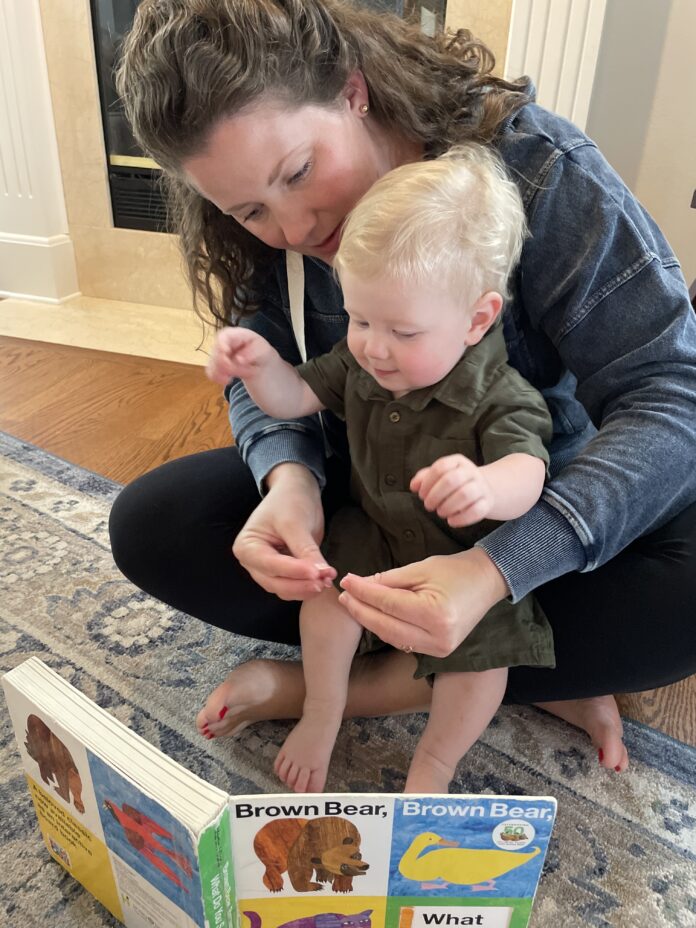
Grace Kelly signing "more" to her 14 month old son, Teddy, helping him ask for her to read "more" to him
Babies know so much more than they are able to communicate; which oftentimes causes great frustration for both babies and caregivers alike.
Grace Kelly and her son signing “please.”
“Baby signs can be using gestures in order to help babies communicate,” said local speech-language pathologist, and owner of Toledo Pediatric Speech Therapy, Grace Kelly MA, CCC-SLP. She said that the baby signs can be as different or as similar as you want them to be to American Sign Language (ASL). However, because ASL uses exact signs and syntax, it is another language, whereas baby signs continue to rely on gestures.
Debunking the myths
“Babies learn communication at different stages,” said Kelly. When infants start understanding and also manipulate body parts to do things like clap and wave, is usually the time when baby signing can be taught. Caregivers and parents can start signing very early, though the children will not be able to imitate until they develop their gross motor skills.
Though many people may worry that using baby signs may delay a child’s speech development, the research has shown that babies who use baby signs do not have a delay in speech, and conversely, using baby signs does not promote earlier speaking.
Babies may use the gestures until they are able to speak, and sometimes may continue to use the gestures with their words until eventually they phase out of using gestures altogether. When doing baby signs for your child, it is important to use the gestures with the verbalization according to Grace Kelly.
“You can’t make their voice turn on, but you can show by modeling with your hands or guide their hands,” said Kelly. She added that the tactile and visual support make a big difference for helping the babies to understand.
Some of the more popular baby signs are used for more, all done, please, drink, etc. When the children are able to manipulate their hands, they are able to imitate the motions such as fingers together touching the mouth, or rubbing a circle on their belly, etc.
Everything to gain, nothing to lose
The bottom line is that introducing your infant to baby signs can only help improve communication between them and their caregivers and family members. Grace Kelly MA, CCC-SLC has used baby signs with all three of her children.
“We’re allowing the child to have a different form of communication that is more accessible to them at the moment,” she said. When a child can feel understood and have their needs met sooner, the amount of frustration felt by both infant and parent decreases immensely. Bottom line, baby signs can help bridge the communication gap until the child is able to begin communicating verbally.
Additional resources
Grace Kelly MA, CCC-SLP has recommended the online resources to provide more information regarding baby signs and the research that has been done regarding using baby signs.
Should you or your child’s caregiver have concerns of a speech delay, contact a local pediatric speech-language pathologist for an evaluation. Early intervention is always key. Happy signing!
Ritu Pasrija is the author and founder of Conscious Connections. She shares the meaning behind H.O.P.E.
The crisp air, the colorful leaves, the crunch of leaves as you step across the lawn you hear the laughter of children and in a moment you are back to your childhood where the world was full of hope, of possibilities.
Taking a deep breath, you come back to this moment and wonder when did the world change or did we change? Is this the world we want for our children? The heart whispers no…and the mind says that wish is impossible.
And yet I have faith and hope that it is possible.
Research shows that children who are raised in nurturing, supportive environments are more likely to thrive emotionally and academically. Studies also uncovered that hope is a driver for resilience and success. So, how do we begin to create this world – a world where they are happy, innocent, full of compassion, always trying to right the wrongs they see? A world where they speak their minds without fear of rejection or judgment? I believe this is possible by creating the Highest Optimal Potential Environment (H.O.P.E.) for children to thrive.
Lets explore the deeper meaning behind H.O.P.E.
“Highest” refers to putting the child’s best interest first — outside of the fears and traumas of parents, as well as the school system’s emphasis on meeting standards that doesn’t always cater to the child’s individual needs.
“Optimal” involves exploring different possible solutions that prioritize the child’s overall well-being — from the way we speak to them, which shapes their self-belief, to the books and ideas we choose to introduce and reinforce.
“Potential” is calibrating to what is possible versus preconceived notions. We are full of potential, no matter what we’ve experienced. Sometimes, our limiting beliefs get in the way.
“Environment” encompasses all the factors from the people we interact with, to the spaces we inhabit, to the feeling you get when you walk in a room where someone has just fought.
As such H.O.P.E. nurtures a holistic approach – championing young minds, hearts and souls by creating from the lens of the child
When we see children as complete and capable just as they are, we honor them for who they are as individuals and that feels good. This is a cornerstone of H.O.P.E.
When we begin to create H.O.P.E., our world will change. How? We begin to raise more confident, resilient, self-assured, yet empathetic individuals that will be great leaders of the future. Let’s be part of the solution—together, we can reimagine how we approach our children’s development by focusing on truly understanding them, connecting heart to heart.
One of the simplest yet powerful ways to begin nurturing a H.O.P.E.-ful environment is by practicing gratitude together — an ideal activity to do just before bed or during family meals. Be creative – make a “gratitude jar” where everyone writes down something they appreciate each week, and anyone can pick one out when they need a little boost. Deepen your connection by drawing something that made you happy that day, then get curious with each other about it! The key to experiencing the benefits is to savor the process and express gratitude as if you’re fully reliving those feelings and sensations in the present moment.
Gratitude is a powerful practice that impacts multiple areas of life. It helps us manage negative emotions, builds resilience in the face of challenges, and strengthens family bonds. It leads people to be more empathetic and happier. As Ackerman, 2017 paraphrases — Long term happiness can be increased by over 10% by simply journaling five minutes a day on what we are grateful for. Grateful individuals also tend to be more focused and motivated — even in school.
All these benefits strengthen the family unit while building a solid foundation for our children to thrive, so let’s get our “grat-titude” on!
Email me at the address below for a free resource to get you started and join the upcoming GRATITUDE CHALLENGE – let’s have fun & watch our world transform!!
The author, founder of Conscious Connections is Ritu Pasrija, M.Ed, CHT,[email protected]. She is a mindfulness, emotional intelligence, and mindset expert for over 20 years. She empowers parents, teachers, and children—starting as early as 3 ½ years old—with a foundation of H.O.P.E.
Leslie LeFevre, LPCC-S is the youth therapy manager at Zepf Center
Dear mental health professional,
I can’t get my son to do anything that isn’t related to electronics. He is always on video games or asking to use my phone to watch YouTube. I can’t get him to help around the house, clean up after himself, or do his homework. He will even get on electronics after I send him to bed, so it is starting to impact his sleep. What do I do?
Sincerely,
Frustrated
Dear Frustrated,
This is a very common complaint I hear from parents in my office. A good first step can be setting a timeframe that they are able to use electronics and then allow the opportunity to earn more time through completing household tasks. For example, “you can have 1-hour of time to spend on electronics per day, and you can earn an extra 15-minutes for each chore you complete.” It can also help diffuse some of the negative interactions by having something neutral enforcing the limit, so you are not always being the target of frustration when the time is up. There are many apps that can help with this or just setting a simple household timer would work. It is important to be consistent with carrying out the routines and limits for it to truly be effective. Behaviors often tend to get worse before we see improvements, as children adjust to new limits being set, so be sure to stick with it. CommonSenseMedia.org is a great resource for parents to utilize regarding media in general and ensuring children are utilizing media that is appropriate for their age. If you feel that you or your child needs further support or resources, feel free to contact Zepf Center at 419-841-7701.
Sincerely,
Leslie LeFevre, LPCC-S
Youth Therapy Manager at Zepf Center
To ask a mental health expert a question to be answered anonymously on Toledo Parent, send your question to[email protected].
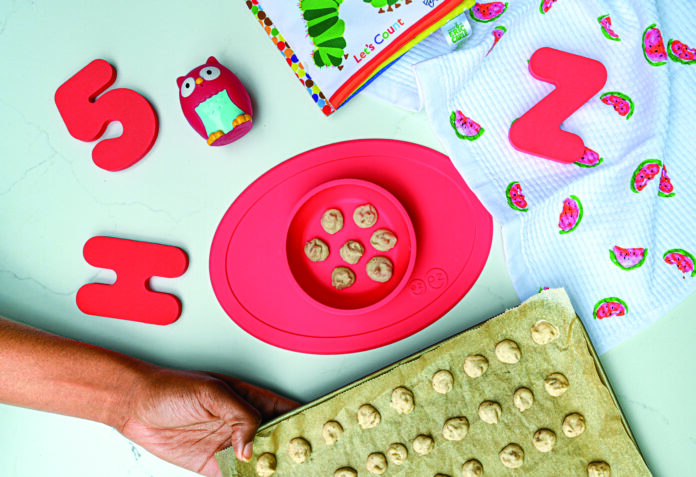
Mascarpone peanut butter melts. Photo provided by Malina Malkani.
Introducing new foods with infants is a task that can cause anxiety in even the most seasoned parents. Pediatric dietician and author Malina Malkani has dedicated her career to helping parents feel confident in providing children with a healthy start in life. Toledo Area Parent sat down with Malina to discuss what advice she would give parents with introducing common allergens with infants (the topic of her new book “Safe and Simple Food Allergy Prevention”), eliminating mealtime battles, baby led weaning, choking concerns and other child nutrition topics.
“Safe and Simple Food Allergy Prevention.”Photo provided by Malina Malkani.
Toledo Area Parent: Your website offers a wealth of information on nutrition for families, with a little bit of everything from infant health and baby led weaning and introducing new foods to nutrition for teens and tweens to even nutrition for mom. You also mention that nutrition is your second career. How did your career evolve into a passion for nutrition?
Malina: Yes, in my prior career, I was a New York-based professional singer, actor and dancer, performing in national touring companies, Off-Broadway shows, regional theatre, and some television and film. While I loved what I did, I felt that I wanted my life’s work to help people in a more tangible way. Simultaneously, I was struggling with pressure from within the industry to be slender and look a certain way, and I learned the hard way that denying my body nutrients was not healthy or sustainable. When dieting, I found that I did not have the energy to perform at my peak through eight shows a week. This made me curious about food as an energy source, and the more I learned, the more I fell in love with the science of nutrition, so much so that I ended up going to graduate school and getting my Masters in Clinical Nutrition at New York University.
Toledo Area Parent: Before we get into the new book, let’s discuss some of your other work. Your online parenting courses center around safe baby led feeding and solving picky eating in children. So often, parents might say, “Oh, my child would never eat that.” What words of wisdom can be offered to curb some of those mealtime battles?
Malina: In my experience as a pediatric dietitian (and also as a mom of three), most families have the best success with mealtimes when parents start with a clear understanding of what our roles are (and aren’t!) as caregivers in the feeding relationship.
It’s not our job as caregivers to get kids to eat any specific food, trick them into eating, control or restrict their intake, or sneak any particular nutrients into their food.
Our role is to provide a wide variety of foods at meals and snacks that come at regular, dependable intervals throughout the day, make the eating environment positive and without distractions, role model the eating habits we want to see, and allow our kids to then decide whether and how much to eat.
Apple oat bars. Photo provided by Malina Malkani.
This requires an element of trust. But most babies and kids are incredible at self-regulating and meeting their nutrient needs when we allow them to do so, and when parents and kids are both clear on their different roles, food battles tend to fall away.
Toledo Area Parent: Moving into your new book, “Safe and Simple Food Allergy Prevention,” many parents may mistakenly believe that they must offer their infant food in a pureed form. Rather, you advocate for simple, wholesome finger foods in a variety of textures. What benefits might parents experience introducing finger foods earlier?
Malina: Baby-led weaning is a way of starting babies on complementary foods using finger foods from the family table (of an appropriate size and texture) rather than spoon-feeding baby food in pureed form.
Potential benefits of baby-led weaning for babies include earlier involvement in family meals and exposure to different flavors, colors and textures, more opportunities to practice fine motor skills, greater early dietary variety and more freedom to follow internal cues for hunger and fullness. Baby-led weaning offers potential benefits for parents too. During baby-led weaning, the baby eats what the family eats (with some minor modifications) which saves time, money and energy because there is no need to prepare multiple meals.
Toledo Area Parent: A common concern when introducing new foods to infants is gagging/choking. Your new book does a wonderful job of explaining how not all gagging is bad. Explain how the gag reflex actually prevents choking, and how parents/caregivers can tell the difference between gagging and choking when feeding.
Malina: Depending on the texture of the food offered, babies may gag more often during the early weeks of baby-led weaning (and perhaps more so than spoon-fed babies). While this can sound alarming at first, it’s usually quite helpful.
Gagging is a noisy, common, built-in safety mechanism that involves bringing food forward that a baby isn’t yet ready to swallow. During a gag, you may hear gurgling, sputtering, or coughing, and babies will often open their mouths, thrusting their tongues forward. A common misconception is that if a baby gags on a certain food, it means they are not yet ready for it. On the contrary, it’s wise to take advantage of the gag reflex earlier on, between 6-10 months when the reflex is stronger and more protective of the baby’s airway. This way, babies can build sensory knowledge of the inside of their mouths, learn how to manage bites of food, and accept many different foods, flavors, and textures before the gag reflex shifts further back into the mouth at around 9-10 months and becomes less protective.
Choking, on the other hand, is generally silent and happens when a piece of food or object gets lodged in the airway and blocks it. A baby who is choking may become distressed, turn blue, and grab at the throat, but no air passes through. Intervention is usually needed to force the food out of the baby’s airway.
The best defense against choking is learning how to offer appropriately sized and textured foods for babies and becoming educated about which foods increase choking risk. Notably, when caregivers are educated on safe food sizing and texture, baby-led weaning is not associated with an increased risk of choking.
Toledo Area Parent: What should readers take away from the nine-day plan for introducing common allergens?
Malina: The truth is that offering top allergens early, often, and consistently reduces the risk that babies will develop food allergies, so it’s important not to delay their introduction. But when it comes to feeding babies, there’s no one-size-fits-all approach that works for everyone, and no one “right” way to introduce allergens. Further, what matters just as much as early introduction is keeping common allergens in the diet consistently, once introduced.
I created the allergen introduction plan as the resource I wish I’d had when my girls were babies, keeping in mind how little extra time, energy, and bandwidth I had during this intense phase of parenting. At the time, all I wanted was for someone I trusted to take the reins and do all of the meal planning, thinking, planning, recipe hunting and research for me! So, in “Safe and Simple Food Allergy Prevention,” the complete allergen introduction plan, 8 weeks of maintenance meal plans, and 80 allergen-containing recipes are designed to meet parents where they are, and allows them to follow along prescriptively or liberally, depending on their preferences and their baby’s needs.
Allergen pancakes. Photo provided by Malina Malkani.
Toledo Area Parent: Finally, Safe and Simple Food Allergy Prevention also has over eighty family friendly recipes that safely introduce common allergens…any can’t miss recipes that your own family loves?
Malina: Yes! It was important to me that all of the recipes are not only baby-friendly and inclusive of multiple top allergens but also family-friendly, because making more than one meal at a time can quickly lead to burn-out. To that end, I’m fortunate to have three brutally honest recipe taste-testers in my home (my three girls, now ages 11, 13 and 15). They love most of the dishes in the book, many of which are staple comfort foods I’ve been making since they were born, but they regularly beg for the Avgolemono (Greek Egg and Lemon Soup), the Almond Cardamom Sheet Pan Pancakes, and the BLW Saag Paneer.