Home Blog Page 489

The Canticle Center

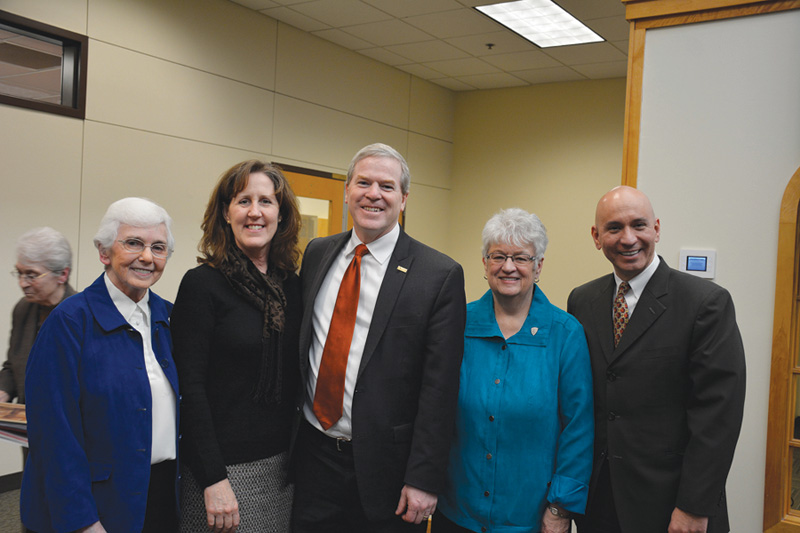
The Canticle Center, housed in the former Franciscan Academy building next to Sylvania Northview High School in Sylvania, opened in February. The Center will house classrooms, studios and the graduate school offices for Lourdes University and additional office space for the Sophia Center.

Lourdes University students will use this additional space in a variety of ways. The Canticle Center has art studios, music studios, a computer lab, student and staff lounges and a gym for intramural sports.

The Sophia Center is part of the Sylvania Franciscan Ministries, a group of programs that address the physical, mental and spiritual needs of individuals in Sylvania. The Sophia Center offers individual and group counseling, as well as educational testing. They will have a private, dedicated entrance to counseling rooms and group therapy rooms in the Canticle Center.

Both Lourdes University and the Sophia Center are sponsored ministries of the Sisters of St. Francis of Sylvania, which was founded in 1916.

Local Resource for Learning

The Ottawa National Wildlife Refuge is a rich local resource for learning about our natural surroundings and the creatures that live there. This season, consider participating  in one of many field trips offered by the organization. The Ottawa NWR offers activities specifically for children, including swamp tours, arts and crafts, and guided nature walks. The programs can also supplement classroom curriculums and accommodate groups of any age. All events and programs are free, and transportation funding may be available to your group.


Call Visitor Services Manager Justin Woldt at 419-898-0014 to
schedule your trip. Visit facebook.com/OttawaNWR or onwra.com.

T-ball Treasures

Our first foray into the world of t-ball was with the youngest of our three boys this last season. Don’t ask me why we waited so long to join this all-American preschool pastime – perhaps I’m lazy. The only reason we signed him up in the first place was to get him out of the house, and to learn a few important life lessons, taught by a cockamamie group of sweaty kiddos.

Preschoolers have absolutely no concept of imminent pain.

How can one teach a four-year-old that getting smashed in the face by a hard ball is going to hurt without actually smashing the kid in the face with a hard ball? Chucking the balls at each other from point-blank range, while not necessarily even looking at each other, was the practice norm. I only feel slightly guilty for wishing for a lifelong wisdom-giving mishap.

Command Central

It takes an average of twelve seconds for a command not related to food to sink in.

Throughout the season, during each game, there were no less than thirty repetitions of the same command: RUN! This was usually aimed at the batters, who had already hit the ball and were just standing there, mouths agape, watching in glorified awe as the ball went sailing. Snack time, on the other hand, was immediately responded to with cheers and trampling each other, racing to the sidelines.

Port-o’-potties the holy grail of preoccupation.

During every practice, one or more of the players left their posts in favor of picking flowers, daydreaming and pottying. “I need to use the bathroom! There’s a potty over there! It’s blue!” Every kid turns to see and subsequently starts the potty dance and intense begging for permission to visit the “bathroom.” Upon their return, they kindly share the smell of port-o’-potty soap with their teammates by allowing them the chance to smell their hands. Ooh, so refreshing.

T-ball is super gross.

Urban myth illuminates the ick factor with the legend of an entire team contracting head lice through the sharing of the batting helmets. Lice aside, it’s pretty unsanitary that each sweaty kid removes the helmet and passes it blindly to the next sweaty kid, who, in turn, does the same. That’s nine different types of sweat, sunscreen and bug spray all mixed up in there. Ew. I just scratched my head while writing this and got goose bumps when I recognized the correlation. Seriously, if my little athlete shows up with a shorn head, you know what we’ve received complementary with a t-ball education!


Where ADHD, ODD and “@%$#!” are a way of life, Rhonda Wilson is a stay-at-home mom to four kiddos (Juliet, 16, Liam, 11, Connor, 9, Jack, 4) while babysitting and writing for other publications and blog (www.alphabetsoupmama.com). 

April 2015

10 steps to prepare for your Day Camp Adventure

 Summer day camp is a place where children can stretch their minds, exercise their bodies, develop new interests and forge lasting friendships. For young children, it is a good introduction to the camp experience. For older ones, it is a way to enjoy the activities without the overnight option. Day camp programs vary from one setting to the next and it is important to choose a camp tailored to your child’s needs. Help make the most of your child’s day camp experience by asking the right questions.

1. Consider interests. Day camps offer a host of options that include everything from one centralized activity to a variety of traditional camp fun. Talk with your child about his interests and what he would like to gain from the experience. Would he enjoy an assortment of activities or does he want to concentrate on one skill, such as soccer or art?

2. Ponder program length. Day camps range from several hours to a full day and can run from one week to an entire summer. How long your child should participate in a program will depend largely upon his age, developmental level and previous camp experience. First-time campers would do well starting in a partial- to full-week program. Experienced campers may enjoy one that runs throughout the summer. Even if your child decides to stay at camp all summer, consider allowing a few weeks break between school and camp (and vice versa) for down time.

3. Look at location. Consider the distance’s impact on the camping experience. If you choose a day camp close to home, commute time will be less and your child may already be acquainted with some of the other children. A day camp near your employer, however, would give you quick access to your child, in the event of an emergency. But if your child needs additional morning or afternoon childcare, you may want to consider a program close to your sitter.

4. Ask about staff. Find out the camper-to-counselor ratio, ideally it should be six campers to one counselor, as recommended by the American Camping Association. What experience and/or training do the counselors have? How are they selected? What is the camp’s discipline policy? Are they trained to take care of health concerns such as asthma, allergies and dispensing medicine?

5. Focus on the facility. Ask about indoor and outdoor facilities. Is there ample indoor space for children to play during inclement weather? What do they do if it rains all week? Is the outdoor equipment and grounds well maintained and safe? Are the children’s swimming skills tested before they are allowed to enter the water? Is the staff certified in lifesaving and present during water activities?

6. Investigate cost. Inquire about additional fees. Some day camps have a base price but charge extra for trips, special events and activities. If the camp you want to send your child to costs more than you can afford, find out if there is a scholarship program. Also ask about a refund policy, in the event of an illness or family emergency.

7. Arrange a pre-visit. Find out if the day camp offers an open house prior to season start up. If not, make other arrangements to introduce yourself to those who will be caring for your child. Open houses are a good time to gather information, so make sure to jot down any questions you have before leaving home. If your questions are not addressed during this time, ask to speak with someone before securing your deposit.

8. Fill out forms. Organize all relevant information concerning your child’s health and history. When it comes to medical forms, be thorough and specific. If your child was on a medication during the school year but will be taken off of it for the summer, make sure the camp is aware of this as it could cause an extreme change in behavior. Insect and food-related allergies should be listed too. Equally important is to share other concerns, such as if your family is going through a divorce or has experienced a recent death, as this may affect how your child interacts throughout the day. Remember, camps look out for both the physical and emotional needs of your child, so the more information you provide, the better equipped they will be.

You will also be asked to fill out an emergency contact form, which lists another designated individual to call if you cannot be reached in the event of an accident or illness. While it is imperative to have an appointed individual, equally important is that the person knows she has been designated as such. Every year camps contact the emergency person listed and she was not informed she was “on call.” The best advice? Check with that individual before writing the name down.

9. Peruse policies & procedures. Ask for a list of the camp’s policies, procedures and planned activities. The summer will run smoother if you and your child know what to expect and what is expected of you. Most camps have a weekly schedule so parents know what the upcoming activities are. Talk with you child about what is planned. If she cannot participate due to health reasons, make sure you (not your child) inform the camp.

In recent years, many day camps have developed strict policies about leaving technology items – cell phones, handheld games and other tech toys – at home. Their philosophy is that day camps are designed to be enriching experiences and the children should be engaging in these activities rather than playing with electronics. If restricted items are brought to camp, they may be confiscated and returned at the end of the day in hopes the child gets the message.

10. Keep the line of communication open. Talk about camp before it even starts. Reassure your child of the positive experience he will have. At the end of each camp day, find a block of uninterrupted time where you can listen as he shares his adventures. Ask what he liked about camp and if there were any things he didn’t like. If he is having a hard time articulating what happened, break it down by activities—“What crafts did you do?” “Did you play any outdoor games that involved balls or running?”  “Who did you sit with at lunch?” Encourage your child to do his best and be respectful of others, and he’ll have a great time.

Denise Yearian is the former editor of two parenting magazines and the mother of three children.

Pitasub Express

Pitasub Express
5155 S. Main, Sylvania 43560

419-882-1796

Mon-Fri: 11a.m.-8p.m.
Sat: 12p.m.-8p.m.

www.pitasubexpress.com


Kid-friendly: Best suited for older children

To avoid wait: Anytime

Noise level: Quiet

Bathroom amenities: No public restroom…employee restroom available

High chairs: No

Got milk? No. Canned pop, lemonade, and bottled water.

Food allergy concerns: You can speak directly to the owner, Zane, who will most likely be the one preparing your meal. They do not have any peanut oil in the restaurant, and each pita/bowl is made to order, so just let them know in advance about any allergies.


I love Lebanese food. No. Let me rephrase. I LOVE Lebanese food. I’m so thankful my children appreciate it as well because when I have a hankering for hummus, grape leaves and all that pure deliciousness, I am never met with resistance. We followed a friend’s recommendation, and came upon traditional Lebanese served with a contemporary twist.  

Another hidden gem

I shall not lie. When pulling up to the most humble of humble looking store fronts in a strip plaza in Sylvania, I had some serious doubts. I did it again. I was judging by appearances. I should know better by now. The owner of Pitasub Express, Zane Ismail, is very proud of the fact that he serves only healthy, freshly made food and that nothing is fried.

Mr. Ismail promptly greeted us from behind the counter as he was busy cooking up something that smelled delectable. A quick glance told me this was more of a carryout kind of place rather than sit down.  Mr. Ismail confirmed that about 90% of his business is carryout. Not being around the corner from our home in Holland, however, we were there to stay. In the mean time we saw several others come in and grab their pick-up orders.

Mr. Ismail…..no, I’m going to call him Zane because we entered his restaurant as strangers but left as friends.  Zane truly has a way of making people feel welcome. He moved here from Lebanon when he was 16 years old, so he considers Toledo his hometown.  He has been in the restaurant business almost 40 years, and has owned Pitasub Express for about seven years. “I’m happy I work here every day,” said Zane. You might also see his sons working with him as well.

Lebanese meets Chipotle style

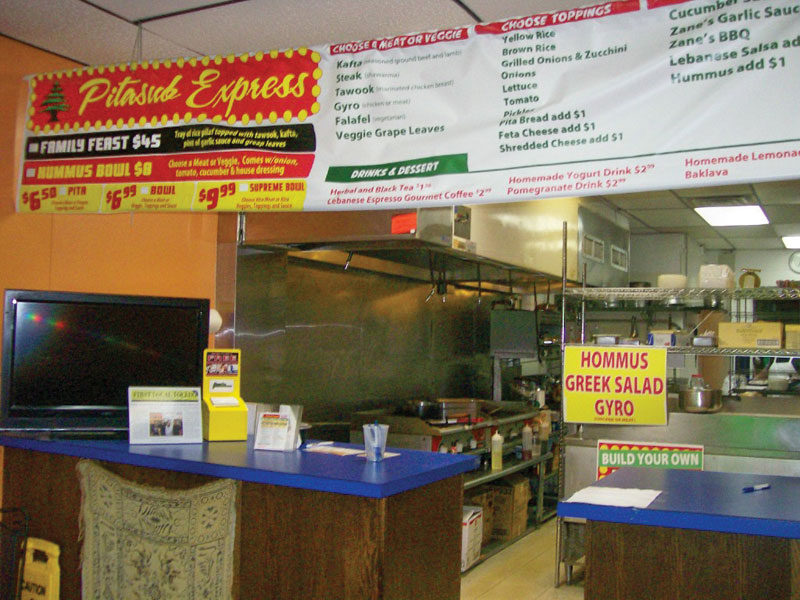
Pretty much that is how Zane summed up Pitasub for us. He handed us a little paper and a pen for us to select our choices. Like Chipotle restaurants where you select your protein and then all the extras you want in your “bowl” or burrito, the same is true for Pitasub, except it’s Lebanese food and you make a “bowl” or stuff a pita! Almost two years ago Zane’s son suggested switching to the Chipotle style and it appears to have won over his customers.

You can choose from chicken, steak, gyro meat or go vegetarian. Then select brown or yellow rice and choice of vegetables. Top it off with one of their several homemade sauces such as traditional cucumber sauce, or garlic sauce. Zane said his Lebanese salsa is out of this world. I know I need to make a trip back because I also forgot to try the Baklava!

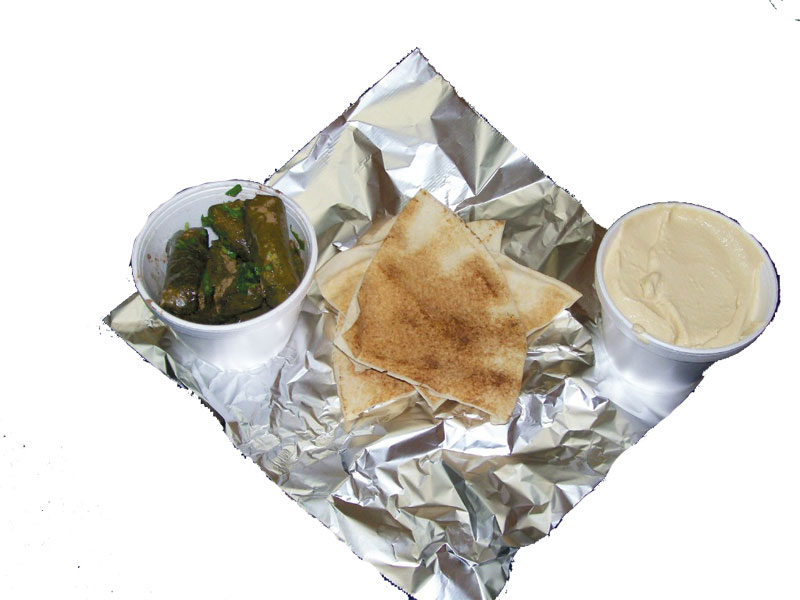
The boys and I chose bowls and because we just couldn’t decide on which meat, Zane surprised us with a little gyro meat AND chicken in each of our bowls. I still can’t decide which I liked better. They don’t have a kids’ menu, but Zane made up the $6.99 bowls for $5 for each of the boys. We also ordered hummus and grape leaves. I have said in the past that I am a hummus snob and must try it wherever it’s offered. It was delish.  Zane raved about the falafel and a regular customer came in for it for the third time that week while we were there. “I think I’m the only one who doesn’t fry it,” said Zane.

It was a bit chilly in the seating area on that blustery evening.   Zane was quick to come out and turn up the heat for us; checking back to make sure we were warm enough. He also surprised me with some complimentary herbal tea. It was quite unique and obvious he knew what he was doing with that as well.  

We purposely left a little in our bowls so we could have it again the next day. And before we packed up our hummus to take home for my daughter to try, he topped us off. We came in as strangers, and certainly left as friends. 

Bottom Line: Zane Ismail will make you feel welcome in his restaurant and takes great pride in his fresh, healthy cooking. Though not the most ideal for eating in with very young ones in tow, it is a must try for carryout or eating in with older children. If your kids enjoy Lebanese cuisine or you’re looking for a fun way to introduce it to them, they will enjoy making their own selections and the bowls will be a hit.

 Karen Zickes is a mom of three active children and freelance writer who resides in Holland, OH. She can be reached in c/o
[email protected].