The polls are open! It’s that awesome time of year where we ask “what was your favorite” with the Family Favorites nominations.
Each year, we love seeing who shined the brightest. It’s the perfect chance for your favorite, family-oriented place to get the recognition they deserve!
Vote for your favorite business, company, non-profit, or person into the entry below to nominate them as being one of this year’s Family Favorites. Who has stood out amidst COVID? Who had the best teaching curriculum? What was the best takeout or dine in experience you had this year? We want to know!
The finalists were selected from thousands of nominees submitted by our readers. You can vote once per day in each category now through Sunday, April 17!
We can’t wait to see who is your family favorite this year!
Not Pregnant Poetry explores the emotional journey of pregnancy loss and infertility.
Local author Christina Reed carried the dreams of many young girls – to be married and have children – into her adult life. But when she met and married the love of her life, she found the parenting journey to be not at all what she had planned.
“As I was married to a woman, I figured I’d have to see a fertility specialist,” Reed explained. “My doctor was optimistic and saw nothing [that would have prevented pregnancy.]”
Even so, after two years and two IVF (in vitro fertilization) treatments that resulted in pregnancies followed by miscarriages, she realized that “having a baby was off the table. After the second miscarriage, I had to come to terms with that,” she said.
You can be just a little bit pregnant Also not pregnant at all Or ever again We can be so many things (Reed 15)
During her treatments, Reed began writing, ultimately creating the book Not Pregnant Poetry, which was illustrated by her wife Lindsey. It’s a raw, poignant and ultimately uplifting collection of feelings about a diagnosis that impacts 25 percent of all women.
She also created an Instagram page and website of the same name, because she felt she had to connect with women who were going through the same thing. “People really reached out to my poetry,” she explained. “It’s all part of the grieving process I’ve been through, so it was helping heal their wounds too.”
Every woman can learn about the continuing challenges of infertility, Reed said. “It can open your eyes to the different avenues we all take,” she said. It also helps everyone understand why “going to baby showers isn’t always fun,” she said.
It wasn’t the death That was difficult It was the insignificant role I played in it all (Reed 26)
The Reed family today (left to right) – Christina, Hudson, Thomas and Lindsey.
“It was a very dark time,” Reed said. “I was really paralyzed with depression as I was coming to terms with this nightmare. It was very isolating because everything was set up for me to become a parent.” She found it difficult to go to social gatherings, and even to be happy for friends growing their families.
At one point it was suggested that her wife consider becoming pregnant. “She said no,” Reed said. “We struggled through this and all the treatments together, and actually became much stronger because of it.”
In fact, as the book began to become a reality, “my wife took care of everything,” Reed said. “She edited the book and did all the illustrations.”
Of all the things I’ve had to love And let go You are By far The greatest (Reed 91)
During their fertility treatments, Reed and her wife discussed adoption. “I said no to adoption, but she convinced me to take fostering classes,” Reed said. They were wary about fostering children under five years old who might be returned to their birth parents, and, in fact, were assigned a two-week-old whose uncle was later located. They were able to adopt the child – Hudson – at the age of eight months. “He’s everything I absolutely wanted,” Reed said. Later they provided respite care for a six-year-old, Thomas, and were able to adopt him.
I gave up on my dreams Shortly after I found out They would cause Bankruptcy and body dysmorphia (Reed 52)
“When we’ve had disappointment in the past, we tended to be taught that if we work harder or try something else, we’ll be able to do it next time,” said reproductive therapist Julie Bindeman in Huff Post. “While that is the case quite often in life, it’s not how things work with fertility – it’s not something just can just easily figure out.”
Bindeman and other therapists share coping advice:
Build a support system with your partner, family and friends.
Feel your feelings and acknowledge that there’s no right or wrong way to feel.
Talk about it, and don’t be afraid to share your story (if you’re comfortable).
Practice self-care, even though you may feel betrayed by your body. Take a fertility break if that’s possible.
Dive into activities that bring you joy and fulfillment.
Try to remember that you’re not the only person facing these hurdles.
Find experts you trust.
Remove blame and regret, knowing that infertility is a medical condition.
Understand that your partner might feel differently.
Seek professional help.
You don’t have to plant the seed For the flower to be yours (Reed 146)
“I’ve learned that my purpose was to be a mother, not to have a pregnancy,” Reed said. “You can do great things and tell a great story, even if the outcome is not what you thought it would be.”
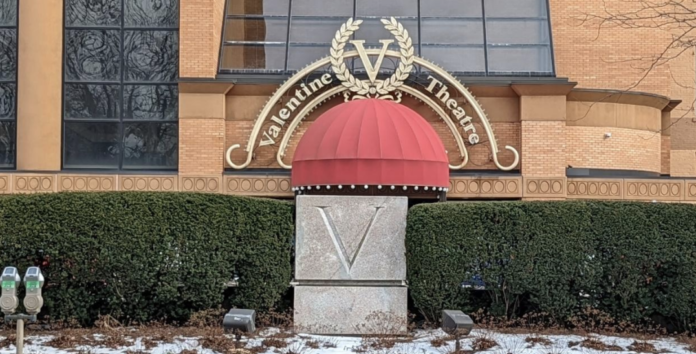
The Valentine Theater is providing a way for individuals with autistic needs to enjoy performances. In collaboration with ProMedica Ebeid Children’s Hospital Finnegan Family Autism Center, the Valentine is planning on a Sensory Program that consists of putting on a series of shows catered to individuals who may require relaxed environments, while still enjoying what the Valentine has to offer.
Creating a relaxing environment Plans for the series include dimming the lights down to at least 50 percent during shows, giving audience cues to alert them about loud noises, and the option to get up and walk around whenever they want. Plans also include implementing a relaxed room with comfortable couches and chairs, manipulative objects, and a television with a remote control so audience members won’t miss the performance.
“After speaking with the Finnegan Center, they told us it may be beneficial to have a designated area where people can go to relax if things become too jarring,” says Kelby Sodeman, development coordinator with the Valentine Theatre. The 20’ by 20’ room, also known as the Founders Room, serves two purposes – a meeting room for staff during business hours and a relaxed environment room when needed during performances, and is located directly off the grand lobby. A reservation will not be needed and audience members can enter and exit the room as needed throughout the performance.
Putting the wheels in motion The idea of the Sensory Program was born in 2019 by way of the Valentine staff who began noticing the need for audience members who might need a more relaxed environment. “We immediately started researching other venues around the country and found they were implementing these rooms,” says Jori Jex, executive director at the Valentine Theatre. She and Sodeman began making phone calls to these other venues and learned at least 80 percent of volunteers and 100 percent of the staff needed to be trained to assist individuals who might present autistic signs.
“So many of our volunteers are retired nurses, teachers or healthcare professionals, so I think when we go for the training, our volunteers will take this very well and appreciate it,” says Jex. Volunteers will be required to complete and test out of one hour of training per person, and staff members will be required to complete four hours. The training is good for two years.
Jex says the Theatre is “very early in the process” and hopes to get the series, and the room, up and running later this fall while they continue to gather funding. “Our ultimate goal is to make sure that people feel comfortable coming to the Valentine, that it’s a part of their family life.”
Looking ahead Tickets for the Sensory Program shows will hover in the $12-$14 dollar range, according to Sodeman, and may drop if they receive enough funding. If you would like more information on providing funds, contact Sodeman at [email protected].
When the series begins, anyone can log on and see images of the shows — so they know what to expect — as well as a list of upcoming performances. Masking is still required regardless of vaccination status, and the Theatre will update the policy as needed.
The Nest provides natural playscapes and gardens for children to enjoy throughout their stay.
In 2018, The Nest opened in Bowling Green, offering free childcare to parents enrolled in school. Located within ten minutes of Bowling Green State University, it offers childcare for children ages six weeks to five years old. Services are open to all parents, whether they are attending high school, college, trade school or interning. While working as client service director at the Pregnancy Center in Bowling Green,Tiffany Crain, who now serves as executive director of The Nest, realized students needed more options, particularly after an unplanned pregnancy. While walking through the former Agape Church of Prayer, she envisioned turning the church into a childcare center.
“It was hard to meet with a young woman who had an unplanned pregnancy and reassure her that God would provide a way for her and her baby,” Crain shares. “Not because I didn’t
Utilizing The Nest’s services helped Yetunde graduate with her Master’s Degree from BGSU in the midst of entering motherhood.
believe that He could, but because I know that feels like an empty promise when you’re [the one faced with the challenge].” Speaking from personal and professional experience, Crain is familiar with the difficulties of choosing to parent before she intended, so she was motivated to eliminate this barrier.
The Nest offers childcare Monday-Friday from 7am-5pm. Until recently, their capacity was only six children. The Nest has recently been licensed by the state of Ohio and is now able to care for 12 children at one time. They are excited to have increased availability and looking to fill these spots. Children are provided breakfast, two snacks and lunch. A strong emphasis is placed on healthy snacks and meals for the kids. Dietetic students from BGSU are often involved in planning meals and snacks. The kids spend their days working on art, storytime, drama and free play. There are three teachers on staff and a separate area for preschool aged children to begin their education. All volunteers are certified. The children also get to enjoy a natural playscape as well as help care for gardens. “They love helping with and harvesting the gardens,” says Crain. “They get to enjoy the fruits and vegetables they grow.”
With the hope of encouraging literacy and at-home bonding, there are shelves full of books for parents to choose from, enabling them to read to their kids at home if trips to the library are not possible.
Services do not just relieve a financial burden for parents; they also provide holistic support. The Nest has a “Parent Room” where parents are able to study, take online tests, complete assignments, and receive tutoring and academic support as needed. Weekly Parent Meetings are held to build community amongst parents who are facing similar challenges, also incentivizing them to develop life skills such as financial management. Parents are asked to volunteer two hours per week as it fits their schedule. While The Nest’s mission statement is “to serve families with the love of Christ by providing free childcare for parents completing their education,” no one is denied services based on their religious beliefs.
The Nest is a registered 501(c)(3) whose funding is provided by regular donors and an annual fundraiser held by USA Today. They receive the majority of their donations from local churches, businesses and individuals.
Parents or expecting parents can apply for free childcare by completing the application at thenestbg.com.
The Arts Commission is seeking apprentices for their 2022 Young Artists at Work Program, a six-week paid apprenticeship that allow teens and young adults from the Toledo area to express their artistic ability and fuel their creative passions. Apprentices learn creative job skills, connecting with their community through the creation of public artwork. Every year more than 40 teens are employed by YAAW.
Apprentices are put into groups based on their creative interests and are tasked with creating original artworks, public murals, short films, magazines, animations and more. In fact, YAAW is responsible for much of the art surrounding Toledo. They have previously commissioned the “Sun Kissed” mural in Ottawa Park and the art pieces seen on the East Toledo Main Street Corridor signal boxes, which were designed under the theme “Flora and Fauna”.
In the 2021 season, one of the major projects tackled by a team of Young Artists was the Four Corners Window Project. This project required the team to design over 80 window panels for the Spitzer, Nasby and Nicholas buildings at Madison and Huron Street. These four corners represent the only original architecture left in the Toledo area, and are now adorned with native Northern Ohio flora.
The YAAW is accepting applications now for their 2022 apprenticeship program. The introduction video is available here!
Applications are due by March 18th. Those interested can apply online at the YAAW website. YAAW asks for a character recommendation from a non-family member to supplement all applications. For more information, contact the Toledo Arts Commission at 419-254-2787.
You’ve heard of doctors, nurses, and midwives, but who exactly is a doula?
Not to be confused with a medical provider, doulas help guide and support their clients throughout the entirety of the birthing process, using their vast knowledge of labor, hospitals, and the like. The doula is there to guide, not direct. They offer support in ways that your doctor or your partner can’t.
“[Doulas] provide support physically through comfort and experiences; emotionally, with affirmations and ensuring the client feels confident and not overwhelmed, protecting the birth space; and by being a bridge between the client and the medical care providers,” says Sunday Tortelli, a DONA International certified birth doula and doula trainer, childbirth educator, and certified lactation counselor.
“For me it’s more heart work than business work. I do it because I love it. I am fortunate.”
Doulas don’t just show up for labor and the birth. Beginning in early pregnancy, after meeting with the client and signing the agreement, doulas are there every step of the way, helping plan and decide exactly what kind of birthing process is best for the client. They answer questions, provide references to helpful classes, and ensure that both the pregnant party and their partner are comfortable.
“The birthing person is, of course, the central figure, but the birth partner is a very close second. Because birth partners often feel the weight of the world on their shoulders. There is a sense that there is someone there who can help them with this. For first time parents, the partner can feel out of their element…I like to talk directly to the partner and say, “how do you see yourself participating in this experience?” explains Tortelli.
Since the early 90s, Tortelli has been running and operating her own doula business, The Doula Experience, which has served hundreds from the Greater Cleveland and Akron areas. Starting as a childbirth educator, Tortelli was lucky enough to work as a research doula and research doula coordinator with one of the founders of the doula career- Dr. John H. Kennell.
“The term doula happened after I started doing it. As a childbirth educator, a couple began asking me to accompany me at their birth for a little extra reassurance and help. Eventually, I learned that there was a thing for this, that it was a burgeoning career. I decided to legitimize what I was doing by taking training.” Tortelli became one of the first 100 doulas certified by the now oldest and largest doula organization, DONA International.
Tortelli is also a certified doula trainer, and understands the need to individualize the experience with her own clients, encouraging her students to do the same. She says, “There is the criteria of learning the basics of what people need. What is trauma-informed care? How do we recognize when somebody might not be going through their postpartum in a healthy way?”
Tortelli teaches future doulas important ways of addressing the things that some might not think of when they think of pregnancy, including abuse, neglect, domestic violence, substance abuse, and grief and loss.
“The goal for being empathic is to try to understand what someone is going through, and to not dismiss or diminish their experience. To hold their hand and go through things with them, to be available to support and find resources.”
To contact Sunday Tortelli for inquiries regarding her doula services or any workshops and classes she provides, make sure to visit her website, doulaexperience.com .





 With the hope of encouraging literacy and at-home bonding, there are shelves full of books for parents to choose from, enabling them to read to their kids at home if trips to the library are not possible.

