
Home Blog Page 126

So, What Are Your (Latchkey) Kids Are Doing After School?

Every year, millions of children head home after school to an empty house because school clubs/sport programs have been cut, after-school supervision is expensive, or the children are at an age where parents feel they are capable of being home alone for a few hours. If you have a “Latchkey” kid, you’re certainly not alone. 

After-school care is a multi-billion-dollar industry, however it is estimated that as many as 10 million American school children are on their own after the school day ends. If after-school care is not an option for your family, or you feel your child is old enough and responsible enough to be home alone, rather than allowing your child to set his or her own after-school schedule you should take advantage of the opportunity to create a teachable moment. 

Parents can easily build their own after-school programs for their children by following the guidelines below. Besides children benefiting from the “teachable moments”, the experience will also start them down the path of developing into a responsible young adult. Here are some suggestions on how to start your program:

  1. Set Expectations with Goals, Rewards & Penalties … No matter the age of your children or what you are trying to teach them, it’s important to set real goals, rewards for a job well done, and penalties if something goes wrong. By having clear goals, rewards and penalties, children of all ages can understand the benefits of following directions and weigh the consequences of any bad decisions.
  2. Determine the “Trust Factor” … On a scale of 1-5, how much do you trust your child to be home unattended? If the number is 1, you will need to keep your child busy, and possibly, set some high penalties if something goes wrong. If the number is 5, give your child enough tasks to remain productive or possibly in charge of others.  
  3. Communication Is Key … Make sure your children understand that there is no such thing as over-communication throughout any time home alone and that you actually demand regular updates. Set times to get short updates and then have full “downloads” when you get home. Use dinner or breakfast as the time to catch up or discuss what’s coming up.
  4. Fill Time By Doing Projects … Set a schedule for your children so that each day there are different chores to do and that the chores fit the proper ages. Make sure the chores fill enough time and can be finished by the time you get home. Also, build in some short breaks so your children have time to unwind from a tough day at school. Again, depending on the age and “trust factor”, the amount of time that needs to be filled can vary.
  5.  Follow Through … No matter whether your children do a great job or a poor one, you need to follow through with the rewards and penalties. Kids are smart enough to know whether parents will stand by their word or not and whether there is any bite behind that bark. While this is about keeping your kids safe and active, it’s also about teaching them work ethic, responsibility, and accountability. So, praise and reward them for a job well done and remain strongly committed to the penalty you set for failing to meet expectations. 

About Gregg Murset

The co-founder & CEO of BusyKid, Gregg is a father of six, grandfather of two, certified financial planner and consultant who also became a leading advocate for sound parenting, child accountability and financial literacy. Gregg is considered a pillar of his Arizona community and has twice been named Chairman of “Smart Money Week” for the state of Arizona and was the 2014 National Financial Educators Council’s Financial Education Instructor of the Year. 
Live Well Toledo: Nonprofit Builds a Healthier Future

Safe route maps for schools in TPS and WLS districts are available on the Living Well website.
Toledo Bikes teaches students how to fix their bikes and provides helmets for young riders.

Live Well Greater Toledo is a diverse collaboration of community leaders and organizations working together to promote policy, systems and environmental change for a healthier community.  Coordinated locally by the YMCA, Live Well works with the Northwest Ohio Food Bank, Lucas County Health Department and local school districts to improve safe routes to school for students, to increase access to healthy foods and to promote active transportation (i.e. biking and walking to get to a destination). 

Safe Routes to School

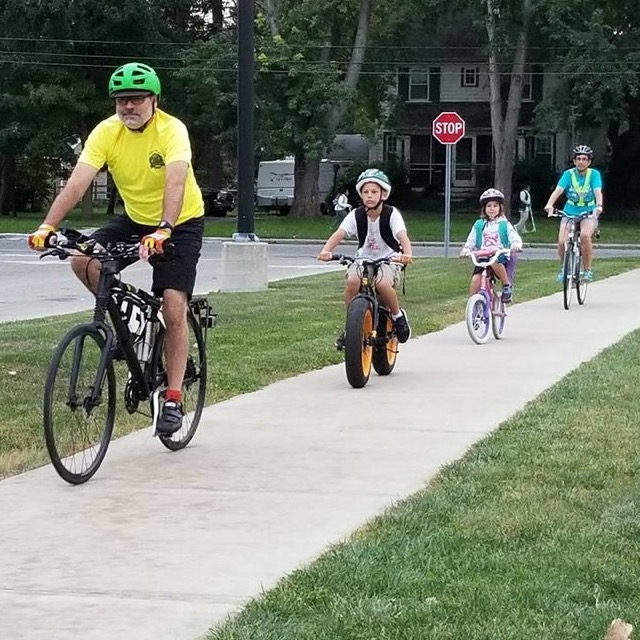
Kids gather with volunteers to ride and walk to school together as a way to help them exercise while traveling safely.

Safe Routes to School started with Toledo Public Schools in 2014 and was established with Washington Local Schools in 2018. The purpose of creating safe routes is to eliminate barriers that may otherwise deter students from being able to travel safely to and from school. Before routes were established, the Live Well team walked routes themselves to determine barriers or potential issues for school aged children including infrastructure concerns — such as striping on the roads, adequate lighting and designated crosswalks. 

Parents can access maps and routes for each of the 40 TPS elementary schools and 8 WLS elementary schools in addition to Washington and Jefferson Jr. High Schools.  Each map suggests the safest route for students to walk and bike to school. Maps can be found to TPS and Washington Local Schools at livewelltoledo.org. 

The NWO Food Bank and Lucas County Health Department partner with local corner stores and neighborhoods to promote healthy eating habits, including temporary retail pop ups with Toledo Farmers Market.

Since 2012, the YMCA has been collaborating with local organizations to increase the safety and well being of children in the community. Beth Deakins, Executive Director of Healthy Living at the YMCA, says, “Walking or biking to school helps get [children’s] brains ready to learn before school begins. It helps them get some of their energy out.”

The YMCA also partners with Toledo Bikes in the fall and spring to offer free bike repair and helmets. Operation Lifesaver, Inc. teaches students about safety concerning trains and train tracks. To get to school, students in North and East Toledo must cross more tracks than students in other areas of the city.

Don’t have a bike? ‘Walking buses’ are an option. Instead of getting on the school bus, two adult volunteers walk routes as students join them along the way. Parents know their children are getting to school safely and under the care of an adult. All volunteers undergo background checks and receive training.

Active transportation

To encourage more people to use active transportation, walking and biking, Live Well works to make roads safer in Toledo for everyone, working with local jurisdictions to allow everyone to share the road. 

In 2022, a completed Lucas County Transportation Plan was adopted by Toledo City Council, the Lucas County Commissioners, the City of Sylvania and the City of Maumee. The plan is designed to increase the number of bike lanes and off-road trails. Sharing the road with vehicles in close proximity is often a hindrance to those who would like to use their bikes as a mode of transportation. Live Well is working to create more space between riders and cars to make it easier for Toledoans to use active transportation to improve their health. 

Eating good in the neighborhood

Another initiative of Living Well is to increase access to fresh fruits and vegetables. While some neighborhoods do not have close access to grocery stores or supermarkets, Live Well partners with convenience stores so neighboring customers have the opportunity to buy healthy foods. Community surveys determine residents’ preferences and also to see which foods are actually being purchased. This helps to eliminate food waste while also assuring that the cultural variations of residents are represented in the available selections.

In collaboration with the Toledo Farmers’ Market and Lucas County Health Department, pop-up markets are held in the neighborhoods to increase access to fresh produce. Families are able to use their SNAP/EBT, WIC benefits and senior coupons. Corner store locations offering healthy foods can be found at livewelltoledo.org/school-gardens. 

Live Well Greater Toledo. 419-725-7892. [email protected]. livewelltoledo.org.

Nursing Mothers – Know Your Rights

Photo from Pexels.

On December 29, 2022 The Providing Urgent Maternal Protection (PUMP) for Nursing Mothers Act was signed into law. The “PUMP Act”, as it is often referred to, comes twelve years after a law called Break Time for Nursing Mothers was passed in 2010. While the ideas behind the PUMP Act are very similar to those in the Break Time for Nursing Mothers, this new law does help close some loopholes. 

What does the PUMP Act do?

Both the initial 2010 law and the new 2022 PUMP Act require that employers provide reasonable time and a private location, other than a bathroom, for lactating employees to pump during the work day for up to one year after the child’s birth. However, according to the U.S. Breastfeeding Committee, the new PUMP Act closes a gap that left almost 25% of women without federal protection and now has given that right for close to 9 million more workers. 

Additionally the new law allows for employees to file a lawsuit against their employer if the law is violated. Prior to the PUMP Act becoming law, employees were not able to sue their employers for damage.

Lastly this new law clarifies that time spent pumping counts as time worked when calculating minimum wage, and if an employee is also not completely relieved from their tasks while pumping, they are to be paid overtime.

Who is covered by the PUMP Act?

The PUMP Act applies to all employees covered by the Fair Labor Standards Act, although there are some cases in which employees of small businesses and transportation employees such as those working on railroads, on airlines and in motorcoach carriers may not be given the provided space or time to pump a work.

For rail carriers and motorcoach service operators, the law will go into effect on December 29, 2025 with some adjustments. For specifics on those professions and what is expected in December 2025, please visit USBC’s “The Pump Act Explained”. 

What to do if an employer doesn’t comply?

If an employer does not comply with the PUMP Act, there are multiple ways in which an employee can, and should, take action. Firstly, a complaint to the U.S. Department of Labor Wage and Hour Division can be made by calling 1-800-487-9243 or online.

After a complaint is made, a local Wage and Hour Division office will investigate. An employer can not fire or discriminate against an employee for filing a complaint. It’s against the law. 

Secondly employees can visit free helplines like Center for WorkLife Law and A Better Balance to help them learn about their rights and options. 

Thirdly, employees can file a lawsuit for violations in break time, private space for pumping, or for discrimination or being fired for requesting break time and space. A complaint does not need to be made prior to serving a lawsuit. However, it is important to note that according to the U.S. Breastfeeding Committee, “to be allowed to file a lawsuit for a violation of the lactation space requirement, an employee must notify their employer that an adequate space has not been provided. Employees must do this 10 or more days before filing a lawsuit in court. Informing an employer that the lactation space is not adequate may give the employer an opportunity to provide what is needed.”

Be informed and know your rights. For more information and additional resources, please visit dol.gov/agencies/whd/pump-at-work.

The ABC’s of a Peaceful Bedtime Routine

Parents are experts at multi-tasking. You’re a whiz at putting together tacos while pulling soccer pants out of the dryer. You know how to pack lunches and get the kids out the door with three minutes to spare before the school bus arrives. You don’t flinch when you hear it’s your turn to have two dozen cupcakes ready by two o’clock this afternoon. But when it comes to a smooth and peaceful bedtime routine, you may feel there isn’t any more gas in the tank. You just want them in bed and asleep so you can collapse on the couch for a bit before your own bedtime.

Children of all ages can make bedtime a bit of a nightmare. First of all, they’re tired after a long day and not very conducive to reason. In addition, they easily learn this is a vulnerable time for parents if the routine is not yet well-established because you’re tired too. Bedtime is an opportunity to push buttons and ask for more and stretch those boundaries all the way to the wall. Some parents come to dread the nightly battles known as bedtime.

But never fear, you can change that. What would the perfect bedtime routine look like in your ideal world? There is no one “right” scenario, but here are some guidelines that may help you get back on track to make bedtime enjoyable for both you and your kiddos. It’s as easy as A B C.

Aim  

To reach success you need a clear, measurable goal. You need to have an accurate picture in your mind of your chosen bedtime routine. And using the word routine implies you’ll go through the same procedures and activities each evening. Your goal at the end of these activities is a contented, cooperative child, relaxed and in bed, ready to drift off to sleep with no drama. 

At its best, bedtime is a time for bonding — a time to close out the day together and get ready for a new one. And studies show that children who have enjoyed consistent bedtime routines have better sleep quality all through childhood.

Children learn a measure of self-care even though you, the parents are key to implementation. A bedtime routine is calming and can help to improve stress levels and promote better behavior.

Basics

What needs to happen before bedtime and what do you want to add as positive interactions with your children before they sleep?

It makes sense to begin preparing for bedtime at least an hour earlier when you turn off all devices and move toward quieter activities.

Bedtime routines usually include most of the following:

  • A snack or feeding
  • A bath
  • Brushing teeth and using the bathroom
  • A quiet activity such as reading a book or singing a song together while
  • Cuddling or rocking
  • A short talk about the day
  • Goodnight kiss and lights out

You can feel free to tailor the routine to your family favorites if you don’t extend the routine beyond thirty to forty minutes. Some children enjoy playing in the bath for quite a while and others love to hear three or four stories before sleep. Be sure you’re the one setting the timeline and don’t allow power plays to put off time to sleep.

Address any fears or insecurities by leaving on a nightlight or hall light, keeping the door open, or reminding the children you’re nearby, but this is time to sleep. Offer a comfort item such as a favorite stuffed animal or a favorite blanket.

Consistency

Following the same routine in the same order each night is the key to a successful bedtime routine and is the biggest challenge in our heavily-scheduled lives. Ideally bedtime routines are done every night of the week. And when the routine is broken by vacations, illness or any other break in the schedule, you’ll need to re-instate the routine and be especially mindful of sticking to the guidelines. 

It’s best for both parents to take part in the bedtime routine, but when that’s not possible, try to follow the same routine no matter who is doing it. And for those children who always want one more drink and one more story, cut through the efforts to sabotage your plan by allowing them to make choices.

“Which pajamas do you want to wear, the red or the blue?” or “Which story shall we read tonight, the fairy tale or the book about spiders?”

You will adapt your bedtime routines and times as your children get older. They’ll take more responsibility for each step and go to bed a bit later in the evening. But even adults benefit from bedtime routines, so keep them in place for your children to ensure peaceful, no-hassle bedtimes.

Bedtime should be enjoyable for both parent and child. It’s a time to share your love and prepare for a healthy night of sleep. It takes time, effort and persistence to create a healthy bedtime routine, but the benefits are well worth your effort.

Jan Pierce, M.Ed. is a retired teacher and reading specialist who specializes in education, family life and parenting articles. Find Jan at janpierce.net.