

Parenting little ones can be exhausting, even on the best of days. But parents with debilitating diseases, illnesses or disabilities have even more hurdles to overcome on a daily basis.
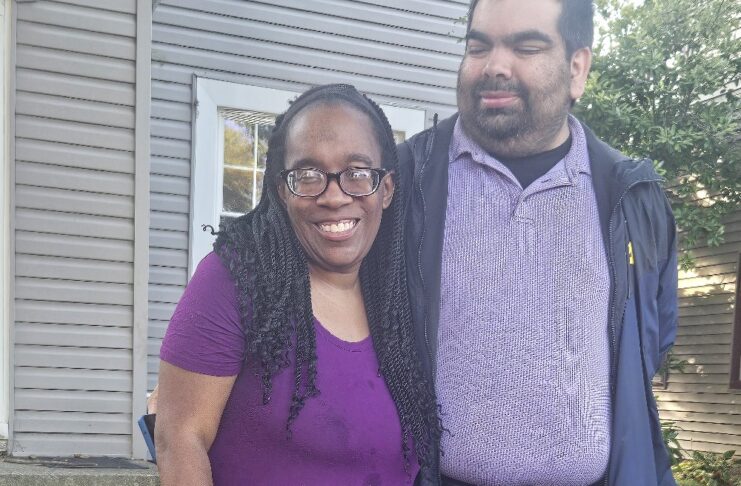
LaKedria Lozano knows this all too well. As a homeschooling mother of four children, ages 5 to 10, her weekly calendar is already full. She also has to manage multiple health conditions, from fibromyalgia and migraines to partial blindness. Recently, she was diagnosed with a condition called necrotizing autoimmune myopathy, a condition which affects her muscles in a way that now requires dependence on walking aids.
“If you look at me, you’d probably not be able to tell that I’m dealing with a lot of challenges,” Lozano said. “I’ve always been one to get around by any means necessary, and not make my life revolve around any of my challenges while I’m doing normal things, like going to the park with my kids.”
Parent guilt
Oftentimes, the parent with a disability will feel guilt and inadequacy when it comes to interactions with their children. They want to be present and active, but they know their own limitations. “Mom guilt is so real and it’s something that I deal with often. I try to give my kids the best life possible along with my husband, but sometimes I feel like I don’t do enough or they are missing out on things because I physically can’t get around,” she said.
Lozano and her husband try hard to create the typical childhood memories for their family despite their limitations. “One of the biggest parenting challenges I have is trying to make sure my kids have opportunities to be kids despite having a mom who can’t drive. They are tired of my unpredictable health. They have unfortunately witnessed me at some of my worst moments. It truly breaks my heart when I have to say ‘No, we can’t go to the park because I’m not able to handle it.’”
Advice for parents with health issues
Finding a balance between parental responsibility and prioritizing health is important. Here are some coping mechanisms that Lozano employs:
- Find a good support system
“In addition to my amazing husband, Don, who drives me everywhere and is an amazing dad, I also have my mother-in-law in the area and a helpful, loving church family at Northpoint Church of the Nazarene. They will come to me quickly if I call and need anything.”
- Avoid the comparison trap
“You are doing the best that you can for your family. Try not to compare yourself to that mom who has a challenge but can do this or that.”
- Be an example for your children
“Your kids are watching and learning. You are showing them how to be empathetic and help others. It’s all about how we approach our challenges and how we handle them.”
- Find your people
“Build a village of support and use it. This doesn’t have to be just family and close friends. I join Facebook groups, where I connect with others experiencing similar things, which leads to in-person connections and more support in general.”
- Get professional assistance
“Seek therapy to protect your peace.”
RELATED: Toledo Families Share the Impact of Assistance Dogs
The Importance of Self Care
Lozano has a Master’s degree in voice performance and pedagogy, along with a Bachelor’s degree in music and specialty certifications in teaching. She has taught music in many classrooms and settings, but has recently had to scale back because of the unpredictable nature of her health. “I’ve recently hit my ‘rock bottom’, and am really taking a step back. I’m going to focus on self care,” she said.
“I try to shake things off and push through the pain and just do the best that I possibly can. My kids know that they are loved and have their needs physically, mentally, academically and emotionally met. But again, mom guilt likes to sneak in often. Hopefully, in sharing my story, I can help others seek support.”

