From laugh-out-loud adventures to thoughtful stories about friendship and courage, this month’s selections highlight imagination, connection, and the many ways kids discover who they are. These standout titles invite young readers to laugh, wonder, and see themselves on the page.
By A.B. Peele This energetic picture book follows a group of animals determined to have the most bananas-filled day ever. Bursting with color and silliness, it’s a joyful read-aloud that celebrates friendship, imagination, and letting loose. Ages 3-6.
By Matt Phelan When a group of middle schoolers connects during detention, secrets surface and friendships are tested in this contemporary novel told in verse. Honest and relatable, it looks at belonging, identity and the courage it takes to speak up. Ages 8-12.
By Joe Todd-Stanton In a world where robots have replaced humans, one lonely robot begins to wonder what was lost. This beautifully illustrated graphic novel blends adventure and emotion in a moving story about memory, kindness and what it means to be alive. Ages 7-10.
By Christina Wyman When a group of middle schoolers forms an unlikely bond during detention, secrets surface and friendships are tested in this heartfelt, contemporary novel in verse. Honest and relatable, it explores belonging, identity and the power of speaking up. Ages 8-12.
by Suzanne Pell The town’s only doctor is a tiny snail with a very big reputation, and patients line up for his unusual cures. Playful and offbeat, this giggle-worthy story celebrates confidence, creativity, and community. Ages 3-8.
This collection of books was curated by freelance writerLori Orlinsky, an award-winning, bestselling children’s book author and industry expert who lives and breathes children’s books. She is the author of the Being Me series, including her 2025 book,Being Middle.
Dr. Jon Dvorak, Director of Medical Operations, Pediatrics, ProMedica Physician Group
Hepatitis B vaccination protocols for infants and young children were established in 1991 and have been touted as among the most successful policies in medicine. The series of three vaccinations begin with the first within 24 hours of a child’s birth (the “birth dose”), and two additional vaccinations between the ages of 1 and 18 months.
99 % drop in Hep B infections
Dr. Jon Dvorak, Director of Medical Operations, Pediatrics, ProMedica Physician Group
The vaccine has one of the most well-established safety records of any vaccine, said Jon Dvorak, MD, Director of Medical Operations, Pediatrics, with ProMedica Physician Group. Annual Hepatitis B infections among infants and children have dropped 99 percent (from 16,000 per year to less than 20 per year) since the protocol was recommended by the Advisory Committee on Immunization Practices (ACIP).
“Most adults with chronic Hepatitis B have no symptoms and are unaware they are infected. Unvaccinated infants can be infected through household or community exposures, such as nail clippers or toothbrushes,” Dvorak said.
Recent federal revisions to established policy
Dr. R. W. Mills, Chief Medical Officer, Nationwide Children’s Hospital Toledo.
But recent federal revisions to Hepatitis B vaccination policy have thrown a wrench into pediatrics practices. In the revisions, announced last December by the Centers for Disease Control and Prevention (CDC), vaccine advisers have instead recommended that the vaccine be given at the time of birth only to those children born to women who test positive for the virus. The panel also voted to revise the remainder of the policy, recommending that physicians check a child’s antibody levels after each shot to determine whether additional shots are needed.
The American Academy of Pediatrics (AAP), however, continues to recommend giving newborns a dose of hepatitis B vaccine within 24 hours of birth, with additional doses at 1-2 months and 6-18 months. In Toledo, many pediatricians are following the AAP guidelines for these immunizations. “We strongly believe the schedule of the AAP is best,” said Dr. R. W. Mills, Chief Medical Officer with Nationwide Children’s Hospital Toledo. “We have not changed our recommendations.”
Stemming the confusion tide
What has changed, however, is the discussion. “Our single biggest concern is confusion,” Mills continued. Whenever you make changes to a standardized policy, he said, “you’re implying that there’s something wrong with the previous schedule. There has not been any new evidence or concerns about the vaccine or the schedule.”
Children are at their highest medical risk when they are infants, when the immune system is not at its peak. Vaccines are critical at this time of life, Mills said. Stopping the protocol at fewer than three shots assumes efficacy that may not be supported by existing data.
Dvorak explained that the “Vaccine Integrity Project” published in December 2025, found that delaying the birth dose of the Hepatitis B vaccine would lead to increased infections with no benefit to the vaccine’s safety or effectiveness. “Because the changes to the vaccine’s recommendation were made in early December 2025, and reiterated on January 5, we have not seen much, if any, change in our Hepatitis B vaccinations,” he said.
CDC Recommendations
The CDC has revised the number of vaccines they recommend for children, based on three criteria:
Immunizations recommended for all children – including measles, mumps, rubella, diphtheria, tetanus, pertussis, polio, Hib and pneumococcal disease vaccines
Immunizations recommended for certain high-risk groups or populations – based on underlying comorbidities, unusual exposure to the disease or the risk of disease transmission to others
Immunizations based on shared clinical decision-making – based on discussions between physicians and the patient or parent/ guardian
The Hepatitis B vaccination has been moved to both the high risk and clinical decision-making recommendations.
Beginning last fall, the CDC also shifted the number of vaccines routinely recommended for children from 17 to 11, and the number of routine vaccines from 13 to 7. Vaccines no longer recommended for routine use by all children in the U.S. include Rotavirus, COVID-19, Influenza, Hepatitis A, Hepatitis B and Meningococcal.
Call your doctor
Maternal screening throughout pregnancy (and for other family members too, if needed) is recommended. “All of our decisions are based on conversations between families and their physicians,” said Mills.
“Important issues have come up in our conversations with families,” said Mills. “We look at the ‘community’ of their broader families, and who might not be able to be protected when the new baby comes (young and older).”
“A good relationship between families and providers is critical today,” Mills said. “It’s key to trust your family provider and, for providers, it’s all about communication with families. We want to be available to answer any questions families have.”
Jessica Bol designs and sells handmade clothing for children.
Ask a parent about kids’ clothes, and you will hear a familiar refrain. It is hard to find quality clothing that can take the daily wear and tear of childhood. Jessica Bol saw this problem as an opportunity. In 2019, she launched George and Lynn, sharing the bows and dresses she was making for her own daughters with other families.
A sustainable brand
“I started George and Lynn out of necessity. I was simply making things for my own kids. As I shared what I was creating, people really connected with it, and the business grew naturally from there,” Bol explains. “Over time, it evolved into a sustainable brand, which is something I deeply believe in. Kids grow so fast and I wanted to create clothing that lasts far longer than typical store-bought pieces and can truly keep up with childhood.”
George and Lynn children’s clothing is sold at festivals, events and markets such as Finders Keepers.
Bol sells her clothing collections on her website, as well as local markets, festivals and events such as Finders Keepers. Her handmade clothing is made of sustainable fabrics. From hoodies and crewnecks to dresses and rompers, many items are designed with “grow with me” features. “I offer a wide range of pieces, including custom orders. My collections focus on fun, joyful prints that kids love, while also giving parents peace of mind through durability and longevity,” Bol said.
Bol plans to attend more in-person events in 2026 and to collaborate with local small businesses. “Community and connection are really important to me, and I want the brand to continue to grow in that direction.”
Get to Know Jessica Bol
Tell us about yourself! I live in Northwest Ohio with my husband, Tyler, our twin daughters Charlotte and Elouise (6), our three year old, Courtland, and our dog named Peanut, who is very much a part of the family.
Where did you grow up?
Oak Harbor, Ohio. I attended Bowling Green State University, where I studied construction management.
Careers? In 2015, I moved to Colorado on a whim. I worked as a manager of a restaurant, and then in a full time role in quality control at a concrete company. While there, I met my husband. Eventually, we made our way back to Ohio, got married in 2018 and started our family. Dream vacation? A sightseeing trip to Paris. If you could learn one new skill, talent or ability to master, what would it be? Consistency on social media. Marketing is such a huge part of running a business, and doing it all on your own can be incredibly challenging. If I could truly master that, it would be a game changer.
Pick your favorite: podcasts, movies or books?
Books, especially audiobooks. I love romance novels, and my all-time favorite series is Throne of Glass.
Any hobbies?
Sewing and quilting are big ones, along with spending time with friends and being creative whenever I can.
You can be counted on to bring ___________ to the potluck.
Green bean casserole. It’s my go-to for family gatherings. Favorite local restaurant? Hands down, Paddy Joe’s in Oregon. Their chicken chunks are the best! I top mine with barbecue, fries, coleslaw and cheese.
Favorite hidden (or not-so hidden) gem in Northwest Ohio? Laverne and Frankie, a women’s boutique in Genoa. It’s one of those small businesses that more people need to know about. I’m a huge believer in supporting small, local brands and I’m genuinely obsessed with everything she’s creating.
Any quotes or mottos that inspire you? Through the hard times, there will always be people who tell you to give up, that your dream isn’t realistic or that it won’t work. But I’ve been doing this for almost seven years now, and I’m still here. I’m still sewing, still showing up and still putting myself out there because I truly love what I do. This business has brought me incredible friendships, meaningful opportunities and a deep sense of fulfillment, and I’m incredibly grateful for all of it.
What has surprised you about being a business owner? How differently small businesses are treated compared to large corporations. You don’t fully understand the business side until you’re in it. Navigating customer expectations, problem-solving and learning how to handle situations with grace, especially in a world of instant gratification.
Advice for mompreneurs who are thinking of starting their own business?
Go for it. If it brings you joy and you’re passionate about it, don’t let anything hold you back-especially yourself. You’re already a mom, which is the hardest job there is. If you can raise kids and run a household, you can run a business. Believe in yourself, trust the process, and don’t quit your daydream.
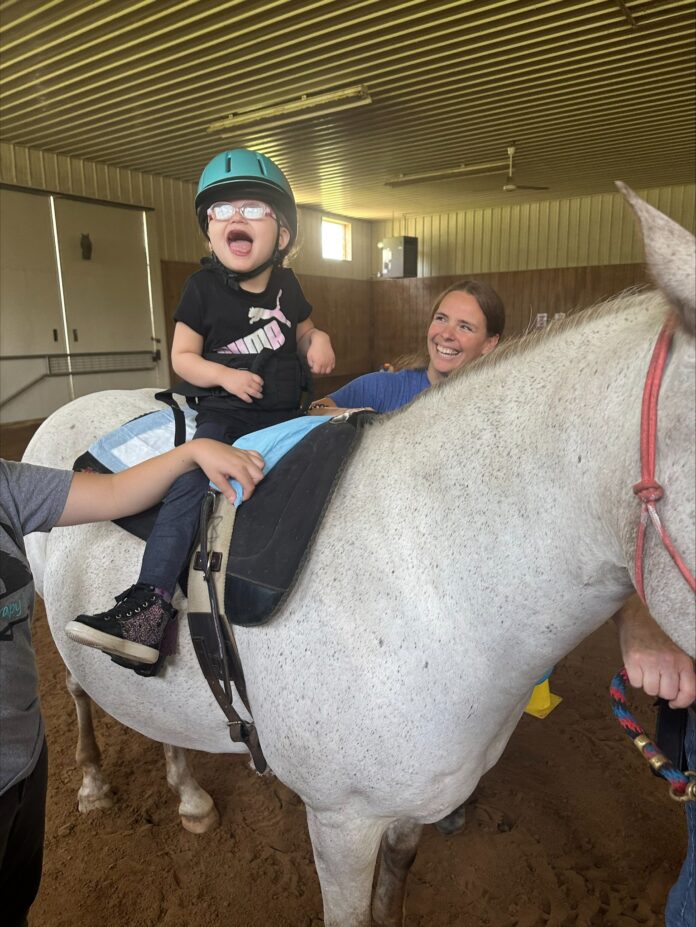
Stephanie Gross, physical therapist at Nationwide Children’s Hospital – Toledo, and Ava. Image courtesy of Nationwide Children's Hospital – Toledo.
For children who struggle with movement, communication or sensory regulation, traditional therapy settings aren’t always the right environment to make meaningful progress. Hippotherapy takes therapy outside the clinic and onto a horse, using purposeful movement to help children meet developmental goals in a way that feels engaging rather than clinical. Hippotherapy is a therapeutic treatment using horse movement to improve neurological and physical function in patients.
“Hippotherapy is the use of purposeful manipulation of equine movement in treatment by Occupational Therapy (OT), Physical Therapy (PT) and Speech Language Pathology (SLP) professionals to improve patients’ functional therapy goals,” explains Stephanie Gross, a physical therapist at Nationwide Children’s Hospital – Toledo.
The rhythmic movement of a horse provides “sensory input that is needed to help a patient regulate their sensory system, which then allows them to focus on the task at hand,” Gross said. She noted that achieving that level of engagement can be difficult in a traditional clinic setting.
How Hippotherapy differs from therapeutic riding
Hippotherapy is often confused with therapeutic riding, but the two serve different purposes. “Therapeutic riding is provided by a certified instructor whose goal is teaching persons with disabilities to ride,” said Patty Wolff, owner of TimberWolff Stables, which provides horses and facilities for hippotherapy sessions in the Toledo area. “Hippotherapy is provided by a certified therapist… whose goal is using the horse to provide therapy.”
In hippotherapy, the horse is not the focus of instruction. Instead, therapists use the horse’s movement as a treatment tool, carefully directing speed, direction and patterns to support each child’s goals.
Who can benefit
Hippotherapy is commonly used with children who have cerebral palsy, Down syndrome, autism spectrum disorder, developmental delays, scoliosis and motor or speech- language impairments. It can also support children who need postural training or core strengthening.
“Hippotherapy can support goals such as sensory regulation, core and lower extremity strengthening, increasing hip range of motion, improving flexibility, balance training and postural training,” said Gross.
The role of the horses
At TimberWolff Stables, horses are carefully selected and trained for therapy work. Wolff said horses are chosen based on temperament and size and they undergo specific training to prepare them for therapy work.
“Horses need to be calm and prepared for unknowns as children can be unpredictable in their movements and voices,” she said.
Why it works for many kids
Both Gross and Wolff said motivation plays a major role in why hippotherapy can be effective. “Many look at it as horseback riding not therapy and don’t realize how hard they are working as they are having fun,” Wolff said.
How families can get started
To participate, children must meet certain safety requirements, including age and weight guidelines, and therapists review medical history to identify any precautions. Families interested in hippotherapy should start by talking with their child’s therapist or health care provider to determine whether it may be an appropriate option.
For Toledo families, hippotherapy offers a unique approach that blends clinical expertise with movement and connection — helping some children make meaningful progress in a setting that feels both supportive and empowering.
Experience trampolines, foam pits and more at Get Air Trampoline Park. Photo from @getairsports on Instagram.
While making snow angels and ice skating can be fun, the cold weather often keeps kids inside – just waiting to be entertained. Chilly weather, however, doesn’t mean all the fun needs to be at home. There are fun indoor play spaces in Toledo that are perfect for helping kids burn up energy.
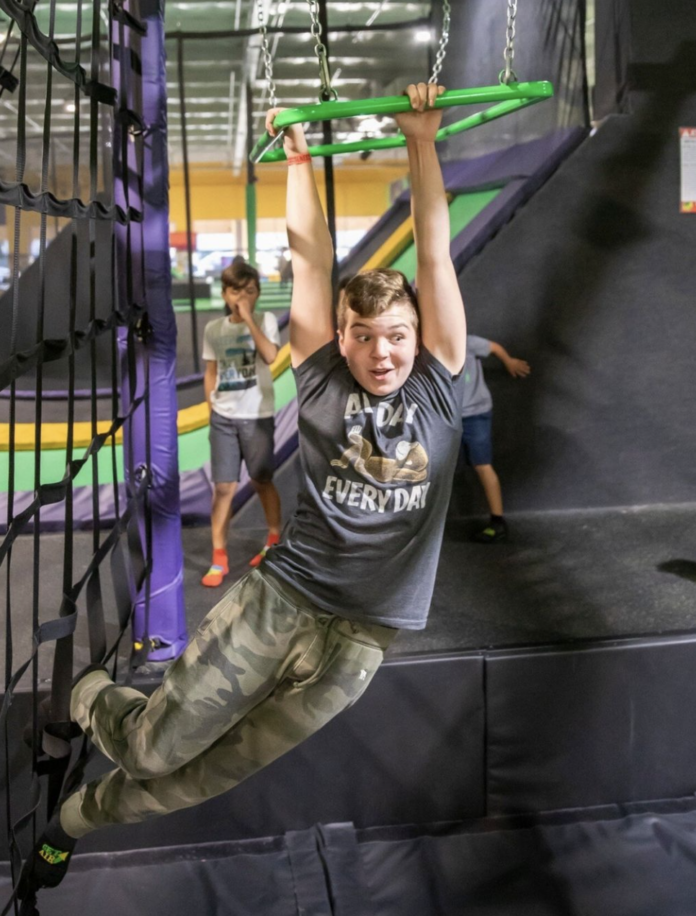
Kids test their skills with the ninja warrior course at Skyzone. Photo from @skyzonetoledo on Instagram.
At Sky Zone, kids can literally bounce off the walls. With so many high energy activities, kids are likely to be tired far before they have the chance to be bored. This trampoline park is full of fun activities for kids, including a foam zone, trapeze and swing, warped wall and ninja warrior course. For kids that can’t get enough, there are memberships with added perks.
For kids who love to jump around, Get Air Trampoline Park can be the perfect day out of the house, offering a variety of fun activi- ties for kids to enjoy. Sit back and relax in their massage chairs while waiting for your kids
Bring your kids to climb, slide and play at Funagin’s SkyMaze Playground. This indoor playground has many fun features, providing a safe experience for kids, while parents relax. Funagin’s also has laser tag, escape rooms, a roller rink and an arcade.
While not specifically a playground, the Imagination Station offers many hands-on activities for children — for an added bonus, this day trip might even spark an interest in STEM. The Imagination Station has something for everyone, including a wet lab with water tables, simulator theater, designated role play area, high wire cycle, hurricane chamber and more.
In addition to the classic food and arcade games that children know and love, Chuck E. Cheese has a Trampoline Zone for kids to jump and play. The iconic mascot, Chuck E., adds to the excitement, making it a popular destination for families for an outing or, perhaps, a birthday party.
Jump around inflatables at Sylvania Playland. Photo from @sylvaniaplayland on Instagram.
At Sylvania Playland, kids can jump and play on a variety of inflatables and indoor play structures. The inflatables are specifically designed for children 12 and under, so those are not available to teens. However, there is glow in the dark mini-golf and arcades for all to enjoy.
Take a roadtrip to Jungle Junction in Bellevue for a day of energetic fun at this play and party center. This play space offers six levels of adventure for kids under 12 years old. Socks are required to be worn at all times in the play area.
One of the more recent additions to the Toledo area, Waddles offers a fun atmosphere for kids. Adults can see the full play space while sitting in comfortable seating. There is a range of attractions such as an infant zone, interactive structures and imaginative playhouses.
Lattes & Littles provides fun for the whole family in Sylvania. While the kids are enjoying the soft play structure, toddler area and Play Town, parents can sip on specialty coffee drinks at the cafe. The playspace offers drop- in play as well as birthday parties for kids.
Kidnetic Play Cafe features a ninja course, trampoline zone and soft toddler play area for kids to enjoy. The space is designed for ages 1-10. They offer open play, birthday parties and special events.
Black Swamp Play Place is designed for kids ages 2-6 and features a Pikler triangle, balance beams, stepping stones, play scarves, foam pogo stick, indoor wooden jungle gym and more.
260 Railroad Avenue Suite C,Bowling Green. 567-228-8332.
This play space has climbing structures, swings, a café and more. It was founded by pediatric occupational therapist Erica Zimmerman. The inclusive indoor space caters to children of all abilities, offering a sensory-friendly environment for both play and therapeutic activities. There is also a dedicated area for infants under 24 months.
The Family Center provides the opportunity for young children and their grown-ups to unique art inspired by the work in TMA’s collections and special exhibitions. This family-friendly space is filled with all the supplies they need to create.
To date, Ball’s Hidden Pictures have appeared in over 300 publications throughout the United States and internationally, including, now, in every issue of Toledo Area Parent.
Liz working on a hidden picture puzzle. “My office tends to get cluttered!”
Do you know someone that doodles on every scrap of paper and scribbles on all the pages of their spiral notebooks? Liz Ball is that person. Like many young creatives, Ball knew she wanted to be an artist from an early age.
“My childhood was filled with farm life, scouting, nature, art and books,” Ball said. “Imagination and creativity were encouraged and a normal part of my childhood. I loved drawing and of- ten filled the margins of my school pag- es with sketches while taking notes.” It wasn’t until many years later that she returned to that early interest.
Hidden Picture origins
“After getting married and after our two children were born, I stayed home and started pursuing my love of draw- ing. This evolved into sending puzzles to magazines, and in 1991, my first Hidden Picture puzzle was published in Hopscotch magazine.”
To date, Ball’s Hidden Pictures have appeared in over 300 publications throughout the United States and internationally, including, now, in every issue of Toledo Area Parent.
To date, Ball’s Hidden Pictures have appeared in over 300 publications throughout the United States and in- ternationally, including, now, in every issue of Toledo Area Parent. Since 1996, her puzzles have appeared twice weekly in the Dayton Daily News.
Ball, who resides in Tipp City, Ohio, gets her inspiration from the flower gar- dens that surround her ivy-covered stu- dio, where her German shepherd and her fluffy cat keep her company.
“When the Dayton Daily News first began publishing Hidden Pictures, we discovered it wasn’t just kids who liked finding the hidden items. They’ve become a family game in many house- holds. It’s especially nice today as a way to unplug from video and cell phones,” she explains.
Every year, Ball receives thousands of letters from fans of her puzzles. Chil- dren enjoy the fun that her puzzles pro- vide, while many adults use the puzzles to help them with memory and brain function.
“Hidden Picture puzzles are recom- mended by teachers, parents and doc- tors to help improve spatial skills, eye coordination and memory retention,” she said. “But mostly, kids and adults just think they’re fun.”
From puzzles to published books
In addition to appearing in newspa- pers and magazines, Ball has published fifteen books in her Hidden Treasures series. “I tackled self-publishing before it was popular, and truthfully, I didn’t know much about how to do it,” she said. “I read everything I could about printing and publishing and decided to go for it.”
After a lot of research and editing, she saw her first book in print in 1999.“I’d ordered 3000 books, and to say I was nervous about whether they would sell is an understatement. But in three months, I had to reorder! I’ve been blessed to now have fifteen titles in the Hidden Treasures series. My books have sold over 1,000,000 copies.”
Ball has also written and illustrated over 40 books in her career, including the book “Why America Matters” by Dr. Ben Carson.
Classroom demonstrations inspire future artists
Children often ask her about her art process when she visits them in class- room presentations. “School visits are al- ways fun and my presentations are a lit- tle different than a regular author visit.”
Her classroom sessions include two hidden picture demonstrations. The first involves a personalized theme for the teacher. The second is a hands-on lesson. “Students enjoy this step-by-step pro- cess. While drawing, I encourage creativ- ity and imagination, and can incorporate themes, shapes, and options for hidden items,” she said.
“Kids always want to know how long it takes me to draw a hidden picture. The average time is usually around three hours, and that’s from blank page to pencil sketch to the final inking. Some pages in a book can take six to eight hours.”
While Ball also enjoys hobbies such as gardening, baking, reading and traveling, she still returns to her first love. “Even when traveling, I take my clipboard and draw in airports, hotels, or when relax- ing at my destination,” she said. “I draw almost every day and I love it.”

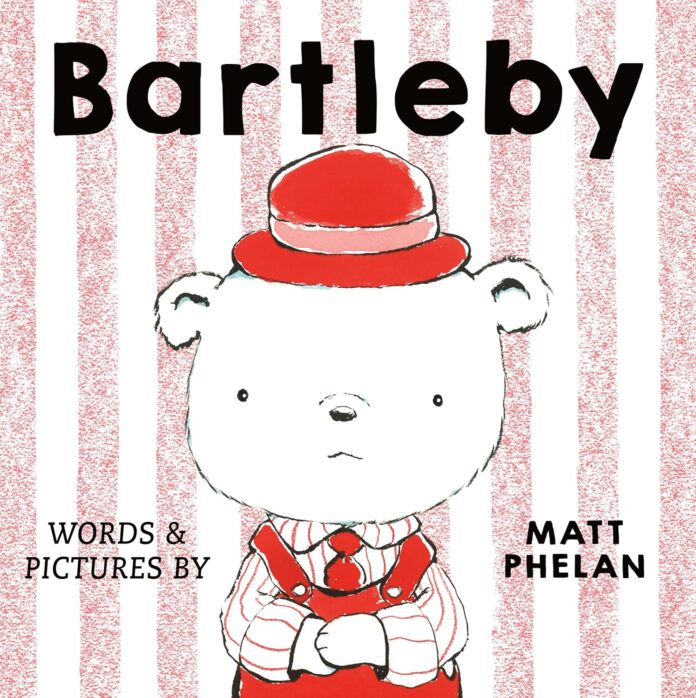

 Bartleby




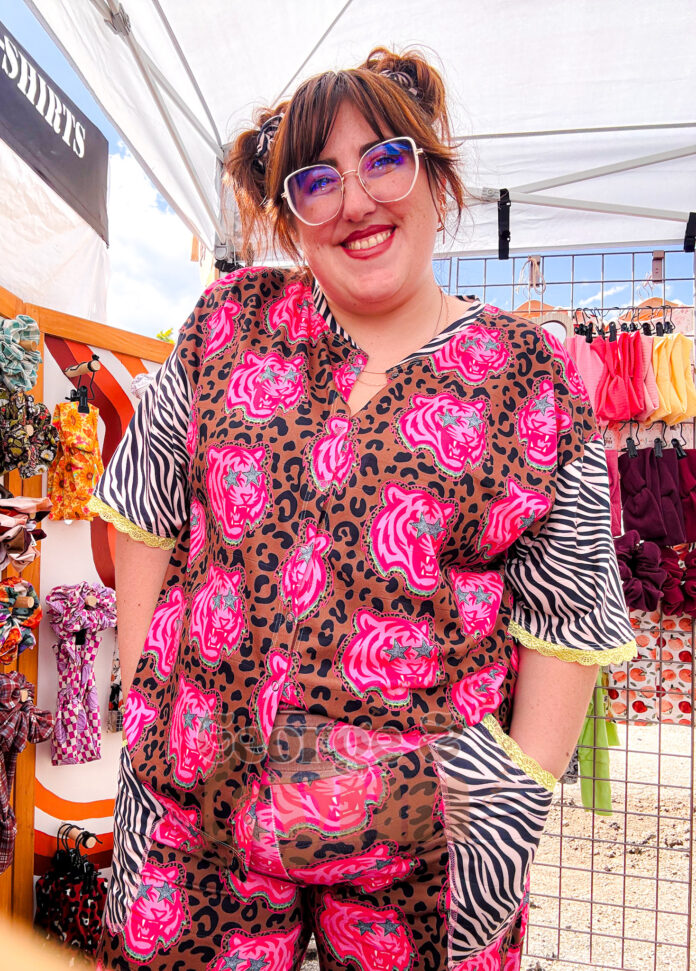

 Tell us about yourself!