Home Blog Page 142

10 new guidelines to keep your kids safe on social media

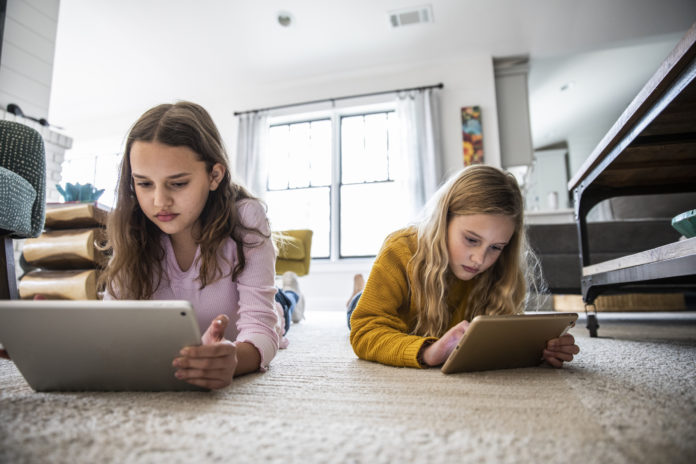
Tween sisters using digital tablets on living room floor

The American Psychological Association (APA) recently released a health advisory as guidelines for limiting social media use among adolescents.

The advisory includes 10 recommendations based on feedback from a panel of health experts who create healthy and safe things parents can practice with their kids. The recommendations include social media literacy, promoting a healthy online environment and ensuring that the use of social media does not interfere with sleep and/or physical activity, among others.

Making sense of the recommendations

Parents may find these guidelines to be daunting, but the APA stresses that these are merely guidelines and not an end-all-be-all for your child’s mental development.

The APA notes that using social media “is not inherently beneficial or harmful to young people” and is “dependent on [an] adolescents’ own personal and psychological characteristics and social circumstances,” meaning each child is different and matures at a different pace.

Muszynski on Social Media
Dr. Muszynski has been practicing pediatrics for eight years.

Ashley Muszysnki, MD, a pediatrician at ProMedica Physicians Oregon Pediatrics, says that social media is a double-edged sword, and — when not used correctly — can do more harm than good. “It [social media] can give a child a sense of community by connecting to other people, especially in smaller school districts, but it can also lead to your children comparing themselves to social media influencers which can lead to self-doubt, anxiety and depression.”

This is why she believes parents need to play a large role in their child’s social media lives, and they should start with social media literacy, which comes in at number nine on APA’s guidelines. 

“Parents should actively try to teach their children social media literacy to help them understand what’s happening in the world so that when they see it online, the message or image won’t be misconstrued,” Dr. Muszysnki says, adding that it’s important for parents to look at screen time usage as a whole, not just social media use. According to Children’s Hospital of Orange County (California)(CHOC), over 65 percent of teens spend more than four hours on their phones daily. 

“There have been a lot of studies that show blue-light emitting devices such as phones or tablets can affect the natural production of melatonin in a child’s body,” says Dr. Muszynski, adding that if you start by limiting screen time, it will be easier to enforce social media rules in the house.

What are some simple things parents can do to keep their children safe while on social media?

While you can’t monitor everything your child does when they’re online, CHOC offers some simple tips and tricks to try with your child. These include setting boundaries to limit potential health issues, setting daily limits for electronic devices while encouraging face-to-face interactions with others, and having an open dialogue with your children about what they are seeing online or on social media.

In addition to what the APA offers, Dr. Muszysnki says another great resource for parents is the American Academy of Pediatrics, whose mission is to help families reach their optimal physical, mental and social health and well-being.

A panel of experts with APA started a Q&A section that is categorized into early childhood, middle childhood, early adolescence, middle adolescence and tech in K-12. Parents can submit questions that are then reviewed by the experts who create personalized answers. Those answers will then be added to the library of answers to help others with similar questions.

Dr. Muszynski reminds parents that the APA guidelines can be used as a tool but it’s up to parents to garner strong relationships with their children as they grow, explaining, “The life on your phone isn’t detrimental to your life off your phone.”

Find the recommendations, in full, at apa.org.

Mental Health Matters at Kobacker Center

Mental, emotional, and behavioral disorders in youth can cause long-term problems that may affect the health and well-being of children, families, and communities. Treating a child’s mental health needs as soon as possible can help reduce problems at home and school and help with healthy development into adulthood.

Located at The University of Toledo Medical Center (UTMC), Kobacker Center has been dedicated to addressing the mental health needs of children, adolescents, and their families for the past 40 years. Their skilled psychiatry staff specializes in treating youth with severe emotional and behavioral needs with treatment plans available on both an outpatient basis as well as at inpatient units.

Children’s Mental Health in Crisis


Kobacker interior
Photo Credit Kobacker Center website

The increased demand for mental health help for adolescents is one of the biggest changes seen by team members at the Kobacker Center. According to Caylie Bell, MD and Child Fellow at Kobacker Center, more children than ever are struggling with mental illness, with a recent study showing that nearly 20 percent of the youth population has a mental health disorder.

Some common child and adolescent psychiatry conditions that are evaluated and treated at Kobacker Center include anxiety, attention deficit disorder, autism spectrum disorders, and conduct disorders. The staff also helps treat youth with depression, learning disabilities, post-traumatic stress disorder, self-injury, sleep disorders, stress, suicidal ideation, gender dysphoria, and many other conditions.

Kobacker interior
Photo Credit Kobacker Center website

Treatment at Kobacker Center

Kobacker Center has many highly skilled psychiatrists, nurses, and support staff who specialize in helping children with serious emotional and behavioral needs, as well as their families. The team provides comprehensive evaluations and makes recommendations for treatment. Treatment plans may include individual and family therapy, group therapy, play therapy, parental guidance, and more. While counseling and medication management can often help youth with their mental health diagnosis, there are also more intensive outpatient or partial hospitalization programs available. The most robust treatment is provided at the inpatient unit where patients may stay from three to six nights.

Kobacker building
Photo Credit Kobacker Center website

“We try to make interventions specialized, as every youth has their own unique challenges and is raised and exposed to a different environment,” said Dr. Tanvir Singh, Kobacker Center Medical Director. “We always need to recognize the importance of continuity of care. In current practices to help kids, we should not only focus on the weaknesses and problems. The best mental health treatment programs provide a platform for the healthy development of all aspects of youth personality and help with resilience development. Our social work team at UTMC does a great job in ensuring a patient’s treatment is ongoing after their stay with us.”

Learn More or Schedule an Appointment

These are challenging times for children, and the staff at the Kobacker Center at UTMC take great pride in being a provider of choice to help youth and adolescents get the help they need when they need it. To learn more about the services offered at Kobacker Center or to set up an appointment call 419.383.5695.

Farm Animals & Pancakes: Free Fulton County Breakfast on the Farm

Breakfast on the Farm is a family-friendly event that allows the community to enjoy a locally-produced breakfast while having a close-to-home agricultural experience.
Breakfast on the Farm is a fun, free event that the whole family will enjoy!

Free Fulton County Breakfast on the Farm event to be held Saturday, June 24


Never been on a farm? Looking for a fun, family-friendly event? Would you like to meet local farmers, see some animals, and enjoy a delicious breakfast? If so, make plans to attend Fulton County Breakfast on the Farm on Saturday, June 24 – a local event that shines the spotlight on the importance of agriculture.

Tractors, sprayers, combines, and other farm equipment will be available for viewing.

This popular farm event will be held from 9am–1pm at the Triple H Farms in Metamora. Pre-registered guests will enjoy a free breakfast, meet cows, calves, and horses, see a variety of farm equipment, and enjoy many other agricultural-themed activities. Guests will learn about modern food production practices and meet farm families who work hard to produce safe, wholesome food for Ohio communities and the world.

Free Breakfast


Breakfast on the Farm is a family-friendly event that allows the community to enjoy a locally-produced breakfast while having a close-to-home agricultural experience. Pre-registered guests will enjoy a delicious breakfast including pancakes, sausage, scrambled eggs, yogurt, tomato juice, and salsa!

Fulton County Breakfast on the Farm is coordinated by the Fulton Soil and Water Conservation District, Ohio Farm Bureau Fulton County, and the Fulton County OSU Extension, along with a community-based planning committee and the help of many volunteers.

Tour the Farm


After enjoying a delicious breakfast, guests of all ages will have an opportunity to take a self-guided tour of the Triple H Farm. They will meet the Herr family and learn about today’s modern tomato and grain farms. Guests can visit the greenhouse and get an up-close look at the equipment used to plant and harvest tomatoes. Tractors, sprayers, combines, and other farm equipment will be available for viewing. There will be beef cattle and horses for guests to meet and a variety of hands-on activities for kids to enjoy. Representatives from any agriculture commodity groups will be on-hand to share information about water quality, dairy, beef, bison, corn, soybeans, composting, and more!

Pre-registered guests will enjoy a delicious breakfast including pancakes, sausage, scrambled eggs, yogurt, tomato juice, and salsa!

“Breakfast on the Farm gives people throughout the region a firsthand look at modern food production,” shared Amanda Podach, Fulton Soil and Water Education Specialist. “As the gap between producer and consumer continues to grow, it is important to offer people the opportunity to experience how farmers care for their animals, how they produce wholesome and safe food, and how they care for the land.”

There will be a variety of hands-on activities for kids to enjoy including a corn play area, planting activity and more!

Meet The Family – Triple H Farms


Triple H Farms is a fifth-generation family farm operated by the Tommy and Jenny Herr family in partnership with Tom, Sr., and Lynn Herr. The Herr “Century Farm” has operated since 1910 when it originally began on US 20, west of Assumption growing grain, vegetables, and tomatoes for the Toledo and Detroit markets. In 1991, the farm was incorporated to be Triple H Farms, Inc. and continues to grow high-quality corn, soybeans, wheat, hay, tomatoes, and beef today. Triple H Farms is a member of the Ohio Cattlemen’s Association, the Gerald Grain Co-Op, and Fulton County Farm Bureau.

Pre-registered guests will enjoy a free breakfast, meet cows, calves, and horses, see a variety of farm equipment, and enjoy many other agricultural-themed activities.

Fulton County Breakfast on the Farm is coordinated by the Fulton Soil and Water Conservation District, Ohio Farm Bureau Fulton County, and the Fulton County OSU Extension, along with a community-based planning committee.

Register Today


Registration is required for the 2023 Breakfast on the Farm event. To register, click here.  To learn more about this free event visit the Fulton County Facebook page.

Epworth United Methodist Church preschool program will not return for the fall school year 

Epworth’s preschool program closed for the 2023 school year in March with hopes of reopening in the fall, but they recently reported in their newsletter that they will not be able to rebuild their program, onboard staff or register new students in time for the fall.

Since its founding in 1982, Epworth United Methodist Church has offered the community a private, nonprofit preschool program that offers half-day sessions for children ages two to five. 

Not only is the preschool program licensed through the State of Ohio Department of Job and Family Services, but teachers are also certified through the department and complete professional development hours each year, which is paired with a strong curriculum that includes thematic units, weekly lesson plans, crafts, circle story time, and large group learning. The program also features direct teacher instruction through small groups, creative time with free art, group music, gross motor play time, and a variety of other manipulatives. 

Preschool facilities include an engaging classroom environment, enrichment room, Children’s Church, indoor gym, and fenced outdoor playground. Special programming includes holiday parties for students, school pictures, an Olympics event, and an end of year school picnic.

For updates about the preschool program, whose staff is still hoping to reopen in the future, call Epworth at 419-531-4236 or email [email protected].

Celebrating Twin Polar Bears Kallik and Kallu at the Toledo Zoo 

On Friday, April 28, the Toledo Zoo officially introduced its new twin polar bear cubs, Kallik and Kallu, to the Arctic Encounter exhibit. Kallik and Kallu are two male cubs who were born on November 11, 2022, to their mother Crystal, who after the birth of her new twins now has a total of nine cubs. 

According to Michael Frushour, curator of mammals, the cubs stand out among their counterparts and “may be some of the most fun and rambunctious cubs we have ever had here at Toledo Zoo.” 

The decision to exhibit Kallik and Kallu has followed close supervision of the cubs to ensure their proficiency in swimming and exploring their environment independently. The Toledo Zoo’s success in efforts to care and breed Kallik and Kallu is a testament to the Zoo’s 20 years of experience as a part of the Species Survival Plan (SSP), which helps promote the survival of select species in zoos and aquariums, most of which are threatened or endangered species in the wild. 

With polar bears listed as a “vulnerable” species on the IUCN Red List of Threatened Species, the Zoo has included the cubs and other polar bears in its conservation efforts, which include maintaining a safe and enriching environment for the bears. The cubs can be visited at the Arctic Encounter daily from 10am to 5pm, or viewed on live stream.

To learn more about the Toledo Zoo and its polar bears, visit the Toledo Zoo’s website. To learn more about Toledo Zoo memberships, visit this page.  

Local Nonprofit Provides Interactive Technology for Autistic Children

training session
Group training

Tammy Eisenreich and Brooke Olsen met each other because they each had four-year-old sons at the same preschool for autistic children. Brooke’s son was nonverbal and learned to communicate through an iPad, while Tammy’s son was verbal and used interactive technology for learning to read, daily living skills and help with transitions. They had seen such dramatic improvements that they wanted other autistic children to have access, and so, in 2011, they founded the iTaalk Autism Foundation. 

iTaalk (Interactive Technology Assisting Autistic Little Kids) started out providing tablets to families around the country. The families receiving the device had barriers to using them effectively. 

“We learned very quickly that if the family can’t afford an iPad, you’re probably not going to be able to afford the educational apps that are going to make it a true communication device or educational tool.” 

Besides the cost of apps, families experienced difficulties in knowing how to use the technology for specific needs of their child. The organization realized that they would need to provide apps and education along with the device. 

Since 2011, iTaalk has educated over 3,000 families, service providers, and caretakers on the beneficial uses of interactive technology for children with autism and other disabilities.

Helping a parent

Benefits from Interactive Technology

  • Assisted communication
  • Improvements in math and reading
  • Social and emotional control
  • Individualized options: the child chooses pictures and rewards
  • Consistency: Tammy explains, “An app is great because I would get kind of frustrated after the 10th time of repeating the same thing over and over. Even our nonverbal kids, they hear the frustration in your tone. The app doesn’t do that to them.”

Tammy Eisenreich second from right co-founder of iTaalk

National Impact 

iTaalk is the giving program for the two major companies providing communication assistance apps nationwide. iTaalk volunteers verify the need for the app and send them a code to obtain the app at no cost.

In addition, iTaalk has partnered with other nonprofits to deliver the technology and education in areas that don’t have easy access to services. They went to Aspen, CO to provide 70 devices and training for 150 people. The organization has provided similar programs in Florida, Boston, and Charleston. 

Local Impact

Tammy emphasizes that “we want to help locally. We’ll help in Aspen and other places when funding comes in to do so, but this [Toledo] is our home.” 

Two giving cycles for devices are held in April and October, along with a full day training on iPad set-up and on the built-in accessibility features. iTaalk also has a program that provides tech carts with many assisted technology devices that can be loaned out to organizations and schools.

Financial Support

The foundation is funded through grants, donations, and an annual fundraiser. The Fox Family Ride for Autism, a motorcycle ride, is held in Rockford, Ohio in September. 

The organization is completely volunteer-based; all funds go directly to purchasing devices and apps. The foundation is run by a six-person board that includes a speech pathologist and assisted technology professional.

How to Qualify for Assistance

Families only need an autism diagnosis to receive the device. Because each child’s need for technological support is unique to them, getting an app requires a letter from a professional such as a speech pathologist. 

Only one tablet is given per person. When children need additional, updated devices, iTaalk points them to other resources. Some have been able to get a device and related technology covered by medical insurance.  Go to itaalk.org for applications for technology, to donate, or to access additional resources.