Home Blog Page 12

Resetting Routines for a Strong School Start

Cherie Sexton, Pediatric Nurse Practitioner

By Cherie Sexton, Pediatric Nurse Practitioner at Nationwide Children’s – Toledo Oregon City Schools Primary Care Center

As summer winds down, the transition back to school can bring both excitement and anxiety for children and parents. While shopping for school supplies and finalizing class schedules often top the to-do list, one of the most important ways to prepare for a successful school year is by reestablishing healthy daily routines.

Consistent routines help children feel secure, reduce stress and support better academic performance, behavior and overall well-being. A few simple adjustments before the first day of school can make the transition much smoother for the entire family.

Build a Successful Morning Routine

For many families, getting everyone ready and out the door on time seems like an impossible task. The morning checklist can seem endless between choosing clothes, eating breakfast, brushing teeth, packing backpacks and finding shoes.

The good news is that, with a little planning, your mornings can become much smoother. Creating a consistent routine not only helps the entire family stay on schedule but also encourages children to become more independent. One of the easiest ways to reduce morning stress is to prepare as much as possible the night before. Some strategies include:

  • Laying out clothes for the next day.
  • Packing backpacks and homework.
  • Placing shoes, coats, and other essentials by the door.
  • Preparing lunches or snacks ahead of time.
  • Create a simple morning checklist for children to follow independently.

A little preparation each evening can lead to more calm, organized mornings for everyone.

Prioritize healthy sleep habits

A good night’s sleep is important for everyone in the family and helps us all perform better, whether at school or work. Most kids need 10 to 12 hours of sleep at night, while most teens and adults need 7 to 8 hours. Some tips to help your nighttime routine this school year are:

  • Begin shifting bedtimes and wake-up times about two weeks before school starts.
  • Follow a consistent bedtime routine each night.
  • Avoid after-school naps that can interfere with nighttime sleep.
  • Limit electronics and screen use before bedtime.

Sleep plays a critical role in a child’s ability to learn, grow and stay healthy. 

Create a Homework Routine That Works

Just like bedtime or morning routines, it is helpful to create a predictable homework routine. Consistency is especially important before and after school breaks when schedules tend to shift.

To help set your child up for success:

  • Choose a consistent time and quiet space for homework each day.
  • Encourage your child to ask for help when they need it or take a short break if they become frustrated.
  • Encourage your child to use effective problem-solving skills when tackling challenging tasks.

If your child resists doing homework, try scheduling it before a favorite activity, such as playing outside, watching TV, or using electronics. Completing homework first can become a natural part of the daily routine and help motivate your child to stay on task.

Set Healthy Screen Time Boundaries

Summer often brings more free time, making it easy for screen use to become a larger part of a child’s daily routine. As families prepare for the start of school, it’s a great time to gradually reset healthy screen-time habits. Set clear expectations by creating screen-free times and spaces, such as during meals, homework time, and before bed. Parents can reinforce these habits by modeling healthy technology use and putting their own devices away during family time. Consistent boundaries help children adjust more easily and encourage healthier routines for everyone.

With patience and practice, strong routines can help children feel confident, independent, and ready for the school year ahead. Talk to your child’s pediatrician if you have any questions about preparing for the upcoming school year. 

Oregon City Schools Primary Care Center is open and available to all children in the community. To schedule an appointment, call (419) 696-5533. Learn more at NationwideChildrens.org/OCS-Primary-Care. 

Nationwide Children’s – Toledo Oregon City Schools Primary Care Center
5665 Seaman Rd. Oregon, OH 43616

The Miracle of Music: Why Children Who Make Music Thrive 

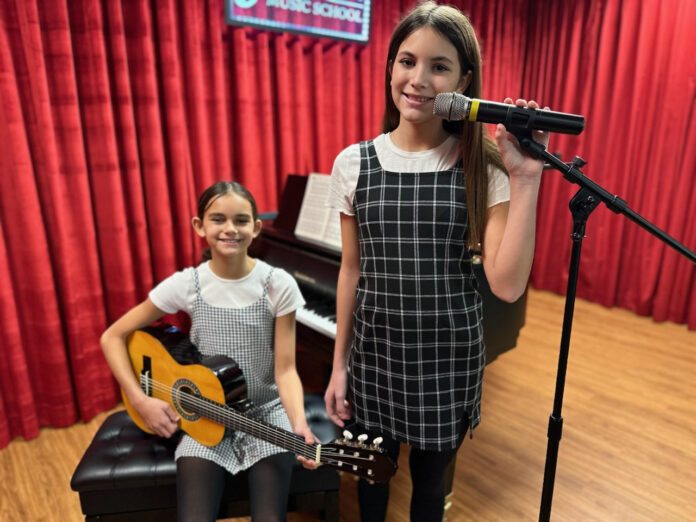
Students at Forté Music School learn valuable lessons through music. Photo provided by Forté Music School.
Most parents have witnessed a fussy baby calmed by a lullaby, a toddler who can’t resist bouncing to a beat, or a preschooler inventing songs with hilarious lyrics. But beyond the joy and entertainment, there’s something remarkable happening inside those little brains. Music isn’t just fun. It’s foundational to how children learn, think, and grow.

The Science of Sound: How Music Builds Better Brains

Recent research confirms what parents have long suspected: Music is a powerful tool for cognitive development.

A comprehensive meta-analysis published in Frontiers in Psychology analyzed 46 studies involving 3,530 children and found that musical training significantly enhances executive function. These are the mental skills that help children plan, focus, remember instructions, and juggle multiple tasks. These are the very abilities that underpin success in school, emotional regulation, and social navigation.

The longitudinal evidence is equally compelling. A study drawing on data from one of the largest long-term investigations of brain development found that kids who consistently engaged in music training scored higher on multiple cognitive and language tasks. Remarkably, the study also revealed music’s power as an equalizer: Musicians across all socioeconomic backgrounds demonstrated similar gains, suggesting that music training serves as a “cognitive enrichment tool” that transcends economic circumstances.

Even the youngest children benefit. In a randomized controlled trial of three-year-olds, children who participated in music programs developed greater neural efficiency. Brain imaging showed that they didn’t have to work as hard to achieve the same results as their peers, a finding that speaks to music’s ability to literally streamline how the brain processes information.

Why children are natural musicians

So why does music feel so instinctive to children? The answer is biological. Research on musical ability has found that children’s musical abilities continue to improve without formal training until around age 12. This natural development is closely tied to the brain’s capacity to hold and process sounds, even in young children.

Beloved children’s musician Raffi captures this beautifully: “The first instrument the child is hearing is a parental, loving, caring voice. That feeling of being loved for who I am – being safe in my mama’s and papa’s arms – that feeling, that’s the first music.”

Because music activates multiple sensory channels simultaneously, it naturally engages the developing brain in ways that feel like play. And as developmental experts have long noted, play is how children learn best. When music feels like play, children aren’t just having fun. They’re building neural pathways that will serve them for life.

Forté Music School Director Virgil Lupu said, “Music education is not limited to teaching notes and rhythms; it supports the development of the whole child.”

Long-term benefits

The benefits of music aren’t fleeting. They compound over time. A landmark twelve-year study on children receiving music lessons found that making music physically changed the brain, regardless of natural talent. The more music the children played, the greater the activation of key brain regions.

“Even if a child eventually chooses a different path, the lessons learned through music remain valuable. They carry with them the experience of developing a skill over time and discovering that effort can transform something difficult into something meaningful,” Lupu said.


RELATED: Instilling a Love of Music in Children in Toledo


Practical Tips for Music at Home

All of this science is encouraging, but it can also feel daunting. Some parents assume they need formal training, a natural ear, or expensive instruments to expose their child to music. This isn’t the case. The beauty of music is that it’s already woven into the fabric of daily life. You just need to know how to spot the opportunities.

Here’s how to weave music into your family’s life:

1. Show Them With Your Actions
Modeling musicking as parents is key. When children see the adults in their lives enjoying music, they learn how to joyfully incorporate music into their own lives. This includes singing along to the radio, tapping a beat while cooking, or dancing in the kitchen. Your enthusiasm is more contagious than any lesson.

2. Try Simple Activities
The most powerful musical moments are often the simplest. No sheet music required. Try these:

  • Kitchen Band Jam: Pull out pots, pans, wooden spoons, and sealed jars. Tap, bang, and scrape to discover different sounds. Try a rhythm circle where one person sets a beat, and everyone follows.
  • Freeze Dance: Play upbeat music and dance. When the music stops, everyone freezes. This builds listening skills, self-control, and body awareness. Better yet, giggles usually follow.
  • Body Percussion: Clap hands, snap fingers, stomp feet, or pat knees. Start with simple patterns and have children echo them back, then switch roles.
  • Sound Sorting: Gather everyday objects (keys, bells, paper, spoons) and explore how each sounds. Sort by loud/quiet, high/low, or long/short. Hide an object behind your back and let children identify it by sound alone.
  • Nature’s Music Walk: Step outside and listen. Record sounds like birds, wind rustling, and leaves crunching, then play them back as a “sound quiz.”

3. Make It a Ritual
Establish designated music time, whether a weekly Family Music Night where everyone shares a favorite song or a daily dance break after dinner. These rituals create lasting memories and signal that music matters in your family. Not as a chore, but as a shared joy.

A gift that lasts a lifetime

The research is clear: music builds brains. But perhaps more importantly, music builds connection. Whether you’re singing in the kitchen, dancing in the living room, or simply pausing to listen to the birds outside, you’re offering your child something precious: the chance to grow, learn, and thrive through the miracle of music.

The 5-Minute Music Break

Here are some short activities that require zero prep and are perfect for busy families:

1. Echo Me: Clap or sing a pattern. Your child repeats it back. Increase complexity each round.

2. Song Swap: Each family member picks a song to play. Then everyone guesses why they chose it.

3. Mood Music: Play 30 seconds of different genres (classical, jazz, rock, lullaby). Ask: What does this music make you feel?

4. Name That Tune: Hum or clap the rhythm of a familiar song and see who guesses first.

5. Bedtime Wind-Down: End the day with one slow, quiet song.


A Q&A with Forté Music School

Virgil Lupu
Director

What changes do you notice in children after they’ve been taking classes for a while?

One of the most meaningful changes we notice in children is the growth of their confidence. Many students begin lessons feeling shy, uncertain, or worried about making mistakes. They may speak very quietly, hesitate before trying something new, or immediately look to a parent or teacher for reassurance. As they continue with music, they gradually become more willing to take healthy risks. They begin playing or singing more confidently, sharing their ideas, asking questions, and feeling proud of what they can accomplish.

We also see tremendous growth in patience and perseverance. Learning music requires children to understand that they may not be able to do everything perfectly on the first attempt. A difficult rhythm, a new note, or a challenging section of a song may take several tries. Over time, children learn to slow down, listen carefully, make adjustments, and try again. That process teaches them that mistakes are not failures; they are a natural and important part of learning.

Another important change is their ability to focus. During a music lesson, children are listening to instructions, watching the teacher, reading musical symbols, controlling their movements, and responding to what they hear. With consistent practice, many children become better at maintaining their attention and completing a task one step at a time.

We often see these changes become especially visible during performances. A child who was once afraid to play in front of even one person may eventually walk onto a stage, perform for an audience, and take a bow with a smile. That sense of accomplishment can stay with a child far beyond the music classroom. They begin to realize, ‘I worked hard, I was nervous, and I still did it.’ That is a very powerful lesson.

Are there certain developmental milestones or skills that music seems to support?

Music engages the mind, body, emotions, and senses. Photo provided by Forté Music School.

Music can support many areas of development because it engages the mind, body, emotions, and senses at the same time. With very young children, we often see music support listening, language development, coordination, and social interaction. Singing songs introduces children to new words, sounds, rhymes, and sentence patterns. Movement activities help them connect what they hear with what their bodies are doing, while clapping and rhythm games encourage coordination and an awareness of timing.

Playing an instrument can also strengthen fine motor skills. Children learn to move individual fingers, coordinate both hands, control a bow, press piano keys, hold an instrument correctly, or manage their breathing while singing or playing a wind instrument. These actions may appear simple to an adult, but they require concentration and careful physical control.

Music also supports memory and pattern recognition. Children learn to recognize repeated musical ideas, remember sequences, anticipate what comes next, and connect symbols on a page with sounds and movements. They may be counting beats, recognizing high and low sounds, remembering lyrics, or identifying when something sounds different from what they practiced.

In group classes, ensembles, choirs, dance, and musical theatre activities, children develop additional social and emotional skills. They learn to wait for their turn, listen to others, follow a leader, cooperate, and understand that their individual contribution is part of something larger. They also learn how to adjust, such as playing more softly so someone else can be heard, matching another student’s tempo, or recovering calmly if the group makes a mistake.

Music can also give children a healthy way to identify and express emotions. A song may sound joyful, peaceful, exciting, mysterious, or sad. Talking about those qualities helps children build emotional vocabulary and recognize that feelings can be expressed in many positive and constructive ways. Music education is not limited to teaching notes and rhythms; it supports the development of the whole child.

If you could tell every parent one thing about music and child development, what would it be?

I would tell every parent that their child does not need to become a professional musician for music education to have lifelong value. Of course, some children will discover a deep passion for music and may choose to pursue it seriously. However, the benefits of learning music are not limited to children who eventually perform professionally.

Music gives children repeated opportunities to practice confidence, discipline, creativity, patience and resilience. They learn how to begin something that feels unfamiliar, work through frustration, and gradually improve. They experience what it means to prepare for a goal, whether that goal is learning a short song, participating in a group activity, or performing in a recital. Those experiences can influence the way they approach schoolwork, sports, relationships and future challenges.

I would also encourage parents not to measure their child’s progress only by how quickly they advance or how perfectly they perform. Every child develops differently. One child may immediately enjoy performing, while another may need a long time to feel comfortable. One child may progress quickly through a method book, while another may be developing important listening, coordination or confidence skills that are not as easy to see.

The most important thing is to create a positive and consistent experience. Children need encouragement, realistic expectations and the freedom to learn without feeling that every mistake is being judged. A supportive teacher and family can help a child understand that music is not simply another task to complete. It can become a source of joy, expression, connection and personal accomplishment.

Even if a child eventually chooses a different path, the lessons learned through music remain valuable. They carry with them the experience of developing a skill over time and discovering that effort can transform something difficult into something meaningful.

What does music give children that other activities can’t?

Music offers a particularly unique combination of creativity, emotion, discipline, physical coordination and human connection. Many activities develop one or more of these areas, but music brings them together in a very immediate and personal way.

When children make music, they are not simply repeating information. They are creating and interpreting something. Even when two students perform the same song, each child brings a different personality, sound, and feeling to it. Music gives children permission to develop an individual voice while also teaching them to respect structure, listen carefully, and respond to others.

Music can also communicate feelings that children may not yet know how to explain in words. A child may not be able to describe exactly why they feel excited, peaceful, frustrated, or emotional, but they may connect strongly with a song. Playing, singing, dancing, or acting gives them a safe way to explore and express those feelings.

At the same time, music teaches children that expression and discipline are not opposites. Creativity becomes stronger when a child also develops the skills needed to communicate an idea clearly. They learn that freedom comes through preparation. The more control they develop over their voice, instrument, or movement, the more fully they can express themselves.

Music is also deeply connecting. It can connect a child with a teacher, a parent, another student, an audience, or even a culture and tradition that existed long before they were born. In a group, children learn that every part matters. They must listen as much as they perform. They experience the difference between simply making sound and creating something meaningful together.

Perhaps most importantly, music gives children something that can remain with them throughout their entire lives. They may sing to their own children one day, play an instrument for personal enjoyment, attend performances with a greater appreciation, or simply turn to music during meaningful moments. Music can become not only a skill, but also a lifelong companion.

Toledo Public Schools Career Technology Program: Pathways to High-Demand Jobs and College Success

Toledo Public Schools (TPS) offers a comprehensive Career Technology program designed to provide students with hands-on experience and a seamless transition to college or career paths. The program encompasses over 30 pathways across various fields, including:

  • Agriculture, Food & Natural Resources
  • Architecture & Construction
  • Arts, A/V Technology & Communications
  • Business Management & Administration
  • Health Sciences
  • Human Services
  • Information Technology
  • Law & Public Safety
  • Manufacturing
  • Marketing
  • Science, Technology, Engineering & Mathematics (STEM)
  • Transportation, Distribution & Logistics

Most programs are structured as two-year courses for juniors and seniors, though some extend over four years, starting in freshman year. Students have the opportunity to earn industry-recognized credentials and certifications, enhancing their employability upon graduation.

For those interested in further education, TPS has partnerships with institutions such as Owens Community College, Lourdes University, the University of Toledo, and Bowling Green State University. Through these collaborations, students can earn college credits while still in high school, providing a head start on higher education.

Upon graduation, students are well-prepared to enter the workforce in their chosen fields or to continue their education at the collegiate level, equipped with practical skills and academic credits that support their career aspirations.

For more information, visit tps.org/career_tech or call 419-671-0001

Pilates By V Offers Movement and Strength to Women at Two Local Studios

Pilates By V Offers Movement and Strength to Women at Two Local Studios. Vanessa Pierce has been growing her business, Pilates by V, since its humble beginnings in her basement in 2022. She is now the owner of two studios with twelve instructors. The Maumee location has been in operation for two and a half years, and the Sylvania location had its grand opening in July.

Pierce had spent her early years as a dancer, but temporarily put it aside to raise four children and attend nursing school. During her new career as a medical device rep, she discovered a renewed passion for movement while traveling.

“I would come home after these great adventures with work, where  I was able to visit Pilates studios that were so supportive of women, wanting them to flourish and be strong. I would come home and look for it, but I didn’t find it in our area,” Pierce said. 

Pierce decided to create a fitness community herself. “That’s where the whole vision started, wanting to bring a strong sense of female empowerment, a studio that is only for women that focuses on every aspect of womanhood. Not only when you are young, but also when you go through pregnancy and hormonal changes and even into your senior citizen life.”

Classes for all levels

Soon, Pierce was approached by participants who wanted to join in on her vision.

“I had these amazing women coming to me and saying ‘I’m inspired and I just want to learn, and if you’re willing to teach me and you’re willing to let me become  part of your mission, I’d love to be a part of it. They were women that I couldn’t turn down,” Pierce said.

Instructors at Pilates by V offer Mommy and Me classes in their studios.

The studios offer everything from beginner levels to advanced, along with high intensity strength-based classes and barre. Participants can sign up for private sessions as well as group classes. 

Pierce also offers pop-up classes at various locations in the area.

“We have popped up all over,” Pierce said. “If there’s a space and they’re willing to let us fill it, we’ll fill it. We’ve done outdoor Pilates in the Park at Wildwood, we’ve done hair salons, we have done pop ups at medical spas, we’ve done pop ups at schools. We’re all over the place.”

Movement for moms

Pierce has found that pilates is very beneficial to moms, from pregnancy to post-partum and beyond.

“It allows a mom to reconnect with her body. It gives her autonomy to be able to move in a way that evokes more feeling within herself,” Pierce said. “It’s a deeper sense of being that it promotes.”


RELATED: Local Mom Turns Family Struggles into National Super Mom Run


“One of my biggest joys is that right now, four percent of our clientele is pregnant,” she said. “That is a big number to me because a lot of pregnant women have avoided movement for a long time because there is a stigma that surrounds it. You don’t want to do too much, you don’t want to hurt yourself. Women ask ‘Is this okay during pregnancy? Is this going to have an effect on the baby?’ Being able to bring those women in and actually give them the tools and resources to successfully move throughout their pregnancy and then have that baby and come back. We’re seeing that now in our women that are coming back after birth. It’s the coolest thing ever. They’re coming back and saying ‘My doctor said he couldn’t believe this was my first baby because I knew how to use my pelvic floor. I knew how to engage my entire core and use those muscles that I didn’t even know existed.’”

Pierce also offers Mommy and Me classes that introduce movement to children with fun stretches, ribbon dancing, obstacle courses, and more. Moms have the option of participating with their child, or attending their own session while the children are led by an instructor in their own class.

“The kiddos get a session and then Mom gets her own session,” Pierce said. “Sometimes Moms don’t have babysitters, and sometimes Moms want to move with their kids.

Pierce is happy to offer a space where women can build strength and form friendships.

“The Pilates by V community in general has so many women from so many walks of life. It’s just time for you. It’s time to enjoy being with other women and maybe talk about things you can’t talk about at home.  Just to have that adult interaction. Sometimes you need that. They’re always so supportive,” Pierce said. 

Pilates By V Maumee Studio:
1550 Reynolds Rd., Maumee
419-654-4780

Pilates By V Sylvania Studio:
6363 Monroe St. Suite C, Sylvania
419-654-4780


Elizabeth Davenport Brings History to Life in Otis at the Grove

Elizabeth Davenport's newest children's book "Otis at the Grove" tells the tale of a time-traveling squirrel.

When Elizabeth Davenport sat down with an idea that seemed to appear out of nowhere, she never imagined it would become a children’s book connecting young readers to one of Ohio’s most treasured historic sites.

Her newest book, “Otis at the Grove,” follows a curious squirrel who accidentally travels back in time to 1851 at Spiegel Grove, home of President Rutherford B. Hayes. The story blends history, imagination and heart, introducing children to the people and places that shaped one of America’s presidents.

“It came to me in a flash,” Davenport said. “I was not thinking about writing a book about a time-traveling squirrel, but it came in such a rush, I wrote it in about six hours not including all of the time editing and tweaking.”

The inspiration struck while she was reminiscing about her years working at Hayes Presidential Library & Museums.

“I knew it was a story my 4- and 7-year-old would enjoy and hoped other children would too,” she said. “I found out after publishing that, completely unknown to me, HPLM had been looking for a children’s book on Hayes history. The whole thing felt rather divinely inspired.”

A squirrel with a real-life beginning

Although Otis may travel through time, the lovable squirrel has very real roots.

“Several of the ladies that worked at HPLM years ago, including myself, would walk the grounds occasionally on our lunch breaks,” Davenport recalled. “One day a chubby squirrel marched right up to the edge of the walking path and watched us as we walked by.”

The squirrel clearly hoped for snacks.

“I’m sure he was hoping for more snacks to fill his already plump tummy,” she laughed. “We all got a kick out of him, and he stuck with me all of these years and was most definitely the inspiration behind Otis.”

Inspired by Spiegel Grove

For Davenport, working at Hayes Presidential Library & Museums left an impression that never faded.

“Every step you take at Spiegel Grove is a step through history,” she said. “I felt so privileged during my time there to walk the halls of a museum that Webb Hayes worked so tirelessly on in memory of his father.”

She remembers exploring hidden corners of the historic home and even serving during the site’s Christmas dinners.

“Dressing up to serve at Christmas dinners felt magical. Working there was unlike any job I’ve ever had.”

Writing Otis at the Grove allowed her to reconnect with that experience.

“I have missed my connection with the site and the staff and am thrilled to get to reconnect through Otis and his story. What an honor to get to convey the story of the Hayes family to children.”

History first, adventure second

Although Otis is fictional, Davenport worked hard to ensure the historical setting remained authentic.

“The Hayes family history is uniquely well documented,” she explained. “There is so much recorded that it makes filling in with fiction a little difficult. It makes it a bit like a treasure hunt or a giant puzzle to complete.”

Historical accuracy mattered deeply to her.

“It is very important to me that it is as historically accurate as I can make it, with the exception of a time-traveling squirrel.”

Fortunately, she had two enthusiastic editors at home.

“I have a 4-year-old and a 7-year-old, so I have built-in editors,” she said. “Hearing their giggles the first time I read the story to them let me know I was on the right track.”

Looking beyond the president

One of Davenport’s goals was to highlight people who often receive less attention than President Hayes himself.

“It was pretty important to me that Otis did not meet the president first,” she said.

Instead, readers encounter Sardis Birchard, Hayes’ influential uncle.

“What about the people that shaped his life?” Davenport asked. “What about the people largely hidden in history that made him the man and president he was? There are so many stories about the Hayes family and friends that are just begging to be told.”

She added, “Learning about Sardis was important to me because he played such a large role in shaping the man we know as president, as well as financing his education and building the Hayes home.”

A message of courage

Beneath the adventure lies a deeply personal message.

“Otis and I have something in common,” Davenport said. “We both struggle with fear.”

One scene has become especially meaningful to her.

“Sardis sees his struggle and quotes his nephew, Ruddy (Rutherford), in saying, ‘Take counsel of hopes rather than fears.’ What wonderful advice to a frightened squirrel and to me.”

Her favorite exchange comes when Otis imagines everything that could go wrong.

“‘What if I get hurt?’ and ‘What if I get trampled?'”

Sardis responds with the question that Davenport hopes readers remember long after finishing the book.

“‘What if you have a grand adventure?'”

She hopes that message resonates with readers of every age. “I hope young and old alike can gain a morsel of courage from Otis and Sardis. History is made by the brave by those who do what they are called to do in spite of the fear. The brave don’t lack fear. The brave refuse to listen to its lies.”

A dream decades in the making

Although Otis at the Grove is one of Davenport’s newest books, becoming an author has been a lifelong dream.

“I have always loved reading and subsequently writing,” she said.

Her first story as a child featured “an odd little book about a duckling’s adventures after getting flushed down a toilet.”

“Thankfully, my writing style has grown,” she joked.

At 18, she first declared that she wanted to become a children’s author.

“A friend was sharing with me her artwork and a desire for it to become a children’s book, and it felt so inspiring,” she said. “That announcement… was initially scoffed at by others, and I shamefully set it aside.”


RELATED: Local Author Finds Her Voice Through Children’s Book About Self-Discovery


For more than two decades, the dream remained dormant.

“But the stories were there, growing in me and waiting to be written. Perhaps they were just waiting for me to gain a little courage.”

Writing from real life

Before Otis came along, Davenport published books inspired by someone very close to her heart; her brother Freddie, who has Cornelia de Lange Syndrome.

“My first book is based on the real-life shenanigans of my brother, Freddie,” she said.

Family memories inspired Freddie and the Bear: Something’s Afoot, while another story grew from Freddie’s beloved old coat.

“While working on publishing my second book… Otis came to me in a fuzzy flurry, and I simultaneously completed both books and published them within a couple of weeks of each other.”

Choosing the independent path

Davenport chose to publish independently, valuing the freedom it gave her.

“The roads to traditional publishing are winding and often convoluted and typically expensive,” she said.

“Self-publishing kept the entire process in my control.”

While it required more work, she said it also allowed her to learn every aspect of the publishing process.

“I’ve had many calls from publishing companies over this past year, and I decided to self-publish the next two books as well.”

Her advice to aspiring writers is simple.

“It is utterly amazing to me the things you can do today,” she said. “Maybe you’re like me and your book has sat on your shelf for years because the whole process of publishing was completely daunting and mysterious. The doors are wide open in 2026. If you want to, you absolutely can.”

Deep Ohio roots

Davenport’s love of history extends beyond Spiegel Grove.

She is a lifelong Northwest Ohio resident.

“Born and raised,” she said. “In fact, I now live in the home that my great-grandfather built in 1902.”

“I am surrounded by my own family’s history, and I love it.”

She also has fond memories of Toledo, attending Toledo Christian Schools and visiting places like the 577 Foundation, the Toledo Zoo and the Toledo Museum of Art.

When asked why Ohio makes such a rich setting for stories, her answer came quickly.

“Eight presidents from our state, the birthplace of aviation and so much more,” she said. “The stories that exist to be told are unending and so worth remembering.”

More adventures ahead

Readers won’t have to say goodbye to Otis anytime soon.

“Oh, do I ever!” Davenport said when asked whether more adventures are planned.

“It’s easy in some ways because so much of the story has already been written through history. But weaving in a fictional, time-traveling squirrel without disrupting historical fact takes a lot of creativity.”

She even hinted at what’s coming next.

“I have it on good authority that his next adventure does indeed include pie.”

Beyond Otis, Davenport is already dreaming up additional stories, including one featuring a country mouse named Georgia Sophia Constance Mouse.

For now, though, she’s grateful that the dream she quietly carried for more than 20 years has finally become reality.

“After I published Otis at the Grove,” she said, “I felt like an author. This was real.”

Kids Astrology: Leo (July 23 – August 22)

Happy Birthday to your Leo child! This year encourages confidence from within. Leo kids love to shine by expressing themselves and being seen.
• The Perfect Party Idea: Set up a stage for singing, acting or dress-up fun.
• Birthday Cake: A bold “star” or gold-themed cake.
• Perfect Gifts for a younger Leo: Dress-up clothes; for an older Leo: Creative performance items.