Home Blog Page 10

September/October 2026: New Kids on the Block

Healing Hearts & Minds was started by Evan and Eliyah McKinney.

New program offers therapy and more resources to Toledo kids

Healing Hearts & Minds is a community based program for youth, recently opened by father and daughter duo, Evan and Eliyah McKinney. They are bringing together their expertise in mental health and behavioral health to create a program that serves local children attending kindergarten-8th grade. Some of their services include therapy and case management, daily emotional check-ins, art and computer based projects, outdoor play, homework assistance and nutrition-focused lessons.

[email protected]

Goodwill Relocates and Goodwill Outlet Store opens

Goodwill Inc. at 2021 S. Reynolds Road will relocate to 2450 S. Reynolds Rd., a former Rite Aid location. The existing store at 2021 S. Reynolds Road has been converted into a Goodwill Outlet Store.

Trader Joe’s comes to Toledo

There will be a Trader Joe’s in the redevelopment of Westgate Plaza at Central and Secor. Other businesses planned for the redevelopment of the former Sears and Elder-Beerman properties include Mission BBQ, Smoothie King, Golf Galaxy, Dick’s House of Sport, Sierra and Nordstrom Rack.

New ice cream shop scoops ice cream flights

Swanky Scoops owner Alissa Vieira welcomes customers inside her Downtown Toledo shop. The business regularly rotates its handcrafted, hand-dipped ice cream flavors throughout the year, giving visitors something new to discover with each visit. Photo by Andrew Kersten

Swanky Scoops is now serving handcrafted, hand-dipped ice cream in Toledo. In addition to single and double scoop options, customers can order a flight of three mini scoops to try multiple flavors of ice cream in one order.

144 S Huron St #101, Toledo. 419-724-1091.

Northwest Ohio Resident Releases New Book

Elizabeth Davenport’s new children’s book, “Otis at the Grove,” tells the tale of a curious squirrel who accidentally travels back in time to 1851 at Spiegel Grove, home of President Rutherford B. Hayes. “I have a 4-year-old and a 7-year-old, so I have built-in editors,” she said. “Hearing their giggles the first time I read the story to them let me know I was on the right track.” See the full story by Melissa Lee on Toledoparent.com.

Treatment center offering professional behavioral health services opens in Maumee

Offering mental health and recovery services, Soul Path Treatment Center describes itself as a “recovery ecosystem.” They offer various levels of care, including integrated assessment, crisis intervention, partial hospitalization, intensive outpatient, outpatient/ continuing care, case management services, therapeutic behavioral services, peer/ recovery support and recovery housing. 2211 River Rd, Maumee. 419-724-2264.

September/October 2026: What’s Briefly Happening

Boosting literacy with Little libraries

Seven little libraries will be installed by local school entrances by the non-profit, Partners in Education, to help make reading more accessible. The schools include Birmingham Elementary, Deveaux Elementary, Escuela SMART Academy, Keyser Elementary, Leverette Elementary, Old Orchard Elementary, and Queen of Apostles School. “Access to books should never be a barrier to learning,” said PIE executive director Brooke Schlageter said. “Many of the children we serve may not have books at home, and these little free libraries will help change that. By making books freely available to all children in our partner communities — not just those enrolled in our programs — we’re helping children develop stronger literacy skills, gain confidence and continue learning beyond the classroom.”

Two Friends Turn Donating Cookies into Sweet Nonprofit

Cookies for Better has been the mission of Gavin Ballard and Logan Dane, two friends since elementary school who graduated from Northview High School in May. Thanks to their talents in baking, organizing and entrepreneurship, six local charities receive a total of 850 cookies every two weeks to distribute to the people they help. See the full story by Dennis Bova on Toledoparent.com.

Nonprofit receives award for courage

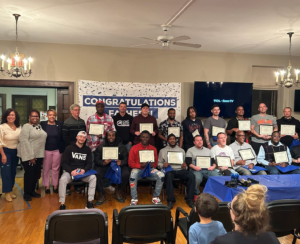
Open Arms Transformation Living, a Toledo nonprofit, received a prestigious award from The Courage Project in recognition of its courageous commitment to serving vulnerable youth and strengthening the community. “This recognition from The Courage Project is deeply meaningful because it affirms the lived‐experience leadership and trauma‐responsive work we pour into Toledo’s youth every day,” said Fonda J. Royster, executive director of Open Arms Transformation Living. “At OATL, we believe healing and stability are possible when young people feel seen, safe, and supported. This award strengthens our commitment to building systems where vulnerable youth are no longer invisible.”

Program that supports local fathers receives funding

The Zepf Center recently announced a five-year award, totaling $6.25 million, from the U.S. Department of Health & Human Services, Office of Family Assistance. The funds are for its Northwest Ohio Fatherhood Connection, a program that empowers local fathers. This funding will support the program and help expand its reach throughout the community. Additionally, Zepf Center named Robert Bass as the program’s Project Director. “This is an exciting moment for our Fatherhood program and the families we serve,” said Zepf Center CEO Deb Flores. “Robert Bass is a visionary leader whose passion, experience, and community connections will help us expand our impact, strengthen outcomes, and create even greater opportunities for children and families across our region.”

Kids Invited to Join “Flakes! The Musical”

Children ages 4-10 are invited to participate in the latest show in Perrysburg Musical Theatre’s Broadway Beginners Series. Registration for Flakes! The Musical ends Sept. 1. 

Flakes! The Musical is a fun and heartwarming winter adventure filled with music, friendship, and laughter. When the Littlest Snowflake needs help, a lively group of Snowflakes and their playful friends, the Snirts, come together on a magical journey. Along the way, they discover that being different is something to celebrate and that everyone has a special place in the world.

The musical is led by mother-daughter duo, Katie and Madi Gankowski.

“We are excited to bring this unique musical to the stage this December. Flakes! reminds us that we are all perfectly imperfect and unique, just like snowflakes. No two people are exactly the same, and it is our individuality that makes each of us special,” Katie said. 

“I am excited to work on my second project as an assistant director with PMT. I can’t wait to see all of the Broadway Beginners’ smiling faces take the stage again!” Madi said. 

No experience necessary to participate and registration is $125. To sign up, visit perrysburgmusicaltheatre.org.

Full rehearsal schedule: 

September 3, 10, 14, 17, 21, 24, & 28
October 1, 8, 12, 15, 22, & 29
November 2, 5, & 12
December 3, 10, 14, 15, 16, & 17, with shows on Dec. 18 & 19 

Rehearsals are 6-7pm, except for week-of-show they are 6-7:30pm. Call times for show dates TBD. 

The After-School Meltdown: Why It Happens, What Masking Has to Do With It, and How to Support Your Child

Have you ever sat in a parent–teacher conference listening to glowing praise about your child?

“So well-behaved.”
“Such a pleasure to have in class.”
“Always follows directions.”

You smile and nod… while internally wondering if you’re talking about the same child who melts down every day around 5:00 p.m. The same child who bursts into tears over the “wrong” snack.
Who snaps at a sibling for breathing too loudly. Who falls apart when asked to pick up their shoes.

If this sounds familiar, you are not alone.

For many families, the after-school hours feel like emotional whiplash. And there’s a name for what’s happening: after-school restraint collapse.

But for some children—especially those with ADHD, anxiety, or sensory sensitivities—there’s another important layer to understand: masking.

What Is After-School Restraint Collapse?

All day at school, children are expected to follow rules, sit still, manage impulses, stay quiet at the right times, focus on academic tasks, and navigate complex social situations.

That takes energy. A lot of it.

By the time they get home, their emotional reserves are depleted. Home becomes the safe landing spot where everything they’ve been holding in finally spills out. Tears. Irritability. Defiance. Total shutdown.

It’s not misbehavior—it’s exhaustion.

The Hidden Piece: Masking

Some children aren’t just holding it together at school—they’re working overtime to hide how hard it actually is.

Masking happens when a child suppresses their natural impulses, struggles, or anxiety in order to appear “fine.” They copy peers, overcompensate, stay hyper-vigilant about rules, or push themselves to meet expectations—even when it’s incredibly draining.

Children with ADHD or anxiety are especially prone to masking. Girls with ADHD and/or anxiety are even more prone to masking due to the stigma surrounding being “too loud” or “too much.”


RELATED: Back to School Guide


As a parent, I experienced this firsthand. My daughter masked her ADHD and anxiety so well at school that educators didn’t initially see a need for support. Because she wasn’t disruptive. Because she was compliant. Because she worked so hard to appear okay.

But what teachers didn’t see was the emotional crash happening every single afternoon at home.

Masking can make it incredibly difficult for others to understand what a child truly needs. When struggles aren’t visible in the classroom, securing support—like a 504 plan—can become an uphill battle. The child looks successful on paper. Meanwhile, at home, they’re unraveling.

The after-school meltdown is often the cost of that invisible effort.

Why Home Gets the Fallout

Here’s the important reframe: children don’t melt down at home because they feel unsafe.

They melt down because they feel safe enough to stop pretending.

That emotional release means your child trusts you. They know home is the place where they don’t have to perform. It may not feel flattering in the moment—but it’s actually a sign of secure attachment.

What Can Parents Do?

Understanding the “why” doesn’t automatically make evenings easier. But it can change how we respond.

1. Expect decompression time

Instead of jumping straight into homework, chores, or activities, build in buffer time. Some kids need 20 minutes. Others need an hour. Think of it as a pressure-release valve.

For kids who mask all day, this isn’t optional—it’s essential.

2. Meet physical needs first

Many meltdowns are fueled by basic depletion.

Offer a snack immediately. Hydrate. Keep the first 30 minutes low-demand. A hungry, overstimulated child has very little capacity left for self-control.

3. Prioritize movement

Research shows school-aged children need four to five hours of active physical play daily—but many get far less during structured school days.

Movement helps discharge the stress chemicals built up from a day of self-regulation.

Bike rides. Trampoline time. Climbing. Wrestling or rough play. A quick trip to the backyard before dinner. Even 15–20 minutes can reset a nervous system.

4. Use sensory tools

Sensory input can be incredibly calming after a day of overstimulation.

Try:

  • Playing with slime or kinetic sand
  • Painting or water play
  • Digging in the garden
  • Petting or walking the dog
  • A warm bath

These aren’t just activities—they’re regulation strategies.

5. Respond with connection first

When the meltdown hits, it’s tempting to correct the behavior immediately. But often what helps most is a calm presence.

Soft voice. Few words. Reassurance.

“I can see today was really hard.”
“You held it together all day.”
“I’m here.”

Once the nervous system settles, problem-solving can happen later.

When Masking Means More Support Is Needed

If your child consistently falls apart after school, struggles with anxiety, or seems exhausted from “being good,” it may be worth looking deeper.

Masking can hide significant challenges. It can also delay support.

If you suspect ADHD, anxiety, or another underlying concern, trust what you see at home. Document patterns. Communicate with teachers. Share specific examples. Sometimes schools only see the polished version. They need the full picture.

Your perspective matters.

A Different Way to See the Meltdown

After-school collapse isn’t a sign you’re failing.

It’s often a sign your child worked incredibly hard all day.

It’s the exhale after hours of holding their breath.

With understanding, patience, and intentional decompression time, evenings can shift from battlegrounds to reconnection points. Not perfectly. Not overnight. But gradually.

Because at the end of the day, every child needs one place where they don’t have to mask.

And for most kids—that place is home.


Waterville 7-Year-Old Crowned National Baton-Twirling Champion

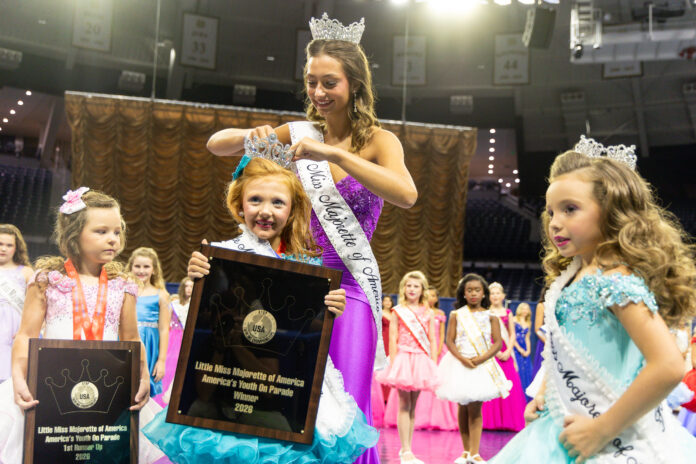
7-year-old Annie Galati was named 2026 Little Miss Majorette of America and Grand National Twirling Champion at the America’s Youth on Parade (AYOP) National Baton Twirling Championships.

The Waterville girl, Annie Galati, was recently crowned 2026 Little Miss Majorette of America and Grand National Twirling Champion at the America’s Youth on Parade (AYOP) National Baton Twirling Championships at the University of Notre Dame at seven years old.

The titles are considered the two highest honors in the country for baton twirling.

For Annie, the accomplishment comes after a year of early mornings, long practices and travel to competitions across the country.

From football game to national champion

Annie Galati has been baton twirling since she was four.

Annie first picked up a baton when she was 4 after watching majorettes perform at a football game.

Her mother, Maria Galati, said the family later took photos for a local baton group and put Annie in the program.

“She liked it right off the get-go,” Maria said.

Annie began training with The Sophisticates in Perrysburg under coach Andrea Whiting. She quickly caught on and began competing, pushing herself to improve.

By ages 5 and 6, Annie and her family were traveling to competitions around the country. This past year, they visited 17 states, giving Annie the experience she needed to compete at the national level.

A demanding schedule

Annie’s training schedule is impressive for a 7-year-old.

During the school year, she practices as early as 7am, attends school and returns to the gym for afternoon and evening practices that can last until 7 or 8pm. Weekends are often spent traveling to competitions or practicing.

Maria said Annie has never needed to be forced to train.

“She willingly gets out of bed and wants to do it,” Maria said.

Her parents also make sure she has time to be a kid. Family trips, friends, school and time with her younger brother are all part of the balance.

A goal she was determined to reach

After last year’s nationals, Annie told her parents she wanted to return the following year wearing the sash and crown. As the competition season progressed, her parents saw how serious she was about reaching that goal. “She knew she wanted it,” Maria said. “We realized she isn’t messing around. She is in it to win it.”

At Notre Dame, Annie finished first in modeling, second in another category and first in twirling. When the final results were announced, she was named both Little Miss Majorette of America and Grand National Twirling Champion.

“Her jaw dropped,” Maria said.

Annie said she was surprised by the result.

For her parents, the championships were a testament to her determination.

“It’s a true testament that hard work pays off,” Maria said.


RELATED: Perrysburg Teen Brings Order to Chaos in Local Homes


Building friendships through twirling

Baton twirling has also helped Annie develop friendships across the country.

“I have learned how to make friends and making goals,” Annie said.

She also shares her experiences through her Instagram account, @twirlinganne. Annie uses the account to interview fellow twirlers, asking their names, where they are from and what their favorite tricks are before having them demonstrate.

The experience has helped Annie become more comfortable meeting and talking with people.

“You can go a thousand miles away and you still know people,” Maria said.

Giving back

Annie has also learned that baton twirling can be a way to give back.

After learning about the Islamic Food Bank, which operates out of the same gym where she trains, Annie became interested in helping provide gluten-free food for families because she follows a gluten-free diet herself.

That led to the creation of “Annie’s Gluten-Free Corner.” Annie and her family helped collect donations and purchase gluten-free food for the food bank. They also organized a fundraiser where children could learn baton twirling while donations were collected.

“We made food and went to the store and stuff for the food bank,” Annie said. “And I know that can help so many people.”

More than a crown

Maria and Annie’s father, Jake, said they hope their daughter remembers more than the trophies.

They want her to remember the determination, friendships, family support and community she found along the way.

“We hope that she remembers how determined she is personally and that she can go after anything,” Maria said.

For Annie, one of the most meaningful moments came after her solo performance at nationals. She completed the routine without a drop, putting everything she had practiced into her performance.

“She was mentally prepared and she put it all on the floor,” Maria said.

When Annie finished, she ran to her parents.

“She was proud,” Maria said.

At 7, Annie has already reached the highest levels of her sport. But for her family, the greatest accomplishment may be seeing her learn that hard work can help her reach big goals and that success is even more meaningful when she uses what she loves to help others.