
For more than four decades, Children’s Discovery Center has been guided by the principles of the Reggio Emilia approach, an educational philosophy that views children as capable, competent and curious learners.
The Reggio Emilia approach has frequently been compared to the Montessori approach to learning. Angel Heath, operations manager of Children’s Discovery Center, explains the difference, “While they share a deep respect for children, the approaches are quite different. Montessori relies on a structured set of materials and lessons designed to help children master specific skills. Reggio Emilia, on the other hand, starts by listening to children, their interests, ideas, questions, and wonderings. Teachers carefully observe what captures a child’s attention and uses those interests as the foundation for meaningful learning experiences. In Reggio, the curriculum emerges from the child, making learning highly personalized, engaging and responsive to each group of children.”
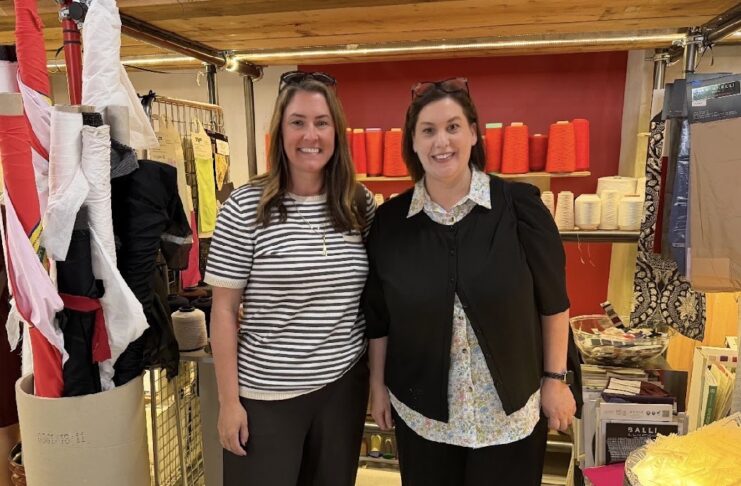
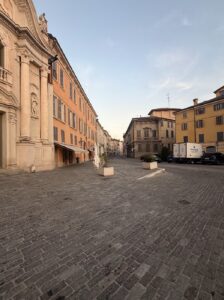
Heath and Kristin Tansel, pedagogista and education director, traveled to Reggio Emilia, Italy, this spring as part of a study group organized by the North American Reggio Emilia Alliance (NAREA). Together, Heath and Tansel bring more than five decades of experience at Children’s Discovery Center to the journey—31 years for Heath and 24 years for Tansel.
The experience carried special significance because Children’s Discovery Center’s connection to the Reggio Emilia philosophy began more than 40 years ago. Founder and CEO Lois Rosenberry first encountered the approach through an article in Newsweek magazine. Intrigued by its emphasis on honoring children’s ideas, creativity, and capabilities, Rosenberry traveled to Italy in 1994 to learn more. Upon her return, she began incorporating those principles into Children’s Discovery Center, where they continue to shape the organization’s culture and educational practices today.
RELATED: Toledo Parent’s Summer Camp Guide
During their time in Italy, Heath and Tansel toured municipal schools, attended presentations and discussions, observed classrooms, and studied documentation of children’s learning. Both visited the Paulo Freire School, while Heath also toured the Arcobaleno School and Tansel visited the Alice Infant Toddler School.
While the educators expected to return home inspired with new ideas, one of the most meaningful outcomes of the trip was an overwhelming sense of affirmation.
“We realized just how much Children’s Discovery Center is already doing well,” they reflected.
The environments they observed in Reggio Emilia reinforced the strength of Rosenberry’s original vision and highlighted the exceptional work being done by teachers across Children’s Discovery Center locations. The values emphasized throughout the schools in Italy—respect for children, thoughtfully designed learning environments, meaningful relationships, careful documentation of learning, and child-led exploration—closely mirrored the practices already taking place in Children’s Discovery Center.
“We felt incredibly proud of the environments our teachers create for children every day,” Heath and Tansel said. “They reflect a deep understanding of the philosophy and a commitment to seeing children as capable learners.”
Another powerful takeaway was the level of independence children were given. Throughout the schools, children moved freely between indoor and outdoor spaces, pursued investigations driven by their own interests, and demonstrated remarkable autonomy. The experience served as a reminder of the trust and respect that are central to the Reggio Emilia approach.
Among the highlights of the trip was a visit to the renowned Remida Center, a creative reuse center that provides recycled and repurposed materials for artistic and educational exploration. Heath and Tansel report being inspired by the endless possibilities the materials offered and filled with ideas they hope to share with teachers.
The visit reinforced a fundamental principle of the Reggio Emilia philosophy: meaningful learning does not require expensive materials. Instead, extraordinary discoveries can emerge when children are given opportunities to imagine, experiment, create and problem-solve using open-ended resources. The experience deepened their appreciation for Rosenberry’s vision and for the dedication of the staff members who have spent years bringing that vision to life for children and families.
Now, Heath and Tansel are focused on sharing what they learned with their colleagues. They are currently planning Children’s Discovery Center’s October In-Service Day and hope to incorporate many of the experiences and insights gained during their travels. Their goal is to create a hands-on professional learning experience that encourages reflection, sparks creativity, and continues to deepen teachers’ understanding of the Reggio Emilia philosophy.

