
“Do you know how to shred?”
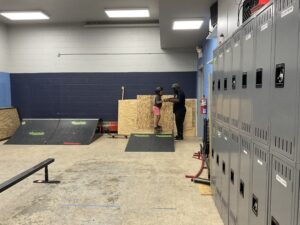
Four-year-old Zacharia approached me just as I sat down in the Frederick Douglas Community Center’s indoor skateboarding gym lined with half pipes and mini rails.
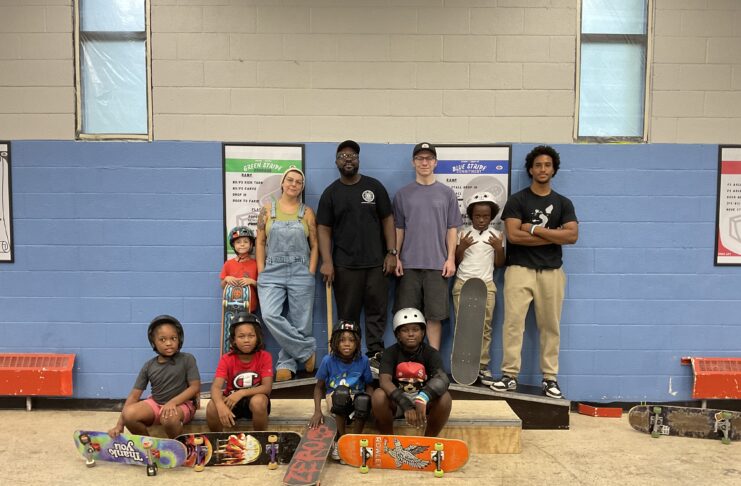
“No, but maybe I can learn something from you today,” I responded with a smile. Helmet on and excited to share his knowledge, Zacharia willingly took on the task of welcoming a new face. This is the environment that Joshua Cunningham, former veteran and founder of the On Deck Alliance, has cultivated through the I Can Program for youth.
The I Can Program empowers underserved youth through skateboarding. The goal of the program is to foster confidence, resilience, and community. Cunningham emphasizes that the classes go beyond learning to do cool tricks – he aims for the kids to walk away with skills that extend to every other area of their lives. “For me, skateboarding is like therapy,” Cunningham shared. “And the whole confidence thing, too. Confidence is contagious. You get confident in one thing, and then it helps you in so many other areas.”
Cunningham first started skating in 2013 when was 28 years old. About a decade later, he came up with the idea for the I Can Program after he’d moved home from San Diego to Toledo. “I was at the skate park, and kids were tearing it up,” Cunningham explained. “I was like, if kids in my neighborhood had skateboards, they’d be skating.”
The program uses an “Earn Your Stripes” (EYS) curriculum, similar to the martial arts belt ranking system. As the kids successfully meet different goal posts, they earn different colored tape on their boards to symbolize their advancement through the program. These challenges reinforce the I Can Program’s core principles: courage, consistency, commitment, and confidence.
Local volunteers help teach the skateboarding lessons alongside Cunningham. Caleb, 24, is one of the volunteers for the program. When I asked what he enjoys about working with the kids, Caleb said, “Seeing them grow up over the years and seeing their personalities come out. Some started really quiet and are now really rambunctious,” he said smiling as he looked out at them. “And how they look up to us.”
RELATED: Two Friends Turn Donating Cookies into Sweet Nonprofit
Austin, 29, said, “For me, [skateboarding] was always an outlet, a form of self expression that teaches you accountability.” His partner, Gina, also helps out, and they have a son, Luca, who takes part in the program.
“Joshua is extremely, extremely patient with the kids. He keeps them in line, and he’s definitely just a really good role model for them,” Gina shared with me. “He picks some of the kids up who can’t get here and takes them home, and he makes sure that they get where they need to be. He’s constantly in contact with parents and is super professional but just like a big kid who likes to teach other kids to skate. And this is his neighborhood, this is where he grew up, too, so it’s super special to him.”
The collective mission of the On Deck Alliance is to face challenges faced by the communities they serve. They focus on addressing cultural and economic inequities through creating safe skateboarding spaces, promoting wellness through movement, and integrating skateboarding’s culture of inclusion ‘as a vehicle for the development of cognitive, social and emotional skills.’ The goal is to create sustainable change that allows for community self sufficiency.
Johsua and the team “envision a world where often marginalized communities heal and grow to be self-sufficient through direct and safe access to the benefits of skateboarding.” By also involving families and building protective factors within the community, they hope that students of the program can grow into resilient individuals who contribute to positively transforming their communities.
“You see those kids in there now, we never have a problem asking them to get on the boards,” Cunningham said motioning towards the open doors as we stood outside in light rain to hear above the symphony of laughter and wheels gliding across the gym floor. “You’ve got to tell them to get off the skateboard.”
The I Can Program meets on Mondays and Thursdays from 5-8 at the Frederick Douglas Community Center, both inside and outside depending on the weather. To date, they’ve provided over 50 skateboards, protective gear, and 600+ hours of instruction to children aged 6–14.

